Skip to content
ScienceBlog.com
  • Featured Blogs
    • EU Horizon Blog
    • ESA Tracker
    • Experimental Frontiers
    • Josh Mitteldorf’s Aging Matters
    • Dr. Lu Zhang’s Gondwanaland
    • NeuroEdge
    • NIAAA
    • SciChi
    • The Poetry of Science
    • Wild Science
  • Topics
    • Brain & Behavior
    • Earth, Energy & Environment
    • Health
    • Life & Non-humans
    • Physics & Mathematics
    • Social Sciences
    • Space
    • Technology
  • Our Substack
  • Follow Us!
    • Bluesky
    • Threads
    • FaceBook
    • Google News
    • Twitter/X
  • Contribute/Contact

MIT

satellite

Earth’s Carbon Footprint Now Threatening Satellite Operations

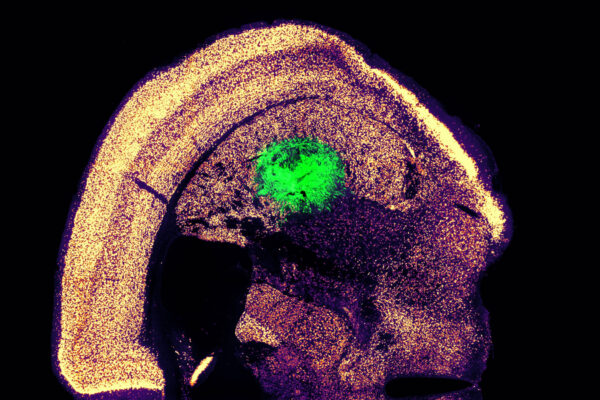
Researchers at MIT have devised a simplified process to convert a skin cell directly into a neuron. This image shows converted neurons (green) that have integrated with neurons in the brain’s striatum after implantation.

Scientists Crack Code to Transform Skin Cells Directly into Neurons

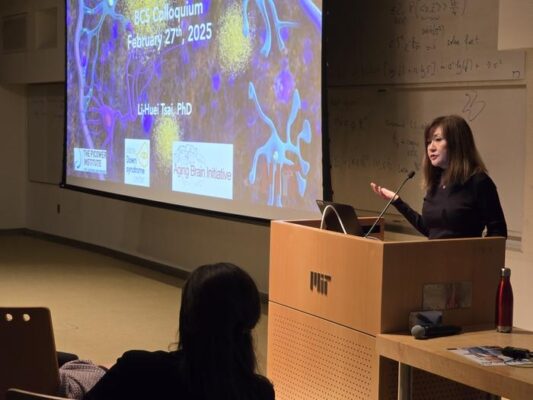
Li-Huei Tsai speaks about the latest gamma rhythm sensory stimulation research in her lab at an MIT colloquium Feb. 27, 2025.

Sound and Light Therapy Shows Promising Results in Alzheimer’s Treatment

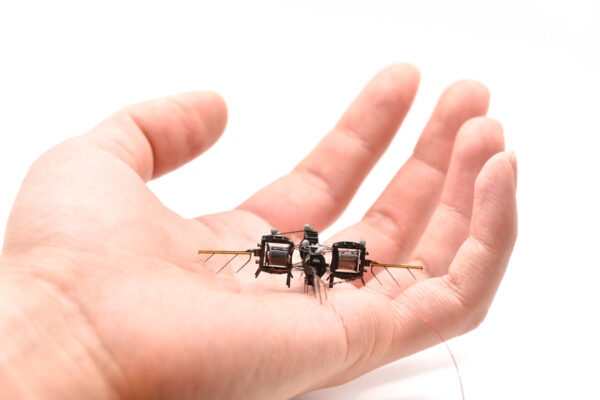
The revamped robot is designed to boost flight precision and agility while minimizing the mechanical stress on its artificial wing flexures, which enables faster maneuvers, increased endurance, and a longer lifespan.

Robot bug could help pollinate crops

An artist's illustration of a neutron star emitting a radio beam from within its magnetic environment. As the radio waves travel through dense plasma within the galaxy, they split into multiple paths, causing the observed signal to flicker in brightness. Credits:Credit: Daniel Liévano, edited by MIT News

MIT scientists pin down the origins of a fast radio burst

MIT philosopher Sam Berstler analyzes the social dynamics accompanying open secrets.

The Power of Silence in Open Secrets Shapes Workplaces, Communities

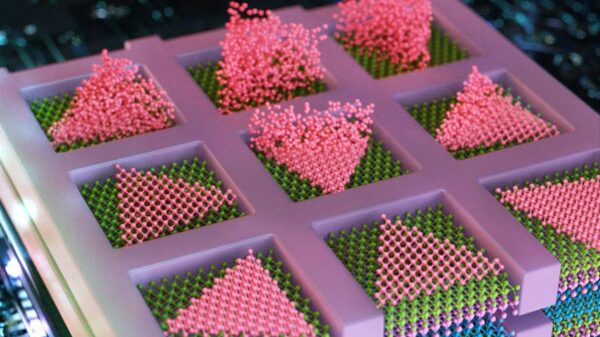
MIT engineers have developed a method to seamlessly stack electronic layers to create faster, denser, more powerful computer chips. The team deposits semiconducting particles (in pink) as triangles within confined squares, to create high-quality electronic elements, directly atop other semiconducting layers (shown in layers of purple, blue, and green). Credits:Credit: Cube 3D Graphic

MIT Engineers Stack Transistors Vertically, Breaking Through Computing’s 2D Barrier

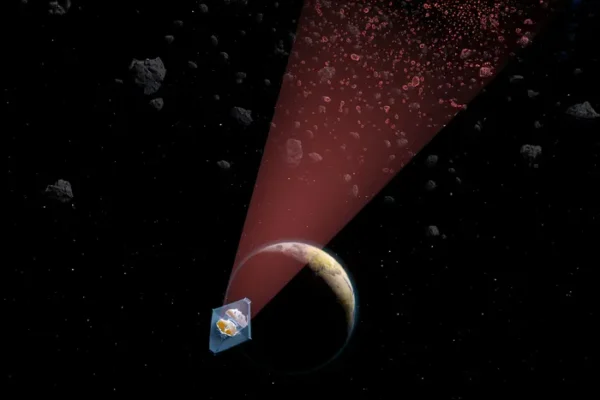
An artist’s illustration of NASA’s James Webb Space Telescope revealing a population of small asteroids in the main asteroid belt.

Team Unveils Hidden Population of Bus-Sized Asteroids Lurking in Solar System’s Main Belt

Pictured are two of the four absorber units at Climeworks’ direct air capture and storage plant, Orca, in Hellisheidi, Iceland. Each absorber unit can remove about 1,000 tons of carbon dioxide per year. Credits:Photo courtesy of Climeworks.

MIT Study Reveals Major Challenges with Carbon Removal Technology Plans

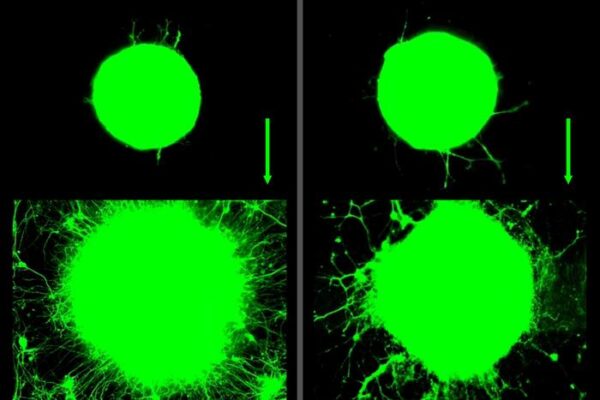
MIT scientists find that motor neuron growth increased significantly over 5 days in response to biochemical (left) and mechanical (right) signals related to exercise. The green ball represents cluster of neurons that grow outward in long tails, or axons.

Neurons Grow Faster When Muscles Exercise, MIT Study Reveals

silver balls on string

MIT Engineers Create New Algorithm to Decode Cause and Effect in Complex Systems

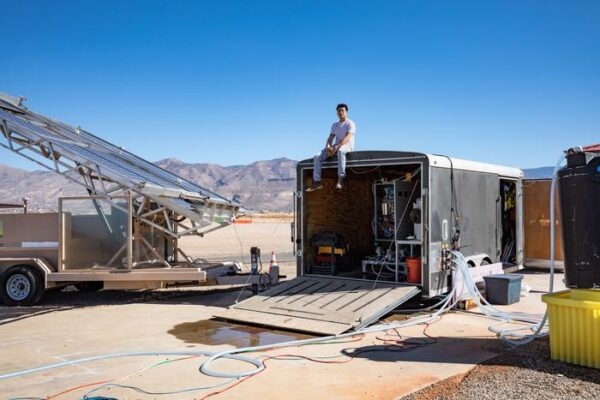
Jon Bessette sits atop a trailer housing the electrodialysis desalination system at the Brackish Groundwater National Research Facility (BGNDRF) in Alamogordo, New Mexico. The system is connected to real groundwater, water tanks, and solar panels.

Solar-powered desalination system requires no extra batteries

Researchers from MIT and elsewhere created a system that enables users to have an online, text-based conversation with an AI-generated simulation of their potential future self. Credits:Credit: Future You; Melanie Gonick, MIT

MIT Researchers Develop AI System That Simulates Users’ Future Selves

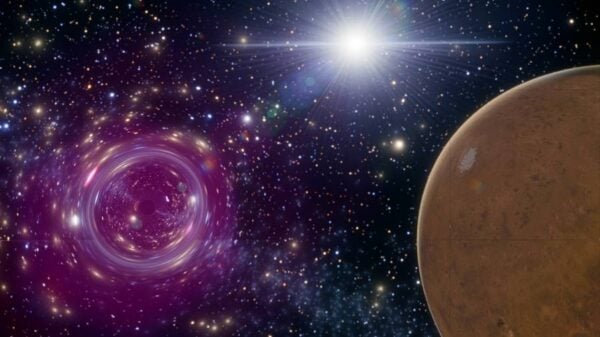
An artist’s illustration depicts a primordial black hole (at left) flying past, and briefly “wobbling” the orbit of Mars (at right), with the sun in the background. MIT scientists say such a wobble could be detectable by today’s instruments. Credits:Credit: Image by Benjamin Lehmann, using SpaceEngine @ Cosmographic Software LLC.

Mars’ Wobble Could Reveal Dark Matter, MIT Study Suggests

Older posts
Newer posts
← Previous Page1 Page2 Page3 Page4 … Page66 Next →
Substack subscription form sign up

Comments

  • Karoly Mirnics on Common Prescription Drugs May Disrupt Cholesterol Pathways in the Womb and Raise Autism Risk
  • Aizen on Laziness helped lead to extinction of Homo erectus
  • Norwood johnson on Electrons in New Crystals Behave as If They Live in Four Dimensions
  • ScienceBlog.com on Hidden Geometry Could Finally Fix Quantum Computers
  • Theo Prinse on America Is Going Back to the Moon. This Time, It Plans to Stay
© 2026 ScienceBlog.com | Follow our RSS / XML feed