How Scientists Learned to Read Information Encoded in Darkness Inside Light

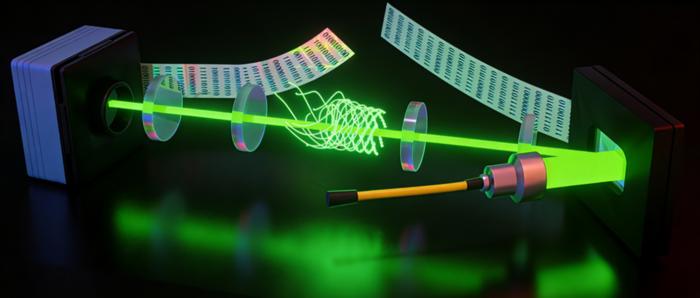
Schematic and working principles of the LightELF system.​ LightELF is a neuromorphic high-throughput optical data transmission prototype that uses the topological invariants of optical singularity evolution as the information medium.

Inside a beam of light, there are places where the light simply isn’t. Not dim, not scattered, not absorbed. Absent, a void of zero intensity threading through the beam like a knotted vein of darkness. These are phase singularities: points where the electromagnetic phase becomes undefined, where the wave collapses into nothing. They dart through … Read more

Ancient Herbal Remedy Produces Nanomedicine When You Boil It

concoction boiling over a fire

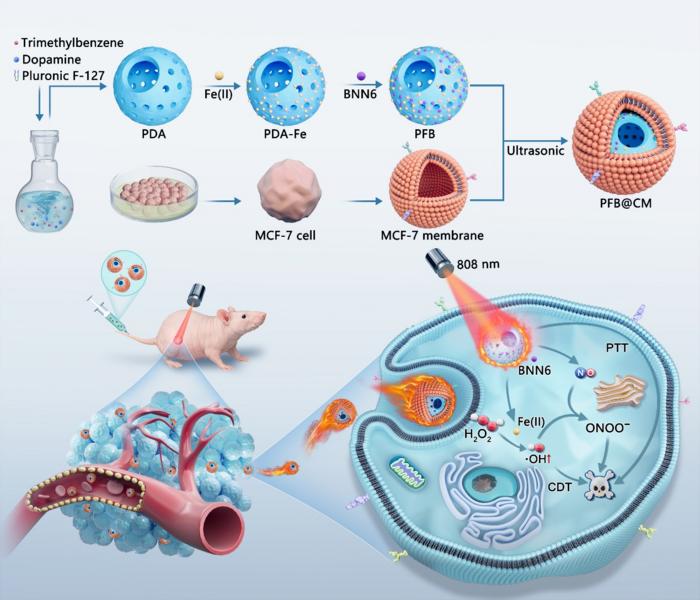
Boiling water destroys things. That, more or less, is the assumption underlying decades of nanomedicine research, which has largely ignored traditional herbal teas and decoctions as sources of therapeutic nanoparticles. Lipid membranes, the reasoning went, simply don’t survive prolonged exposure to 100 degrees Celsius. They rupture. They disintegrate. And so researchers seeking plant-derived nanoparticles have … Read more

Bat-Inspired Gripper Lets Drones Perch Like Birds and Switch Off Their Motors

Perching behavior of biological and artificial systems.

A bat hanging from a cave ceiling is doing something that looks effortless but is, mechanically speaking, genuinely strange. It isn’t gripping. Not actively, anyway. When a bat lands inverted, its body weight pulls down on tendons running through the legs, and those tendons tighten the toes around whatever surface the animal has landed on. … Read more

A Catalyst That Heats Itself Up Can Turn Sunlight and CO2 into Fuel

Both Pd single atoms (Pd1) and clusters (Pdc) were constructed in three-dimensional ordered macroporous (3DOM) In2O3 for photocatalytic CO2 reduction with H2O. The large surface area and abundant pore channels of 3DOM-In2O3 facilitate mass transfer and intermediate enrichment. The synergisticPd1 and Pdc active sites enhance the adsorption and activation of CO2 and H2O. The localized surface plasmon resonance of Pd clusters induces a photothermal effect, further accelerating the reaction kinetics.

Light hits a particle of indium oxide, and something unusual happens. The palladium clusters dotting its surface don’t just absorb the photons. They convert them into heat, raising the catalyst’s skin temperature to around 230 degrees Celsius within seconds, even though the source of illumination is nothing more exotic than simulated sunlight. That warmth is … Read more

Yak Gene Could Repair Damaged Nerves in Multiple Sclerosis

Yak

Every nerve fibre in your brain and spinal cord is wrapped in something a bit like electrical tape. The myelin sheath, as it’s called, is a fatty insulating layer produced by specialist cells called oligodendrocytes, and without it, nerve signals lose their speed and coherence. In multiple sclerosis, the immune system attacks this layer directly. … Read more

SciChi

Tracking Chinese Research

Skip to content ↓