

Key Takeaways
- Boiling traditional herbal teas can yield nanoparticles that survive intact, contrary to previous beliefs in nanomedicine.
- A study found that kudzu root decoctions contain heat-stable, plant-derived nanoparticles that effectively treat inflammatory bowel disease in mice.
- These nanoparticles restore gut microbiota, improving conditions like ulcerative colitis by enhancing microbial diversity and short-chain fatty acid production.
- The nanoparticles have unique lipid compositions, contributing to their stability and therapeutic effects, unlike typical fresh plant vesicles.
- Future research may explore the potential translation of these findings to human treatments for Crohn’s disease or ulcerative colitis.
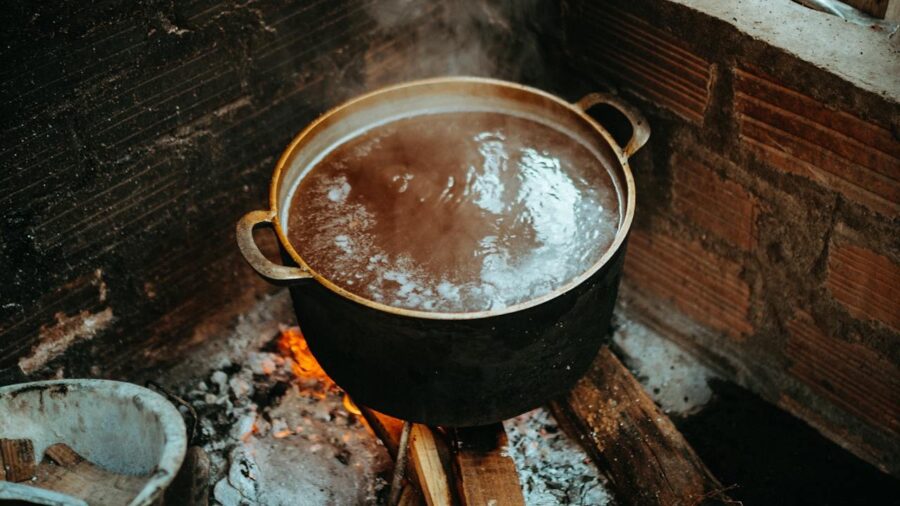
Boiling water destroys things. That, more or less, is the assumption underlying decades of nanomedicine research, which has largely ignored traditional herbal teas and decoctions as sources of therapeutic nanoparticles. Lipid membranes, the reasoning went, simply don’t survive prolonged exposure to 100 degrees Celsius. They rupture. They disintegrate. And so researchers seeking plant-derived nanoparticles have typically pressed fresh juice, blended raw tissue, worked cold. The idea that the oldest and most mundane of laboratory procedures, boiling dried roots in water, might yield structurally intact nanoscale drug carriers wasn’t really on anyone’s agenda.
It turns out they may have been looking in the wrong place. A study published in February in Extracellular Vesicles and Circulating Nucleic Acids reports that a traditional Chinese decoction made from kudzu root, boiled for 45 minutes in the standard way herbalists have prepared it for centuries, contains abundant vesicle-like nanoparticles that survive the process entirely intact, navigate the full length of the digestive tract without degrading, and treat inflammatory bowel disease in mice by selectively reshaping the gut microbial ecosystem.
The plant in question is Pueraria lobata, the sprawling vine that has, depending on your vantage point, transformed Chinese medicine or consumed large portions of the American South. Its dried root, known as GeGen, has featured in traditional formulae for gastrointestinal complaints for roughly two thousand years. Modern pharmacology has mostly focused on puerarin, an isoflavone extracted from the root that shows anti-inflammatory effects, though poor solubility and rapid clearance have limited its clinical usefulness. Researchers at Northwestern Polytechnical University in Xi’an set out to ask a simpler question: what exactly is the active component when you actually make the decoction? Not an extract. The tea itself.
It’s too early to say, and the jump from mice to humans in inflammatory bowel disease research has historically been a difficult one. What the study does establish is that plant-derived nanoparticles from a boiled herbal preparation can reach inflamed gut tissue in animals and produce measurable therapeutic effects through the microbiome. Whether that translates to human UC or Crohn’s would require clinical trials, but the biological pathway being targeted, restoring microbial diversity and short-chain fatty acid production, is increasingly recognised as central to both conditions.
The prevailing assumption was that it would, which is why plant nanoparticle research has focused almost entirely on fresh juices and cold extraction. The kudzu vesicles appear to be unusually heat-tolerant, possibly because their lipid membranes are enriched in neutral lipids and ceramides rather than the more typical polar lipids found in other plant vesicles. Whether this is a quirk of kudzu specifically or a broader feature of dried medicinal herbs remains an open question that other research groups will likely now pursue.
The study makes a strong case that the nanoparticles are doing most of the work: removing them from the decoction largely abolished the therapeutic effect in colitis mice, and giving the particles alone reproduced it. The famous puerarin compound in kudzu was present in the nanoparticles but at doses far below what would normally be needed to produce a therapeutic effect on its own, suggesting the particle formulation either dramatically improves bioavailability or that other cargo, perhaps lipids or small RNAs within the vesicles, is responsible.
It adds a layer of complexity but also a degree of ecological elegance. Rather than overriding the immune system directly, the nanoparticles appear to work by restoring the microbial community that keeps inflammation in check under healthy conditions. When that community is missing, the particles do nothing, a finding that positions them as ecosystem restorers rather than direct drugs. It also points toward the gut microbiome as a potentially more tractable therapeutic target than the immune cascade itself.
The answer required ultracentrifugation, several rounds of it. When the team processed the cooled decoction through progressively higher centrifugal forces, spinning up to 150,000 times the force of gravity, a pellet collected at the bottom of the tube. Under electron microscopy, it resolved into cup-shaped particles roughly 198 nanometres across, each bounded by a clear lipid bilayer. They looked, in other words, exactly like extracellular vesicles, the membrane-bound packages that cells use throughout the body to shuttle cargo and signals. These were not animal vesicles. They were plant-derived. And they had apparently survived boiling.
Survival wasn’t incidental. When the team tested the particles in simulated gastric acid and intestinal fluid (both corrosive enough to degrade many oral drug formulations) the nanoparticles held their structure. Size, surface charge, morphology: all essentially unchanged after two hours of exposure. This matters enormously for any oral treatment targeting colonic inflammation, because the gut is a genuinely hostile environment for fragile molecules. Whatever reaches the inflamed tissue has to run a gauntlet of enzymes and pH shifts before it gets there. These particles, apparently, are built for it.
The colitis experiments used a mouse model induced with dextran sulfate sodium, a chemical irritant that produces intestinal inflammation resembling human ulcerative colitis. Mice given the whole decoction showed substantial improvement: weight maintained, colon length preserved, inflammatory cell infiltration reduced. Then came the more revealing experiment. The researchers removed the nanoparticles from the decoction using ultracentrifugation and gave mice the remaining liquid, the decoction without its particles. Therapeutic effect almost entirely disappeared. Then they gave mice the isolated nanoparticles alone, without the rest of the decoction. Therapeutic effect returned, matching the whole preparation. The nanoparticles weren’t one component among many. They were, apparently, the medicine.
How they work is perhaps the most unexpected part. The particles don’t seem to act directly on the immune system, at least not primarily. When researchers depleted the gut microbiota of mice using a cocktail of antibiotics before administering the nanoparticles, the therapeutic benefit vanished completely. No microbiota, no effect. The particles appear to need the bacteria. Confocal microscopy confirmed why: fluorescently labelled nanoparticles were visibly taken up by gut bacteria, absorbed directly into bacterial cells. What the particles are doing inside those cells remains somewhat unclear, but the downstream effects on microbial composition were measurable. Species that had been depleted by the inflammatory process, particularly Akkermansia and Bifidobacterium and several short-chain fatty acid producers in the family Lachnospiraceae, recovered substantially. Harmful shifts in the Firmicutes-to-Bacteroidetes ratio, a rough indicator of gut microbiome dysfunction that tends to worsen in colitis, reversed toward healthier proportions.
Short-chain fatty acids, produced when these bacteria ferment dietary fibre, serve as the primary fuel for colonocytes, the cells lining the gut. They also directly dampen inflammatory signalling. When their producers are depleted, as happens in ulcerative colitis, the mucosal barrier weakens, immune activation escalates, and the disease becomes self-perpetuating. The nanoparticles seem to interrupt this cycle, though indirectly: by restoring the microbial producers, they restore the metabolic output, which in turn rebuilds the barrier and quiets inflammation. The team measured recovery of tight junction proteins, occludin and ZO-1, both of which had been depleted in colitis mice and both of which returned to near-normal levels following nanoparticle treatment. Pro-inflammatory cytokines fell; anti-inflammatory IL-10 rose. The bowel, in short, was healing.
The lipid composition of the nanoparticles offers some clues to their unusual heat stability. Analysis by mass spectrometry found the membrane predominantly built from triglycerides, diglycerides, ceramides, and phosphatidylcholines, a profile heavy in neutral lipids and sphingolipids. This differs markedly from fresh plant vesicles, which typically carry more polar lipids. Whether boiling selects for a heat-resistant lipid subset or whether kudzu simply makes its vesicles this way regardless of preparation remains an open question; the authors note that unboiled Pueraria lobata shows a similar profile, suggesting it may be intrinsic to the species rather than an artefact of heat.
There are genuine limitations to flag. The experiments are in mice, not humans, and colitis models are notoriously imperfect proxies for the human disease. The ultracentrifugation used to strip nanoparticles from the decoction may also have removed other large molecular complexes, so the depletion experiments aren’t perfectly clean. And while the study shows that microbiota depletion abolishes the effect, the precise molecular mechanism by which the particles interact with specific bacterial species, what cargo they’re delivering, what signalling they’re triggering, is not yet understood.
None of that diminishes what is, at minimum, an intriguing reframe of a very old technology. The decoction as natural nano-drug delivery system is a somewhat different thing from the decoction as chemical soup, and it raises some genuinely awkward questions about how much of traditional herbal medicine may have been working through mechanisms nobody suspected. Several other herbal preparations have now been shown to contain heat-stable vesicle-like particles, though systematic study is still early. The kudzu work is perhaps the most rigorous demonstration so far that boiling dried roots in water, a process predating the germ theory of disease by roughly two millennia, can produce something with properties that nanomedicine researchers are still struggling to engineer deliberately.
Source: doi.org/10.20517/evcna.2025.134