Skip to content
ScienceBlog.com
  • Featured Blogs
    • EU Horizon Blog
    • ESA Tracker
    • Experimental Frontiers
    • Josh Mitteldorf’s Aging Matters
    • Dr. Lu Zhang’s Gondwanaland
    • NeuroEdge
    • NIAAA
    • SciChi
    • The Poetry of Science
    • Wild Science
  • Topics
    • Brain & Behavior
    • Earth, Energy & Environment
    • Health
    • Life & Non-humans
    • Physics & Mathematics
    • Social Sciences
    • Space
    • Technology
  • Our Substack
  • Follow Us!
    • Bluesky
    • Threads
    • FaceBook
    • Google News
    • Twitter/X
  • Contribute/Contact

MIT

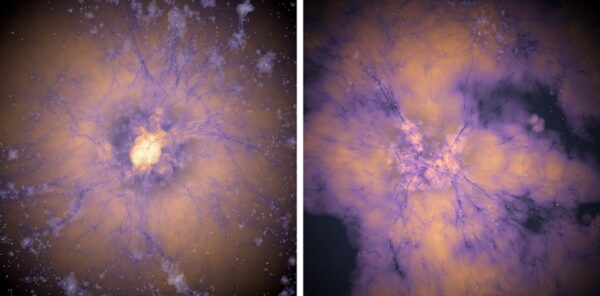
Early dark energy could have triggered the formation of numerous bright galaxies, very early in the universe, a new study finds. The mysterious unknown force could have caused early seeds of galaxies (depicted at left) to sprout many more bright galaxies (at right) than theory predicts. Credits:Image: Josh Borrow/Thesan Team

Early dark energy could resolve cosmology’s two biggest puzzles

This new algorithm requires fewer quantum building blocks, and has a higher tolerance to quantum noise, which could make it more feasible to implement in practice.

MIT Scientists Unveil Quantum Leap Towards Cracking Unbreakable Codes

gavel on a law book

The Science Behind Legal Jargon: MIT Study Reveals Why Laws Are So Hard to Read

A zinc-air microbattery designed by MIT engineers could enable the deployment of cell-sized, autonomous robots for drug delivery within in the human body, as well as other applications such as locating leaks in gas pipelines.

Engineers design tiny batteries for powering cell-sized robots

Artsy black and white photo of an airliner. Pixabay

Airline Safety Continues to Improve, New MIT Study Shows

An artist rendering of an astronaut working on the lunar surface during a future mission. Credits:Credit: NASA

Lunar Atmosphere Mystery Solved: Meteorite Impacts Reign Supreme

In a paper appearing in the journal “Environmental Science and Technology,” MIT scientists report that they detected a clear signal of human influence on upper tropospheric ozone trends in a 17-year satellite record starting in 2005. Credits:Credit: iStock

Human Fingerprint Found in Rising Upper Tropospheric Ozone Levels, MIT Study Confirms

A new tool enables someone to perform complicated statistical analyses on tabular data using just a few keystrokes. Credits:Image: MIT News; iStock

AI Tool Simplifies Complex Database Analysis, Outperforms Neural Networks

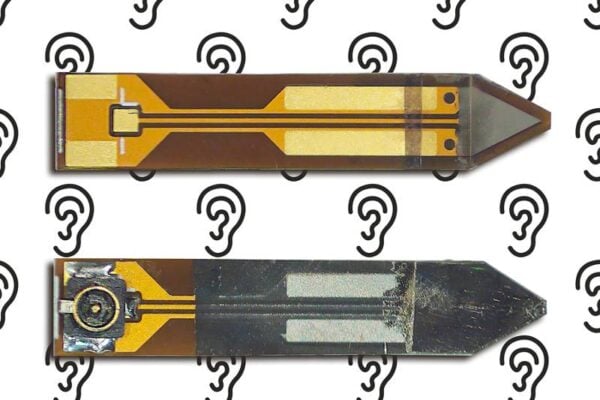
Pictured are the two sides of a prototype for the implantable microphone. Credits:Image: Courtesy of the researchers; iStock

Tiny Implantable Microphone Could Revolutionize Cochlear Implants

As the ocean gets weaker, it could release more carbon from the deep ocean into the atmosphere — rather than less, as some have predicted. Credits:Image: MIT News; iStock

Ocean Circulation Slowdown Could Accelerate Climate Change, MIT Study Finds

The glassy, amber-like polymer can be used for long-term storage of DNA, such as entire human genomes or digital files such as photos. Credits:Image: MIT News; iStock

Scientists preserve DNA in an amber-like polymer

In this image adapted from the figures, the left side shows the chip micrograph, while the right side displays the pixel layout and schematics, highlighting each circuit element. The new pixel circuit uses only two additional transistors (T5 and T6) compared to the conventional CMOS pixel. This minimalist design allows for independent programming of pixel exposures without sacrificing photodiode area to the circuits, ensuring high sensitivity under low light conditions.

MIT Researchers Unveil Innovative Image Sensor for Enhancing Neural Activity Visualization

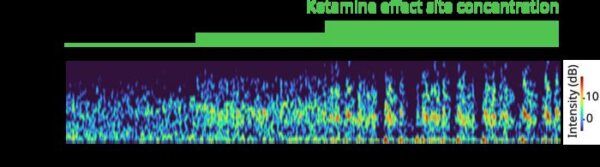
A spectrogram of brain rhythm frequencies over time predicted by the team's model. After a first, moderate dose of ketamine gamma brain rhythm power (warmer colors) emerges. Then as the dose increases, the gamma rhythms become periodically interrupted, leaving only very low freqeuncy waves, and then resume.

Computational Model Unveils the Inner Workings of Ketamine

Engineered yeast-containing hydrogel capsules could be used to remove lead from contaminated water rapidly and inexpensively. The work, from MIT and Georgia Tech researchers, could be especially useful in low-income areas with high lead contamination.

Repurposed beer yeast may offer a cost-effective way to remove lead from water

Older posts
Newer posts
← Previous Page1 … Page3 Page4 Page5 … Page66 Next →
Substack subscription form sign up

Comments

  • Sue Ann Hayes on Hidden Nuclear Protein Fuels Pancreatic Cancer’s Deadly Aggression
  • Curtis Webber on The GPS-Killer? This Quantum Device ‘Feels’ Motion Like a Brain—Down to the Atomic Level
  • Ran on How the Age You First Had Sex Could Shape How You Age Decades Later
  • Sparty on How the Age You First Had Sex Could Shape How You Age Decades Later
  • Josh Mitteldorf on A Single TV Segment Sent Leucovorin Prescriptions for Autistic Children Soaring 2,000 Percent
© 2026 ScienceBlog.com | Follow our RSS / XML feed