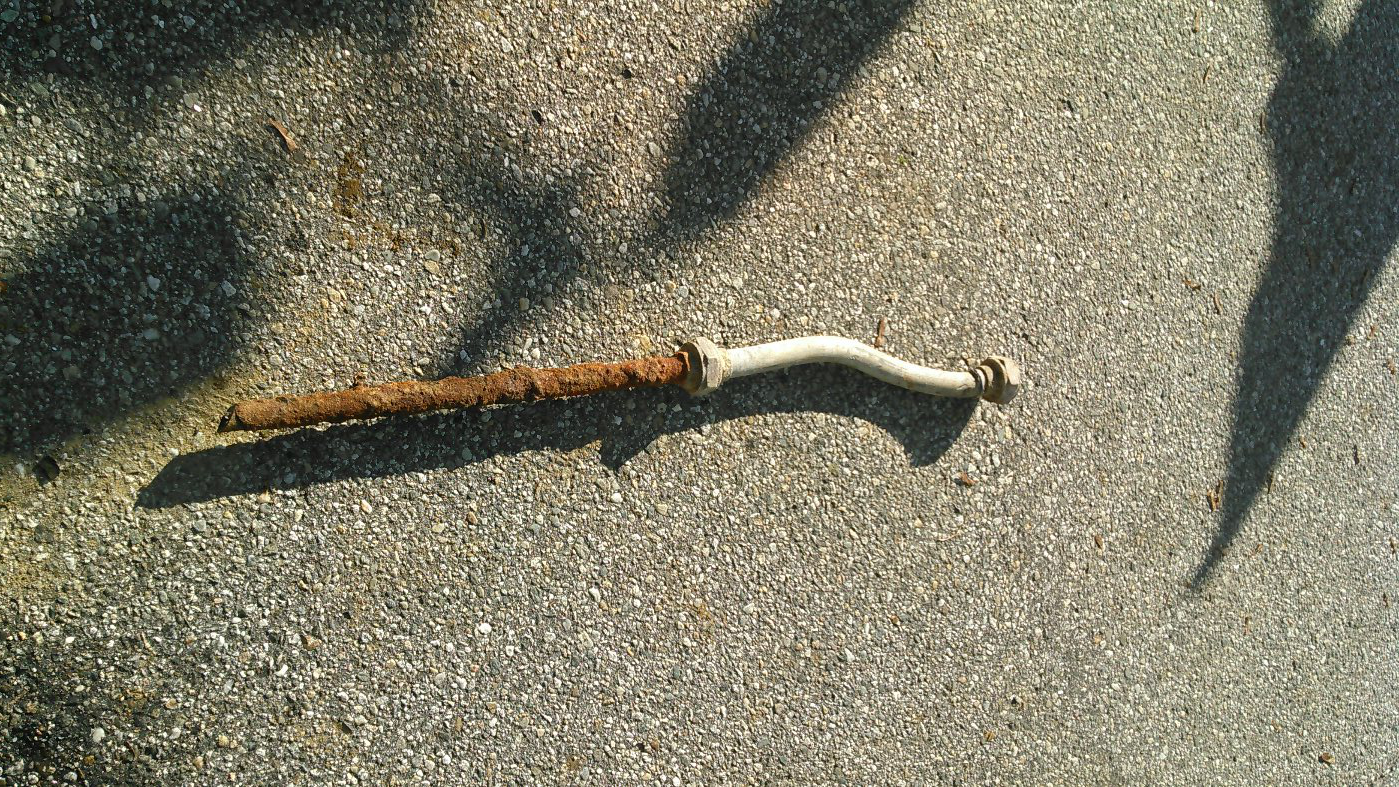
Benton Harbor, Michigan, had inspected 99 percent of its water service lines and replaced those found to be lead or galvanized with copper by 2 November 2022, on a job that Michigan’s baseline drinking water rule gives communities 20 years to finish.
That comes from a Michigan Department of Health and Human Services (MDHHS) announcement dated 2 November 2022, which said nearly 4,500 water service lines had been replaced or verified non-lead, and described the campaign as “reaching completion five months ahead of schedule, on budget and at no cost to residents”.
The clock started on 14 October 2021, when Governor Gretchen Whitmer signed an executive directive on Benton Harbor’s water and the state announced “the goal of replacing 100% of lead service lines in Benton Harbor in 18 months”, according to the governor’s office.
Michigan strengthened its Lead and Copper Rule in 2018, the Michigan Department of Environment, Great Lakes, and Energy (EGLE) says. The rule requires communities to replace “an average of 5% of their total lead service lines each year, meaning 100% replacement in 20 years”. A community with an action level exceedance must replace 7 percent a year, or 100 percent in just under 15 years, the governor’s office said. EGLE puts the trigger as an exceedance after optimal corrosion control treatment is installed, and runs the higher rate until samples are below the action level for two consecutive monitoring periods. An exceedance means a 90th percentile lead value above 15 parts per billion, EGLE said in a December 2023 post.
The 20 year pace was not the only clock here. EGLE says it proactively ordered Benton Harbor to remove 7 percent of its lead service lines over a 12 month period that began on 1 July 2021, months before the governor set the 18 month goal, though the agency notes the rule “technically does not yet require” that rate of the city.
So what turned two decades of allowed time into 99 percent of the lines in a little over a year?
Benton Harbor’s samples had been failing the lead test since 2018, Bridge Michigan reported on 14 October 2021, and local officials had planned to stay on a 20 year timeline for removing the city’s lead pipes. They said they could not move faster because the city lacked the funding. Mayor Marcus Muhammad told Bridge that dozens of pipes had been replaced out of thousands that likely needed to go.
Benton Harbor launched its latest round of lead service line replacements during the week of 8 November 2021, EGLE’s program page says. A 27 April 2022 state update said the Building Michigan Together Plan, signed by Whitmer “late last month”, directs $45 million to the city for infrastructure including all of its lead water service lines. The digging started months before that plan was signed, and the figure matches the $45 million American Rescue Plan Act allocation on EGLE’s funding page, though no record here ties the two together.
The same page lists a $10 million state General Fund allocation in the fiscal year 2022 budget, a $5,557,000 grant from the US Environmental Protection Agency (EPA) and $3 million from the Drinking Water State Revolving Fund for lead line replacement.
The Federal Reserve Bank of Chicago, in a case page dated May 2022, puts the project scope at 4,438 lead service lines, a count the page dates to 19 May 2022, with cost at “$33.2 million, about $7,500 per line”. The page says total costs “are expected to reach” that figure. That 4,438 counts lead service lines to be replaced, while the state’s nearly 4,500 covers lines replaced or verified non-lead.
By that late April update, 33 percent of the city’s lead service lines had been replaced with copper, the state’s MI Lead Safe site said, with crews averaging 18 replacements a day. The state put that pace down to improving weather and added staffing, with the sixth and final contractor just started.
On 25 May 2022 MDHHS said more than half the city’s lead lines had been replaced or verified lead-free, with six contractors running 15 crews and crews still averaging 18 replacements a day. By 20 September 2022, with more than 90 percent of lines inspected and replaced or verified non-lead, crews were averaging six line excavations a day. The September count was of excavations, not replacements.
EGLE credits the way the work was bought. Benton Harbor, with multiple state departments, created a request for proposals that let several contractors work in defined areas of the city at the same time, which the agency says “expedited lead service line removal and was key in achieving the goal” of replacing all lead and galvanized lines in less than 18 months. A 2018 state law requires the water system to pay for the owner’s side of the line once the owner consents, the Chicago Fed notes.
Consent still had to be collected property by property. In February 2022 the city adopted an ordinance requiring replacement while asking owners for permission to enter, with fines of up to $500 for noncompliance, the Chicago Fed says. By 2 November 2022, nearly 2,800 Right of Access forms had been completed by the city’s 2,900 current water customers, MDHHS said, a count of forms rather than of pipes.
The last known lead service line in the city was replaced in May 2023, EGLE said in December 2023. On 8 June 2023 the EPA terminated its Safe Drinking Water Act order to Benton Harbor, saying all terms of the order “have been satisfactorily completed” and that “100% of the lead service lines in the city have been replaced”.
Lead at the tap rose, then fell sharply. Since the first exceedance in 2018, the city’s 90th percentile values have run, in order, 22, 27, 32, 23, 24, 24, 15, 14, 9, 1 and 1 parts per billion, the same EGLE post said.
I think the timeline is the finding here. The baseline rule allowed 20 years and the city’s initial plan assumed 20 years, but 99 percent of the lines were inspected and dealt with in a little over a year, which makes a slow schedule elsewhere look more like a choice than a limit.
What the public record does not settle is how much of that work was digging. The nearly 4,500 figure covers lines replaced and lines verified as non-lead, and the split has not been published.
“Ahead of schedule” depends on the yardstick. At 99 percent the city was five months inside the 18 month goal, by MDHHS’s count, and EGLE put the expedited timeline at more than 10 times faster than the law required of Benton Harbor. Measured against the March 2023 date in the governor’s goal, the last known lead line came out about two months late.
The cost figures look forward too. EGLE’s funding page, a pre-bid snapshot that said updated estimates were due in early 2022, put the preliminary total at $30 million and, at that pre-bid stage, an estimated $11.4 million gap to close. MDHHS said in November 2022 that the work was on budget, but none of these records publishes a reconciled final cost, so $7,500 a line rests on a projection.
Sources:
- Michigan Department of Health and Human Services, “City of Benton Harbor lead service line replacement effort reaching completion”, 2 November 2022. https://www.michigan.gov/mdhhs/inside-mdhhs/newsroom/2022/11/02/bh-lines
- Office of Governor Gretchen Whitmer, “Gov. Whitmer Signs Directive to Coordinate All Available State Resources to Deliver Safe Drinking Water to Residents in Benton Harbor”, 14 October 2021. https://www.michigan.gov/whitmer/news/press-releases/2021/10/14/gov–whitmer-signs-directive-to-coordinate-all-available-state-resources-to-deliver-safe-drinking-w
- Kelly House, “Michigan announces 18-month goal to remove Benton Harbor lead water lines”, Bridge Michigan, 14 October 2021. https://bridgemi.com/michigan-environment-watch/michigan-announces-18-month-goal-remove-benton-harbor-lead-water-lines/
- Michigan EGLE, “Benton Harbor: lead service line replacement” (archived program page). https://www.michigan.gov/egle/about/organization/drinking-water-and-environmental-health/community-water-supply/supplies/benton-harbor/lsl-replacement
- Michigan EGLE, “Benton Harbor: funding and investments” (archived program page). https://www.michigan.gov/egle/about/organization/drinking-water-and-environmental-health/community-water-supply/supplies/benton-harbor/funding-investments
- Federal Reserve Bank of Chicago, “Benton Harbor, MI: New law enables centralized funding”, Example Programs, May 2022. https://www.chicagofed.org/research/content-areas/lead/benton-harbor-mi
- MI Lead Safe, “33% of City of Benton Harbor lead service lines replaced”, 27 April 2022. https://www.michigan.gov/mileadsafe/community-response/benton-harbor/news/2022/04/27/33-percent-of-city-of-benton-harbor-lead-service-lines-replaced
- Michigan Department of Health and Human Services, “Over 50% of City of Benton Harbor lead service lines replaced”, 25 May 2022. https://www.michigan.gov/mdhhs/inside-mdhhs/newsroom/2022/05/25/pipe-update
- Michigan Department of Health and Human Services, “Over 90% of City of Benton Harbor lead service lines replaced”, 20 September 2022. https://www.michigan.gov/mdhhs/inside-mdhhs/newsroom/2022/09/20/90-percent
- Michigan EGLE, “Benton Harbor marks second year of meeting state and federal lead standards”, 6 December 2023. https://www.michigan.gov/egle/newsroom/mi-environment/2023/12/06/benton-harbor-marks-second-year-of-meeting-state-and-federal-lead-standards
- US Environmental Protection Agency, “Benton Harbor, Michigan Meets Requirements of EPA Order to Improve Drinking Water Safety”, 8 June 2023. https://www.epa.gov/newsreleases/benton-harbor-michigan-meets-requirements-epa-order-improve-drinking-water-safety
Spot an error in this article? Email [email protected]