

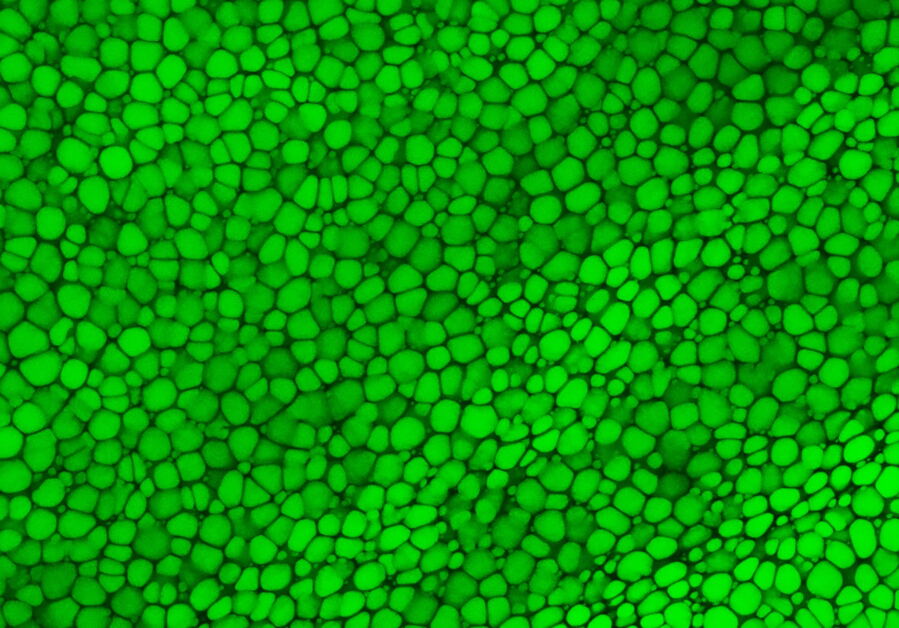
Scientists have rediscovered and characterized a remarkable type of body tissue that works much like biological bubble wrap, potentially revolutionizing how we approach facial reconstruction and tissue engineering. The tissue, dubbed “lipocartilage,” maintains its shape and springiness through fat-filled cells that act like nature’s version of packaging bubbles.
The groundbreaking research, published today in Science, resurrects and validates an observation first made in 1854 but largely forgotten until now. The discovery could transform treatments for facial injuries and birth defects.
Nature’s Bubble Wrap
“Lipocartilage’s resilience and stability provide a compliant, elastic quality that’s perfect for flexible body parts such as earlobes or the tip of the nose,” explains Maksim Plikus, professor of developmental and cell biology at the University of California, Irvine and the study’s corresponding author.
The story begins with Dr. Franz Leydig, who first noticed fat droplets in rat ear cartilage in 1854. Using modern technology, researchers have now fully characterized these specialized cells, called lipochondrocytes, revealing their unique properties and potential medical applications.
Unlike regular fat cells that expand and shrink based on diet, lipochondrocytes maintain remarkably stable sizes regardless of food availability. The research team discovered that these cells produce their own fat through a specialized process and lack the enzymes needed to break down their fatty contents, effectively “locking in” their size and shape.
Promising Medical Applications
“Currently, cartilage reconstruction often requires harvesting tissue from the patient’s rib – a painful and invasive procedure,” Plikus notes. “In the future, patient-specific lipochondrocytes could be derived from stem cells, purified and used to manufacture living cartilage tailored to individual needs. With the help of 3D printing, these engineered tissues could be shaped to fit precisely, offering new solutions for treating birth defects, trauma and various cartilage diseases.”
The research revealed fascinating variations across species. In bats, for instance, these cells form intricate patterns in their oversized ears, potentially enhancing their echolocation abilities by helping to modulate sound waves.
“The discovery of the unique lipid biology of lipocartilage challenges long-standing assumptions in biomechanics and opens doors to countless research opportunities,” says Raul Ramos, lead author and postdoctoral researcher at UC Irvine. He explains that future research will explore how these cells maintain their stability over time and the mechanisms behind cellular aging.
The international study brought together researchers from eight countries, including the United States, Australia, Belarus, Denmark, Germany, Japan, South Korea, and Singapore, demonstrating the global significance of this discovery.
Implications for Regenerative Medicine
When the researchers removed lipids from the tissue, it became stiff and brittle, highlighting how crucial these fat-filled cells are for maintaining the tissue’s unique combination of durability and flexibility. This finding could lead to new approaches in tissue engineering and regenerative medicine.
The research was published in Science and received support from multiple organizations including the W.M. Keck Foundation, National Institutes of Health, and National Science Foundation, among others.
