The rule was that nobody sits up. Not to eat, not to wash, not to use the toilet, not once, for sixty days.
Twenty-four healthy volunteers agreed to exactly that in 2019, on beds tilted six degrees head-down at the German Aerospace Center’s :envihab facility in Cologne. Six degrees is barely visible from across a room and it does the whole job. Fluid that gravity normally drags towards the feet drifts back up into the chest and skull, which is why astronauts in orbit have puffy faces and thin legs. A shoulder had to stay in contact with the mattress at all times, meals were eaten lying on one side, and student assistants watched a monitor to make sure nobody cheated. A physiotherapist came round every second day to stretch muscles that were not being used. Staff prepared more than 24,000 vials for blood samples across the project and ran roughly 650 hours of experiments on the first twelve participants alone.
Compensation for the full 89-day stay came to 16,500 euros, or about 19,000 US dollars, a figure that got the project considerably more coverage in NBC News and elsewhere than any of its results.
Then everyone stood up, and the measuring began.
What two months flat does to a calf
Plantar flexion is the push that lifts a heel off the floor. That is the calf’s main job, alongside holding a standing body upright without its owner ever thinking about it. In a randomised controlled trial published in the European Journal of Applied Physiology, Andreas Kramer of the University of Konstanz and colleagues studied the eight control-group volunteers, the ones simply left to lie there. They came off the bed with 48 per cent less maximum calf strength than they had arrived with. Their rate of force development, meaning how quickly they could reach even that reduced peak, was down 40 per cent. Maximal oxygen uptake fell by roughly a quarter across every group.
Why half an hour of spinning bought something
Sixteen of the volunteers were not left alone. Each day they were wheeled into a centrifuge with a 3.8 metre arm and spun feet-outwards for thirty minutes, either continuously or in six five-minute bursts, hard enough to press one g through the centre of the body and about two g through the soles. Both spun groups finished with calf losses of 31 to 35 per cent rather than 48. Neither protected aerobic fitness at all.
The likely explanation is unglamorous. In a companion paper in Frontiers in Physiology, the same team logged what bodies were actually doing while they spun. Oxygen consumption never rose above resting levels. The muscle doing most of the quiet work was the calf, because participants had been told to squeeze their leg muscles to keep from fainting. So the centrifuge protected the one muscle group it accidentally exercised. Eight people per group is a small trial, and that is one result rather than a settled body of evidence.
The muscles that barely noticed
Plenty of tissue came through fine. Dorsiflexion, the pull that lifts the toes towards the shin, lost about 3 per cent. Trunk flexor strength, on the abdominal side, did not change significantly at all. Trunk extension, the muscles along the spine that stop someone doubling over at the waist, dropped by more than 20 per cent. A pattern runs through all of it: what wasted away was whatever had been resisting gravity for a living.
One result deserved more attention than it got. Pooled across all three groups, the eight women lost more than the sixteen men: 41 per cent of knee extension strength against the men’s 29 per cent, and 39 per cent of jumping power against their 22 per cent. Kramer’s team is cautious about it, since pooling groups to reach eight women is thin ground and older bed rest studies were run almost entirely on men. Crews heading for Mars will not be.
The countermeasure that already works
A few years earlier, at the same facility, Kramer’s group ran a bed rest study published in Scientific Reports in which the countermeasure was jumping. Half the volunteers did short, hard bouts of hops and countermovement jumps on a sledge rig while lying down, and half did not. After sixty days flat, the jumpers showed no significant change in bone mineral content, leg lean mass, leg strength or peak oxygen uptake, while the non-jumping controls lost up to 40 per cent in knee extensor torque and 29 per cent of peak oxygen uptake. A few minutes of jumping a day outperformed the whole centrifuge.
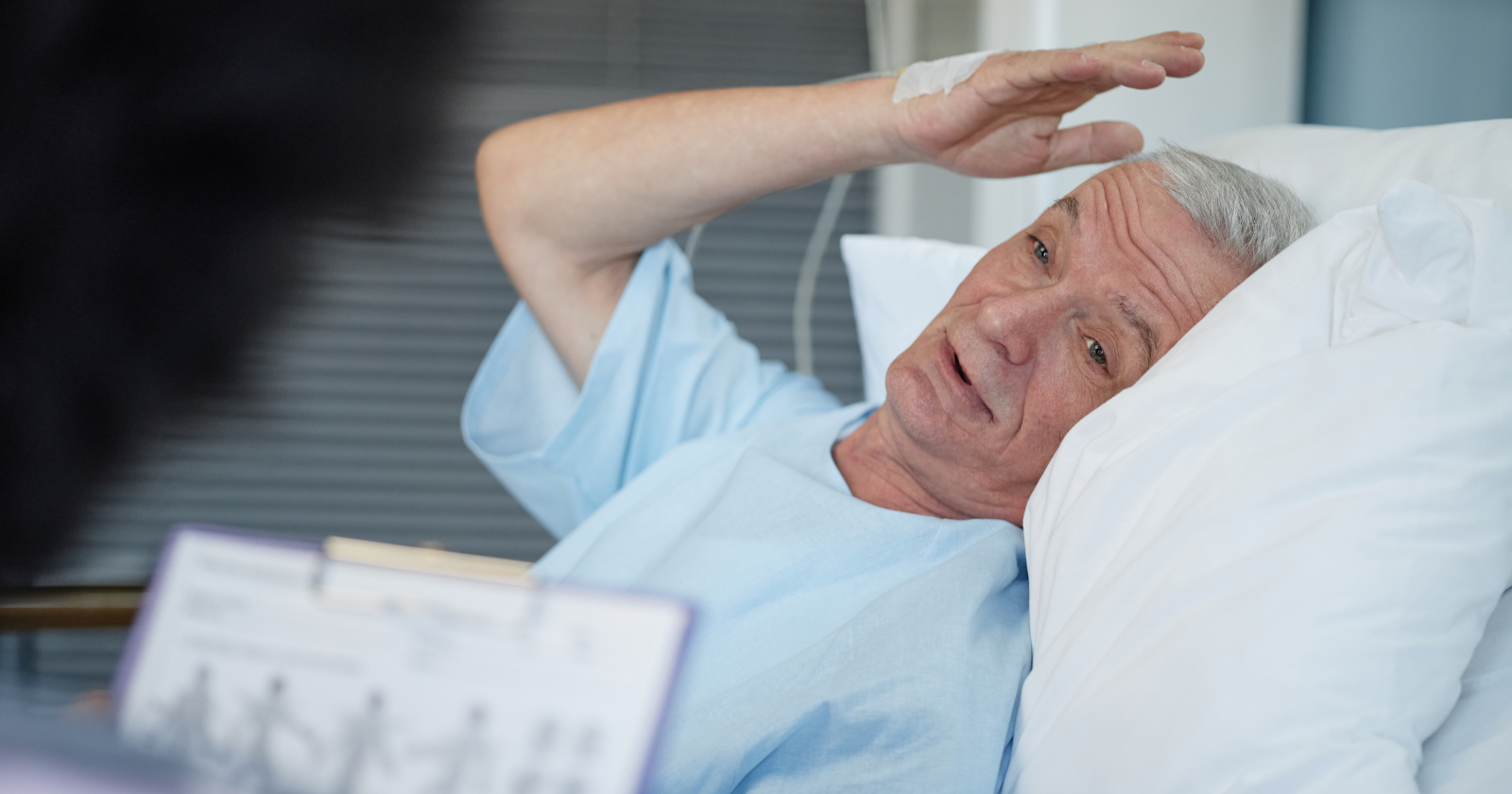
None of which is only an astronaut problem. A Frontiers in Nutrition systematic review pooled decades of bed rest experiments and found leg muscle loss tracking with time spent horizontal, and worse in older adults. That describes, fairly precisely, an elderly patient parked in a hospital bed for a fortnight with nobody being paid 19,000 dollars to notice.