

Thank you, readers, for a lively dialog that has developed at the bottom of this page over the last few weeks, touching on some subjects that I have written about and many that I haven’t written about. I will take this space to respond to some of what you’ve written about. Some of my favorite topics include exercise, epigenetics, NSAIDs, and the gut microbiome. Reports of whole-body rejuvenation with the four “Yakanaka factors” is especially promising. I’m grateful to Dr Paul Rivas for many of the ideas that I’ve expanded on here.
Aspirin, Ibuprofen, Naproxen
Background: COX2 inhibitors were found to reduce pain and inflammation of arthritis, but most COX2 inhibitors also inhibit COX1. It is the COX1 inhibition that led to stomach damage and ulcer risk. So in the 1990s, the pharma industry set out to find drugs that would inhibit COX2 without inhibiting COX1. Only later, it came to light that these drugs elevated risk of heart disease, though they lowered the risk of cancer. (Merck knew of the dangers of Vioxx before anyone else, but kept the stats under their hat as long as they could.) The worst offender, Vioxx=rofecoxib was taken off the market. Only after CV statistics made the problem clear, researchers were led to ask, Why? The problem is endemic. Turns out that COX2 plays a role in maintenance of arterial health, and generally the NSAIDs increase heart risk to the extent that they inhibit COX2. It turned out that Vioxx was dangerous because it did too well exactly what it was designed to do.
This story hangs together until we consider aspirin. Aspirin inhibits both COX1 and COX2, and yet the preponderance of studies appear to show aspirin is associated with reduced CV risk [ref, ref]. This suggests there is a piece of the metabolic puzzle that is still missing. Aspirin has many mechanisms of action, some of them unique to aspirin.
My advice, longstanding, has been to take ¼ to 1 whole aspirin or ibuprofen a day (not both; not to be mixed in the same week) after about age 50 for lowered inflammation and protection from heart disease and cancer. Evidence for protective effect of aspirin has weakened a bit in recent years, but is still holding up [2016]. For patients who have already had a heart attack, aspirin remains standard protocol, and evidence for this population is strongest.
Readers pointed to this study [2017], which reports elevated risk of heart attack for people taking ibuprofen or naproxen. The dosages they are looking at are several times higher than the daily dosage used for prevention alone.
All the NSAIDs have powerful effects in reducing cancer risk. Glossing over the different numbers for different kinds of cancer with different NSAIDs in different studies, it’s a good rule of thumb that taking low-dose NSAIDs daily cuts cancer risk in half. [ref]
Effects on cardiovascular risk are more complicated. I have been unable to find direct comparisons of aspirin vs ibuprofen and others, but there is “circumstantial” evidence in the literature that aspirin slightly decreases CV risk, while all the others slightly increase risk. Different studies rank the NSAIDs differently. There is suspicion of the “coxib” drugs which many people find work well for arthritis, but the latest studies show this seems to be unfounded. This study [2016] finds Celecoxib (Celebrex) is safer than either ibuprofen or naproxen (Alleve), and results in both lower CV risk and lower all-cause mortality.
There may be other reasons to prefer one or another NSAID. There are benefits for joint pain and stiffness; there are risks for gastric pain and ulcers. It’s an individual choice, and I encourage you to experiment on yourself. You can alternate different NSAIDs, but it’s best to do so week-by-week or month-by-month, rather than daily. Don’t take aspirin and other NSAIDs in the same week.
Does too much exercise cause areterial calcification?
Readers pointed to this study [2017] from Mayo Clinic, in which young adults were followed for 25 years, and those who exercised most hours per week had elevated calcification of their arteries. Calcification, in turn, is correlated with higher risk of heart disease.
There are several reasons I’m not turning on a dime to change my advice about exercise (which has always been, “the more, the better”).
- It’s a new finding. The study is still in preprint form, and cites no precedent.
- It’s based on just 268 subjects.
- The people in the high-exercise/high-calcification group did the equivalent of 7 or more hours of jogging each week. But the study didn’t separate recreational from occupational exercise. Social class is a really big factor, and it may be that all we’re seeing is that working class people have more CV symptoms than the upper middle class.
- The fact that exercise is correlated with calcification and calcification is correlated with increased heart risk does not necessarily imply that exercise is correlated with heart risk. This is such a common mistake. (A correlated with B) and (B correlated with C) does not let you conclude that A is correlated with C. In fact, the paper explicitly cites precedent that people who exercise most have lowest CV risk [ref, ref].
- So many benefits of exercise for so many aspects of health have been documented over the years that exercise is one of the solidest pillars of any health and longevity program.
The Copenhagen City Heart Study gave me more pause. They found that joggers who ran at a moderate pace 2-3 hours per week had longest lifespans. The benefit was about 6 years of life (a big number compared to every other life extension strategy that’s been studied, with the exception of caloric restriction). But runners who worked longer and harder than this lost the benefit and, in fact, died early. There is support for this thesis in other articles as well [ref, ref]. But there are also studies claiming that there is only a law of diminishing returns, and no amount or intensity of exercise that is actually bad for longevity [ref, ref].
I have not figured out the reason that different studies come to different conclusions, but here is what they agree on:
- Exercise has a strong benefit for life expectancy, health, mood and productivity.
- For low intensity exercise (yoga, walking, hiking, low-speed cycling, low-speed swimming) there is no evidence that too much can hurt you.
- If there is a threshold above which exercise can increase cardiovascular risk and shorten life expectancy, it is only for intense exercise and long duration, typical of a marathon runner.
My guess (based on disagreement among experts) is that there are individuals for whom a great deal of high intensity exercise is beneficial, and there are others who damage their cardiovascular systems by pushing too far. Doctors may be able to tell you if you have a heart condition that makes exercise hazardous. My hope (based on personal experience with yoga) is that we might develop a sensitivity to our bodies, so that we can distinguish the pain of damage from the pain and resistance that always accompanies a strenuous workout.
IP6 is a new supplement for me
I’m grateful to Dr Paul Rivas whose comment in this blog led me to read a little about it. Inositol hexaphosphate (IP6) is a bio-available form of Inositol, which is in the B-vitamin family. It has a major benefit for certain kinds of anxiety and depression, and minor benefits for blood sugar, insulin sensitivity, and cancer prevention.
Extraordinary story of radiation hormesis
A reader referred us to this story in a comment last week.
It would be unethical to intentionally expose people, unknowing, to ionizing radiation. But in Taiwan 35 years ago, construction steel was accidentally contaminated with Cobalt 60. The Health Safety Society recommends that 50 millisieverts (mSv) is the maximum safe radiation dosage. But 1700 people in apartments buildings in Taibei were exposed to this much radiation year after year for a period of 9-20 years until the contamination was discovered and they were evacuated. These people were studied for adverse possible health effects, but the result was that they had dramatically lower rates of cancer and birth defects.
Hormesis is a word for Improved health and longevity in response to challenges such as low doses of toxins, radiation, heat, cold exercise and fasting.
Cancer as atavism
Dr Green has outlined a theory that cancer [his comment] is a state of unconstrained cell growth characteristic of free-living cells half a billion years ago, before there was multicellular life.
First part of theory is cancer is normal growth from prior to 500,000 million years ago, prior to Cambian period. That was before plants and before oxygen rich atmosphere; life was fermentation, unlimited telomerase, no aging, cells were immortal.
This was new to me. Cyanobacteria have been around for 2.5 billion years, with the capacity to turn CO2 into O2. But apparently it was not until 800-600 million years ago that the oxygen in the atmosphere approached present levels.
Of more practical interest is Dr Green’s idea that it is epigenetics and not genetics that makes a cancer cell. If this is true, then an entire anti-cancer industry based on the idea of mutations being the root cause of cancer is misguided.
Yamanaka Factors Used for Rejuvenation
I missed this article when it came out almost a year ago. The “Yamanaka factors” (abbreviated OSKM) are four chemicals which, when applied together, can turn an ordinary differentiated cell (a skin cell, for example) back into the stem cell from which it came. Pluripotent stem cells replenish all the cell needs in the body. The offspring of a stem cell can be any kind of cell, hence “pluripotent”. Up until ten years ago, it was thought that this was a one-way street, and that the process of differentiation was irreversible. Then the Kyoto laboratory of Shinya Yamanaka reported success in “de-differentiating” cells by adding just four chemicals, initials O, S, K and M. In other words, these four chemicals turn a regular skin or muscle or organ cell back into the stem cell from whence it came.
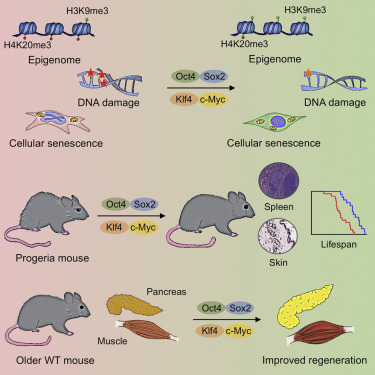
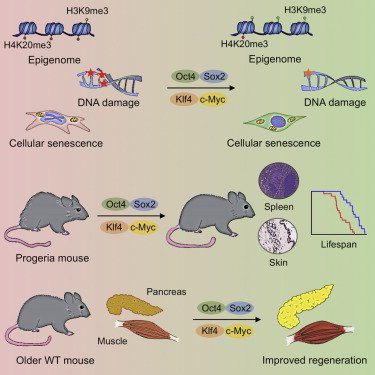
De-differentiation rejuvenates the cell, including lengthening of telomeres. But can the rejuvenation be done without the de-differentiation? That’s the subject of a Cell paper by Ocampo et al. They report success in rejuvenating cells in a living mouse, without changing them back into stem cells. They do this via intermittent doses of the same four Yamanaka factors. The shorter duration (2-4 days) has the effect of epigenetically reprogramming cells to their younger state, without destroying their differentiated identity.
For several years, I have have been attracted to the idea that aging is essentially an evolved epigenetic program. The holy grail would be to take cells that are programmed to be old and epigenetically reprogram them to be young. The hitch in this plan is that to do this directly requires changing methylation at millions of separate sites, in addition to re-programming dozens of other kinds of epigenetic markers (besides methylation), some of which are just being discovered. These sites are specific to cell type, introducing further complexity. We have neither the knowledge of where all these sites are, and only rudimenteray ability to alter them with CRISPR and allied techniques.
These results raise the exciting possibility that epigenetic changes supersede/precede other aging hallmarks in the physiological aging process, as well, and may thus constitute a key target for future rejuvenation strategies. – Anne Brunet & Salah Mahmoudi
The finding last year by Ocampo et al offers the possibility that we don’t have to do any of this, that just four chemicals will instruct the body to do it all for us. Watch closely—this may be the pathway to whole-body rejuvenation that so many researchers have been groping toward.
What about damage to the cells? The good news is that epigenetically rejuvenated cells seem to be able to repair their damage better than we might do it with artificial interventions. Somatic DNA mutations were repaired. Mitochondria were returned to a younger appearance and performance.
Provisos and qualifications:
- Lifespan increase has been demonstrated in genetically short-lived mice. For normal lab mice, they report physiological markers of rejuvenation, but didn’t wait to see if the mice would live longer.
- How do you get OSKM into the mice (or the humans)? In this experiment, extra copies of the four factors were inserted into the mouse genome before birth in such a way that they were normally turned off, except in the presence of the antibiotic doxycycline. This provided a convenient way to turn OSKM on and off at will, with injections of doxycycline.
- In the genetically short-lived mice, the rejuvenation is temporary, only lasting 8 days before progeria asserts itself again. We don’t yet know whether rejuvenation in normal mice will be short- or long-acting.
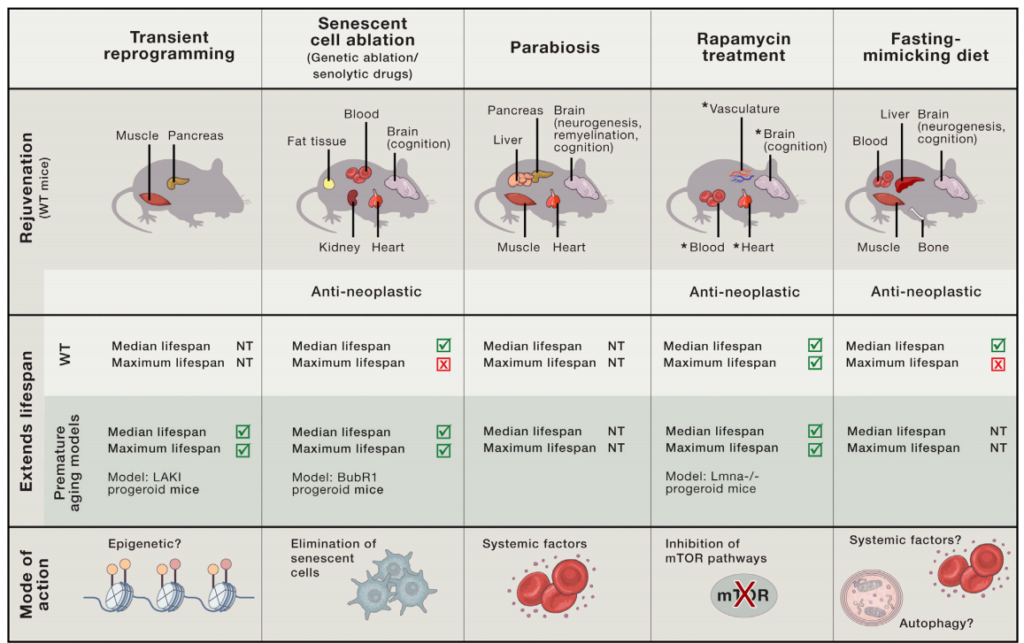
Brunet and Mahmoudi end by suggesting that induction of the four factors could be combined with removal of senescent cells, speculating that major life extension could result from synergy between the two. (They also note that getting the four factors into cells of a living human being is a challenge we don’t yet know how to approach.)
News from the world of telomerase activation
Thanks again to Dr Rivas for this article demonstrating that ashwagandha is a potent telomerase activator. This article adds to the evidence that cells with the shortest telomeres are the problem, and average telomere length is less important.
Gut Microbiome
Once again it is Dr Rivas pointing us to this article. Stool samples from 1,000 “extremely healthy” people of all ages were analyzed for RNA sequences associated with intestinal bacteria. Their principal finding was that the composition of the bacteria depended more on health than on age. There were major differences through childhood, and for people in their 20s, the bacterial colony was in a class by itself. But after age 30, up through age 100, bacterial ecology of all the healthy individuals tended to look alike.
A recent consensus says that we lose gut diversity with age, possibly as an adaptation, but more likely with negative consequences for health.
Tocotrienols
These are variants of vitamin E. They differ from vitamin E (tocopherol) in the same way that unsaturated fats differ from saturated fats. They are more reactive, more easily manipulated by the body. The normal varieyty of vitamin E (alpha tocopherol) does not have lifespan benefits, and may be a net negative. Gamma tocopherol may be better, or it may be that we need a mixture of tocopherols in combination. The only human studies have been done with alpha tocopherol, and when you buy “vitamin E pills” that’s what you’re getting.
Early research suggests that tocotrienols protect against cancer and reduce inflammation. The body treats them differently from vitamin E, and they have separate activity. Tocotrienols occur naturally in foods including palm oil, wheat germ, and rice bran. You can buy supplements of mixed tocotrienols, or gamma tocotrienol, or mixed tocotrienols with tocopherols.
Inheriting Telomere Length
Unsurprisingly, telomere length at birth is inherited from parents, and is assumed to be correlated to lifespan. Surpringly, a baby’s telomere length is inherited more from the father than from the mother. More surprisingly, older fathers sire children with longer telomeres (though their own telomeres are, presumably, shorter).
Low-Dose Naltrexone
Naltrexone is a 35-year-old drug used to block opioid receptors and help people breaking addictions. Soon afterward, Dr Bernard Birhari discovered naltrexone in low doses as a treatment for auto-immune disorders (allergies, lupus) and as an anti-inflammatory. There has been some success with LDN as a cancer treatment. Take LDN at bedtime, as it blocks pleasure receptors. The theory is that blocking receptors during sleep increases the release of endorphins during the day. There is anecdotal evidence for LDN as treatment for depression, PTSD, anxiety and sexual dysfunction. LDN hasn’t been approved or tested for any of these uses, but informal experimentation off-label is gathering a critical mass. Advocacy site for LDN.
Thanks to all of you reading this column, and thanks especially for the intelligent and informative conversation that has grown up underneath this blog. I hope you’ll please keep the ideas coming!
Discussion
303 reader comments
Imported threads are marked Archive. New comments are welcome and moderated for spam.
Some facts pertaining to Aspirin and Ibuprofen:
Aspirin:
It seems that a low dose of Aspirin in the range of 50 - 81 mg or even as low as 30 mg has the same anti-blodd-clotting effects as a normal to high dose of 300 - 1200 mg.
1) https://books.google.de/books?id=GnIQGmiSylkC&pg=PA1108&lpg=PA1108&dq=aspirin+75mg&source=bl&ots=iXpVbhuZQ7&sig=m1sJvOT_tDJzHXcony2F9MATen0&hl=de&sa=X&ved=0ahUKEwi01cuq_bDQAhVKDsAKHRMOAYY4ChDoAQhzMAM#v=onepage&q=aspirin%2075mg&f=false
2) https://www.ncbi.nlm.nih.gov/pubmed/4082090
3) https://www.ncbi.nlm.nih.gov/pubmed/10870801
Coated aspirin (protect) does NOT have the same effect as uncoated but is weaker
http://stroke.ahajournals.org/content/37/8/2153
Aspirin can help to reduce blood-pressure, but this effect only occurs when taken in the evening
http://www.docguide.com/administration-time-dependent-effects-aspirin-blood-pressure-untreated-hypertensive-patients
By the way, this time-dependent effect of drugs is commonplace and seems to occur basically with all drugs.
There are opinions that glycine uptake influences the precipitation rate of aspirin.
https://www.thieme-connect.com/products/ejournals/abstract/10.1055/s-2005-870853
Translation:
"Salicylic acids are coupled to glycine by peptides and as salicyluric acid renally eliminated. The precipitation rate ( rate at which a substance is removed from the body) at higher concentrations of aspirin is dependent on the amount of available glycine. One can suppose, that the uptake of glycine helps to lower the concentration of aspirin. Comparing examinations about effects and side effects should therefore orient themselves on the blood concentration and not the dosis uptake."
As a side note:
This article claims that aspirin can even help women getting pregnant
http://www.mirror.co.uk/lifestyle/health/daily-aspirin-can-help-women-6672104
But this itself is not a study, but only a news article, so taken with care.
Ibuprofen:
Ibuprofen seems to have a slightly different set of attributes:
Anti- inflammatory ( like aspirin)
Pro- cardiovascular disease ( unlike aspirin)
https://www.ncbi.nlm.nih.gov/pubmed/24256349
a special pro-longevity effect (propietary)
https://www.ncbi.nlm.nih.gov/pmc/articles/PMC4270464/
So this effect seems to be based on to the inhibition of tryptophan uptake.
Combined uptake of aspirin and Ibuprofen:
Combined uptake of Ibuprofen is possible, but tricky and only sucessfull if done under a strict set of rules.
1) https://www.pharmazeutische-zeitung.de/index.php?id=pharm4_28_2004
2) https://ptaforum.pharmazeutische-zeitung.de/index.php?id=434
Google translate might be your friend here.
Summary:
1. One has to take the aspirin first.
2. the aspirin should NOT be of the coated ( protect) kind.
3. one has to wait at least 30 minutes after that before taking the ibuprofen, but also not longer than 2 hours.
4. the ibuprofen has to be weak, best not more than 200mg, even less is better.
5. only one ibuprofen per day allowed.
Under this circumstances can one reap the benefits of both NSAIDs. Discipline is mandatory, though.
Hi Mark
Your comments on fat deposits are pretty original. Concerning body fat, 90% of fat is subcutaneous, 10% is visceral. Visceral fat acts as an endocrine organ and gives off the very inflammatory cytokines, they also produce precursors to angiotensin ( another aging pathway), and lastly they produce retinal-binding proteins which increase insulin resistance (RBP4). They are developing a blood test for rbp4 it's so linked to visceral fat.
As you suggest, subcutaneous fat is a different animal and produces both leptin and adiponectin to control appetite and reduce body fat.
So you're on the right track. It is true that we lose " baby fat" as we age. Do you have any theories about it ?
My best guess is failure of adipose stem cells to differentiate as they should. I am not sure why this happens so much earlier than in stem cells elsewhere in the body, but maybe it is because oxidation stress is much higher in the skin that elsewhere.
This is definitely a feature of aging. Just look at anyone in their 40s. Even if they take very good care of themselves you can tell they're not 25. This is the main reason.
Hence plastic surgeons and juvederm injections
This is an interesting field, i believe that subcutaneous fat is very important. If we approach this from an Aesthetic point, what we see is that in older people their faces starts to change dramatically, this is mostly because of the loss of subcutaneous fat, and less with loss of elastin/collagen = wrinkles. offcoruse the two are interconnected. This is also why PRP and fat grafting is getting so much attention in skin rejuvenation atm.
I believe the one major reason for subcutaneous fat loss is because of loss of angiogenesis, the fat simply does not get the needed blood an nutrition. This is a two-way street, i believe that angiogenesis is good in some settings and really bad in others. (ex. cancer).
There is an animal study that suggest that PRP could be used to recover stem cells from senescence:
"Delayed animal aging through the recovery of stem cell senescence by platelet rich plasma"
There also is a lot of data on how rich subcutaneous fat is in stem cells.
to tie this to rapamycin, there is studies conducted with a rapamycin 1% topical formulation to inhibit the regrowth of telangiectasia in vivo (mouse and man) after laser treatment, rapamycin proved to be very effective at this, it is normally a pretty hard task. This makes me believe that rapa is a potent anti-angiogenesis agent.
Mark you asked earlier about the implications of using rapamycin before old age, again if we look at it from an Aesthetic point of view what we see in old age is the enlargement of nose, ears and hands, i believe this to be mainly driven by mTOR (and to some extent: HGH, IGF, Insulin), these changes is not something that happens overnight but is changes that occur over many years of increased mTOR, i believe that this increase/negative effect of mTOR begins already when you are fully grown, late 20’s early 30’s and at somepoint later in life really goes haywire.
Just my current conviction though.
Very interesting comment that old age enlargement nose, ears, hands due to increased activity MTOR, HCH, IGF.
I am just speculating here Paul, but i see it as highly plausible.
I actually like some aspects of Hgh not the synthetic kind (partly because of different actions but mostly because of halflife)
synthetic Hgh is around for way too long, it is this increased/sustained (over time) signaling from hgh to the liver that releases an abundance of IGF-1 not something that we want.
What we want is hgh to bind to its receptor, start its signaling cascade and vanish, not stay around too long and cause all kinds of havoc.
The way to do this is using a combination of:
GHRP/GHRH in 50mg/50mg or 100mg/100mg doses to stimulate the hypothalamus and pituitary to secrete gh. This should be done at nighttime, to simulate the natural release of the hormone. (in men, in women its different).
The preferred relasing agent (GHRP) is ipamorelin because it does not raise cortisol nor prolactin.
Currently i see the benefits of natrual released hgh (low dose, quick Metabolised) far outweighing the negatives.
The positives of hgh are well established.
Realease pattern of rHGH vs GHRP/GHRH:
This should not be done when rapamycin is most active in the system but should also be used in a intermittent manner.
The graph:
http://www.peptidequestions.com/wordpress/wp-content/uploads/2013/11/graph_daily.jpg
I feel that restoring subcutaneous fat to youthful levels is possible.
As for the other aesthetic or should I say, unaesthetic changes such as ear and nose growth due to protracted MTOR (and related hormones) activation, even rapamycin treatment will not reverse this, so the only option I can think of is surgery. So if we all live to 150, we'll likely need to go under the knife at some point if we want to look young!
Hi Brand
You offer some interesting ideas. It is certainly becoming clear that a certain degree of mitochondrial stress is important and Mark is right that both metformin and berberine will do it, but they both have some associated negatives, but metformin at 250-500 a day seems ok. I wonder if a24hour fast with low dose metformin and exercise represents too much of a mitochondrial stress, or maybe just right, I suppose no one knows the sweet spot.
As far as C60 as a potent antioxidant, Mark has tried it, I have not, but I did do a self experiment 2 years ago. You are familiar of course with viagra which is a phosphodiesterase inhibitor and thus raises nitric oxide endothelial levels. This increase can also boost exercise endurance. So I took a pretty hefty dose and exercised with it, but then it always gave nasal congestion, headache, and flushing which I tried to eliminate with various high dose antioxidants. None of them worked at any dose except for one. Sangre de Drago is the highest rated antioxidant of any, with a sky high ORAC rating, and is literally blood red. In two minutes all of the nitric oxide effects completely vanished. It never failed.
Now Iget the same beneficial effects from pine bark extract 200mg a day without the side effects, but Dragon's Blood was impressive stuff.
About the nose growth, the same holds with earlobes, and even though I like your theories, I think the simple answer is gravity.
On Nitric Oxide and Antioxidants the effect you describe is somewhat strange. I thought anti oxidants increased NO production? That said if Viagra is causing inflammation in addition to the NO effect then it is that the anti-oxidants are addressing.
I notice that many people use Sangre de Drago on wounds. I've used C60 in olive oil for this purpose and it works very well.
When you say the Pine Bark gives you the same effect, do you mean the benefits of increase nitric oxide (but presumably without the headaches)?
Your brilliant self experimentation has got me thinking Paul.
I love doing those sort of experiments, I've learnt a lot simply by playing around with cycling supplements or even simple dietary changes. Many of my discoveries have been accidental.
For example I have always suffered with hayfever and animal hair allergy which necessitated taking antihistamines. These gradually lose potency I have found. I took a 23andme test and found my body is particularly bad at using B6 (I inherited the less functional form of the gene from both parents). So I started supplementing it last summer. Low and behold I found my hayfever much improved and my animal hair allergy almost gone. I then looked into it and found B6 is required in processing histamine. How cool is that? I've made a number of discoveries like that, which have improved my life and health.
Hi Mark
NO is a potential antioxidant, but it also acts as an oxidant , particularly in indirect reactions with oxygen or superoxide anion.
I love the B6 idea, my allergies drive me crazy and I avoid all antihistamines due to their anticholinergic effects which are linked to Alzheimer's.
Thymosin β4 reduces senescence of endothelial progenitor cells via the PI3K/Akt/eNOS signal transduction pathway.
https://www.ncbi.nlm.nih.gov/pubmed/23151623
worth a look
interesting molecule, studien it further does however lead me to believe its anti aging purposes are, limited. Could be useful in a healing setting though.
This one will interest people into C60 oil:
Fullerenes as Anti-Aging Antioxidants
http://www.eurekaselect.com/145681/article
Mark suggests that much of its benefits may be from the rather potent antioxidant effect. The abstract seems to support this. Was that the bottom line?
Can't get access to this unfortunately, but from the abstract they seem to be focusing on the mitochondrial uncoupling mechanism. Basically the C60 molecule transports protons within the mitochondria so lowering the membrane potential and decreasing ROS (and therefore aging). This seems to explain the recovery benefits users have noticed with exercise.
I'm not sure if this can explain the lifespan benefits of the Baati study, however. There might also be a permanent anti-inflammatory effect, due to accumulation in the spleen, as shown by the same study.
Richard Morimoto spoke today about his new study out of Northwestern:
Mitochondrial stress enhances resilience, protects aging cells and delays risk for disease. Cell Reports. Nov7
Using C elegant they screened 22000 genes and identified the mitochondrial electron transport chain as a central regulator of age related decline. They found that signals from mildly stressed mitochondria prevent the failure of proteostasis in the cell that comes with age.
"This has not been seen before. People have always known that prolonged mitochondrial stress can be deleterious, but we discovered that when you stress mitochondria just a little, the mitochondrial stress signal is interpreted by the cell as a survival strategy. It makes the animals completely stress resistant and doubles their lifespan. It's like magic."
Yes Paul, you catched the gist form the abstract.
That is a very interesting study you just posed, do you think metformins interference with mitochondrial complex 1 woud fall into the category of "mild stess"?
Metformin and Berberine both interfere with the electron transport chain, which then triggers AMPK. It is difficult to say how much of their resulting benefit is due to increased mitophagy (the stress part) or MTOR inhibition. I suspect it's both but have never seen this proven.
Josh mentioned in his latest post that NSAID's reduce cancer risk and that Celebrex may be the safest. Carlos has referred on several occasions to his studies on digoxin as cancer preventative.
A new study today in Nature Biomedical Engineering (Backman) used partial wave spectroscopic microscopy to look at chromatin in cancer cells. This revealed that a more heterogeneous and disordered chromatin packing density was related to greater cancer cell survival whereas a more ordered packing density lead to greater cell death with chemo.
They then combined digoxin with Celebrex, which they referred to as chromatin protection therapeutics, and these drugs restructured the chromatin so that every single cancer cell died because they could not respond to the chemo.
This worked in all cancers that they tried it on. Very promising.
Yes indeed. Good share Paul.
On your last post you wrote about another cardiac glycoside, Proscillaridin A, which must be in the same class of drugs as digoxin, and would probably do the same thing.
There seems to be a consistent pattern here with both cancer and aging - that a therapeutic is making the cells respond in a certain way, which makes them resistant to the changes induced by aging or cancer. That this mechanisms would be via epigenetics makes total sense.
For example, in vitro immortalized cells gradually gain methylation, but this primarily occurs on inactive gene sites. If the area of the genome is in use then it is maintained and far more resistant to methylation and deactivation. It takes many population doublings (>100) before active sites start to get methylated (in vitro). This can explain why exercise, calorie restriction and certain supplements work - by forcing an certain cellular response that is resistance to drift.
I wrote a short article based on a recent paper by Leo Zacharski, in which he calculated that a normal ferritin, that is, one that is not associated with any form of ill health, is no more than 100. http://roguehealthandfitness.com/the-normal-value-iron-matters/
Hi P.D Magnan,
Thanks for pointing out your article. I was not aware of Zacharski study. I will read both your article and Zacharski paper with interest.
Hi P.D.
Ferritin looks like could be useful marker for both response to treatment and screen test for risk of disease.
Will consider adding ferritin to regime.
Thanks
Thanks for chiming in with that article. As usual we fail to measure the important things like insulin, IGF, and ferritin
hi aldebaran
My ferritin level was 88 at last checked. I want it as low as I can get it without having iron deficiency anemia. My Hct is 48 with a normal MCH and MCHC. As long as those are ok then you're fine , though some include a TIBC which I find redundant to the ferritin level which I feel is best. If you're over 200 donate blood and start IP6.
Hi Paul,
Mine was around 140 last time I checked so it is lower than 200. The hypothesis that ASA is beneficial because of associated blood loss is certainly interesting and merits further investigation. However, I have not been able to find any evidence that ferritin lower than 100 is beneficial. I have only found evidence that ferritin above 200 is detrimental. Do you have more data?
I will start on IP6 regardless of ferritin level, as you have rightly pointed out that there is evidence for cancer prevention.
Thanks
Sorry Paul what is Hct?
Got it hematocrit! Mine is low so no issue on that part.
Sorry. I need to be clearer and avoid the medical jargon
Hi Aldebaran
Are you going to start donating blood now?
Hi Paul,
Ferritin is elevated due to disease, obesity, chronic inflammation, cancer, liver disease.,alcoholism Lots of things unrelated to iron. So agree low fetritin reassuring; but high fetritin, should see Internist.
Glad to see GHK enter the discussion. I tried to post about it a day or two ago but none of my attempted posts show up. Not sure which 'rule of engagement' I keep breaking (?)
Telomere Plus from enzymedica has been subjectively good for me. Cheaper not to buy it from their website (around 20 sterling from amazon). As for scientific evidence read this paper, 'Identification_of_Telomerase-activating_Blends_From_Naturally_Occurring_Compounds'.
Although this study was paid for by the manufacturers for the cell type they looked at the results seem impressive. And the natural substances used all have decent bioavailability, unlike cycloastranagol.
As Alan says we'll have to wait for a safe viral vector and gene therapy to have telomeres extended significantly, but we might not need to wait for FDA approval. Just look at Bioviva's website. These guys look like they are setting up clinics as we speak, the price will presumably start very high and then come down to more realistic levels.
I'll check it out. I guess ideally you should get a full blown telomere analysis at baseline and then keep repeating it to see if the pills are having an effect.
On that note, too bad we can't directly measure mTOR levels somehow.
We do know that telomerase activators elongate telomeres but do we know if they impact life span of animal models? In her 2012 paper Blasco was saying:
"Telomerase activators have been reported (de Jesus et al, 2011; Fauce et al, 2008; Harley et al, 2011), however, their mechanism of action is still poorly understood. Instead, we turned into a TERT-based gene therapy strategy to extend longevity, to our knowledge unprecedented in the context of aging studies. "
I think telomerase activators only gave a healthspan increase in mice, whereas the gene therapy increased mean and max lifespan.
Cycloastranagol has a terrible bioavailability (although better in mice than in humans). In any case it clearly isn't strong enough to give the effect we're looking for.
Comments from Micheal Fossel about BioViva:
http://www.michaelfossel.com/blog/?p=139
"For another thing, Liz knew that our biotech firm, Telocyte, intends to do almost the same thing, but with a few crucial differences: we will only be using telomerase (hTERT) and we intend to pursue human trials that have FDA clearance, have full IRB agreement, and meet GMP (“Good Medical Production”) standards."
Incidentally, BioViva has in its pipeline several other potential therapies (than telomerase). I am wondering if they have the funds to really explore all of these. Part of it could be marketing but I really don't know.
It is hard to say, but Liz is an excellent speaker and is always on the road, so I wouldn't be surprised if they get the funds together to open some clinics. We should know in a year if this is going to happen.
Looking at Blackburn 2017 book; no commercial endorsements.
In regard section on testing she lists no companies and adds as caveat unregulated business.
Didn't find her name linked to any commercial enterprise.
Everything in book to maintain telomeres is free.
So looks to me like unlike very many others, Blackburn retains her scientist standing and is a very credible expert.
Liz is definitely a good speaker and I hope she will get the funding she needs. However, I don't like too much idea of creating a clinic offshore without the proper trials.
Given the number of parameters that improved in mice in the Blasco study, (BMD, insulin, memory, ...), it looks feasible to me (although certainly expensive) to establish the same improvements in humans in a relatively short time (3-5 years). That could give them a lot more credibility.
FDA approval could be more complicated because they need to target one disease in particular though, and they would probably need to focus on a very serious disease to justify gene therapy.
I think Liz's argument is that the FDA route is flawed because it 1) Takes too long whilst patients are dying now, 2) Still results in many withdrawn drugs, 3) Is too expensive to pursue for all but the biggest Pharma companies, AND 4) Results in very expensive treatments (to recoup those costs).
She is calling for a more risk balanced approach. Best of all she is honest that there are risks, and has put her own life on the line with the first treatment.
Hi Aldebaran,
Fascinating stuff, off shore treatments, gene treatments.
So I looked BioViva and first picture I saw was Aubrey De Grey. Since to me De Grey and that whole crew are nut cases; count me out.
Hi Mark,
I understand her point that the FDA route is flawed but BioViva does not have to go through FDA approval to validate its technology. They just need to fund independent placebo-control studies. I think it is unavoidable at some point for BioViva's credibility. In any case, I hope she'll succeed.
Hi Alan,
I know that Aubrey has not a lot of credibility in your mind but don't you think that the technology itself, as demonstrated by Blasco in several mice studies, is really promising?
Well the FDA has started to approve gene therapies now, although only for specific maladies, not aging itself, which might be a bit of a leap for them. That another reason why Michael Fossel is going the FDA route with this therapy for Alzheimer's. Liz is going the other way, off shore - less credible, but faster and cheaper. It will be interesting to see which approach will be more successful. If Liz gets some success with undeniable results (like an obviously rejuvenated person according to many biomarkers), then the game will change and it might even be curtains for the FDA.
Yes we need a defence against quackery as you put it, but the current system cannot remain in place. The regulatory burden has resulted in a vested interest system when only multi-billion dollar companies can even consider investing in a new treatment, and would only do so if the returns look good enough. Such companies are actually opposed to any in kind of rejuvenation of aged people, because it would reduce the health care burden, and hence their profits. The whole system needs shaking up and re-baselining, with a sensible risk of treatment vs. risk of delaying treatment approach. That is not to say I think there should be no regulation. The problem is, what government agency, whose job is to regulate, would willing regulate less? We shall see, but if they do nothing and refuse to change we do risk a off shore free-for-all.
1 more reply
I am of course very interested in telomere extension therapies, but the question remains, will this restore a healthy 'young' phenotype by itself?
Michael Fossel and Bioviva argue that it may well do that. But if senescence is not reversible and SC's are not cleared, how will a healthy non inflammatory phenotype be restored?
If the main cause of cell sen. in humans is telomere attrition we may need some form of telomere restoration therapy, but perhaps, once it has occurred, only an effective senolytic can 'turn' the clock back by clearing SC's (which just itself may cause as much cell senescence is the existing tissue has to replicate to make up for the loss).
All the super positive info about telemerase comes from people in business of selling stock in their telemetry companies.
One big infomercial.
Like to see any credible evidence from someone who doesn't have huge financial interest into putting out BS.
The work with mice from Blasco looks very promising, so this is not just hype.
I am not sure if telomere elongation on its own can rescue senescence cells, although it has been done in progeria afflicted cells. I suspect it can. Perhaps also a rejuvenated immune system would increase the natural clearance post treatment. And if this is not sufficient perhaps a synergistic pairing would be senolytic clearance followed by telomerase therapy; as you say this might be necessary anyway as one will need to replace the removed senescent cells.
Hi Mark,
As I have an anti-aging medical practice with Rapamycin as cornerstone of treatment; I would be most delighted to be able to add an injection therapy which was approved by FDA.
I will believe when I see it and not before.
furthermore Tam-818 used to be only found in skin creams but i think they recently made a sublingual spray with it in. But i am just curious, what the heck is this molecule, and how does it work?
Looks like strength training shouldn't be ignored. A very recent study out of Sydney looked at 80000 people and found that twice a week strength training of any sort reduced all cause mortality by23% and cancer deaths by 31%,while aerobic training had more of an effect on heart disease.
Journal of Epidemiology 2017 Stomatakis et. al.
Maria Blasco has a PHD in molecular biology and is the director of The Cancer Research Center in Spain. It was primarily reading her work that convinced me to take TA 65for 3 years, and now a group of other telomerase activators. My real concern was that it may convert an insolent cancer into a more aggressive form, but she put those fears to rest. I'm never certain why Elizabeth Blackburn and others just sort of ignore her findings. She's totally legit.
Hi Paul,
Just regarding price, availability and status of telemere related products and saying nothing about merits, my understanding is as follows:
TA-65, $600 month, 250 units, food supp
Other drugs that Mark has been talking about:
Not on market, will require FDA approval, phase 2 human trials not yet begun; probable time to market, over 5 years, probable cost, high.
Are there any other natural supp cost @ $25 a month
Replied below.
Hi Alan
There have always been several knocks on TA 65, jusitfied or not. One is cost. They blame that on the cost of extraction.
The other is efficacy in people. It seems to work somewhat in mice ( Blasco) but not like rapamycin, Also there have been actual human studies showing elongation of the critically short telomeres.
The main knock is regarding safety and cancer risk mainly because scientists like Blackburn and DelPinho keep saying it, and have from the beginning. Even Vince, a very early and ardent proponent stopped it over those concerns. Do they know something? I doubt it.
Totally agree, her work is brilliant. I guess Blackburn prefers science to stay theoretical and never actually benefit anyone.
I like Elizabeth Blackburn. After winning a Nobel prize she remained a scientist. She could have made millions becoming a pitchman. So I like scientists. I have nothing against entreupeneurs. However, I Have great suspicion of scientist turned businessman. I also believe ZERO of what businessman says about their product.
So unless somebody with no financial ties to company verifies data; to me have nothing.
I still remember how all CEOs in cigarette industry said...
And business people haven't gotten any more honest in fifty years.
So I believe Elizabeth Blackburn.
Well she helped found the company Telome Health Inc. where test kits were sold for about $200. Not totally pure
Some very interesting thoughts Brand.
It is my impression that lessening the population of senescent cells through TOR inhibition is good for all cell populations, including stem cells, but if you're right that would certainly be a point against rapamycin. But I don't think so.
Great ideas about IF vs. CR. We know that with chronic low energy intake that the body responds with an equal degree of decreased energy expenditure, in other words a drop in metabolic rate , which does not occur with IF.
Also IF leads to a pronounced decrease in PCSK-9 which dramatically lowers LDL cholesterol and is the mechanism of the new monoclonal antibodies to prevent heart attacks. IF is safer and cheaper than the new drugs, and even more effective.
I agree with the limits of BA with resveratrol. I think pterostilbene is better. Great info on sulforaphane, I didn't know about the sirtuin connection. I eat broc sprouts and the freeze dried ones. Akshay likes a pill, sulforadex, but I can't find it.
Sub-q fat is bad, but not as bad as visceral fat which is in close proximity to the portal vein and this gives those nasty inflammatory chemicals a direct shot to the whole body. Also, Sumu wrestlers have enormous sub-q fat but virtually no visceral fat, so the two aren't necessarily correlated.
Good EOS story!
I'm glad that two of the avenues I'm currently investigating have just been mentioned by others - NF2 pathways and increasing subcutaneous fat! I am convinced these are pathways that will sum with both MTOR inhibition and mitophagy and i'm working on solutions to both, although the subcutaneous fat increasing option might have some risk (so I'd be curious how the Sumo wrestlers do it!)
What do you think of Brand's comment that rapamycin may have a detrimental effect on stem cells? Have you heard of that before Mark?
Hi Paul,
That is exactly what Rapamycin supposed to do.
MTOR drives growth
Rapamycin decrease stimulation to grow.
Stimulation to grow results in senescent cells.
Slow stimulation, preserve stem cells.
That is Rapamycin effect.
Hi Alan
My thinking is in line with yours but it seems like he's saying that by slowing growth one would also be impairing the growth of stem cells. I think that that is similar to the thinking that rapamycin would impair the development of the immune system until it was found, in intermittent doses, to have the opposite effect.
Yes it is unclear whether this would be good or bad in vivo. Echoing what Alan said, obviously blocking protein synthesis includes sirtuins, but it's only intermittent so would take this finding with a pinch of salt, and obviously whatever the downsides of rapamycin, it extends lifespan in everything it's been tried in.
Hi Alan
I too have had a slight decrease in WBC's after 3 months
Sumu:
High calorie diet, 5-7000/day.
Low in sugar and processed foods.
Intense exercise schedule leading to elevated adiponectin levels and insulin sensitivity.
Low cholesterol, triglycerides, and glucose levels.
Low visceral fat and ceramides ( toxic lipids)
So virtually all of their protection is secondary to their exercise regimen and adiponectins. Once they retire, it's rapidly down hill.
You'd think the big amounts of subcutaneous fat would give them some protection, but I guess without the exercise a similar calorific intake would add a lot of visceral fat.
Agreed. And we also don't know if they start eating junk.