

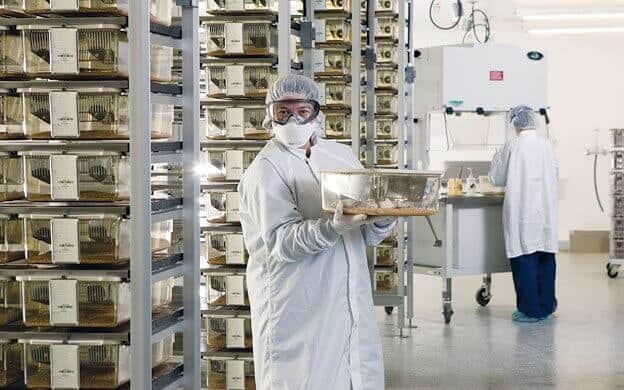
The Most Promising Way Forward for Anti-Aging Science Today
We now have many effective interventions (mostly of small effect) for longevity and preventive care. Most readers of this blog take more than one supplement each day; some of us (I confess) take very many. We make an unthinking assumption that “more is better”, or rather that if A is beneficial and B is beneficial then if we take A and B we can get the benefits of both. We don’t think to question or deconstruct this reasoning. It is rooted in a reductionism that works pretty well in the physical sciences, much less well in biology.
We know that the benefits of all these interventions don’t just add up like numbers in a spreadsheet, but we continue to act as though this were our reality.
The truth is that we know almost nothing about the cross-talk among different health interventions. The reasons so few experiments have been done are plain enough, but the situation has become untenable. There is an urgent need to understand the interactions among treatments. We might begin with those that are individually most promising, but expect surprises. The combinations that offer the greatest longevity benefits may turn out to be pieced together from components that individually have little or no effect.
I might have said ‘the most promising way forward for medical research today, because I believe that anti-aging science is the most productive area of medical research. If you are reading this page, you probably know this already, but we all take comfort in confirmation of what we already know. So:
Prevention is more cost-effective than treatment. The root cause of most disease in the developed world is aging. This point has been made decisively [for example], most eloquently by Aubrey de Grey. (The root cause of most disease in the third world is poverty, and ending poverty is also an essential imperative, but it is not a subject for medical research.)
The problem of interactions has been neglected for a number of reasons:
- Unconscious linear thinking
- The dizzying number of combinations that need to be studied
- The want of a guiding paradigm that would provide context for individual studies
- Scientific inertia: researchers are more likely to study (and funders are more likely to support) research programs that are established and proven
But the problem is potentially of great import. We expect a great deal of redundancy among the mechanisms of action of various interventions we know about. Taking two or three or four drugs that address the same biological pathway is likely to be a costly waste. More rarely, longevity drugs may interact in ways that actually interfere and reduce overall effectiveness.
But we have good reason to hope that in rare cases there are combinations that are more than the sum of their parts. These fortuitous combinations synergize to offer greater benefits than they provide separately. Finding a few such combinations would be a jackpot that justifies many, many expected null results.
The huge number of possibilities to be covered
If we begin with 30 individual interventions, there are 435 pairs of interactions and 4060 combinations of three and 27,405 combinations of four. If we think traditionally, each one of these combinations is a research program in itself, requiring at least several person-years of professional effort plus overhead. This is the daunting reality that confronts anyone who is intent on beginning to address the problem of interactions. 27,405 experiments of any kind is a labor of Hercules, even for a well-funded, fully roboticized biomedical lab.
There is a hierarchy of experimental models for studying anti-aging interventions:
- Human cell cultures are the cheapest and fastest, but we learn the least
- Complementing human cells are yeast cells, which actually have a life expectancy and some biology that overlaps our own
- Studies of thousands of C. elegans worms can be done efficiently with robotic controls and worm counters.
- Fruitflies are a great deal “more like us” than worms and they can be raised in large numbers, live just a few weeks.
- Lab rats and mice are expensive, but they are mammals with biology that is much like our own. Experiments in rodent longevity last 2 to 3 years.
- Human trials require extensive safety measures and typically take decades to see subtle changes in health and mortality statistics; but this is the most direct indication of what we want to know.
So, how might we begin?
We have no idea what we will find. Maybe there will be a few spectacular combinations. Maybe the interactions will turn out to be small, mostly negative, and boringly expected. (My guess is that both of these will turn out to be true.) We should not try to define the second stage of the program until we have results from the first.
The first step is to choose the most promising interventions to combine. A great number of drugs and supplements are known that extend lifespan in rodents and/or lower mortality in human epidemiology. Magalhaes and Kaeberlein have put together a large database of animal studies that seems to be off-line at present. Another version is live at this address. Here is a list I proposed in this column two years ago:
- Rapamycin
- Aspirin
- Metformin
- Melatonin
- Deprenyl
- ALK5 inhibitors
- Epitalon/Epithalamin
- MitoQ/SkQ
- Beta Lapachone (Pao d’Arco)
- Spermidine
- Berberine
- Dinh lang (Policias fruticosum)
- Pterostilbene/Resveratrol
- Gynostemma pentaphyllum (jiao-gu-lan)
- N-Acetyl Cysteine (NAC) / Glutathione and precursors
- Ashwagandha
- Turmeric/curcumin
- C60
- Oxytocin (not oral)
- J147 (a promising new Alzheimer’s drug)
- NR, NMN and NAD precursors
 We might add
- Polyphenols from tea
- Flavinoids from blueberries
- Angiotensin inhibitors
- NLRP3 antibodies
- Acetyl L-Carnitine
- Piracetam
- DHEA
- Statin drugs
- Cardarine / GW501516 / PPAR agonists
- Dasatinib / Quercetin
- FOXO4-DRI
- Astaxanthin
- Momordica charantia (bitter melon)
- Gotu kola / Bacopa
- Reishi mushroom
- Astragalus extracts
- Pine bark extract
- Ginseng
- Acarbose
- BHT
Interventions not in pill form include
- Exercise
- Caloric restriction
- Intermittent fasting (various schedules)
- Plasma transfusions from younger individuals
- Platelet-rich plasma
- Transplanted young thymus
- Transplanted young suprachiasmatic nucleus
How to prioritize and explore the huge number of combinations? Here are four ways we might begin to sort through the possibilities:
- Use theory: Look for biochemical mechanisms that seem complementary
- Traditional Chinese Medicine, Ayurvedic medicine and other ancient traditions suggest combinations of herbs that long experience says function together.
- Broad screens for especially potent combinations
- Statistical mining of an on-line registry of what people are taking presently
Let’s look at these one at a time.
1. Biochemical Theory
We know a few biochemical pathways that are linked to longevity. They all overlap and talk to each other. Nevertheless, we expect that treatments that address the same pathway are likely to be redundant, whereas treatments that address distinctive pathways have a better chance of synergizing. For example, insulin resistance is a robust hallmark of aging. The insulin pathway is most plastic and most accessible to intervention. Fasting and caloric restriction address the insulin pathway, as do metformin berberine, jiaogulan and bitter melon. Exercise has many benefits, some of which work through the insulin pathway.
We might continue classifying interventions that address other pathways. Here are some longevity pathways of which I am aware:
- Insulin
- mTOR
- Inflammation
- Immune senescence / thymic involution
- Epigenetic reprogramming / transcription factors
- Mitochondrial senescence
- Autophagy
- Anabolism / Catabolism imbalance
- Telomere attrition
- P53 / Apoptosis
Someone who knows more biochemistry than I do might be willing to classify the interventions I list (and others) according to these 10 pathways (and others). Here is a template in Google Sheets, which I establish as an open Wiki. http://tinyurl.com/longevity-pathways
2. Eastern and Indigenous Medical Traditions
Many useful modern medicines are derived from ancient folk wisdom. But this work has proceeded with a deductive logic, isolating active chemicals from whole plants (as aspirin from willow bark, cycloastragenol from astragalus, and curcumin from turmeric). Many folk traditions, especially Traditional Chinese Medicine, are based on not just whole herbs but combinations of herbs that have been found over the ages to work together. Ideas may be taken from these traditions to prioritize combinations for testing. For example, the best known Chinese longevity formula is Shou-wu-chi (首乌汁;), which is compounded of (list from Wikipedia):
- Root of Polygonum multiflorum (Radix Polygoni multiflori, also called fo-ti or ho shou wu) – 25%
- Root of Angelica sinensis (Chinese angelica, also called dong quai or danggui) – 25%
- Rhizome of Polygonatum sibiricum (Solomon’s Seal) – 20%
- Rhizome of Rehmannia glutinosa – 10%
- Rhizome of Ligusticum wallichii (Chinese lovage, also called Ligusticum chuanxiong) – 10%
- Root of Angelica dahurica (Dahurian Angelica, also called Angelica glabra Makino) – 7%
- Fruit of Amomum villosum (Villous Amomum, a type of cardamom) – 2%
- Clove – 1%
Other ingredients may also include: Hedychium coronarium (white ginger), Jambosa caryophy Llus Ndz, Citron (Citrus medica), and Conioselinum univittatum Turcz
The Ayurvedic tradition is less contains fewer formulas, but combinations that are said to contribute to longevity include these (which I found, just for illustration, at Banyan Botanicals)
- Haritaki (Terminalia chebula)
- Guduchi (Tinospora cordifolia)
- Amalaki (Embelica officinalis)
- Kumari (Aloe barbadensis, or aloe vera)
- Guggulu (Commiphora mukul)
- Brahmi or gotu Kola (Centella asiatia) or closely-related Bacopa
- Ashwagandha (Withania somnifera)
3. Broad screens for particularly effective combinations
Two years ago in this space, I proposed a screening protocol in which all combinations of 3 interventions from a universe of 15 would be tried on just 3 mice each. I showed with a computational model that if these included at least one lucky combination that increased longevity by more than 50%, then, despite the small number of mice, it would be identified with at least 80% confidence. Combinations of three from a universe of fifteen is a kind of sweet spot for this particular experimental design, and much less is learned if the numbers are scaled back. This means it is not feasible to test the concept on a small scale. The full proposal requires 1365 mice in cages of three, followed for at least two years. Cost estimate is about $2 million in the US or Europe, perhaps as low as $500,000 to do the same experiment in China. I would be eager to work with any lab that has the expertise and the facilities to implement this protocol. The experimental design and simulated analysis was recently published in English in a Russian journal.
4. Data-mining of an online registry where people record what supplements they are taking and commit to reporting their health history
It would be a great public service if someone were to establish a web-based registry where individuals could share information about what supplements they are taking and what results they are getting. Over years, this could turn into a data miner’s heaven for information about individual drugs and lifestyles and their interactions. The subject is too big for a controlled experiment, but enlisting the public would be a great and greatly-rewarding project.
I know there are web sites such as Longecity that are excellent resources for anecdotal accounts of others’ experiences. But the data is not in a format that lends to statistical summaries. If you know of an existing online database of this sort, please reach out and share the web address with me.
I have preliminary plans to create such a web site in conjunction with a forthcoming book project.
The Challenge
There may already be a viable plan for major life extension hiding in plain sight. There is no extant research program to explore the relationships and interactions among life extension measures. Eventually, some large, well-funded agency (perhaps NEA or the Buck Institute) will take on this project in a systematic way. But the large organizations are conservative, and are unlikely to begin until the ice is broken. Thus, even the first shards of information in this area are likely to be valuable indications of a new research direction.
If you have a research lab, or if you know are connected to someone who might be interested in this project, or if you have a funding source, please let us work together.
Discussion
152 reader comments
Imported threads are marked Archive. New comments are welcome and moderated for spam.
What are some of the dangerous interaction with Epithalon?
Here is another quote from the article, "In 2011, he and his colleagues reported that AMPK overactivation by metformin, among other compounds, in animal models impaired the ability of neurons to grow output stalks, or axons. Around the same time, separate research groups found clues that AMPK might also have a role in Alzheimer’s disease."
There is a probably a sweet spot for AMPK activation - more is not necessarily better, rather like how you wouldn't want to totally blockade mTOR, but intermittent inhibition is very beneficial.
I remember an in vitro study with ALCAR vs methylene blue, and MB was much more successful at extending the life of the culture. Strong AMPK activation was much too severe.
Neurons have many mitochondria (far more than even heart cells), and their functioning is paramount to cognition.
I wonder if you have followed up on Metformin causing Alzheimer's due to AMPK over activation and autophagy of dendrites that I mentioned to you back in August 2015. on your thread of Is Metformon an Anti Aging Drug? :Here is a quote from the Scripps News Press release, "In addition to having implications for Alzheimer’s drug discovery, Polleux noted the findings suggest the need for further safety studies on an existing drug, metformin. Metformin, a popular treatment for Type 2 Diabetes, which causes AMPK activation.
"https://www.scripps.edu/news/press/2013/20130410polleux.html
Here is the PubMed study. https://www.ncbi.nlm.nih.gov/pubmed/23583109 "The CAMKK2-AMPK kinase pathway mediates the synaptotoxic effects of Aβ oligomers through Tau phosphorylation."
If there is a link with Alzheimer I wonder if that is mediated by metformin reducing the B12 level which is quite known but can be easily compensated by supplementation and recommended. Did Polleux followed on that? The real question would be whether or not metformin, without any compensation for the induced deficiency in B12, would be causative: at least I recollect many conflicting studies on the for/against of the AMPK activation.
There was a study in 2016 which showed a 76% decrease in risk with metformin and then a study out of Taiwan in 2017 showed just the opposite. . Maybe it has to do with dose, duration, underlying diabetes, and who knows what, but this needs to be sorted out.
No not at all offended Cassia. It’s a great and very important discussion!
We all agree that inhibition of mTORC1 promotes longevity and inhibition of mTORC2 is detrimental. One of the known bad effects of mTORC2 is glucose intolerance, which could be measured. Are there any other detrimental effects we don’t know yet? We also all agree that prolonged treatment of Rapamycin inhibits mTORC2. Now what is considered prolonged use? Rapamycin advocates suggest intermittent use such as once a week is considered safe. But nobody has done any research to see whether rapamycin once a week inhibit mTORC2 or not. From the results of readers of this blog, it does seem weekly use of Rapamycin does not cause glucose intolerance. Also, the instruction sheet says half life of Rapamycin for male is longer than for female at 72 hours. So I would definitely take it once every 2 weeks to allow recovery of mTORC2 especially for people who cannot tolerate metformin.
Well we've been using the half life calculation to see the max and min doses. You could either recalculate it for 72 hours, or for a smaller dose. I'll do it for you later. I suspect so long as the min dose converges to some tolerable amount and doesn't continue to build up, you don't need to worry about MTORC2.
Hi Mark, I know how to calculate peak and trough concentration using half life. What I am trying to say is that research done on prolonged use of Rapamycin is done on cell lines. “cell lines with rapamycin-sensitive Akt/PKB phosphorylation (PC3, BJAB, Jurkat) had less intact mTORC2 following 1 hr of drug treatment and an almost complete loss of complexes by 24 hr”
Article: Prolonged treatment of Rapamycin inhibits mTORC2 assembly
and Akt/PKB.
It seems to me that we base our assumption that weekly (or intermittent) treatment week after week is not considered prolonged treatment. However on sensitive cell lines Rapamycin presence of 1-24 hours is considered prolonged treatment. Of course in vivo is very different from in vitro. We just don’t know anything in vivo, not in mice, let alone humans. I still believe Rapamycin has longevity effect. I would use it biweekly and take a month or two off yearly just to be on the safe side. Of course everyone is free to design their own regimen.
Well we don't really know much at all about mTORC2. I would hazard a guess that most of the bad effects are coming from blocking cell proliferation in tissues that need it, hence mouth sores being a good warning sign. I got skin problems when I took too much (with grapefruit juice - not a good idea). From the in vitro studies I've seen, mTORC1 seems to be knocked down very effectively within 4 hours; i don't know any cells that need to replace that quickly.
In vitro they just keep the cell in a constant solution of whatever compound they are studying, so that would be the equivalent of you never letting the rapamycin cycle out if your system. Taking breaks of weeks or a month every so often might be a good idea if you're worried.
Well we know from Alan that you can take a 6 mg dose once a week for two years now with no apparent adverse reactions. I've been on a weekly dose for 6 months and show no evidence of immune deficiency. It would show itself as stomatitis, delayed wound healing, prolonged infections or bacterial superinfections . We also know from one study on The elderly that the immune response went up by 20% on rapamycin.
So it's not apparent to me that TOR2 is being significantly inhibited.
I'm also not aware of hyperglycemia being an effect of TOR 2 inhibition. Blagosklonny makes it rather clear that it's a benign condition frequently associated with rapamycin therapy.
I'll stick with weekly until I see some evidence that it's dangerous.
Wikipedia under mTORC2:
“Loss of mTORC2/Rictor in pancreatic beta cells results in reduced beta cell mass and insulin secretion, and hyperglycemia and glucose intolerance.”
“Rapamycin-induced insulin resistance is mediated by mTORC2 loss and uncoupled from longevity”
Dudley W. Lamming etc.
Hi Cassia,
Very good points.
Best indication of inhibition mTOR2 is apthous stomatitis. In recent 1 mg/day study few people out of 12 had these mouth sores. That shows some inhibition mTOR2.
Inhibition mTOR1 and mTOR 2 not associated increased lifespan.
Note in Mannick 12/2014 study 5 mg a week rapalog less mouth sores than controls.
I don't think they showed 1 mg/daily is safe.
“Identification of a highly effective rapamycin schedule that markedly reduces the size, multiplicity, and phenotypic progression of tobacco carcinogen-induced murine lung tumors.” The multiplicity of tobacco carcinogen induced lung cancer was decreased by 90% with Rapamycin treatment in mice.
Interesting for smokers or former smokers.
Hi Cassia. That study used a daily dose of rapamycin so it did what we expect, blocked fast proliferating cancer cells via mTORC2 inhibition.
The results I cited was using every other day administration. ????
5 of 7 days I grant you, from the paper:
'Rapamycin was administered on a daily (5 of 7 days) regimen'.
That would definitely effect mTORC2.
“Comparing this regimen with an every-other-day (qod) regimen revealed that rapamycin levels were better maintained with qod administration, reaching a nadir of 16.4 ng/mL, a level relevant in humans. When begun 1 week after NNK, this regimen was well tolerated and decreased tumor multiplicity by 90%. Tumors that did develop showed decreased phenotypic progression and a 74% decrease in size that correlated with decreased proliferation and inhibition of mTOR.”
Hi Mark, Hi Paul,
I am not trying to be argumentative. I am only trying to look at things from all the safety concerns I can think of. Even though I don’t know anything about medicine, I have a M.Sc in biology and did some cell culture and some other research on drug induced diabetes in rats in my youth. Probably because my background in basic research, I sometimes get stuck with little details. I apologize if I sound aggressive or offensive.
No you're quite right Cassia, we need you to push the details so we get this right. I still think this study , which aims to maintain a certain level of rapamycin in the blood, is not applicable to our intermittent usage, especially when a low dose is used.
I would encourage everyone to read Vince Giuliano's new piece on NAD+
http://www.anti-agingfirewalls.com/2018/01/16/tales-nad-presentation-coming/
Allways a pleasure reading Vince's stuff!
Anyone played around with The NR, Resveratrol, Apigenin combo?
I was wondering if some form of rejuvanation could be obtained with Endless amounts of useable NAD+, CD38 down regulation, and sirtuin-1 activation.
Once again, bioavailability seems to be the biggest hurdle, the fact about directy sirtuin-1 downregulation with fat (not just "breaking fast" with whaterver calorie) is new to me, it sucks partially because most of our arsenal of phytochemicals are lipophilic, but maybe it does not mean much.
but there a tons of things to improve outcome, i newly discovered a tea that powerfully inhibits the enzyme that "breaks down/clear's" resveratrol. (Dandelion root tea), these "known's" are what i call gems, i have a lot of gems and i know alot of josh'es blogs readers got a lot of gems too. The thing is that the commentary field below josh's blogs post might not be the best setting to discuss these things, (pathway cross talking, quickly gets messy) and try to work together to make a very sound anti-aging protocol...
I've tried a protocol of liposomal resveratrol every 3 hours (approx half life) for approx 24 hours. I wasn't convinced that there was any good evidence for interfering with digestion enzymes, but I'm happy to review any evidence you've got and try it out on my next attempt. Resveratrol has always struck me as a great molecule in vitro, if only we could get it to do the same in the body.
I took 32 oz of liposomal resveratrol/curcumin over 24 hrs (including every 2 hrs overnight). The only result I saw was a bit of diarrhea.
For a drug with an exponential decay the steady state Peak converges to Dose/(1-x) and the trough to (Peak)(x), where x = the amount at the end of the interval divided by the amount at the beginning of the interval. The smaller the x the fewer doses it takes to reach steady state.
A Half Life Calculator on the web will give you x if you enter half life, interval, and 1 for the dose.
Example: 65 hr half life and 168 hr interval (1 week) gives x=0.166. Peak = (Dose)(1/(1-0.166)) = 1.2 Dose Trough = 0.2 Dose.
That matches the calculation (I eventually got right) for rapamycin. Main difference for resveratrol is half life is around 3 hours instead of 65 for rapamycin. So would need much more regular dosing. I did that for my dose every 3 hours with liposomal resveratrol, although the half life is likely somewhat longer because of liposomal encapsulation, but like you I didn't notice any great effects. Not sure why, but the great in vitro effects of resveratrol were seen in a dish of mostly senescent cells, something that doesnt tend to happen in even old human tissues. Who knows, maybe our senescent cell population has been rejuvenated. Would we notice?
I'm curious why Glycine didn't make the list since you seemed to be high on it in your post from a year ago.
Also, as long as we're piling on with suggestions, I will put in a plug for hemp oil AKA cannabidiol oil. I take a large mountain of stuff and hemp oil has had more of a noticeable impact than anything else as far as I can tell. It seems to have benefit for a ridiculously long list of things and there seems to be decent evidence that it benefits anti-aging pathways, particularly those related to excessive inflammation signaling.
Hi Josh,
here again in the right email many many thanks for your work. I also take
a lot of supplements and try to optimise them from week to week.
It's good to see that other people do the same.
Best wishes
Mike
Just in case, sorry if this duplicates as I am having issues with posting on this site.
@Patrick Stanley in reply. Another great post from Josh! Yes, working with LEF could be an option also to gather funding. They are in the business of selling supplements but the Foundation sponsors research. I even suggested Bill Faloon to launch a “personalized supplementation” program many years ago and include genetics. The approach of Insilico is very interesting as artificial intelligence (AI) and machine learning (ML) can guide understanding the complex and non-linear interactions of compounds to extract insight. This parallels also the critical research on finding the right aging biomarkers; in a recent Insilico paper, their ML approach in guessing, quite well it seems, the chronological age was shown to correlate also well with mortality risk, hence biological age, IMHO. There is a trend in the personalized nutrition (an area which overlaps with precision medicine when it gets to prevention) of using ML and AI to generate hypothesis and complement mechanistic understanding. Just in case, I am learning/posting a bit on Longecity on these topics.
I am experimenting with several of the molecules on Josh's list, particularly NR, NAC, Curcumin, Resveratrol, Quercetin. Also included stabilized Sulforaphane and IP6. So far I have been only on 250mg metformin. Probably the most notable results have been on inflammation biomarkers.
It's great to see so many people taking intermittent Rapamycin. In 20 years might fulfill Blagosklonny prediction of Rapamycin being standard treatment for anti-aging.
Can you say something about once-a-week vs daily?
Also about a few months per year vs continual?
Yes it is great to see that many people takes rapamycin and up to
my knowledge, nobody has reported any serious side effect so far. What we need now in my opinion is a network of doctors aware of the anti-aging benefit of rapamycin and willing to prescribe it to their patients. In addition, a follow-up human trial on rapamycin would not hurt.
How can a layman obtain Rapamycin in Canada for self-testing?
Hi Stephan,
Unfortunately, I don't know where to find a reliable source of rapamycin. I hope that in a couple of years, more doctors will be willing to prescribe it for anti-aging purpose as I think it is best to take it under medial supervision (just to be on the safe side).
Dropshipmd. com
India very reliable. Paid $1.75 mg for 300 1 mg sirolimus. Lower amounts more expensive. Wire payment only. Free 5 week shipping or upgrade. Bicon brand, largest pharm manuf India. No Rx needed
The results for the Rapa trial at University of Texas with Dr. Kellogg has been published. First human trial on healthy elderly people. Still looking for official trial results.
Were they looking at longevity?
Texas
They did 1mg a day instead of intermittent so got nothing
Thanks Van.
The paper is available but not open access:
"A randomized control trial to establish the feasibility and safety of rapamycin treatment in an older human cohort: Immunological, physical performance, and cognitive effects"
This was a short pilot study of 8 weeks, 1mg RAPA / day in the RAPA group. No serious side effects were reported. Not sure why they use daily instead of weekly rapamycin. Maybe some doctors here can comment on that.
The authors conclude:
"Thus, based on the results of our pilot study, it appears that short-term RAPA treatment can be used safely in older persons who are otherwise healthy; a larger trial with a larger samples size and longer treatment duration is warranted."
Used daily Rapamycin because never heard of Blagosklonny, not following literature and generally totally clueless.
Rapamycin dosage requires a complicated dosing strategy to reduce mTORC1; but not mTORC2. Rapamycin destabilizes mTORC1 by competition with Phosphatidic acid; but can not destabilize mTORC2 due to different Kds.
However, Rapamycin can prevent formation of nascent mTOR which will prevent new mTORC2.
Therefore, want low nadir dose before new dose. It is the nadir dose which determines inhibition of mTORC2 and side effects. Note in this 12 people had few with mouth sores.
Figure half-life @65 hours these older persons. If do the math and compare 6 mg once a week vs 1 mg daily, see not only much higher zenith dose with 6 mg; but also lower nadir dose. So with 1 mg daily get the worst of both worlds; a low zenith with small reduction mTORC1 and S6K activity combined with a high nadir dose and more inhibition mTORC2 and side-effects.
Just done the calculations based on an assumption of linear clearance from the body. 6mg/weekly converges on maximum of 9.8mg and minimum of 3.8mg.
1mg/daily converges on a maximum of 5.4mg and a minimum of 4.4mg.
Therefore per week dose of around the same (6mg vs. 7mg) gives completely different dose profile.
Also, if you took 12mg/bi-weekly you'd get a maximum of 14.9mg and a minimum of 2.9mg.
Something to think about?
For those like me who are on a low dose of 2mg/weekly, this gives a maximum of 3.3mg and a minimum of 1.3mg.
But a change to 4mg/bi-weekly (the same dose over time) would give a higher maximum of 5mg, but a reduced minimum of 1mg.
Again, something to think about. To be honest, I really don't understand enough about the mechanisms of rapamycin and MTOR to comment further on whether this would really be better.
Oh whoops, how embarrassing.
New Calculation
6mg/weekly
Max 7.2mg
Min 1.2mg
12mg/bi-weekly
Max 12.3mg
Min 0.3mg
2mg/weekly
Max 2.4mg
Min 0.4mg
4mg/bi-weekly
Max 4.1mg
Min 0.1mg
I did not access the paper.
Aldebaran wrote that it stated: “Thus, based on the results of our pilot study, it appears that short-term RAPA treatment can be used safely in older persons who are otherwise healthy; a larger trial with a larger samples size and longer treatment duration is warranted.
Was the purpose of the study only to verify a baseline of safety related to dosage and length of use, in the elderly?
Or was it anti-aging benefit?
If it was to establish safety baseline, that may be why the dosages are at odds with the intermittent anti-aging use schedule.
It was strictly to establish safety
Thank you Paul.
Angiotensin II inhibitors are interesting, especially AR1T blockers (e.g. lorsartan):
pubmed/25934099
For now, I'm just going to eat my lentils:
pubmed/24142613
Would like to read this paywalled (grr) article:
The loss of muscle mass and sarcopenia: non hormonal intervention.
pubmed/21920428
Here's another interesting article, and it's open access:
From rapalogs to anti-aging formula
PMC5482593
~~~
I'd add glucosamine and chondroitin to the list:
Use of glucosamine and chondroitin in relation to mortality.
pubmed/22828954
Proper dosing is important:
Too much glucosamine can cause the death of pancreatic cells, increase diabetes risk, researchers find
sciencedaily /2010/10/101027111349.htm
"In our experiments, we used doses five to ten times higher than that recommended by most manufacturers, or 1,500 mg/day," stressed Professor Picard. "Previous studies showed that a significant proportion of glucosamine users up the dose hoping to increase the effects," he explained.
{had to take out full links due to CleanTalk issues}
Another technique...
Plasma donation at the Red Cross.