

An Israeli study came out last week that has been described as rejuvenation via hyperbaric oxygen. I’m not taking it very seriously, and I owe you an explanation why.
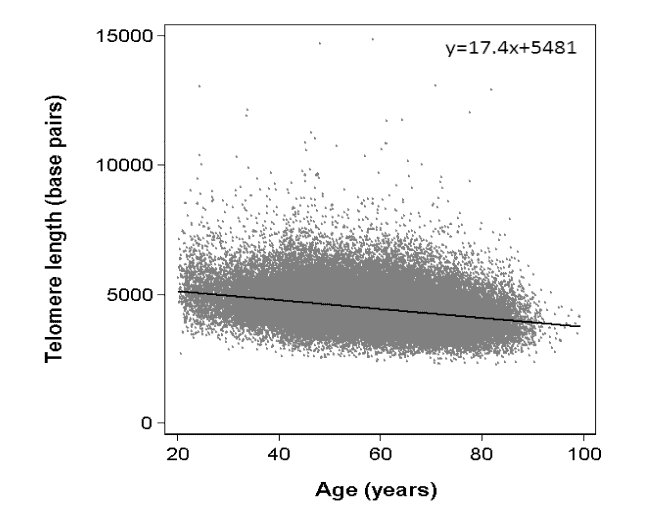
- The main claim is telomere lengthening. I used to think of telomeres as the primary means by which aging is programmed, but since the Danish telomere study [Rode 2015], I think that telomeres play a minor role.
- I think that methylation age is a far better surrogate than telomere length. The study doesn’t mention methylation age, but reading between the lines…
- I think the study’s results can be explained by elimination of senescent white blood cells. This might explain the observed increase in average telomere length, even without expression of telomerase.
- Are there signs of senolytic benefits in other tissues? That’s the big question going forward.
A study was published in the Aging (Albany) last week claiming to lengthen telomeres and eliminate senescent cells in a test group of 20 middle-aged adults using intermittent hyperbaric oxygen treatment. It was promoted as age reversal in popular articles [for example], apparently with the encouragement of Tel Aviv University.
Telomeres as a surrogate marker for aging
Several years ago, I was enthusiastic about the use of telomere length as a measure of biological age. Telomeres shorten progressively with age, and I thought this mechanism provided a good candidate for a mechanism of programmed aging. But when the Rode study came out of Copenhagen (2015), I saw that the scatter in telomere length was too large for this idea to be credible.
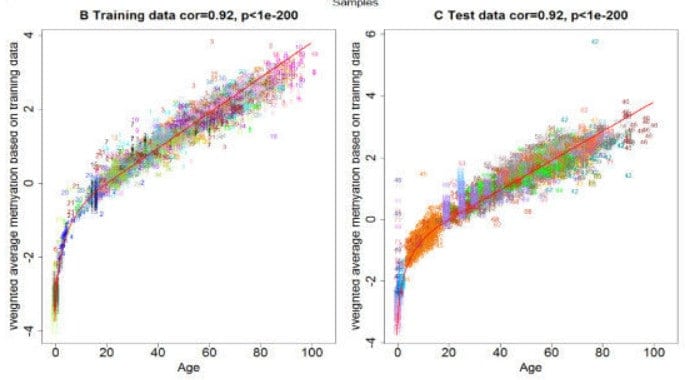
I came to think that telomere shrinkage plays a minor role in aging. Around the same time, I became enthusiastic about methylation clocks. Methylation changes with age are correlated far more strongly with less scatter.
So I think that methylation is plausible as a primary cause of aging, and telomere shrinkage, less so.
The Treatment
The air we breathe is only 21% oxygen. Breathing pure oxygen, five times as concentrated as in air, is a temporary therapy (hours at a time, but not days) for people who have impaired lungs. But prolonged exposure to pure O2 can injure the lungs and other tissues as well. Oxygen is highly reactive, and the body’s antioxidant system is gauged to the environments in which we evolved, so oxygen therapy is not to be taken lightly.
Hyperbaric Oxygen Therapy (HBOT) is oxygen at double full strength. The patient breathes pure oxygen at twice atmospheric pressure. If you just put a tube in your mouth with that much pressure, you wouldn’t be able to hold it, or to exhale. But the body can withstand high pressures as long as it’s all around, not just inside the lungs. If you SCUBA dive, at 30 feet below the surface the ambient pressure is two atmospheres, and SCUBA tanks adjust to feed air into your mouth at a pressure that is matched to the surrounding water.
(Incidentally, pressure varies a lot with altitude, so that in Denver it’s 20% lower than New York. Two years ago, I trekked in the Himalayas at 17,000 feet, where the air pressure is only half the standard (sea level) value, and of course there is only half as much oxygen.)
HBOT needs to arrange higher ambient pressure, not just in the oxygen tank. The patient has to be enclosed in a chamber where the ambient pressure is twice atmospheric pressure. Pure oxygen is expensive enough that the ambient air is just normal air at high pressure, and the patient is given oxygen to breathe from a tank. The patient can be in a pressurized room or lying in a personalized chamber.

HBOT has been around for a century, and standard medical uses are for detoxification, gangrene, and chronic infections. More recently, HBOT has been used with success for traumatic injury, especially nerve damage. There are studies in mice in which HBOT in combination with a ketogenic diet has successfully treated cancer.
In the new Israeli study, subjects received 90 minutes of HBOT therapy 5 days a week for 12 weeks. For 5 minutes of every 20, patients breathed ordinary 21% air. The intermittent treatment was described as inducing some hypoxia adaptations. Apparently, the body adjusts to the high oxygen environment, and then it senses (relative) oxygen deprivation for those 5 minutes.
How does it work?
There is no accepted theory for how HBOT works, so I feel free to speculate. The primary role of a highly oxidative environment is to destroy. That’s probably how HBOT treats infections, since bacteria are generally more vulnerable to oxidative damage than cells of our bodies. Another thing that HBOT does well is to eliminate necrotic tissue, and I wouldn’t be surprised if it turns out to be an effective cancer treatment, since tumor cells thrive in an anaerobic environment. But the body also uses ROS (reactive oxygen species) such as H2O2 as distress signals that dial up chemical protection and repair. This is akin to hormesis, and I’m inclined to think that when HBOT promotes nerve growth, it is via a distress signal.
Results
Authors of the new study make two claims: that telomeres are lengthened in several classes of white blood cells, and that senescent white blood cells are eliminated. Let’s take them in reverse order.
Elimination of senescent cells has been a promising anti-aging therapy since pioneering work of van Deursen at the Mayo Clinic. A quick refresher: telomeres get shorter each time cells replicate, and in our bodies, some of the cells that replicate most (stem cells and their offspring) develop short telomeres late in life that threaten their viability. Cells with short telomeres go into a state of senescence, in which they send out signals (inflammatory cytokines) that increase levels of inflammation in the body and can also induce senescence in adjacent cells, in a chain reaction. Senescent cells are a tiny proportion of all cells in the body, and Van Deursen showed that the body is better off without them. Just by selectively killing senescent cells in a mouse model, he was able to extend their lifespan by about ~25%. But to do the experiment, he had to genetically engineer the mice in such a way that the senescent cells would be easy to kill selectively. Ever since this study, the research community has been looking for effective senolytic agents that could kill senescent cells and leave regular cells alone (without having to genetically engineer us ahead of time).
The new Israeli study demonstrates that senescent white blood cells have been reduced. (Red blood cells have no chromosomes, so they can’t have short telomeres and can’t become senescent in the same way. They just wear out after a few months.) The effect continued after the 60 hyperbaric sessions were over, suggesting that HBOT kills the cells slowly, or damages them so that they die later. Apparently, the reduction was measured by separating different cell types and counting them. There was a great deal of scatter from one patient to the next.
The first claim is that average telomere length was increased in some populations of white cell sub-types. Again, there was a great deal of scatter in the data, with some of the subjects decreasing telomere length and others. For example, when they say that B cell telomeres increased by 22% + 40%, I interpret that to mean that the mean telomere length increased by 22%, but the combined standard deviations from the before and after measurements was 40% of the original length. Hence, a great deal of scatter.
Aside about statistics (With apologies — this from my geeky side)
First, what does that mean 22% + 40% ? How can that be statistically significant? Answer: The standard deviation of a set of measurements is a measure of the scatter. It tells you how broadly they differ from one another. If you’re looking for the average of that distribution, you can be pretty sure that the average isn’t out at the edges, so the uncertainty in the average is a lot smaller than the standard deviation. How much smaller? The answer is the square root of N rule. The “standard error of the mean”, or SEM, is the standard deviation divided by the square root of the number of points, or √N. So the 40% standard deviation gets divided by the square root of the number of subjects in the study, √26=5.1, and “22% + 40%” should really be reported as 22% + 8%. The mean is 22% and the uncertainty in that 22% is 8%.
The way this group did the statistics was based on
- Finding the average telomere length among 26 subjects after the study
- Dividing by the average telomere length among 26 subjects before the study
First they average, then they divide.
But it’s well-known (to statisticians) that the most sensitive test is to reverse the operations. First divide, then average. In other words, compare each subject’s telomeres after the study with the same subject before the study. If you do the statistics this way, then the original scatter among the different subjects all cancels out. You can start with subjects of vastly different telomere lengths, and it doesn’t matter to the statistics, so long as each one of them changes in a consistent way.
If you average first (before dividing), the scatter among the initial group imposes a penalty in statistical significance, even though that has nothing to do with effectiveness of the treatment.
So this raises the question: Why did the authors do the statistics this less-sensitive way? They hint at an answer: “repeated measures analysis shows a non-significant trend (F=4.663, p=0.06)” They seem to be saying that the test which normally gives a better p value, in this case gives a worse p value.
That can only happen if the the people who had the longest telomeres at the end of the study were not the same as the people who had the longest telomeres at the beginning.
Here’s what I think is really going on
Telomerase is the enzyme that increases telomere length. We think of telomerase as anti-aging, and supplements such as astragalus and gotu kola and silymarin are gobbled up for their telomerase activation potential. When we think of longer telomeres as a result of a study, we imagine that telomerase has been activated.
But in this case, I think that the average has gone up simply because the cells with short telomeres have been killed off. The authors are telling us that there are less senescent cells as a result of the treatment. Senescent cells are the ones with the shortest telomeres. At the beginning, the average telomere length is an average of a wide range of cells with long and short telomeres. At the end, you have the same long telomeres in the average, but the shortest ones are gone, so the average has increased.
I’m suggesting that telomerase has not been activated. There has been no elongation of telomeres, but the average length has increased because cells with the shortest telomeres have been eliminated.
It’s only a hypothesis, but it might help explain why the people who had the longest average telomere length at the beginning were not the same as the people who had the longest average telomere length at the end. The senescent cells that were being eliminated had no relationship to the telomere length in other cells.
Next steps
One thing I’d like to know is whether the HBOT treatment affected methylation age by any of the Horvath clocks. I’ve written to the authors with this question, and haven’t received a response. Maybe they did the methylation testing and didn’t report the results because they were negative—just a guess.
But even without reprogramming methylation, the therapy can be valuable if it is eliminating senescent cells generally, and not just in white blood cells. An easy first test would be whether inflammatory cytokines in the blood decreased after the treatment. Confirmation would come from the kind of test van Deursen did, assaying senescent cells in different tissues.
If hyperbaric oxygen can be shown to decrease methylation age, that would be a promising finding. If not, but the treatment has general senolytic effects (not just in white blood cells), it may yet have value as an anti-aging treatment. Maybe the authors already know the answers to these questions; if not, they should be busy finding out.
Discussion
42 reader comments
Imported threads are marked Archive. New comments are welcome and moderated for spam.
79 year old guy here; took telomere supplement and HBO. Telomeres dropped about 5 years after 2 years and now--4 years later---last test shows mine are the length of 48 year old guy.
Clearly the 2 together make things happen.
lw
Since the Isreali results were published, I have been looking for potential explanations and crosschecks. This article ticked both boxes and was easy to follow for someone without higher studies in medicine or biology. Thanks!
Telomere length simply looks like expiry date for cells. Even in absence of any external assaults, cells are bound to degenerate with time by doing what they're supposed to do. So it's natural for evolution to have learned to discard them and replace with brand new cells from stem cells. I think that's exactly what happens. Senescence is malfunction of this program. Increasing telomeres artificially will just extend the life of epigenetically and chronologically old somatic cells. That's opposite of rejuvenation, IMO. If at all telomeres need to be lengthened, that's for stem cells, but they already do express telomerase themselves when they divide. All in all, telomeres deserve our least attention as compared to reversing epigenetic aging and other focus areas such as signalling molecules.
Japanese freedivers Ama practice diving till age 85 and look younger. Probably, variations of Oxygen partial pressure may result in higher ROS production and death of the senescent cells as they are hyperactive in production of proteins and ROS. So, reduction of senescent cells IN BLOOD can be a sign that such variations of Oxygen work.
Josh,
What are currently the leading therapies that might have an impact on lifespan/healthspan? It seems that you have come down on the plasma withdrawal (old particles, proteins or toxins?) and/or replacement (with proteins?), the so-called "parabiosis", as the most promising. I tend to also believe that donating blood could be similar, but perhaps lower level, yet still meaningfully healthy. What other way would, or could, we reduce [CpG] methylation?
Thanks.
It's that simple!
Oxygen activates telomere elongation. And the lengthening of telomeres in senescent cells reduces their number. So there are not two key effects, but one.
Good points there Josh. I too don't think telomere length is as important for life-extension as I used to and not as important as many people think it is, particularly not average telomere length. There is one thing that must be considered with respect to telomeres that you did not touch on.
The Copenhagen (2015) study you referred to does indeed show a wide variation in telomere lengths and yes the scatter is too large to find much of a meaning in the numbers. I agree with you there. But note that it is a scatter of the average telomere length. The distribution of telomere length may be even more important than the average length since telomere shortage isn't really a problem until their length is close to critically short. Average telomere length may not give a good measure of how high of a percentage of a persons telomeres are critically short. Individual A could have twice the average telomere length of individual B but if the variation in telomere length is much smaller in individual B then he might have half the number of critically short telomeres, which is what matters more. The Israelian HBOT therapy study also unfortunately used average telomere length as a measure so we do not know whether there was a decrease in the percentage of cells with critically short telomeres or not. If there was then I would consider that potentially beneficial, but again we have the issue you mentioned on the potential removal of senescent cells increasing the average length of the telomeres.
Nice analysis, Josh.
I'm also highly skeptical of this study, but I have an alternate explanation: observation bias.
First, there was no control group and the study group was highly aware that it was being monitored. Without randomization of assignment to control/treatment groups, then observation bias becomes a confounder.
Here's a nice explanation of observation bias taken from:
https://www.medschool.umaryland.edu/media/SOM/Departments/Anesthesiology/Resources/Faculty-Development-/Bias,-Confounding,-and-Interaction-Lions-and-Tigers,-and-Bears-Oh-My.pdf
"Observational Bias
First described by Landsberger in 1961, the Hawthorne effect is a specific form of observational bias in which the mere awareness of being under observation can alter the way in which a person behaves. The Hawthorne effect is a form of reactivity in which study subjects may improve or modify their behavior, which is being experimentally measured, in response to their knowing that they are being observed, not in response to a specific experimental intervention."
https://scienceblog.com/wp-content/uploads/sites/2/2015/04/Telomere-length-vs-age1.png
Nobody below about 3,000.
All dead I presume.
There is a more direct, specific connection between hyperbaric oxygen treatment (HBOT) and Vince Giuliano’s (and Steve Buss’s) YOUNGING blog posts on the Anti-Aging Firewalls site. They do not discuss oxygen in the context of telomere length, but Vince and Steve mention “exercise with oxygen” (known as EWOT) as an intervention that may be anti-aging, and they note that Steve has been practicing this for years and reaping health benefits from it. EWOT is obviously different from HBOT, but the physiological effects of EWOT supposedly overlap with the effects of HBOT. I have no idea if this is true (I am not a scientist or physician), but proponents of this practice cite the original 1980s research out of Germany (by a scientist named Manfred von Ardenne) as verifying a plethora of health benefits including reduced inflammation and improved microvascular function. There are tons of anecdotal accounts of EWOT benefits, but many of these come from physicians and chiropractors selling EWOT equipment for home use. Regardless, the dearth of studies following up on von Ardenne’s “Oxygen Multi-step Therapy” studies is a mystery to me. Then again, I’m also baffled by the dearth of studies on such things as fecal transplants for conditions other than c. difficile. etc.
Giuliano and Buss note that “[b]reathing oxygen in combination with exercising may promote YOUNGING” because “oxygen is [a] . . . promoter of JMJD3.” They reference “an older but significant body of science behind achieving healthful results via interventions that involve routine breathing of oxygen while exercising” and note that they plan a future blog entry that will “cover the science and historical background of the exercise-oxygen approach, recent related research, how the practice works in detail . . . and the benefits of the approach that Steve has personally experienced.”
I did not see anything in the YOUNGING discussion about stem cell exhaustion or depletion of a finite pool of stem cells as a tradeoff between EWOT benefits and lifespan. By tradeoff, I am referring to Mark’s statement above that “[u]nfortunately that is where the good news ends as using up more stem cells would be expected to reduce lifespan, even if it leads to a temporary improvement in health.” Do any of you, including Mark, have any thoughts about any of this? There are studies showing that exercise mobilizes hematopoietic and endothelial progenitor cells from the bone marrow. Does that mean that exercise reduces life span by depleting the stem cell pool and that EWOT probably reduces lifespan even more?
I don't believe there is a finite pool of stem cells and when we use them up we die. Stem cells are self-renewing when we are young, but not when they receive signals from an old body. That's the story from which I try to explain what we see.
Sadly, I don't believe this to be true. Although the picture is complicated the most pluripotent stem cells do decrease in number, being all but gone by age 40.
Check out Figure 2 from 'Identification of Human Very Small Embryonic like Stem Cells (VSELS) in Human Heart Tissue Among Young and Old Individuals', you'll need to access it from the usual free site.
It is not clear exactly what the mechanism is for the reduction in stem cells. It may simply be insufficient telomerase.
Downstream of this in some tissue stem cell pools, such as in the skin, stem cells do not decrease in number, but those more likely to self renew via symmetric division rather than dividing asymmetrically with one daughter cell differentiating, come to dominant the pool, starving the tissue of new cells over time. See 'Stem cell competition orchestrates skin homeostasis and ageing'.
Mark, in light of the finding in various studies that exercise mobilizes hematopoietic and endothelial progenitor cells from the bone marrow, should we conclude that exercise actually shortens lifespan or healthspan, because it depletes or uses up cells from a finite, non-renewable pool of those cells? Or do we need to make a distinction between progenitor cells and stem cells or between different types of stem or progenitor cells? To a non-scientist like me, it sounds like both exercise and HBOT mobilize stem cells from the bone marrow.
Your speculation at the end is interesting, but I don't think you can extrapolate that "the most sensitive test" wasn't used as way of determining the telomere delta in the population was because the authors were trying to show a reduction in senescent cells Nor is there was an implication of a reduction in them.
To my layman's eyes, the test used is actually more sensitive at detecting a delta in the telomere lengths of a population than the one you suggest using; criticizing your word choice here as I think you didn't mean "most sensitive" but "most accurate to meaningful results".
You've shown the study proves little. That's a bummer. There might have been some value if they'd genetically tested the population and found some meaningful segregations between the people who's telomeres lengthened and those who's telomeres shortened.%0D%0A%0D%0AWith regard to telo-length changes in general, I've wondered if most testing on this is of ambiguous value. Very effective senolytics might result in an average lengthening. I think we really want more than one number - we want a volume, and to compute the space within it. one axis represents telomere length, another is the percent of telomeres at that length, a third represents the "total number of telomeres" indicated by a single point on the plane described by the other two... it would essentially be a line at 45 degrees) - That would likely give us the best picture of a person's telomere situation
I'll stand by my wording. The The paired comparison is almost always "most sensitive".
Josh maybe you can help me understand the statistics associated with this study a little better?
How are they calculating their statistical significance? Normally you look for the probably that their result (i.e. telomere elongation of 22%) could be explained by natural variation without intervention. But there doesn't seem to be a control group to allow them to do this?
Are they simply using the average telomere length before the intervention as the 'population mean' and then subtracting that from the average telomere length after the intervention and then using this and their sample standard deviation and size to calculate p?