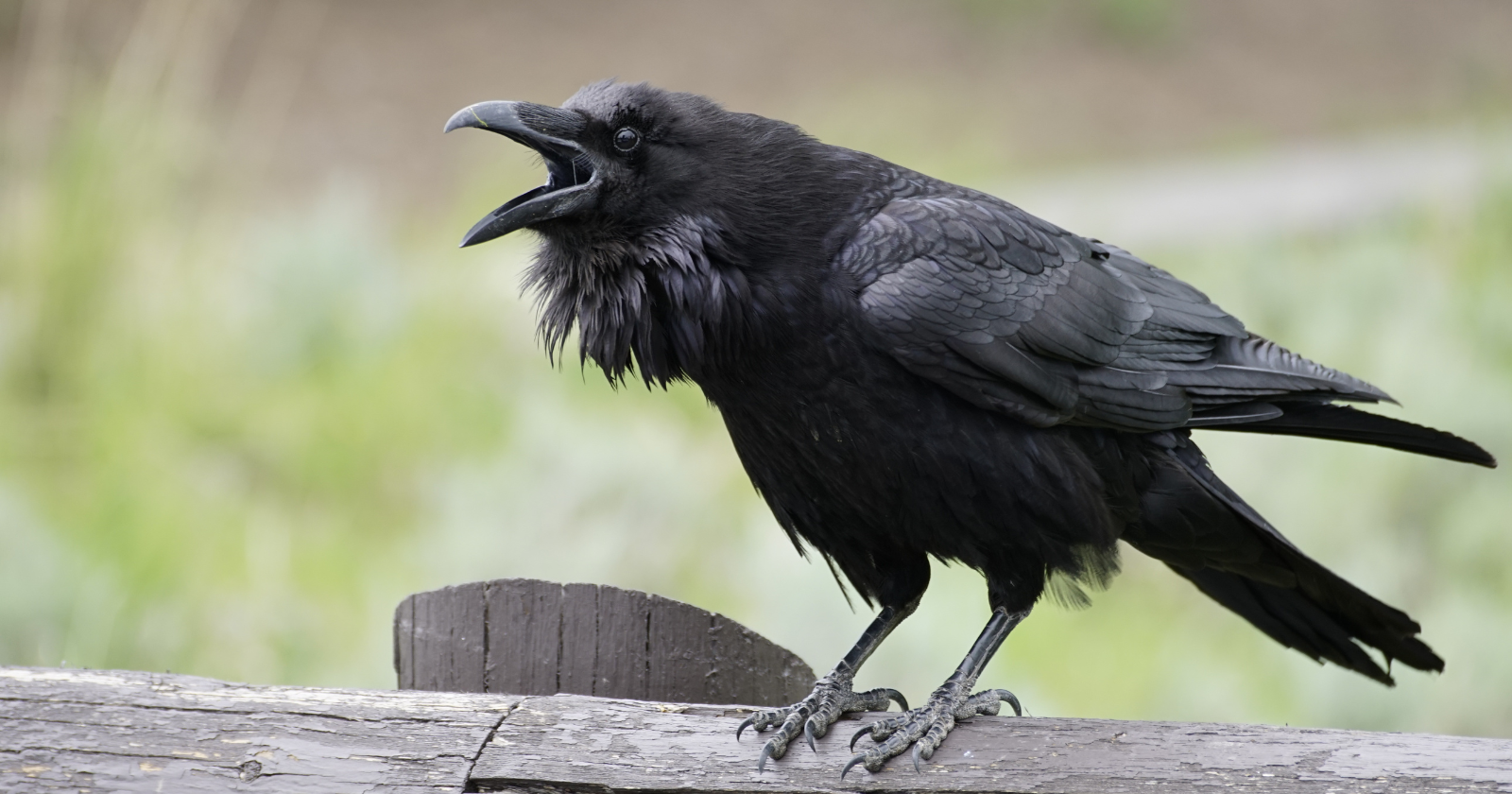
Almost every neighbourhood in North America has crows in it. Big glossy black birds, one of the most successful adaptations to human life any wild animal has ever managed, sitting in trees and telephone lines and city parks, watching people with what looks from underneath like ordinary bored attention. What most people who share their neighbourhoods with them don’t quite realise is that the birds are, in a very specific and measurable sense, watching. And, if you do the wrong thing to one of them, they will remember your face. For years. And they will tell each other.
That last part, the telling, is the one that took the science a while to work out. It’s easy enough to believe that a single crow might remember a person who upset it once. It’s harder to believe that the same crow will teach its chicks to recognise the same face, and that its flockmates who never saw the original offence will still learn the face by watching how the first crow reacts, and that decades later a person walking through a park will be harassed by birds who were not alive when the person did whatever they did in the first place. But that, on the peer-reviewed field evidence gathered on the University of Washington campus over the past two decades, is exactly what happens.
The dangerous mask experiment
According to a 2010 paper by Dr John Marzluff, Jeff Walls, Heather Cornell, John Withey and David Craig at the University of Washington’s School of Environmental and Forest Sciences, published in Animal Behaviour under the title “Lasting Recognition of Threatening People by Wild American Crows”, the Marzluff team ran a set of experiments designed to answer a specific question about crow cognition. They wanted to know whether wild crows could learn to recognise an individual human face after a single negative encounter, and whether that recognition would last.
Related – if you love learning about our animal kingdom, check out this video we created on the wolves of Riverstone:
The design was clever, because it isolated the face itself from every other cue the crows might otherwise have used. The researchers acquired several latex masks. One was chosen as the dangerous mask, and it happened to be a caveman-style ogre mask because that’s what was at hand. Other masks were chosen as neutral controls. At five locations around Seattle, researchers wearing the dangerous mask captured seven to fifteen crows, banded them for identification, and released them. The neutral masks were worn during ordinary walks through the same areas, without any trapping.
Then the team waited to see what would happen.
The results were unambiguous. Crows that had been captured while a researcher wore the caveman mask began scolding, meaning producing loud aggressive alarm calls, whenever they saw someone wearing that specific mask again. The neutral masks got almost no reaction. What made the finding genuinely striking was that the crows were locking onto the face itself. The same mask worn by a different person, of a different sex or age or ethnicity, produced the same scolding response. The mask worn upside down still produced it. The mask worn with a hat still produced it. What the crows had memorised was the specific configuration of features on the ogre face, and they were treating it as the signature of a dangerous individual regardless of who happened to be behind it.
The 2010 paper documented the recognition persisting for at least 2.7 years. The team kept running the experiment.
The bit that made it strange
What the follow-up research established, and what turned the whole line of enquiry into something considerably more interesting, is that the recognition wasn’t confined to the crows who had actually been captured. According to a 2011 follow-up paper by Heather Cornell, John Marzluff and Shannon Pecoraro, published in Proceedings of the Royal Society B under the title “Social Learning Spreads Knowledge About Dangerous Humans Among American Crows”, the team returned to the same sites over the following five years and mapped the spread of the scolding response through the local crow population.
The results identified three separate transmission routes. Crows that had been trapped remembered the face directly. Crows that had watched the trapping without being caught themselves, meaning the birds that circled and scolded in the mob overhead while the researchers held their captured neighbours, picked up the face as well. And young crows that had never witnessed any trapping at all learned to scold the mask from their parents, purely by observing the adults’ behaviour in the presence of the masked researcher. The scolding response doubled in frequency over five years and spread at least 1.2 kilometres from the original trapping sites. On one measured walk during that period, Marzluff was scolded by 47 of the 53 crows he encountered while wearing the dangerous mask. He had only ever trapped seven crows in the first place.
The experiment kept running after the 2011 paper too. According to the University of Washington’s own Urban@UW research communications, which tracked the Marzluff project through its full duration on the university’s environmental sciences news channel, the crow response to the dangerous mask on the UW campus reached its peak in 2013, about seven years after the original trapping. From then on, the scolding response gradually declined as the original captured birds died off and as the descendants who had been taught to recognise the mask began to age out of the population themselves. By September 2023, seventeen years after the experiment began, Marzluff walked across campus wearing the caveman mask and was not scolded by a single crow. The grudge, in a species with a natural lifespan of fifteen to twenty years, had finally faded.
Which is where the 17-year figure comes from. It’s not that the crows remained furious for seventeen straight years. It’s that a memory of a specific human face, planted in a single small group of Seattle crows by a brief negative encounter in 2006, was still being transmitted, socially, through the local corvid population until 2023. Somewhere in the intervening years, every crow on that particular part of the University of Washington campus had learned to recognise a face nobody had shown them, from parents and flockmates who had learned it from their own parents and flockmates, going back to the original seven birds who had actually been trapped by researchers wearing a rubber mask.
Which produces a slightly uncomfortable practical implication if you happen to live near crows. They are, on the accumulated field evidence, watching. If you do something that a specific crow experiences as threatening, that crow will remember you. The other crows in the area will learn to recognise you by watching how the first crow reacts to you. And the chicks those crows raise will inherit the impression along with everything else they learn from their parents. You may not remember the original incident. The crows will. And they will act on that memory for as long as the local population continues to reproduce, which in a species that lives fifteen to twenty years in the wild can be a considerably longer stretch of time than most people would ordinarily expect a bird to be capable of holding a grudge for.