

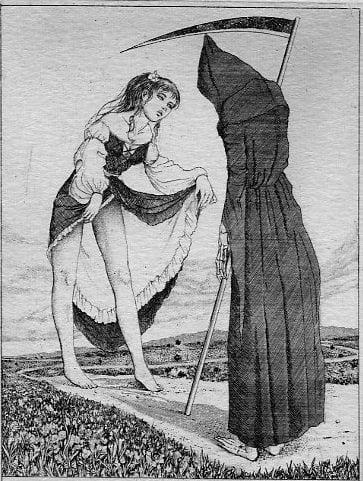
Like you, dear Readers, I tend to be focused on the biochemistry, and have to remind myself again and again that the mind and body are intertwined. I came out last week with my core belief about biology: Mechanistic physics explains only half of what we are. Life has its own laws which we will discover only if we admit they exist.
In fact, the most powerful thing we can do to prolong life expectancy is to have robust connections to other humans. The best-documented effects are for empowering relationships with community (especially cooperative action for change) and intimate relations of love. Together, these factors contribute more to life expectancy than any diet or exercise program, or any supplements you can take. The difference is comparable to life expectancy difference between heavy smokers and non-smokers. (I wrote about these topics 2 years ago: [1. Social status and depression, activism vs powerlessness, 2. Family]
Elissa Epel is famous for having elucidated the connection between stress and eroding telomeres. But she has also brought us positive messages: Meditation is associated with telomerase expression and longer telomeres. Altruism breeds telomerase. Loving-kindness is associated with longer telomeres. In a publication last summer, she and co-authors documented the benefits of sex. Women (all subjects were partnered females) who had sex at least once in the week surveyed had longer telomeres than women who did not.
The result added to evidence that goes back at least 20 years. The Caerphilly study showed that frequency of sex correlated with lower all-cause mortality in men. The conclusion extends to women. The tendency of medical professionals to interpret the result in terms of the biochemistry of orgasm has been tempered, as it became clear that sex with a partner, with or without orgasm, has benefits above masturbation [ref]. Intimacy without sex has its health rewards, as does the strength of one’s community fabric.
So, in this context, the headline result from the newest study is no surprise. The puzzle is that, even though powerful connections between social relations and health are confirmed again and again, the details keep changing, and consistency is elusive.
For example, the study just cited found that subjects who reported more sexual activity had longer telomeres, but they didn’t have more telomerase activity. In fact, they had (almost statistically significant) less telomerase activity. This was a short-term study. Telomerase activity is a short-term variable, and telomere length is supposed to respond in the longer term to telomerase activity. We should not have been surprised if an increase in telomerase had been observed, without a significant difference in telomerelength. The opposite finding suggests a missing link in the causal chain. (The Discussion text in the article is very open about this mystery.)
The study included only women. Women have been found to be more sensitive to the quality of loving attention and the depth of their connections in love, while men tend to respond to the cruder quantitative variable of sexual activity [ref]. But for women in this study, telomere length was related only to the frequency of sex, and not to the quality of relationship, or to relationship satisfaction. In fact, they found no significant association with any of the subjective questions asked concerning satisfaction with the relationship, or feelings of closeness. Again, the investigators themselves were surprised.
Paradoxical results from other studies: Men (>57yo) who had frequent sex (more than once per week) and men who self-reported that sex was “extremely satisfying” had twice as many heart attacks in the ensuing five years [ref]. In the same study, results for women were not strong enough to be statistically significant, but were strange enough to be puzzling. Women (>57yo) who reported sexual relations that were highly satisfying had higher risk of cardiovascular disease, but women who reported most intense pleasure from sex had lower risk. “These findings challenge the assumption that sex brings uniform health benefits to everyone.”
This classic study found that marriage offers substantial benefits in life expectancy for both men and women, but that the benfits for men are far larger. The relative risk in mortality rate, unmarried vs married, is 1.5 for women but 3.5 for men. The large disparity has not held up in more recent studies.
This is the most comprehensive recent review of the relationship between social variables and all-cause mortality, but it is confusingly written (I believe the verbal interpretation of statistics is incorrect). The message comes through loud and strong, that social integration accounts for a large benefit in decreased all-cause mortality, accounting for 5 to 10 years of life expectancy. But even more than in other fields of social science, there are contradictory results and inconsistencies that thwart anyone trying to tell a neat story.
Why is social connection so important to health
|
Bert Uchino distinguishes between “perceived support” and “received support”. The correlation of the former with health and mortality variables is robust. But the latter is sometimes found to be inversely correlated with health. This seems to say that if people are helping you and you don’t appreciate it, you’re worse off than if you had been on your own. If you think you’re embedded in a caring and supportive community, you’ll live longer. If you’re actually embedded in a caring community, but you devalue what you’ve got or if you isolate yourself because you’re more comfortable that way, your life expectancy is shortened. This is a morality tale if I ever heard one.
Conflictual interactions in the context of marriage (as in Western culture generally) contribute to higher levels of systemic inflammation [ref]. But this study found no relationship between job stress in men and measures of chronic inflammation. Maybe it depends on what is meant by “stress”. This study suggests that feeling out of control (powerlessness, low status) is associated with markers of inflammation.
Perspective
Why do we care about this? Many of us are fanatical about following the best evidence when designing exercise and supplement regimens for ourselves. But is there anyone out there who is waiting for the latest correlation with telomere length before deciding whether to fall in love? (I didn’t think so.)
No, the reason we care about this subject is that it reminds us that aging is a social process almost as much as it is a biological process, even if the social correlates of longevity confound our best intuitions about how to live well.
And perhaps it reminds us, indirectly, that in the “rationalization” of our health care system, we have made a bad bargain. Over the course of my lifetime, medical practice in America has gone from a model of individualized care by family doctors to impersonal care by specialists. Medical care has become more evidence-based, and there is a much better chance that the doctor who treats your condition has a deep knowledge and experience of that condition. But what we’ve lost along the way is the doctor-patient relationship—both because you see a different specialist for each condition, and also because as doctors’ time is squeezed to optimize profit, the time for listening and empathizing has been eliminated. Despite the accumulation of studies showing that doctor-patient relationship has an outsized effect on prognosis, our present health care system is systemically deficient in human caring.
Discussion
30 reader comments
Imported threads are marked Archive. New comments are welcome and moderated for spam.
Heather: clearly you need to watch the documentary series "Married... With Children". Now, before you point out that it's not peer-reviewed, remember that peer-reviewed studies in psychology can't be replicated anyway... so your time is more efficiently spent on the Fox channel (at least if you watch it in the gym ;)
Google "Reproducibility Project, University of VA".
I realize you are being sardonic.
I am not familiar with the documentary you mention, but based on the portion of the title you have included, the documentary series you allude to is most likely very selective regarding the couples videoed.
The producers most likely select couples that will stimulate interest and bring a larger audience.
If they are not selective, you are right, the selection process most likely still would not stand up to scientific scrutiny.
Thanks for your response Heather... although as a member of an alien species, it is unlikely that you have a concept of "thanks". (I hope you're pulling my leg here... any human into life extension would know the backstory of the "Futurama" actors. Jolly good job if you are ;)
Is my alien showing?
I thought for sure, I was passing for human.
You must be sharper than the rest of your species.
It's just uncontrolled studies and selection bias. Women dump men with health problems, even subclinical ones. Of course men that have the resources to keep wives live longer. Would they live even longer without the stress?
I think the studies on eunuchs tell us the real story here.
IMO, a marriage only causes high stress, if it is a terrible marriage.
Regarding Eunuchs: Evidence is not proof.
The studies on Eunuchs are confusing and contradictory. Just like a lot of scientific evidence.
Perhaps the lower testosterone, makes them less prone to risky behaviors.
Some studies show that low testosterone can kill, if the beneficial testosterone is lower than the more negative testosterone.
So, you may be right that something else is going on.
Perhaps without high testosterone levels, the Eunuchs become more nurturing toward each other and the inclination to "tend and befriend" as a majority of women do, becomes more expressed, decreasing stress.
Women often decrease their stress levels by complaining to each other rather than a spouse. They are also typically less competitive with each other, unless they are outlier women that have higher than average testosterone.
By my observation fewer men complain to each other about their personal lives, and they tend to keep things inside.
They are also very competitive with each other, even good friends.
You are describing a different species than the one I have lived among for 6 decades... it's almost as though you were spending more time watching behavior of stereotypical TV characters rather than actual humans (most people do, if they actually count up the hours).
Is it possible that you don't observe men "complaining about their personal lives", because they are careful to only do it when you are not present ;)
And seriously, of course "marriages that cause high stress are terrible marriages". What we are asking is whether that is 95% of marriages, or some smaller number? The point is that these studies aren't controlling for selection bias; discarded men paying alimony live shorter lives, but that tells us absolutely nothing about what marriage is doing to its male victims.
We already knew that higher-status males live longer. But would they live longer yet if they weren't married?
Bill:
Actually I rarely watch TV.
I do not have the time.
If I do, it's typically the news or the Discovery channel.
@Heather, I'm sorry to say that I agree with @Bill Walker. The 'women' you are describing don't belong the same species that I know.
Women are not more loving, more nurturing, less competitive or care more for others than men.
.
Virtually every study that I've ever seen showed a life extension for married men. Even more so when married to younger women. The effect doesn't hold nearly as much for married women however.
Is there a study that contradicts this?
Very well written summary of the frontiers for aging research.
Often times it is hard to undo the damage done by misleading headlines in popular press. However, this letter is a valiant effort to set the record straight at least for the research community
Well done!
Hi Josh,
Can you post your following letter in PNAS here?
Josh Mitteldorf and Gregory M. Fahy
Questioning the inevitability of aging
PNAS 2018 ; published ahead of print January 8, 2018
Thanks!
You have brought up many interesting and somewhat inexplicable points. One of which is that people who report more sexual activity have longer telomeres without an increase in telomerase. Maria Blasco and cohorts reported on mice with very long telomeres which they created without altering the telomerase gene.
Generation of mice with longer and better preserved telomeres in the absence of genetic manipulation . Nature Comm 2016;7
There have now been studies linking health and longevity to social status, marriage, and education levels. A very recent study again looked at the link with attending religious services. A professor of epidemiology studied 18,000 participants and found that attendance at religious services had a dose response relationship with mortality, such that respondents who attended frequently had a 40 percent lower mortality rate compared with those who never attended.
Plos One. Ellen Idler. January 2018
This could be the result of social interaction, or perhaps this group tends to have healthier behaviors. These things are all self reported which of course leads to significant bias potential.
Lastly, your point about the changing relationship with doctors is certainly valid, but we are trained only to fix things that are broken, whereas it is much better to take your health into your own hands and avoid the breakdown in the first place. Personally I'm willing to do just about anything, and act on almost any amount of preventive evidence, to avoid the medical system. So when it comes to marriage, meditation, sex, exercise, diet, supplements, religion,status, education, stress reduction, and rapamycin, I say bring it all on. Anything but a visit to the doctor.
One thing that almost all very old people have in common is that they Avoid disease, not overcome disease.
I agree totally with the last paragraph of Paul's comment.
Very well said, Paul, and in total agreement!
Good post!
The paper from Blasco about telomeres is very interesting and intriguing. Apparently, mice with hyper-long telomeres have several health benefits but no clear life extension. This is surprising given that mice treated to over-express TERT late in life did experience a significant life extension (from the 2012 study). Maybe this is telling us something about telomeres and aging.
I've only skimmed the paper, but there are a number of things going on here.
Firstly, this was not a lifespan study - so we don't know whether the chimaeric mice would have lived longer or not. They certainly had some advantages as you might expect, such as quicker wound healing. But we'll have to wait to see if the mice lived longer (assuming they are continuing the experiment).
What was interesting about this study is that rather than using a gene therapy these mice were born with hyper-long telomeres by passaging embryonic stem cells for some set number of passages before fertilization. This is similar to how older Dads give their offspring longer telomeres - like Embryonic stem cells, sperm cells express slightly too much telomerase, so gain telomere length over time; the opposite to most (human) tissues. So this ES passaging is a bit like fast forwarding evolution towards a longer lifespan.
However there is an issue with this, and that issue is that they keep using mice. Mice mainly suffer cellular senescence through non-telomeric damage - mainly ROS and copying errors from replicative stress, rather than from replicative senescence. This is because their TERT gene remains active in somatic cells (unlike humans where it is dialed right down by the presence of the telomere tail, which loops back to inhibit the HTERT promoter). So I would expect there to be a limit on how much benefit mice could get from even longer telomeres and was surpised Blasco got such good mean and max lifespan improvements with her AAV HTERT gene therapy.
What might be happening with the gene therapy given to middle aged and old mice that Blasco has done previously, is that the treatment may have rescued senescent cells, regardless of how they formed, in addition to lengthening telomeres in normal cells. So the normal cells get a boost (even with long telomeres a few cells will get short ones, surely?), and senescent cells get regenerated. If that's true, then this could be considered a superior form of senolytics.
I still think we're missing a piece of the puzzle here, and I believe it might be something to do with the relationship between global methylation changes and telomere shortening. But I'm guessing here.
Interesting points.
You are right that it is not a life span study but looking at the survival curve, it seems that:
- chimaeric mice with hyper-long telomeres outlive chimaeric mice with normal telomeres
- control mice seems to have similar life span than chimearic mice with hyper-long telomeres
However, comparing chimaeric mice with control mice might not be fair because the process of repetive ES divisions needed to generate chimaeric mice might create some level of damage (just guessing). So probably the fairest comparison is between chimaeric mice with normal telomeres vs hyper-long and in this case telomere length seems of offer a clear advantage in survival. Let's see if they publish a follow-up life span study.
2 more replies
The other thing I wanted to mention was that variation in telomere length independent of telomerase is not so difficult to explain. There are lots of genes that positively or negatively influence the length or telomeres and their rate of shortening. These genes are regulated epigenetically, so we can immediately understand how lifestyle factors such as diet, exercise and social interation vs. stress can accelerate or decelerate telomere loss.
As far as I am aware, none of these can extend telomeres however, for that you need telomerase.
I have not doubt in my mind that strong religious believes are good for lifespan, resilience and basically good for most of the important things in life. Related to that, realizing that there is no God out there to help you is awfully self-destructive.
I've a two years old kid, and I don't know what to do. Lie to him with the existence of God, or let him to develop a realistic mindset about life from the beginning.
Suggestion: Convey a sense of wonder. You don't need to bring up "God". If s/he brings up "God", you might say that different people use that word to mean different things. Share your own faith, in whatever form that takes. Talk about times you have experienced mystery just beyond the edge of your own knowledge. There's no sense in saying what you don't believe--kids can see right through that.
@Josh, thanks
I'll study your recommendations, which look very reasonable. This is a tough part of the education for me.
If a majority of men benefit more than women in marriage, that is likely because men benefit from the more nurturing nature of most women.
Conversely it may also indicate that giving too much or be too altruistic may shorten your life span rather than prolong it.
I have known many long suffering nurturing people married to a "taker" spouse, male or female, who have died first and sometimes many years before the taker spouse.
IMO, people thrive best when they receive as well as give to others. Being too nurturing can be very draining.
I find this post very interesting. Not the type of topic I would expect from you, which makes it even more interesting. This makes me thing of the "Blue Zones" where people live longer on average than anywhere else on the planet, and the researchers always noted that there was a strong social life, religion, and caring for the community. And some time alcohol and tobacco ! https://bluezones.com/2017/05/6-links-longevity-news/
In the current evolution of social relationships and instagram focus and no long term commitment to a partner it's important to raise the awareness that it does matter for your longevity. I dont know if you will find the same fulfilment with a sex-robot that with a real human being...
Besides that I find fascinating that social behaviours are "embedded" in our DNA, in a way that supports the small group and not just the individual. The selfish gene is not that selfish :-)
The skeptic's microscope needs to be at maximum magnification when we talk about the health benefits/risks of marriage (primarily a state-sponsored financial institution and a relic of sexist, class-rooted norms, but I guess polygamous throwbacks must live for centuries, eh?), altruism (one person's altruism is often another person's oppression), loving kindness (even if this is driven by superstition and guilt?), self-defined stress (so I guess reading comic books all day is good for you?), community connections (even for well-connected Nazis?), and self-reported sexual satisfaction and frequency (can you even think of an area more riddled with exaggeration?).
Barbs and attempted humor aside, I think we need no prompting to seek satisfying social and sexual lives. If we do not find such comfort, it is probably due to severe burns in our past, and not a matter of making a simple choice to get married, join a church full of tender loving morons, and have lots of great sex before we are >57 years old. Until economic, political and health reality is institutionally just, with war, poverty and disease off humanity's table, feelings of satisfaction will be illusory. Fuzzy chatter about spiritual and emotional matters is primarily a distraction for health extensionists. We should instead stay focussed on factors that can be easily defined and measured. Even a 25% reduction of that last-mentioned tragedy on our collective table through medical science will go further in promoting healthy social lives than all of the Eastern meditation, capitalist holy matrimony, and Left Coast support groups, combined. ...And probably cost less!
Perhaps forming more intimate relationships with our physician will be more common when physicians are robots - no one will care about robots disapproving of them. As you say, mind and body are not separate entities - unless you believe those out-of-body hallucinations (sorry, but...) are the real thing, you'd acknowledge the mind is an epiphenomenon of the brain. To my knowledge, no brain, no mind; shave off the first millimeter of cerebral cortex and no mind. I do believe (who can doubt it) that there is a 'will' to live, which if absent will result in earlier death, and if present can delay death - I think the fact that both founding fathers, and Presidents, Thomas Jefferson and John Adams both died on July 4, 1826 on the fiftieth anniversary of our Independence as an evidence that we can determine, to some extent, the day of our death.
Marriage, sex and longevity have a unquestionable and close relationship.
But which one is the cause and which one the result of them?
If you are healthy and well marriaged, you may be happier and have more chances to live longer.
Deep attitude is very important.
Altruism and gratitude help you to live in peace. That may be very useful inside your marriage. If, in addition to this, you are lucky to have pleasant sex once in a while, who could ask for more?
There's some evidence that people postpone deaths until after holidays, so that supports your idea.
I suggest that many of these results, for instance the relation between finding sex very satisfying, frequent sex, and increased CVD risk, may be due to slow vs fast life history. In a nutshell, people genetically wired to like sex more also live (and die) faster. As for marriage, more pro-social people might be both more likely to get married and to live longer. In my opinion, there may be large genetic confounds in most of this data.