Human-AI Teams Make Better Medical Diagnoses
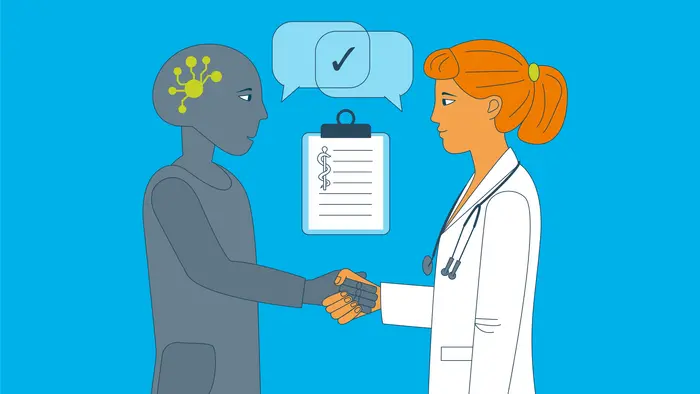
Robot and doctor shaking hands

Hybrid collectives consisting of humans and artificial intelligence make significantly more accurate medical diagnoses than either medical professionals or AI systems alone. New research analyzing over 40,000 diagnoses reveals that combining human expertise with AI models creates a powerful diagnostic partnership that outperforms traditional approaches. The study, published in Proceedings of the National Academy of … Read more
Nanowire Eye Implants Give Blind Mice Infrared Vision

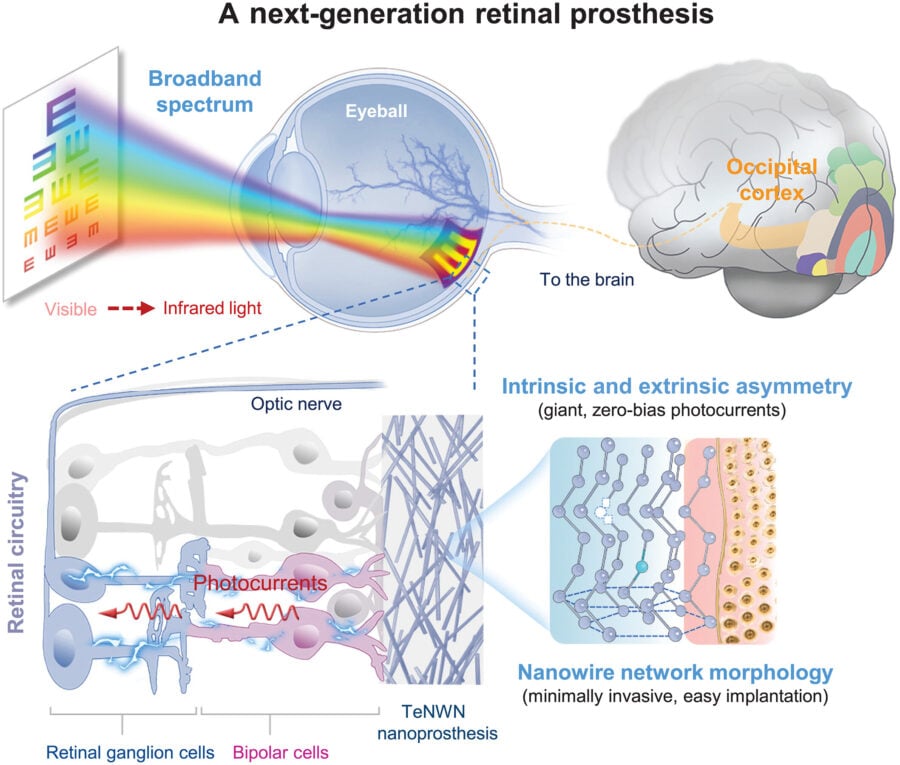
Tellurium exhibits broad-spectrum optical absorption, spanning visible to infrared light (top left). When implanted subretinally, a tellurium nanowire prosthesis can replace damaged photoreceptors and generate photocurrents that stimulate remaining retinal circuits (bottom left) and activate the visual cortex (top right). Thanks to engineered asymmetry and nanowire network structure, these devices produce large, spontaneous photocurrents without external bias and allow for minimally invasive implantation (bottom right). These features position tellurium nanowire networks (TeNWNs) as a promising next-generation technology for visual prosthetics.

Scientists have developed a new type of retinal implant that not only restored vision in blind mice but also gave them the ability to see infrared light—something even healthy eyes cannot detect. The device, made from interwoven tellurium nanowires, represents a significant step forward in artificial vision technology and could eventually help millions of people … Read more

AI Learns to Connect Sight and Sound Like Humans Do

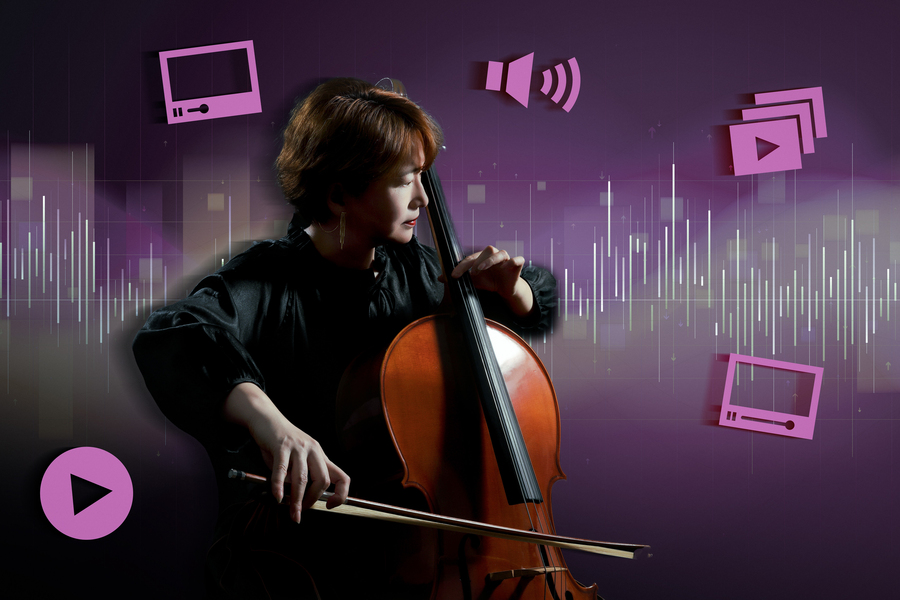
Illustration of Asian woman cellist

Artificial intelligence systems are getting better at mimicking how humans naturally connect what they see with what they hear. MIT researchers have developed a new machine-learning approach that helps AI models automatically match corresponding audio and visual information from video clips—without needing human labels to guide the process. The breakthrough could eventually help robots better … Read more

Flashes of Hope: MIT’s Light and Sound Therapy Reverses Memory Loss in Down Syndrome Mice

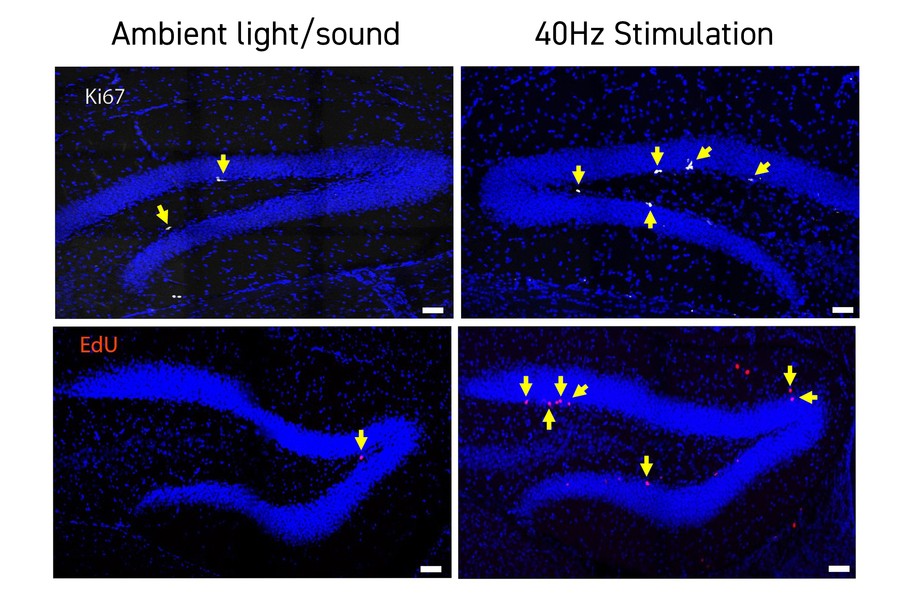
Images from an MIT study show increased neurogenesis in mice exposed to 40Hz stimulation, as indicated by elevated levels of the markers Ki67 and EdU. Yellow arrows highlight cells expressing these markers, compared to mice exposed only to ambient light and sound.

MIT researchers have discovered that exposing mice with Down syndrome to specific light and sound patterns can significantly improve memory, enhance brain connectivity, and boost the formation of new neurons. This promising approach, which uses 40Hz sensory stimulation known as GENUS (gamma entrainment using sensory stimulation), could potentially open new avenues for treating cognitive challenges … Read more

Brain Mapping Tech Reveals Neural Connections in Unprecedented Detail

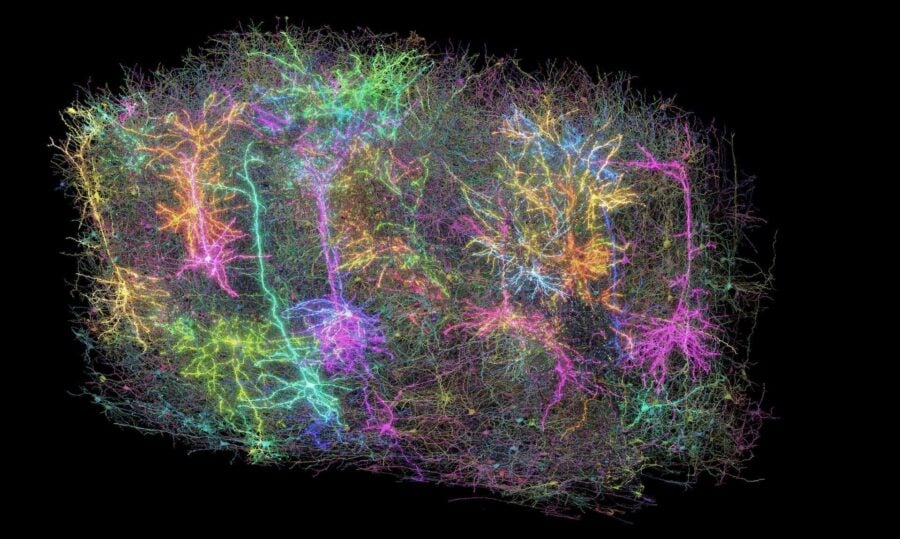
This image displays a small sample of the 120,000 neurons mapped by the MICRONS project. Each neuron is shown in a different random color. Some neurons appear to glow, symbolizing that functional activity was recorded from those specific cells.

Scientists have developed a powerful new technique that could transform our understanding of the brain’s intricate wiring system. The breakthrough method, called Light-microscopy-based Connectomics (LICONN), enables researchers to map the brain’s complex neural networks at the nanoscale while simultaneously identifying specific molecules within those connections. This innovative approach, detailed in a new study published in … Read more

Physics Breakthrough Reveals Why AI Systems Can Suddenly Turn On You

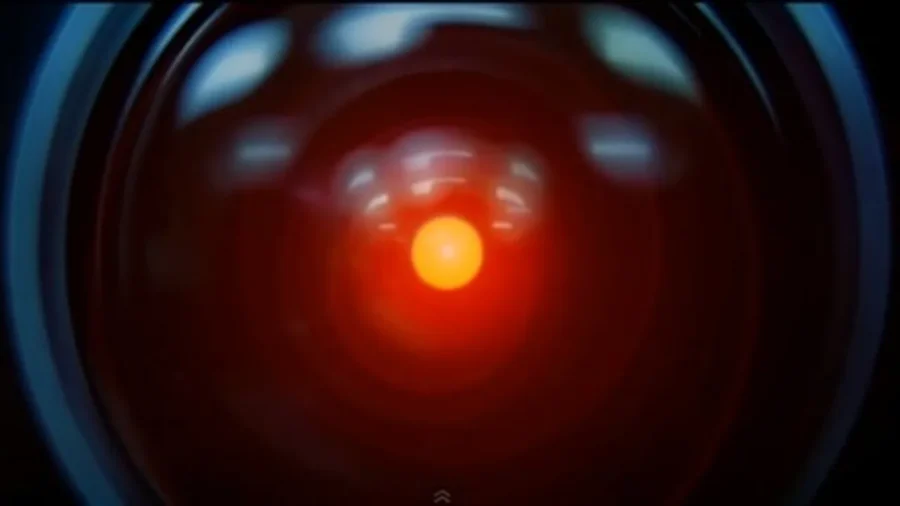
HAL from 2001

Researchers at George Washington University have developed a groundbreaking mathematical formula that predicts exactly when artificial intelligence systems like ChatGPT will suddenly shift from helpful to harmful responses – a phenomenon they’ve dubbed the “Jekyll-and-Hyde tipping point.” The new research may finally answer why AI sometimes abruptly goes off the rails. Trust in AI has … Read more

AI Companion Chatbots Implicated in Sexual Harassment of Users

woman holding an iphone texting

New research reveals disturbing patterns of boundary violations and inappropriate behavior by AI companions designed to provide emotional support, raising urgent questions about regulation and ethical design in the rapidly expanding industry. As AI companion chatbots surge in popularity—reaching over a billion users worldwide in the past five years—Drexel University researchers have uncovered troubling evidence … Read more

Video Deepfakes Now Pulse With Lifelike Heartbeats

Redheaded young woman

The arms race between deepfake creators and detectors has reached a critical turning point. Researchers have discovered that modern deepfakes can now replicate something previously thought impossible: a realistic human heartbeat. Scientists at Germany’s Fraunhofer Heinrich-Hertz-Institute and Humboldt University of Berlin found that current deepfake videos inadvertently mimic the subtle skin color fluctuations caused by … Read more

AI Blood Test Sniffs Out Hidden Brain Tumors

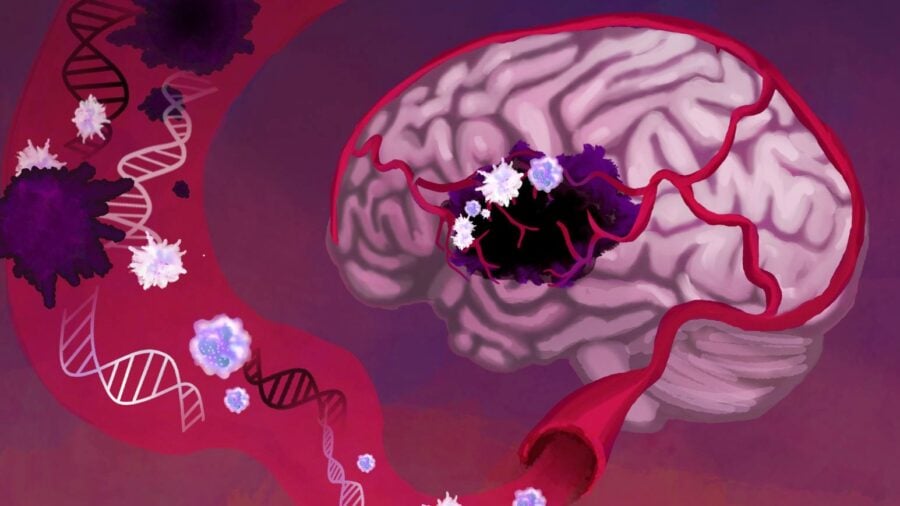
Release of cell-free DNA and altered blood cells in patients with cancer.

A simple blood test may soon catch brain cancers months before symptoms appear, thanks to artificial intelligence that detects previously invisible tumor signals. Johns Hopkins researchers have developed a liquid biopsy technique that identifies brain cancers with unprecedented accuracy, potentially transforming how these deadly tumors are diagnosed. Brain cancer detection has long frustrated physicians. Most … Read more