Your Epigenetic Age Is Aging Your Brain, but Not in the Way Scientists Expected

A man covering his eyes in embarassment

Inside every cell in your body, a chemical clock is running. Not ticking exactly, more like drifting: patterns of methyl groups latching onto DNA, accumulating and shifting in ways that reflect everything you’ve done, breathed, eaten, and been exposed to across a lifetime. Researchers have spent the better part of two decades trying to read … Read more

Alzheimer’s Drugs Clear the Plaques but Leave Patients No Better Off

Drugs that target amyloid beta proteins in the brain likely have no clinically meaningful positive effects, while increasing the risk of bleeding and swelling in the brain, a new Cochrane review has found.

The brain scans look unambiguous. After 18 months of treatment, the amyloid plaques that riddle the brains of early Alzheimer’s patients are visibly reduced, sometimes dramatically so. The drug is doing exactly what it was designed to do: hunting down those sticky protein deposits and clearing them away. So why aren’t the patients getting better? … Read more

Shrunken AI Models Reveal How the Brain’s Visual Neurons Actually Work

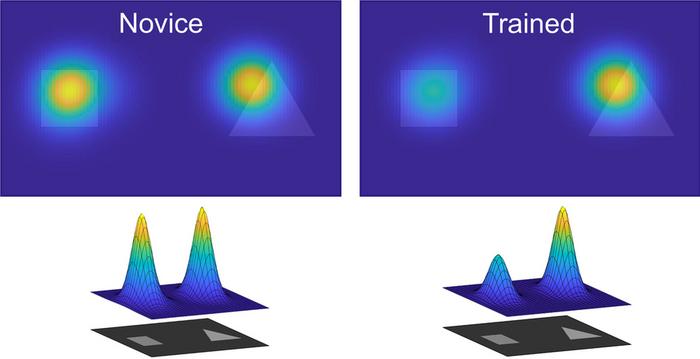
ML technique "prunes" the model, to make it more compact.

Somewhere in the visual cortex of a macaque monkey, a single neuron fires every time a small dot appears in the right location. Not a circle, not a line — a dot, specifically, at a specific size. For decades, neuroscientists could describe this selectivity without really explaining it. Now, for the first time, they can … Read more

One Night of Sleep Data Can Predict Your Disease Risk Years Ahead

AI image of woman in a sleep lab

The next time someone hooks you up to a sleep study, those sensors tracking your brain waves and heartbeat may not just be  looking for snoring problems. They could be capturing something far more revealing: a physiological signature that can forecast whether you’ll develop Parkinson’s disease, suffer a heart attack, or face dementia, sometimes years … Read more

Brain Model Discovers Neurons That Reliably Predict Mistakes

neuron networks

About 20 percent of neurons in a learning brain seem to be doing something counterintuitive. When these cells become more active, mistakes follow. A new computational model of the brain, built to mirror real neural circuits rather than optimize performance, stumbled onto this pattern while learning a simple visual task. Only then did researchers realize … Read more

Autistic Brains Show Measurable Molecular Shift in Glutamate Signaling

digital brain illustration

For many autistic people, a crowded cafe isn’t just noisy. Every clinking spoon sounds like a bell. Every flickering light feels like a strobe. Clinicians have diagnosed autism through behavioral observation for decades, but the biological mechanisms behind these differences have remained elusive. Now, researchers at Yale School of Medicine report a concrete molecular signature … Read more

Recommendation Algorithms Change How You Learn, Not Just What You See

When people are fed suggested content online, they tend to narrow their focus and learn less.

Recommendation algorithms don’t just show you more of what you like. They actually change what you learn and how confident you feel about it, according to a new study in the Journal of Experimental Psychology: General. Researchers at Ohio State University tested this with 346 people learning to categorize fake aliens: crystal-like creatures with six … Read more