


This essay is an ambitious attempt to resolve a well-known physics paradox by introducing a concept that most physicists deny — that is, the existence of information in the abstract, independent of any physical medium like a computer chip or a brain.
The paradox is called “the arrow of time”. The project of modern physics is to understand large-scale phenomena in terms of the interactions among sub-atomic particles. The paradox arises from the fact that in everyday life, time is a one-way street. We remember the past, but not the future. Things spontaneously break or fall apart; they never spontaneously repair themselves or assemble into new structures. But the laws governing sub-atomic particles are entirely time-symmetric. A movie of two particles colliding and bouncing off each other (or the quantum equivalent) can be run forward or backward, and you would never know the difference. So the paradox is this: How can macroscopic physics that goes one-way only emerge from sub-atomic particle dynamics that is indifferent to the direction of time?
To resolve this paradox, I am proposing that information has its own existence, and that as conscious beings the world over make their observations, the sum total of information is steadily accumulating. This accumulation of information defines a preferred direction in time.
Actually, there is diverse evidence that information can exist outside of the domain we call “physical”, but that evidence is in the realm called “parapsychology”, and most physicists deny (on theoretical ground) that it is real.
I am associating the acquisition of information with the quantum measurement process. The “measurement problem” in quantum mechanics is a second deep and thorny issue that physicists have not been able to agree about.
Provocatively, I am calling my proposed synthesis the Akashic Model. When I publish this in a physics journal, I will need another name.
At the end of this essay, I note that my Akashic Model seems to require universal agreement about what is past and what is future. Thus, I am running afoul of Einstein’s relativity, according to which time is relative, and there can be no agreement among different observers. I think this issue can be resolved satisfactorily, but not today.
Prelude
Late in his life, Einstein wrote a letter of consolation to the family of a deceased friend,
“Now he has departed from this strange world a little ahead of me. That signifies nothing. For those of us who believe in physics, the distinction between past, present and future is only a stubbornly persistent illusion”. (AE 1955)
“Gaslighting” is what we call it when someone tries to convince you to ignore the evidence of your own senses because you’re crazy. Science is supposed to explain our experience, not to tell us we are wrong to experience it.
Einstein, of course, was right about the physics. There is no “now” in physics. Time is a coordinate just like x and y, or latitude and longitude, or “Sixth Avenue at 42d St”. “Now” is just a number assigned to an arbitrary position on the time axis.
Eckhardt Tolle would beg to differ. Now is all we have, all we know. The distilled essence of experience is “now”.
My purpose in this essay is to associate the “now” experience with what is called in quantum mechanics a “measurement” or an “observation” or “collapse of the wave function”. What follows from this is resolution of several controversies and a mystery that have plagued physics for decades.
Background
In the 1925 formulation of quantum mechanics (QM) (still the basis of modern atomic physics), the primary reality is not particles but configurations of particles. The wave function (WF) is related to the probability of any measurement of that configuration producing a given result. The Schrödinger Equation (SE) is the primary equation of motion; it is to QM what F=ma is to Newtonian mechanics. The SE tells how the WF changes from moment to moment, and it predicts the outcome of measurements. But there is a rule that is as much a part of QM as the SE. The rule says that at the moment of a measurement, the SE resets — not from where it was just before the measurement, but from an artificial-looking WF in which all the probability is concentrated at one point, that point being the result of the measurement. The probability function is replaced by a statement of certainty, the measurement outcome is now known, so its probability is exactly one. This is usually called “collapse of the wave function”. [Quoting myself]
Measurements and observers have an explicit role to play in quantum theory which is entirely absent in pre-quantum physics. Physicists have argued for 100 years about what constitutes a “measurement”, equivalently, What causes the wave function to collapse? The majority want it to be something “physical”, something about particles in space-time. But my (minority) view is that it cannot be “physical” because anything made of particles in space-time can be incorporated into the wave function, and so is subject to the Schrödinger equation. A measurement, by definition, is an exception to the Schrödinger equation. [My blog on this subject]
(This view is most closely associated with John von Neumann in his QM text and Eugene Wigner, in a 1963 essay. In 1932, von Neumann was the first to synthesize the revolutionary work of Schrödinger, Heisenberg, and Dirac into a coherent account. Arguably, such luminaries as Wigner, Planck, Bohm, and Schrödinger himself also subscribed to the view that consciousness is a necessary element in a fundamental understanding of QM.)
The “Now”
Each of us experiences our lives as a succession of “now” moments, each one rife with information about the outer state of our surroundings and the inner state of our bodies and emotions. We have learned to regard this information as coming wholly from the senses and the nervous system, but it is more than possible that some of the incoming information is telepathic or clairvoyant, received at subliminal levels. Our observations collapse the wave function. Wave functions aren’t limited to tiny particles; a wave function can apply to a macroscopic object or a whole scene. The extra-sensory information that we receive also seems to have an effect in (at least partially) collapsing the wave function, according to research by Dean Radin.
Conventional physics treats our moment-to-moment experience as a biological epiphenomenon with no fundamental physical significance. It just struck me this week how strange it is that physicists have failed to make an association between our experience of “now” and the concept of quantum measurement.
My thesis in this essay is that the “now” experience is exactly the collapse of the wave function, and it is also the source of the asymmetry between past and future (associated with the Second Law of Thermodynamics) which has been another great and longstanding controversy in the lore of fundamental physics.
Time Symmetry and the Second Law
(Skip this section if you already understand this.)
Here is a paradox that mainstream physics has struggled to come to terms with for 150 years.
Since the 19th century, the project of physics has been reductionist. The claim of physics to be a fundamental science, a ground-level reality, is that all complex things can be understood in terms of their simpler parts. Chemistry is just the physics of atoms. Animals and plants are just enormously complex machines, following the rules of chemistry and physics. The claim is that in principle, it can all be understood as physics. We know the rules that particles obey, and if we only had enough computing power, we could understand ecology, psychology, world politics, all in terms of the interactions among vast numbers of particles.
The word we use is “emergence”. All larger-scale phenomena are emergent from the interaction of smaller-scale parts.
I hasten to comment that I think that this is probably not true. I think that living systems have behaviors of their own that go beyond what can be explained by analyzing their chemistry and physics. This is the subject of my forthcoming book.
Here is the crux of the paradox: All the laws that govern atoms and particles are indifferent to the direction of time. (There are tiny exceptions, footnotes to this statement that make no difference to what follows.) But in our experience, forward time and backward time are very different. How can it be that understanding of directional phenomena on a large scale can emerge from interactions on a small scale that could occur backwards as easily as forward?
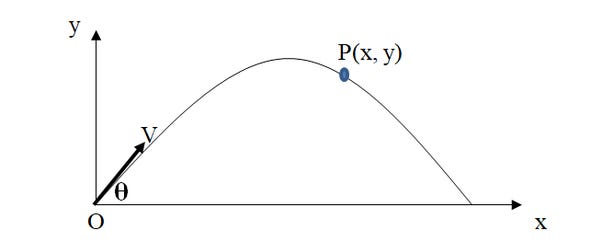
Think of the path of a ball thrown through the air. Once the ball leaves your hand it arcs up, peaks, and comes down. It follows a parabolic curve that is symmetrical. It might have gone backward along this path as easily as forward.
Think of two billiard balls on a frictionless table. They may collide and go off in different directions. If you ran the movie backwards, you would still see a realistic collision that obeys the laws of physics.
Contrast this to everyday life. You drop a champaigne glass and it breaks. That’s a one-way street — it’s not going to spontaneously put itself back together. You can fry an egg, but you can’t un-fry it. You can stop a car with friction, just by applying the brakes; but to get the car moving, you need an energy source.
The paradox is framed: How can macroscopic phenomena — clearly and obviously directional in time — be “emergent phenomena” explainable purely in terms of microscopic physics, which makes no distinction between forward time and backward time?
Historically, there are many proposed resolutions of this paradox, and the best-accepted explanations refer to the Big Bang and expansion of the universe. It is conventional to say that the Big Bang was a state of very low entropy, and that the direction of time is defined by our relation to that one improbable moment.
This is a conventional answer, but even conventional physicists find it unsatisfying. More satisfying would be to identify where the rabbit was put into the hat. Is there something in fundamental physics that specifies a direction of time?
In classical physics, the answer is “no”. The laws of Newton are all indifferent to the arrow of time. But quantum physics explicitly includes observers. Quantum mechanics is explicitly subjective, referring not just to objects in space but to our knowledge about those objects.
In quantum physics, there are “measurements”. After a measurement, there is information that did not exist before the measurement. My point in this essay is that the accumulation of information specifies a direction in time. Quantum information is the seed from which all the one-way phenomena that are familiar to us emerge. Memory, friction, temperature equilibration, the Second Law of Thermodynamics, all are consequences of our experiences of “now” and the accumulation of information that we collectively gather.
Where is memory stored?
nowhere
Conventional science tells us that memory needs a medium for storage. Computer chips certainly do store memory. Neurobiologists have long assumed that memory is stored in synapses in the brain, but evidence for this model has been elusive. Meanwhile, there are indications that memory can exist outside of any identifiable physical medium.
- Monarch butterflies return in the fall, thousands of miles to the same tree where their great great great great grandparents overwintered the year before. Where was the information about the tree’s location and the route to reach it?
- Monica Gagliano’s experiments demonstrate that plants can learn and remember, though they have no nervous systems or sense organs.
- Flatworms can be trained to navigate a simple maze. When their heads are cut off, the tail grows a new head that remembers the training.
- In remote viewing experiments, trained (or inherently talented) viewers find access to information for which there is no plausible path to their senses.
- Likewise, there is overwhelming anecdotal evidence for precognition, especially in dreams.
- Heart transplant recipients sometimes acquire memories of the donor.
These examples provide justification for the leap to a model in which information, once acquired by any conscious being, has a permanent existence outside any physical substrate.
The Akashic Model
A hypothesis of time-directional wave function collapse
- Any conscious being can create new knowledge by an observation.
- This is congruent with what is traditionally called “wave function collapse”.
- The new knowledge adds to a universal knowledge base which I call, provocatively, the Akashic Record.
- The Akashic Record is accessible to all consciousness everywhere. However, brains and nervous systems are filters that limit this access so that individuals aren’t overwhelmed by information that they cannot use, and they can focus on the information that helps them to survive and reproduce.
- This accumulation of Akashic information means that the past is pinned down (though not 100% fixed) by the set of all previous observations, while the future remains open and subject to probability conjectures. This is the significance and usefulness of a “wave function”.
The Mind-body Problem in the Akashic Model
The model finds a natural extension to account for the relationship between our individual experience of “self” and the body-brain that we conventionally name “I”. The brain is a transceiver, channeling nerve signals and sense data to a conscious entity whose existence is fundamentally non-physical (William James, 1898; Robert Epstein, 2021)
Psychokinesis is an ability that each of us is born with (Jahn & Dunne, 2007). In infancy, we learn to use that ability to manipulate neurotransmitters in the brain, which are poised on a quantum knife-edge (Kauffman & Radin, 2023). The biofeedback is extraordinarily effective because, first, our survival and wellbeing depends on it, and, second, we are young learning machines. In my model, each of us is a soul, manipulating our brains and by extension our bodies using psychokinesis at the quantum level.
Strengths of this model
Strength number zero: the model is in accordance with our intuitions and experience. The Akashic Model incorporates a past that is relatively known and a future that is open-ended. The model explicitly elevates the fundamental human experience of the “now” as a central fact about reality. Free will is another fundamental element of our experience which conventional physical models must dismiss as an illusion. The mind-body extension to the Akashic Model is a natural account of our experience of free will.
Beyond this, the first strength: the hypothesis that consciousness collapses the wave function is the only logically consistent way to understand the “measurement problem” of quantum mechanics, a problem about which physicists cannot agree after a century of debate.
Second, the long-standing issue of how the (time-directional) Second Law of Thermodynamics emerges from the (time-symmetric) fundamental equations of physics is resolved in a way that doesn’t appeal to distant causes from cosmology. In particular, the paradox can be formulated as “Why do we ‘know’ the past but we use statistical mechanics to calculate probabilities for the future?” Answer: The Akashic Record is an accumulation of all past knowledge. It is natural to make probabilistic projections of the future based on this record, but it would make no sense to use statistical mechanics to make conjectures about the past.
Third, to be honest, the physics community must recognize that the vast database of parapsychological experiments contradicts basic principles of physics as we understand them today. This is an undeniable signal that foundations of physics require reformulation, and it hints that there is a role for consciousness in the fundamental structure of physical reality. (Didn’t Max Planck tell us this almost a century ago?) For those approaching this literature for the first time, any of Dean Radin’s books provide a readable and compelling entry point (Entangled Minds (2006), Supernormal (2013)). For a more academic bibliography of major parapsychological results, read The Experimental Evidence for Parapsychological Phenomena: A Review, Etzel Cardena, 2018). The Akashic Model provides a natural explanation for telepathy and clairvoyance. Precognition is explained as a probabilistic projection of the future based on extrapolation from the Akashic Record.
Remaining issues
The present model accounts well for telepathy and clairvoyance, but leaves psychokinesis unexplained. There is ample experimental and anecdotal evidence for psychokinesis, though the evidence is not quite as overwhelming as evidence for telepathy and clairvoyance. Micropsychokinesis might be incorporated in the model via the Inverse Quantum Zeno Effect. Macro-PK is rare, but there are too many anecdotes to dismiss. The Akashic Model cannot account for macro psychokinesis.
Second, the Akashic Model implies a universal “now” dividing past and future, in blatant violation of special relativity. The reconciliation with SR will have to remain for a future refinement, but there are two things we might note at present.
First, in conventional Big Bang cosmology, there is a co-moving coordinate system at any point in space which provides a natural definition of “now” locally. This suggests a way to reconcile the Akashic Model with relativity, with details remaining to be worked out.
Second is entanglement, and all that this implies. John Bell (1964) proved that measurements taken in the future have an effect on entangled particles in the past. Information passes backward in time, but not in a way that can be used to carry a message. These measurements will be part of the Akashic record, and it may be that they already are. This suggests routes to a possible explanation of precognition, and also offers the intriguing possibility that the Akashic Model may have testable predictions, especially for the realm of parapsychology.
Summary
The ontology presented to us by conventional Science is built on physical laws that are inconsistent with 150 years of parapsychological research. Most physicists have ignored this blatant falsification of the foundation of their science, not because the evidence is weak, but because the changes they demand are too revolutionary to contemplate. The Akashic Model is a step toward reconciling foundations of physics with parapsychological reality; and, as bonus, it offers a resolution to a long-standing paradox that physicists widely recognize, namely the arrow of time.
The major insight of the Akashic Model is that the well-argued quantum measurement problem may be a way to understand the asymmetry between past and future that characterizes macroscopic physics, e.g., the Second Law of Thermodynamics.
The Akashic Model is something less than a theory at present, but it is a framework for understanding the fundamental nature of physical reality that, I hope, might provide a fertile basis for more detailed hypotheses and theories in the future.
Note: I am exploring precedents for this model in the physics literature, and there are many. The closest is in the work of Los Alamos physicist Wojciech Zurek. Zurek thoroughly anticipates the idea that it is quantum measurement that creates the arrow of time. The main respect in which his model differs from mine is that his model is purely “physical”, with no reference to consciousness. He identifies collapse of the wave function with quantum decoherence, not consciousness. My reference to an abstract repository of information, outside of physics, would be alien to him.
Discussion
0 reader comments
Imported threads are marked Archive. New comments are welcome and moderated for spam.
No comments yet. Be the first to leave one.