


I say “rumors” because there is no publication and results from just 6 rats, all of which were sacrificed for the sake of tissue biopsies. Worse, we have no announcement of what the active agent(s) were that rejuvenated the rats, so discussion of mechanisms will have to wait. I’m writing this largely from personal and scientific trust, while recognizing that even the most careful and honest scientists can deceive themselves. “You are the easiest person to fool,” Feynman warned us.
Some of you may recognize the name of Dr Harold Katcher, who is one of the most prolific and best-informed among many well-informed readers commenting on this blog. I’ve known Harold for about 10 years. We came together because we have the same idea about what aging is. The difference is that I have only the evolutionary reasoning, the logical shell. Harold also has the background in biochemistry to fill in the details. Filling in the details is what he has been doing, and this week he convinced me that he has the most promising age-reversal intervention yet devised. His treatment protocol is in preliminary stages of testing, and because the ideas that he and I share are out of the mainstream, it has not been easy for him to get funding. Now that he has preliminary results, perhaps that is about to change. He is committed to bypassing the standard channel of Big Pharma, proceeding on his own with appropriate partners to assure that the the technology gets to a wide public at affordable prices–but it is early to think in these terms.
The heretical idea that unites Harold’s thinking and mine is this: Aging is controlled through evolutionarily conserved mechanisms. Some of the same genes and proteins that control the rate of aging in yeast cells serve the same function in mammals, which may live a thousand times longer than yeast. This implies that aging isn’t just random damage to individual cells; rather it is tightly regulated at the systemic level. Maybe there is a central clock, or maybe there is a consensus that is reached body-wide. But in any case, there is communication, assuring that different parts of the body keep to a common schedule. The natural place to look for this communication of the age state of the body is through signal molecules in the blood.
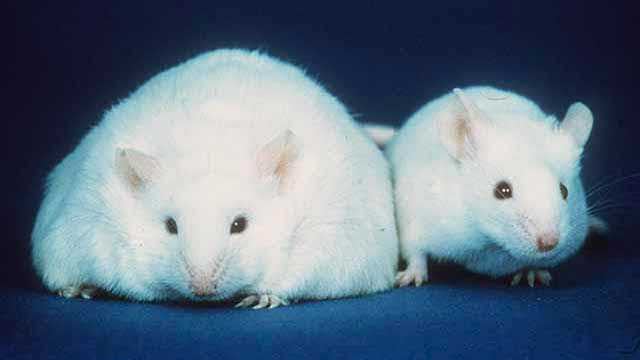
Thus our hypothesis, Harold’s and mine, is that even an old body remembers how to be young, if only it gets the message in the appropriate biochemical language. If an old mouse were to have the blood of a young mouse coursing through its veins, the old mouse would become a young mouse. Parabiosis experiments, sewing together mice of different ages so that they share a common blood supply, originated in the 19th century, but they took a leap into the 21st century beginning in the Stanford laboratory of Irv Weissman. His students spread out to Berkeley and Harvard, and the successors to these programs are studying the rejuvenation potential of various blood plasma components. (It’s not the red blood cells or the white blood cells. It’s not any cells at all, but the proteins and RNAs and short peptides that are dissolved in the blood’s clear liquid background, called plasma.) Some of the best-known people working on this idea are Mike and Irina Conboy at Berkeley, Amy Wagers at Harvard, Tony Wyss-Coray at Stanford. Two companies (Ambrosia and Alkahest) have begun selling transfusions of young blood to wealthy old folks, brave or desperate enough to experiment on themselves with untried technology, and to pay for the privilege.
Harold doesn’t have the funding or the university infrastructure that these people have, but by his report he has leapfrogged their research. He claims to have isolated the crucial molecules in young blood plasma, and that it is feasible in the not-too-distant future to synthesize them, so we’re not all running like vampires after 20-something men and women, bidding up the price of their blood.
His experimental results are preliminary, but impressive. On the one hand, there are big questions that remain; on the other hand, I’ve never seen success like this from any other intervention. (The possible exception is the Mayo Clinic’s work with senolytics, extending the lives of older mice; but the two approaches are so very different and what we know about the two is so different that there is no basis for saying one is more successful or more promising than the other.)
So, what were the results that we find so impressive? I’ve linked to his own chart of results, and I’ve asked Harold to tell us in his own words.
To tell you the truth, when I first was invited by my partner, Akshay Sanghvi to conduct research at a laboratory in Mumbai (India, formerly ‘Bombay’) I had a very definite idea of what I wanted to do. I wanted to transfer the plasma of a young rat, to replace the plasma of an old rat, which I have called Heterochronic Plasma Exchange (HPE). This idea was originally based on heterochronic parabiosis, which apparently resulted in rejuvenation at the cellular level in mice, but without the bizarre and cruel aspects of sewing two animals together; and yet, it should have more profound effects as 100% of the old animal’s blood could be replaced–while in heterochronic parabiosis, a young rat is half the weight of an old rat, so that the combined plasma circulation in the parabiots is considerably less than 50% young plasma. If it is assumed that there are ‘pro-aging’ factors in the blood plasma of old animals, those factors would remain. By using HPE however, sufficient rounds of plasma replacement should leave the old animal with nearly pure ‘young’ plasma. The greater concentration of youthful factors and the absence aging factors should push the cells and, eventually, the body to youthfulness.
Although transfusion technologies for humans are mature and quite safe, transfusing small animals requires state-of-the-art lab techniques. Try as we might, we could not perform plasma exchange in rats. Time was growing short (I was on a two-month visa) so what to do? I made the decision to completely change my approach: yes I believed HPE would work, but I decided to leap ahead, to see if we could make the process of HPE into a marketable product.
Our first pass was to try a combination of known herbal supplements that are known to bind with the targets we’d identified. We gave them to rats, and at first nothing seemed to be happening. But after two months (about 4 years in human terms) the rats showed signs of rejuvenation. We were encouraged. Rather than continue with the herbs, though, we formulated the elixir that we report on here. This is our first iteration, with dosage and timing determined theoretically, yet to be optimized in the lab.
We have addressed several different problems:
- Identification and purification of youth-inducing factors and a process for their large-scale production. Our processes are scalable from microliters to metric tonnes
- Raw material supply: we have gone beyond the need to obtain blood from young people, our sources are virtually limitless
- Removal of the effects of ‘pro-aging-factors’. We have discovered a way to do that, one hidden in plain sight.
Here are our results. Notice the striking and simultaneous occurrence of increases in mental speed and physical strength coupled with lower inflammatory markers and blood glucose levels. Also encouraging is that these changes began days after the IV treatment, and the markers that were improved but not quite down to youthful levels continued to improve right up until the day of their sacrifice. It would appear that the changes induced are permanent, but it will take additional experimentation to confirm this.
Clearly, our next steps are
- repeating and extending our rat results to include molecular and epigenetic signs of aging (Steve Horvath is developing a methylation clock for rats).
- extending results to dogs (in collaboration with Dr Greg Fahy)
- Looking for other molecular changes, including telomere length and various mitochondrial parameters
- and, of course trying the elixir in humans.
I am looking ahead to envision an elixir that brings you back to apparent youth in a week and a day with no side effects. Time will tell, but I feel that the results we have at this point justify optimism.
— Harold Katcher
I’m full of questions, but Harold tells me these will have to wait until intellectual property is secured.
- For some interventions, the body is made stronger and levels of tissue growth repair are restored to youthful states, but there is a cost in elevated cancer risk. This is something that will take time to determine, and perhaps working with mice would be better, since they have higher cancer rates than rats.
- I would guess that a fully youthful phenotype will require restoration of the thymus, which shrinks severely with age both in rats and humans. The current report doesn’t mention thymic regrowth.
- What would rejuvenation look like in humans? Physical strength and mental acuity are a great start. Would my eye lenses soften to youthful levels? Would I grow new discs between my vertebrae (and regain the 2″ I’ve lost in the last decade)? How about teeth and hair?
- I’ve read that many blood factors are transient, with a half-life of seconds to minutes. I can imagine long-term effects from epigenetic reprogramming through blood factors, but I’m surprised this could happen without a continuous IV feed.
- And, of course, I’m curious about the content of the elixir. Thousands of different compounds have been isolated from blood plasma, and hundreds that differ between young and old. I think of the Conboys as leaders in this field, and when I spoke to them less than two years ago, they had been unable to identify a small subset of key factors that would induce changes in the rest. Harold has said, “these factors are ‘bio-similar’ to factors already present in the blood, they work by natural means…”
The bottom line
I respect Harold’s caution in protecting his discovery out of the reach of Big Pharma. On the other hand, so many questions are not being addressed because his resources are limited. This is indeed a very promising start, and let’s hope that the appropriate connections come along so that further experiments can proceed without delay.
Discussion
251 reader comments
Imported threads are marked Archive. New comments are welcome and moderated for spam.
A paper on the larger study in rats is now available pre-peer-review.
A paper on the larger study in rats is now available pre-peer-review.
https://www.biorxiv.org/content/10.1101/2020.05.07.082917v1.full.pdf
Josh has blogged on it, and I am commenting here because these comments add many interesting nuggets of information. For example, has the possibility of a skin patch for n=1 experimentation been shelved?
Hesperetin too: https://www.ncbi.nlm.nih.gov/pmc/articles/PMC3513570/
All sounds very exciting Akshay! How are the 96 rats looking so far?
Not to rain on the parade, but once you solve the problem of aging, you need to then figure out how to regenerate all of the neuronal losses that accumulate in the human brain, starting at age two and moving progressively until old age. One source I read suggests we lose about 1/3rd or our brain mass by the time we are 80, and those are neurons in places that cannot be regenerated. So we risk creating a zombie army of 110 year old people with the brains of morons because we never brought back their lost neurons nor did we stop the ongoing losses after they became "young" again.
From this source:
http://chronopause.com/chronopause.com/index.php/2011/05/30/going-going-gone/index.html
"Cerebral atrophy is a big problem in aging, and it turns out the process begins not in middle age, but at approximately 2 years of age – at least for the neurons that comprise the gray matter of the cerebral cortex.23 Brain cell loss and degeneration become morphologically apparent in the brain’s white matter by the time we are in our early 20’s, although there is evidence that more subtle changes have been afoot for much longer.24 Losses in gray matter volume proceed approximately linearly with age in normal aging, and the average gray matter volume decreases from ~390 mL at age 22, to ~300 ml at age 82.25 Total loss in brain mass between age 20 and age 80 is, on average, ~450 g, or roughly 1/3rd of our youthful brain volume. If you are not on the metric system, all you need to know is that an average human brain weighs ~3 pounds when you are age 20, and by the time you are 80, your brain will weigh a pound less. And that is absent disease – if you have Alzheimer’s, hypertension, or atherosclerosis (cardiovascular disease) your losses will be greater – a lot greater.26"
In our trial the old treated rats regain memory in Barnes Maze test on par with young controls or surpass them. Whereas the old untreated rats memory function continues to degrade.
Akshay, that would be most likely regeneration in the hippocampus, which is one of the few areas of animal brains that can regenerate on its own anyway. It is important to record that, but I do not think that is really an answer to my point.
What I am trying to call out is the atrophy of many areas of the cerebral cortex - where our most critical thinking functions reside - and these are neurons that probably require some kind of stem cell strategy to regenerate.
P.S. Is there a website for your project? What is the best way to reach you?
There is actually some regeneration of brain cells, very limited although. The fact is that we still don't know which would be the effect on it of a rejuvenation treatment, if we find one.
However, intellectual capacity is not just a matter of number of neurons, but of connections. The best example are the babies: they lose a significant number of neurons during the first years and yet develop their intelligence as ever.
I would expect our technology to holistically make the brain young again. But we will have to find out in our future trials. There is link to the results of our previous trial on this post. You can reach me by email atomicblissventures at gmail dot com
Has anyone discussed this paper, yet?
https://onlinelibrary.wiley.com/doi/full/10.1111/acel.12708
Young blood restored autophagy in aged rats, leading to all sorts of benefits. Blocking autophagy abrogated the benefits of young blood.
I assume " his liver spots went away " implies his proteasome system was stimulated to disposed of the lipofuscin that causes "liver spots" and probably disposed of lots of other accumulated protein junk.
Slightly OT, but Vince Giuliano is about to launch his liposomal 4 herb synergy to combat inflammaging. Not sure, how it compares with Akshay and Harolds elixir, though.
http://www.anti-agingfirewalls.com/2019/06/07/inflammation-part-6-the-science-behind-the-4-herb-synergy-dietary-supplement/
Truly respect Vince and James. I love their meticulous detective work at the molecular level with regards to aging. A big fan. There are many similarities with our first natural extract trial. We both have taken steps to improve bioavailability the major stumbling block that dilutes almost all benefits of herbal and natural extracts. What I also liked to see is that the herbs used are Ayurvedic from India :)
They have focused on the one common thread that binds almost all the age related pathologies: chronic inflammation. Thereby transmitting benefits for aging itself. Our first trial focused on activating our repair pathways and old treated rat's age related markers including Il-6 and Nfkb reversed back to levels of young control. So the liposomal 4 herbs sold by Vince should be purchased by all as it will help slow down aging pathologies but if our second trial of elixir translates to humans it should make Vince a teenager again biologically.
Do you mean you expected from your treatment real rejuvenation (I mean inside and outside) or "just" good health as a young man? Did your old treated rats look young after the test?
From elixir real rejuvenation
I gave Vince's product a 3 month trial. CRP was unchanged and NLR was only slightly reduced. I'm 78, so there would seem to be plenty of room for improvement.
It hasn't helped that they took down my objective review of my results. I had expected better from Vince.
"with lack of sleep" Have you tried inositol?
Hm. My comment was intended as reply to Christopher Riegel's comment, however apparently it ended up as standalone comment. I apologise, however don't see how that can be undone
Anything new about this experiment? Did you manage to get the founds to move forward?
I'm looking forward to earing some news about it.
Yea we did get funds to complete our next trial on 96 rats to replicate results and to determine optimum dose and frequency. The trial is under way. After this we are planning for old dog trials in USA with a highly reputed scientist and simultaneously begin process to raise a larger round of funding to continue progress towards regulatory approval, human trials and hopefully making elixir commercially available. In meantime we are in process to launch a transdermal patch of one of the most powerful anti aging molecules which goes down with age. Human trial is expected to start this month including our co-founder Harold. Josh will be the first to get a box to try and share his evaluation with his blog readers. We are trying our best to make it reasonably priced. But it should make a significant uptick in quality of life of aging.
I'm officially volunteering for the trial - free or pay2play - please send me an email once you're looking for new test subjects.
Patricio Yes we did get funds to complete our next trial on 96 rats to replicate results and to determine optimum dose and frequency. The trial is under way. After this we are planning for old dog trials in USA with a highly reputed scientist and simultaneously begin process to raise a larger round of funding to continue progress towards regulatory approval, human trials and hopefully making elixir commercially available. In meantime we are in process to launch a transdermal patch of one of the most powerful anti aging molecules which goes down with age. Human trial is expected to start this month including our co-founder Harold. Josh will be the first to get a box to try and share his evaluation with his blog readers. We are trying our best to make it reasonably priced. But it should make a significant uptick in quality of life of aging.
Thanks for the update. It sounds very promising!
Like Stephan, I would like to know what are the requierements to get a box.
Thanks for the update Akshay.
Hi Akshay,
Any news from your 96 rats trial?
And from the human trial of the transdermal patch?
What would be the requirements to get a box like Josh?
We want to sell a 30 day supply box for $40 if we can achieve such pricing for first lot of 10,000 boxes.
How quickly to you think that you can get this to market and when will you be able to discuss exactly what is in the product?
Thanks Akshay, that sounds very reasonable, count on me to be an early self experimenter.
Hi Ashkay and Harold,
If you are looking for volunteers, I am a former solo OBGYN who killed my brain with lack of sleep. I developed an REM sleep disorder and aged quickly. I now practice anti-aging medicine. I recently tested my Teloyears at 57 and it said I was 64 or older. I volunteer to be a participant.
The authors Kathyln Gan and Thomas Sudhof write: 'We asked whether young blood is enriched in factors that act directly on neurons to promote synapse formation.
'We show that serum from young but not old mice indeed directly boosts synapse formation in cultured neurons, and identify two factors, thrombospondin-4 and SPARCL1, that are enriched in young blood and mediate these effects.
'Thus, our experiments show that young blood is enriched in multiple factors that directly promote synaptic connectivity between neurons.'
https://www.pnas.org/content/early/2019/05/29/1902672116
Crowdfunding might not work if you can't show absolute proof that the treatment actually does have all the effects you claim. One way of getting recognition and attention would be self-experimenting. I'm sure if you could demonstrate these amazing rejuvenating effects on yourself, you wouldn't have a problem getting all the funding you need.