

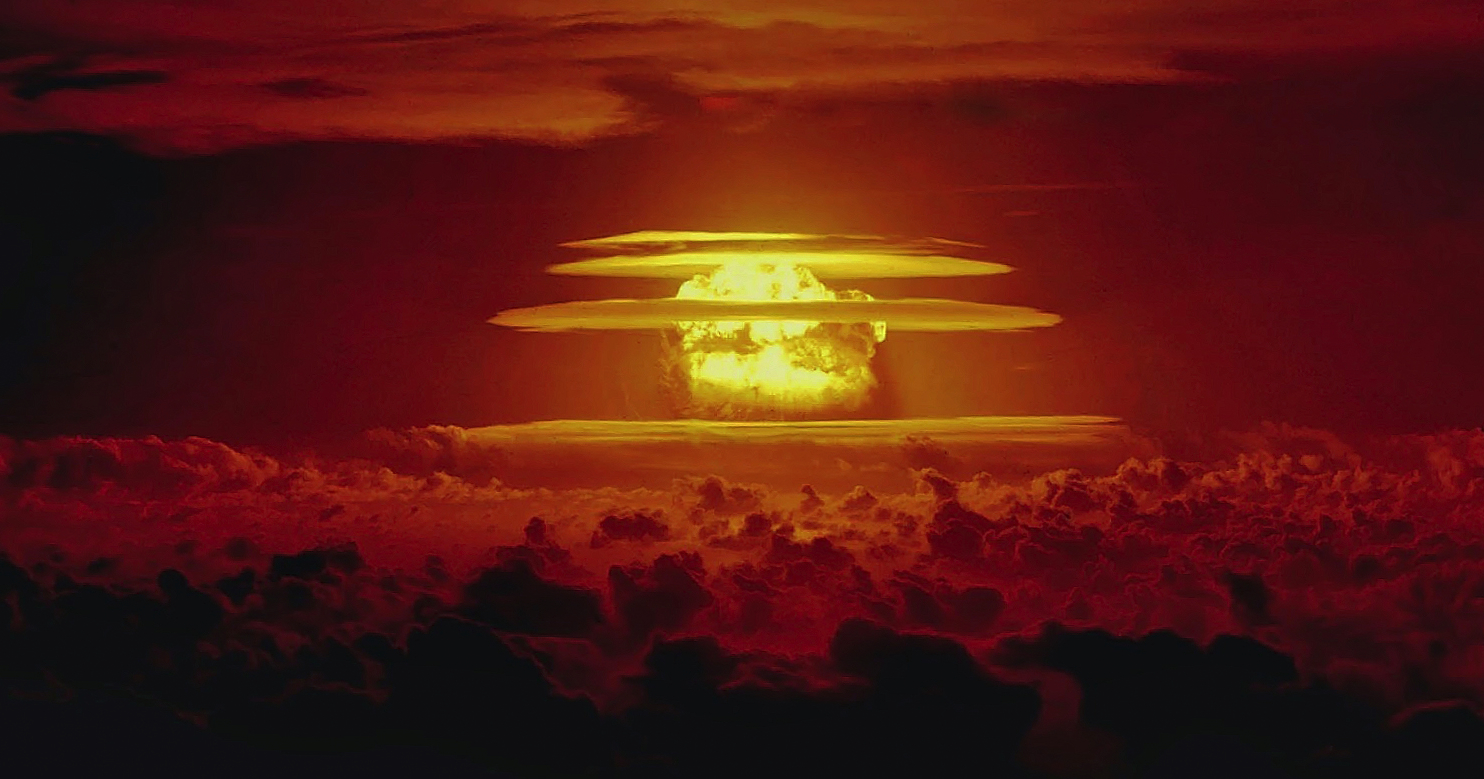
Calling any country “safe” after an all-out nuclear war empties the word of meaning. Safety normally implies that ordinary systems still work: food reaches shops, water remains clean, hospitals can replace medicines, power stays on and public institutions retain authority. A global nuclear exchange could break several of those systems at once, including in places never struck by a weapon.
Australia nevertheless has a larger margin than most. That conclusion does not come from one dramatic map. It comes from several narrower measurements that happen to point in the same direction: less severe modelled agricultural cooling in much of the Southern Hemisphere, a large food-export surplus, comparatively strong public-health capacity, substantial energy and infrastructure, and military spending far above the other food-resilient islands in one published comparison.
The distinction matters. This is an assessment of relative resilience, not a prediction that Australia would escape catastrophe. The measurable claim is that it begins farther from several failure thresholds. How much of that distance survived would depend on where weapons fell, how much soot reached the stratosphere, what trade remained and whether complex systems degraded gracefully or all at once.
The question is bigger than the blast map
A nuclear detonation kills through blast, heat and radiation. A large war adds a second geography. Firestorms in cities and industrial areas can lift black carbon high into the atmosphere, where it absorbs sunlight, heats the surrounding air and can remain for years. The smoke spreads beyond the combatants, reducing light and cooling land and ocean far from any target.
That is the mechanism behind nuclear winter. A 2022 study led by Lili Xia in Nature Food linked six soot scenarios to climate, crop, livestock and fishery models. The smallest injected 5 teragrams of soot; the largest injected 150. Even the 5-teragram case reduced modelled global crop calories by 7% during the first five years. In the 150-teragram case, crop calories fell by about 90% three to four years after the war.
The paper assumed international food trade stopped as exporting countries retained dwindling supplies. That is a harsh assumption, but not an arbitrary one. A crop loss that looks moderate at the global level can become severe for an import-dependent country if exporters close their markets and transport, insurance, finance and ports fail at the same time.
A 2019 comparison of two US–Russia nuclear-winter simulations produced Northern Hemisphere summer temperatures below freezing across large areas. The point is not that every model produces the same local number. It is that direct casualties would be only the beginning of a much wider food emergency.
Why the Southern Hemisphere helps without protecting it
The Nature Food model found the largest percentage losses in agricultural production at mid and high northern latitudes. Slightly less smoke reached the Southern Hemisphere, while its larger ocean area changed temperature more slowly. Ocean sunlight declined less than sunlight over crop regions for the same reason.
Australia therefore benefits from location, but there is no hemispheric shield. Stratospheric soot circulates globally. Temperatures, rainfall and sunlight would still shift, and the paper’s scenarios produced food shortages across almost all countries once soot injection exceeded 5 teragrams. “Favoured” in this context means damaged less than the worst-hit regions, not spared.
The oceans are no untouched reserve either. A separate Earth-system study examined how nuclear war could alter ocean circulation and marine food webs. Cooling, expanding sea ice and reduced plankton productivity could persist after the atmospheric smoke began to clear. Australia has extensive fisheries and long coastlines, but neither makes marine calories independent of planetary climate.
How the island study placed Australia first
Matt Boyd and Nick Wilson approached the problem from a different direction. Their 2023 paper in Risk Analysis first asked which island nations could still produce enough food under a severe 150-teragram abrupt sunlight-reduction scenario. It then compared the more promising countries across energy, infrastructure, manufacturing, social cohesion, political stability, defence spending, education and health security.
Five island nations emerged as the most food-resilient: Australia, New Zealand, Iceland, the Solomon Islands and Vanuatu. The wider table also profiled Indonesia, the Philippines and Mauritius. Australia had the best average rank across the available indicators, with New Zealand second and Iceland third.
This is one study, not a universal league table for the end of the world. The indicators came from different datasets and years, missing values were unavoidable, and the authors counted only the indicators available for each country when averaging ranks. Their exercise is valuable because it makes “resilience” testable, but its precision should not be mistaken for certainty.
Australia’s food advantage is real but not automatic
Australia produces much more agricultural output than its population consumes. The Australian Bureau of Agricultural and Resource Economics and Sciences now reports that the country exported 71% of agricultural production by volume across the three years to 2024–25. Wheat, beef, lamb and canola are especially export-oriented.
In the island study’s nuclear-winter calculation, Australia retained the largest excess food production. That surplus is the centre of its advantage. When trade collapses, an exporter has material that can in principle be redirected inward. An importer faces a missing supply with no domestic substitute ready.
“In principle” does a lot of work. Export volume is not the same thing as a balanced domestic diet. Grain can provide calories, but nutrition also requires protein, fats and micronutrients. Meat production uses land, feed, water, processing and cold chains. Redirecting exports would require rationing, purchasing rules, transport and political legitimacy.
Farms themselves are industrial systems. They need diesel, fertiliser, pesticides, seed, tyres, pumps, electronics and replacement parts. The Boyd and Wilson paper specifically noted risks from reduced fertiliser access and difficulties pumping groundwater if fuel became scarce. A food surplus measured at the farm gate can disappear between harvest and plate if machinery, roads, mills or distribution fail.
Second in health security does not mean hospitals are secured
Australia ranked second among 195 countries in the 2021 Global Health Security Index, scoring 71.1 out of 100 behind the United States. The island paper used this as one measure of resilience because disease surveillance, laboratories, sanitation, public-health administration and medical capacity would matter greatly during a long disruption.
The index was designed for epidemics and biological threats, not nuclear war. It does not measure whether a hospital could function after months of power instability, lost imports or a sudden population movement. Nor was a score of 71.1 an all-clear. The 2021 report placed no country in its top preparedness tier and concluded that every country remained dangerously vulnerable to future health emergencies.
Australia’s ranking is best read as another strong starting condition. Trained staff, surveillance systems and functioning institutions increase the chance of containing outbreaks and allocating scarce care. They do not manufacture imported medicines, restore a broken electrical grid or replace exhausted clinicians.
“Defence capability” was a spending measure
The most easily overstated part of the comparison is defence. Boyd and Wilson used 2020 military expenditure as their indicator, labelling it “defence capability.” Australia spent about US$27.5 billion, compared with US$9.4 billion for Indonesia and US$3.0 billion for New Zealand. It therefore spent almost three times as much as the next country in the eight-island table and roughly nine times as much as New Zealand.
That gap is large, but spending is a proxy, not an inventory of usable capability after a global war. Ships and aircraft depend on fuel, maintenance, munitions, satellite links, trained crews and supply chains. Forces designed for modern coalition operations may not map neatly on to escorting essential shipping, protecting dispersed infrastructure or supporting domestic distribution through years of scarcity.
There is also a reversal hidden inside strength. Australia’s alliances and strategic facilities could raise the chance of direct attack. The island study itself flags AUKUS and US-linked intelligence installations, including Pine Gap, as possible targeting risks. Nuclear-winter resilience measures conditions away from target areas; it cannot cancel blast, fallout or infrastructure destruction if Australia becomes part of the battlefield.
The weakest link may not be food
Modern resilience is a network property. Agriculture needs energy. Energy systems need spare parts and skilled operators. Water needs pumps and treatment chemicals. Hospitals need power and pharmaceuticals. Telecommunications need electricity, hardware and repair crews. Government rationing needs public trust and accurate information.
This is why the island paper also examined manufacturing, infrastructure, political stability and social cohesion. Australia performed strongly in aggregate, yet even a wealthy country holds limited inventories of specialised components. Trade isolation can produce what the authors call “creeping degradation”: one irreparable failure makes another more likely until a technically advanced system settles at a much lower level of complexity.
Adaptation can help at the margins. Science Blog has reported modelling of cold-tolerant, shorter-season maize after a soot shock. Other proposals redirect animal feed, reduce waste or develop alternative foods. The Nature Food study found that such measures offered limited relief in the largest scenarios, especially because changes would have to be organised before the worst second-year shortages.
A measurable distance from the edge
Australia’s case is strongest when none of its advantages is asked to carry the whole argument. Southern latitude reduces some modelled climate damage. Excess production creates a food buffer. Energy and infrastructure provide operating capacity. Health systems offer disease control and treatment. Defence spending indicates an ability to protect institutions and resources. Each is incomplete; together they create margin.
The result still depends on assumptions. A regional exchange producing 5 teragrams of soot is not the same event as a 150-teragram US–Russia war. Targeting patterns would change direct damage. The season of conflict affects crops. Governments might preserve some trade or stop it entirely. Social responses are harder to model than sunlight and temperature.
No table can show that Australia would remain safe if nuclear war went all the way. It can show why its starting position is unusual. Among countries with enough modelled post-winter food, Australia also has the deepest combination of public institutions, infrastructure, energy and military expenditure. That is not immunity. It is the difference between beginning at the edge and beginning some measurable distance back from it.