

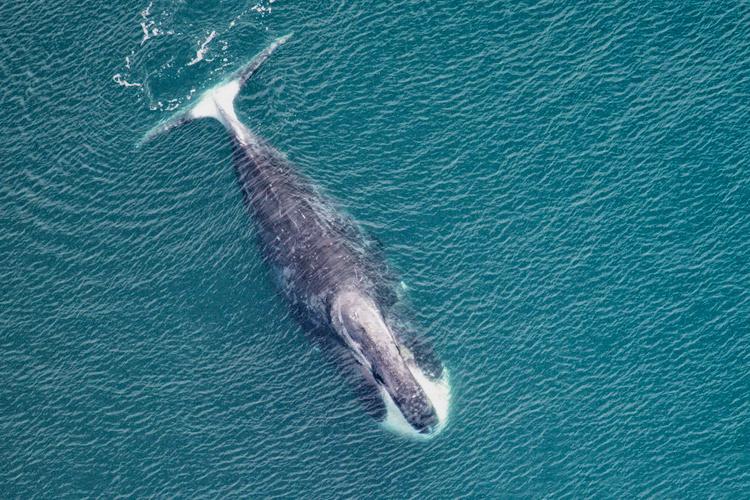
A bowhead whale presents a problem that simple arithmetic says should not exist. It can live for more than two centuries, grow beyond 80,000 kilograms and carry on the order of a thousand times as many cells as a human. Every one of those cells has DNA to copy and maintain. Every year creates more opportunities for a cancer-promoting error.
Yet the bowhead is not highly cancer-prone. In a 2025 Nature study, researchers found evidence that the whale’s answer is not an unusually tall stack of tumour-suppressor barriers. Its cells appear to be better at preventing dangerous mutations from becoming permanent in the first place.
That distinction sounds small. Biologically, it changes the story from one of destroying compromised cells to one of preserving them through unusually efficient and accurate repair.
The thousand-fold problem is a scaling argument
No one has counted every cell in a bowhead whale. The thousand-fold comparison is a reasonable order-of-magnitude estimate based mainly on body mass. A large bowhead can exceed 80 tonnes, while a human is measured in tens of kilograms. Cell sizes and the proportions of different tissues vary, so the figure should not be mistaken for a literal census.
The underlying problem is real, however. Cancer begins when a lineage of cells accumulates a consequential set of changes. More cells mean more places where that sequence might begin, and more years mean more time for it to unfold. Bowheads combine enormous bodies with the longest documented lifespan of any mammal, exceeding 200 years.
If cancer risk simply rose in proportion to cell number and lifespan, large, old animals ought to be overwhelmed. They are not. A broad survey of cancer across 191 mammal species found no significant association between cancer mortality risk and adult body mass or life expectancy. This mismatch is known as Peto’s paradox.
Elephants built more kill switches
One famous evolutionary answer comes from elephants. Humans carry one TP53 gene, which helps a cell respond to serious DNA damage. Elephant genomes carry 20 TP53 copies, including retrogenes, and their cells show an unusually strong damage response. Research linking that TP53 expansion to elephant body size supports a strategy in which potentially dangerous cells are pushed toward programmed death before they can form a tumour.
The bowhead team initially expected something similar. A normal cell usually does not become malignant after one mutation. Several protective systems must be disabled or bypassed. Perhaps, the researchers reasoned, a whale cell would require six or seven engineered oncogenic changes before it could grow as a cancer.
Instead, the experiment went the other way. Human fibroblasts carrying added telomerase needed activated HRAS plus two viral proteins that interfere with tumour-suppressor pathways before they grew independently in soft agar. Comparable bowhead fibroblasts were transformed with activated HRAS and only one of those viral proteins. Separate tests in mice, using the modified cells as xenografts, supported the same result.
The whale’s individual fibroblasts were not protected by an extra series of locks. Under these deliberately artificial conditions, they required fewer interventions than human fibroblasts. That finding has a clear limit: the work used connective-tissue cells, while most human cancers arise in epithelial cells. It cannot establish the transformation rules for every tissue in a living bowhead.
The important event may happen before a tumour begins
The apparent weakness of the last line of defence redirected attention to an earlier one. Whole-genome sequencing found fewer newly acquired single-letter mutations in tumours derived from bowhead cells than in comparable human and mouse tumours. The whale cells also carried fewer small insertions and deletions and fewer large structural changes, including an especially marked reduction in alterations longer than 500,000 DNA letters.
Other experiments exposed cells to radiation or chemicals that damage DNA. Again, bowhead fibroblasts accumulated fewer mutations. The pattern was not that their DNA avoided all harm. It was that damage was less likely to remain as a lasting change in the genome.
The researchers then examined several repair systems. Some were unexceptional: nucleotide-excision repair was comparable with human cells, while an apparent advantage in base-excision repair did not reach statistical significance. The clearest differences involved mismatch repair and the handling of double-strand breaks, among the most dangerous lesions because both rails of the DNA ladder are severed.
Bowhead cells performed both major forms of double-strand-break repair more efficiently than cells from the other mammals tested. They also resolved experimental break markers faster and formed fewer micronuclei, small DNA-containing bodies that signal chromosomal instability.
Accuracy matters as much as speed
A fast repair is not automatically a safe repair. Non-homologous end joining, or NHEJ, reconnects broken DNA directly and can lose genetic material at the join. Homologous recombination uses a matching sequence as a template and is generally more exact, but is available only during particular stages of the cell cycle.
When researchers cut the same conserved site in the PTEN gene of bowhead, human, cow and mouse fibroblasts, deletions dominated the repair outcomes in the three other species. Bowhead cells retained the highest proportion of unmodified sequences and produced the fewest large deletions. Their NHEJ machinery was not merely busy. It was unusually faithful.
This is the heart of the result. A cell can resist cancer by detecting damage and killing itself, or it can reduce the number of oncogenic mutations that ever become fixed. The bowhead evidence points strongly toward the second approach. For an animal that must preserve functioning tissues across two human lifetimes, repairing a cell accurately may be less costly than repeatedly discarding it.
That does not mean bowheads never develop cancer. Disease surveillance in wild Arctic whales cannot match lifelong medical follow-up in humans, and a low number of observed tumours is not proof of immunity. The careful claim is that bowheads are not highly cancer-prone despite a combination of size and longevity that should make them so.
CIRBP is a compelling clue, not the whole answer
The molecular search led to cold-inducible RNA-binding protein, or CIRBP. The protein responds to stress and can associate with RNA and molecules involved in the DNA-damage response. It was strikingly abundant in bowhead fibroblasts and tissues, while largely undetectable in several other mammals examined by the team.
Manipulating CIRBP changed repair performance in both directions. Adding bowhead CIRBP to human cells increased successful NHEJ and homologous recombination, reduced large insertions and deletions, and lowered signs of chromosomal damage. Depleting CIRBP in bowhead cells made both repair routes less efficient and increased deletions. In purified laboratory reactions, the protein also protected exposed DNA ends and helped the joining process.
As ScienceBlog’s earlier look at bowhead longevity noted, CIRBP also improved radiation resistance and extended lifespan when overexpressed in fruit flies. Those experiments strengthen the case that the protein does useful work rather than merely appearing alongside longevity.
They do not show that CIRBP alone explains a 200-year lifespan. The bowhead genome has yielded other longevity candidates, and the 2025 study itself found additional differences, including elevated activity in some repair-associated pathways and a weaker inflammatory response from senescent cells. A whale is an evolved system, not one remarkable protein.
Evolution found more than one solution
The work offers a useful correction to the simplest version of Peto’s paradox. Very large animals do not all need to solve cancer in the same way. Elephants appear to have strengthened damage-triggered cell death. Bowheads appear to have invested heavily in genome maintenance. Other long-lived species may combine these approaches or use mechanisms not yet recognized.
There is also no direct human prescription here. Increasing DNA repair is not automatically beneficial, because a repair pathway that rejoins breaks quickly but inaccurately can create mutations of its own. The published experiments involved cultured cells, purified proteins, fruit flies and mouse xenografts. They did not test a treatment in people, and they do not justify claims about cold showers, supplements or lifespan extension.
What they provide is more basic and, for now, more valuable: evidence that mammalian DNA repair can evolve to become both more efficient and more faithful. The bowhead did not become cancer-proof. It seems to have shifted the odds at countless tiny moments, repairing damage before it could harden into the mutations from which cancer begins.
Across a body measured in tens of tonnes and a life measured in centuries, that quiet advantage has an immense amount of time to matter.