

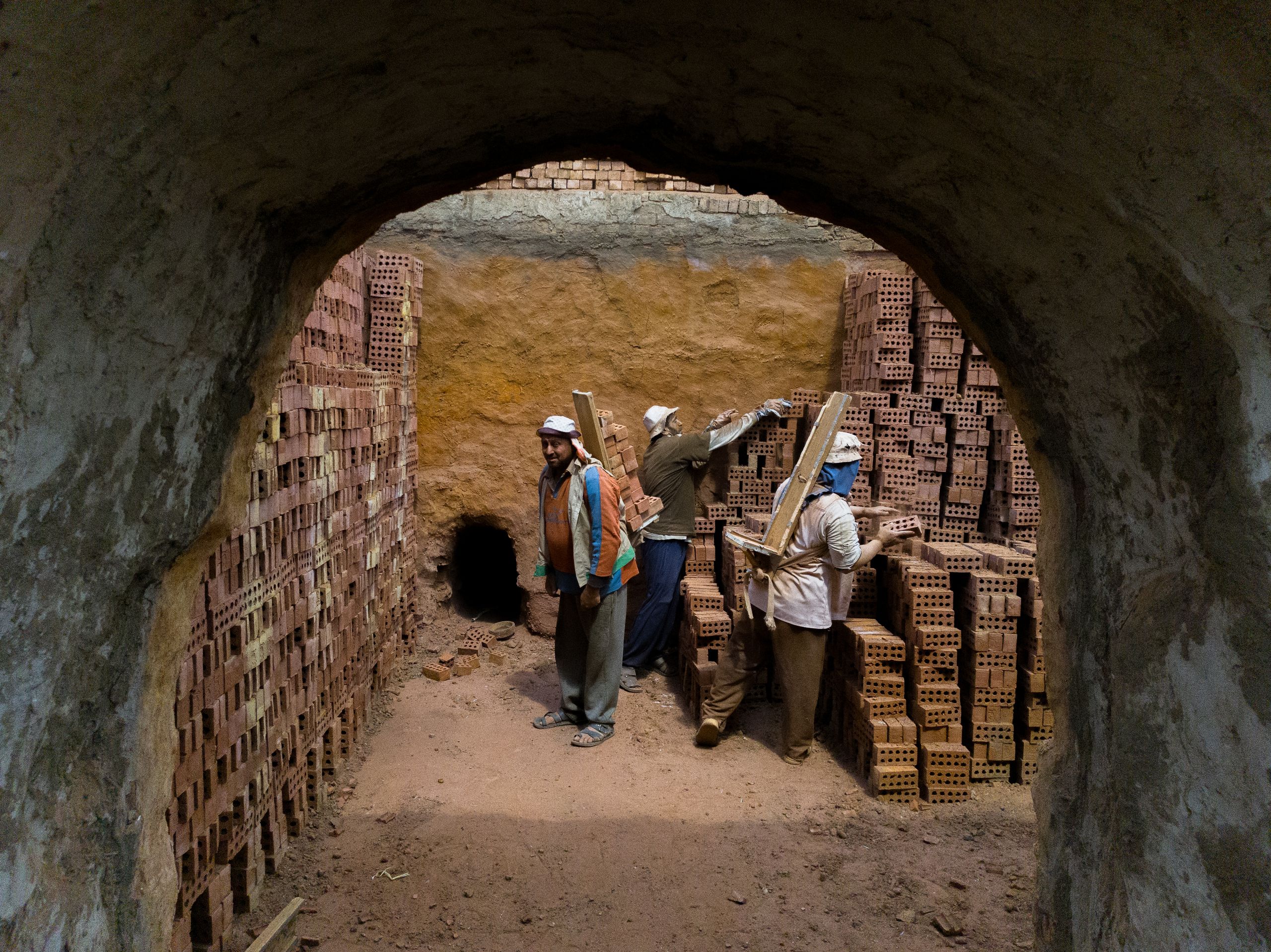
A discarded cigarette butt is a compact bundle of cellulose acetate fibers carrying residues from tobacco smoke. It is small enough to disappear into a gutter, persistent enough to remain in the environment, and common enough to create a waste stream measured in trillions of pieces a year.
RMIT researchers have spent years testing a counterintuitive disposal route: mixing that waste into clay and firing it into bricks. At a one-percent addition by mass, their laboratory specimens became lighter and less thermally conductive while retaining substantial compressive strength. The organic material also contributed energy as the brick fired.
The result is promising, but the boundaries matter. The headline combines findings from several stages of one research program, including calculated energy savings, laboratory furnace measurements and separate leaching tests. These are laboratory-scale studies, not a factory-scale validation.
The one-percent bricks kept useful strength
In a 2020 laboratory study in the journal Materials, RMIT engineers Halenur Kurmus and Abbas Mohajerani made brick specimens with zero, 0.5, one, 1.5 and two percent cigarette butts by mass. The researchers mixed clay, water and butts, compacted the material, dried it and fired it at 1,050 degrees Celsius for three hours. Reported results were averages of three replicates.
The control specimens reached 48.6 megapascals in compressive strength. Adding one percent butts reduced that figure to 30.8 MPa. A roughly 37 percent loss is not trivial, but 30.8 MPa is still substantial strength. That is the more precise meaning of saying the mixture remained useful; it did not perform identically to the control.
The one-percent specimens were also lighter. Their dry density was 1,983 kilograms per cubic meter, compared with 2,114 kg/m³ for the controls. At two percent butt content, density fell slightly further to 1,969 kg/m³. Water absorption moved in the opposite direction, reaching 13.1 percent at two percent butt content versus nine percent for the control.
Those changes are connected. Organic material burns away during firing and leaves pores in the ceramic body. The pores reduce mass and can slow heat transfer, but they also remove solid material that would otherwise carry loads and give water more space to enter.
The 10-percent energy figure has two kinds of support
The 2020 paper calculated a 10.2 percent firing-energy saving for the one-percent mixture. Its method combined the lower mass of clay with the measured calorific value of used cigarette butts, 16.53 megajoules per kilogram. As the cellulose acetate and other organic matter combust, they release some of the heat needed during firing.
That first number was a model result, not a reading from an industrial kiln.
A 2021 follow-up in Construction and Building Materials then monitored energy consumption in a laboratory furnace. For bricks containing one percent butts, the authors reported an eight-percent theoretical saving and a 10.2-percent measured saving in their setup. The agreement makes the scale of the effect more credible, while still stopping short of proving an identical saving in continuous commercial production.
Factory kilns differ in size, fuel, insulation, loading pattern, temperature schedule and heat recovery. A combustible additive could interact with all of those variables. The RMIT work establishes a mechanism and a laboratory result, not a universal discount on every brickmaker’s energy bill.
Lower thermal conductivity comes from added pores
The 2020 study estimated thermal conductivity at 1.078 watts per meter-kelvin for its control and 0.898 W/mK for the one-percent mixture. That is a reduction of 16.76 percent, reasonably rounded to 17 percent in the title.
Lower thermal conductivity means heat passes through the material more slowly. In principle, that could improve a wall’s insulating performance and reduce heating or cooling demand. But the paper’s value was estimated from a relationship with dry density, not measured directly on a full wall assembly. Mortar joints, cavities, moisture and the rest of a building envelope would affect real performance.
The 2021 study provided further thermal measurements across mixtures containing up to two percent butts. It found increasing porosity and decreasing conductivity as butt content rose. The same pore network that improves insulation also explains why density and strength fall, making the percentage of waste a design trade-off rather than a number to maximize.
The 58-percent saving came with much weaker bricks
The dramatic 58.4-percent figure belongs to earlier work summarized in a 2016 Waste Management paper. It was an estimated firing-energy saving for bricks containing five percent cigarette butts by mass. The calculation used the amount and energy value of the waste rather than a factory-scale energy trial.
The higher loading had a steep mechanical cost. In that older specimen series, compressive strength fell from 25.65 MPa for the control to 12.57 MPa at 2.5 percent butts and 5.22 MPa at five percent. The five-percent brick retained only about one-fifth of its control’s compressive strength and sat close to the minimum cited for some low-rise masonry applications.
Those values should not be placed directly beside the 48.6 and 30.8 MPa results as if all four came from one batch. The studies used different mixtures and procedures, and even their control bricks had very different strengths. What is consistent is the direction: more cigarette-butt material creates more pores, saves more estimated firing energy and leaves a weaker brick.
A high-waste brick might still suit some non-load-bearing uses, but suitability depends on the governing standard, manufacturing consistency and the demands of the particular wall. The 58.4-percent figure is therefore a boundary-case estimate, not the program’s recommended recipe.
Firing immobilized much of the tested metal content
Used filters can retain chromium, nickel, cadmium, arsenic and other metals. Left as litter, they can release contaminants into water. Kurmus and Mohajerani examined that problem in a separate 2020 heavy-metal leachate study.
They compared unfired and fired brick specimens containing 0.5, one, 1.5 and two percent butts under leaching solutions with acidic, neutral and alkaline pH values. Firing at high temperature changed the ceramic structure and reduced the ability of metals to move into the test liquid.
Across those mixtures, more than half of the tested heavy metals were immobilized after firing. More than 90 percent of chromium was immobilized, while chromium and nickel leaching was almost completely impeded in several of the tested mixtures. Concentrations from the fired samples were below the solid-waste hazard thresholds used in the paper.
That is stronger evidence than simply assuming a kiln destroys every pollutant. It also leaves sensible limits. The test used crushed samples, three pH conditions and a particular Australian leaching procedure. Barium changed less than several other metals, and the experiment did not measure every chemical found in cigarette waste or every condition a brick might face over decades.
Four and a half trillion butts require a system
The scale of the litter problem is not a laboratory estimate from the brick papers. The World Health Organization says approximately 4.5 trillion cigarettes are discarded into the environment each year. Almost all commercial cigarettes use poorly degradable cellulose acetate filters, and surveys cited by WHO suggest improper disposal is widespread.
Putting even a small fraction into bricks would require more than a recipe. Butts would have to be collected separately, transported, stored without spreading contamination, disinfected and introduced at a controlled dose. RMIT’s later implementation plan considered whole butts, shredded butts and pre-mixed material, along with worker health and safety.
Firing also creates an emissions question. Combusting tobacco residues and filters can release gases, so kiln temperature and heating rate need control. Any environmental claim must compare those emissions and collection costs with landfilling, incineration and the damage caused by litter. The 2020 brick study specifically recommended a lifecycle assessment.
This is the same discipline needed for other waste-derived materials. ScienceBlog’s report on food scraps pressed into prototype solids likewise found that a strong laboratory result did not answer questions about manufacturing energy, moisture, durability or scale.
The one-percent mixture remains the practical center of the RMIT work: it traded some strength for lower density, lower heat conduction and about a tenth less firing energy without reducing the brick to a weak, high-waste curiosity.