

When scientific controversies have major consequences for politics and profits, we’ve come to expect a thumb on the scale of scientific objectivity. The paradox in this case is that the thumb has switched sides.
In 1965, Lyndon Johnson’s science panel was already warning of an effect on global climate from burning fossil fuels. At the time, the response was just what you might expect. The idea was suppressed, and never gained much traction. Privately, Exxon was studying the issue as a defensive precaution. They had both computer modelers (crude at the time!) and an observational program collecting air samples at sea.
At the same time that their internal program was corroborating the logic and predictions of the President’s Panel, they sought proxies to negate this narrative publicly. The American Petroleum Institute funded scientists who would muddy the water and sow doubts, just as the Tobacco Industry had used surrogate scientists to deny there was a link between smoking and cancer a generation earlier.
During the 1990s, the PR battle was joined. James Hansen was writing journal articles and testifying before Congress, while Al Gore was a voice in the wilderness, and the whole story was being suppressed and denied by Big Oil. This is what capitalism does to science. This is the expected norm.
But starting around 2005, something flipped. The scientific evidence for anthropogenic global warming got weaker, and at the same time, the political establishment latched on to the weakened narrative and brooked no debate.
The 2007 Nobel Peace Prize was awarded to Gore and the Intergovernmental Panel on Climate Change. New funding drew young researchers into climate modeling, and it was all contingent on supporting the narrative of an impending climate disaster caused by fossil fuel burning. Big Oil was no longer suppressing the CO2 narrative; on the contrary, they were joining the choir, advertising their commitment to a carbon-neutral future.
Is this a cause for celebration? A rare case of government and industry prioritizing environment over profits and people over corporations? Is government action on climate a hopeful light against the dark background of GMO crops, deforestation, and microplastics in our brains?
Here’s my assessment of the scientific evidence:
What is the scientific status of the CO2 / global warming narrative?
It’s complicated. Yes, human activity is having an effect on global climate. The effect is much smaller than natural variations over the last 200,000 years since man has been on the planet, but is a visible signal in the data. There is no doubt that CO2 as a percentage of the air we breathe has steadily increased over the last 100 years. Whether there has been a corresponding increase in global temperature is more difficult to determine, because averaging temperature readings from thousands of sites around the world can be done in many ways. But it seems true that there has been a 1oC rise during the time that reliable measurements have been available. The net result is probably a boon for life on earth. But computer modeling of climate is a very uncertain science, and published models today are politically influenced in the direction of maximizing alarm.
Historically, there is a strong correlation between atmospheric CO2 and global temperature, but the reason is not the greenhouse effect. You have probably noticed that a can of warm soda bubbles over when opened, much more than cold soda. That’s because water holds less CO2 as it warms. When the earth warms, CO2 comes out of the oceans into the air, and when the earth cools, CO2 comes out of the air and into the oceans. This is a much bigger effect than the greenhouse mechanism. It runs in the same direction, but cause and effect are reversed.
When CO2 in the atmosphere rises, land-based plants grow faster, and the base of the food chain supports richer ecosystems.
H2O has a far larger effect on global temperature than CO2. Cloud cover is the biggest variable in the earth’s albedo, the amount of sunlight reflected back into space before it has a chance to heat the ground or the air. It takes only a small change in the earth’s cloud cover to overwhelm a much larger proportional change in greenhouse CO2. There are complex interactions between CO2 and cloud cover, interactions in both directions that we do not yet understand well enough to make accurate computer models. This is the main reason that current climate models do not have predictive value.
Historically, humans, along with other life forms, have thrived during warmer periods in earth’s history, and ice ages have driven sharp population declines. Warm temperatures mean that more of the earth is habitable, and more CO2 means that plant growth is goosing the base of the food chain.
There are cycles of about 100,000 years — we don’t understand the cause — in which temperatures rise gradually, then fall precipitously and another ice age begins. We are presently at the end of one of these cycles. Temperatures are warmer than they have been in the last 100,000 years, and this was true before humans started burning fossil fuels. It was only 12,000 years ago that all of Canada and half the US were under glacial ice several kilometers thick. That is actually the norm of the last million years. It will happen again. One possibility is that anthropogenic “global warming” has actually forestalled the next ice age.
Interviewed by Danny Jones, Danish Prof Henrik Svensmark tells how he lost his tenured job and his funding for bucking the preferred narrative about global warming. Prof Svensmark studies correlations between earth’s temperature and various astronomical events, especially solar storms and cosmic rays. That was sufficient cause to derail his career.
Briefly: Svensmark says that cloud cover is by far the largest variable in global temperature. Cosmic rays play a significant role in seeding clouds, so high cosmic rays are associated with cooler temperatures. When earth is in a part of the galaxy where there are lots of exploding starts (supernovae are cosmic ray sources), then temperatures are cooler. Closer to home, the sun has “storms” in the form of sunspots and coronal mass ejections (CMEs). The CMEs send a solar wind out to the planets, and this can shield the earth from cosmic rays, meaning less cloud cover and a warmer earth. So the 11-year sunspot cycle is associated with warmer earth at its maximum.
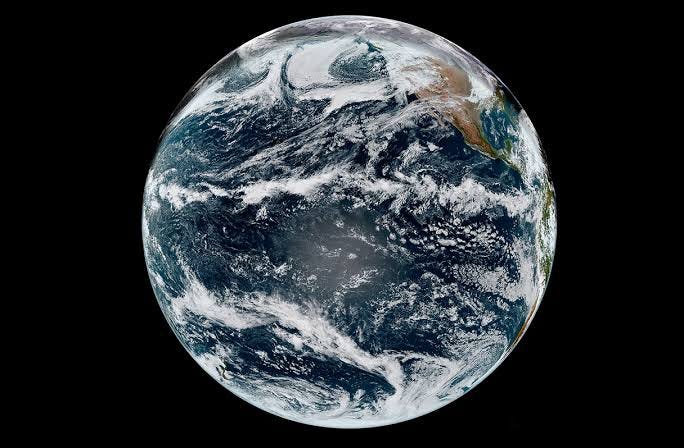
This kind of scientific censorship is almost always associated with corporate profits or a political agenda. But climate alarmism seems to be bad for corporate profits. Is there a possible political agenda?
Discussion
3 reader comments
Imported threads are marked Archive. New comments are welcome and moderated for spam.
Agreed. The climate change hoaxers at the top likely know it is a hoax. The entire claim does not make sense.
Yes, It is presently used for political theater and political leverage.
As was mentioned in the article, earth is in a galaxy. Clustered with other galaxies.
Therefore it makes sense that global forces are dominant and those forces are capable of rapidly and dramatically changing the climate. Human factors are like a flea on Gaia's back.
And let's not forget that we need oxygen created by plants and trees and, plants and trees need CO2, to thrive, as alluded to in Josh's article
Most competent scientists must be aware that Vegetation uses energy from sunlight and water from the soil.
Plants use the energy from sunlight and water to convert the carbon dioxide into glucose that the vegetation uses for root and leaf growth as well as to produce fruit and seeds.
As a byproduct of this chemical reaction, plants give oxygen back to the atmosphere.
Some gardeners and commercial growers supplement CO2 levels in greenhouses to accelerate growth and increase crop yields.
So the small increase in CO2 currently measured is not negatively relevant.
What I know is that the proposed interventions such as carbon credits are counter productive. What has been done is to offshore highly polluting industries and manufacturing to the third world where there is even less regulation and not just CO2 but all manner of pollutants are being released. At the same time this globalization increases energy use due to added transportation of goods back to the first world.
On top of that there are skeptics about renewables, such as seen in the blogs of energyskeptic, and ourfiniteworld, it remains to be seen even if CO2 was an issue if anything could be done about fossil fuels. So far it seems fossil fuels are critical to the functioning of modern civilization and alternatives might not be good enough to replace them so far.
Another breath of fresh air from JM. You (thankfully) got the covscam right, and now you correctly identify another political scam that captured a good percentage of public attention. Much of what made America great got used against it when the leviathan got so big that people didn't hold to principle any longer. A tale as old as time.