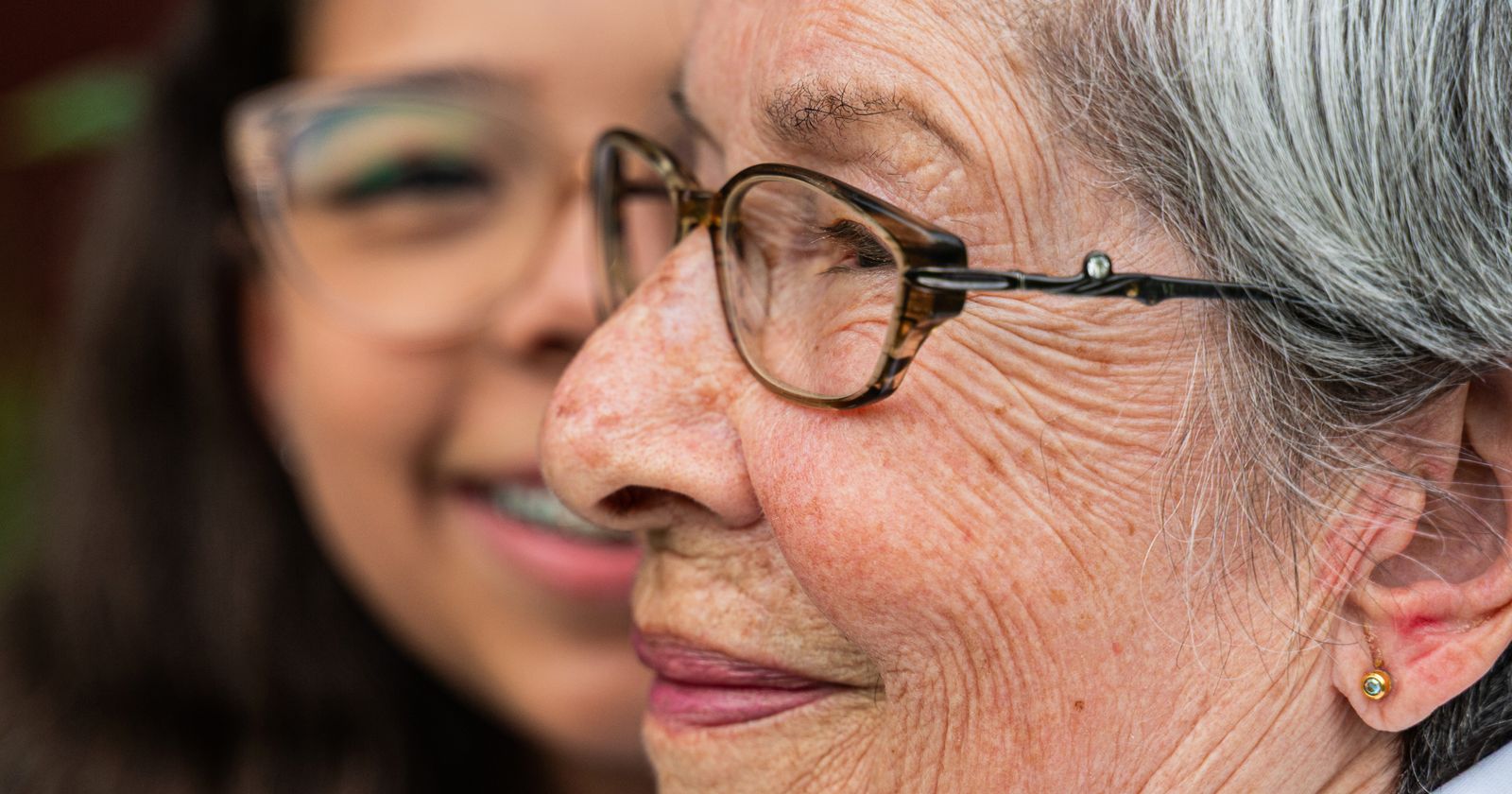
I have always been close to my grandparents, my grandmother most of all. I could talk to her more freely than to almost anyone. I loved her so much that I never asked why, because I thought I knew. She looked after me when I was small and my mother was working. That seemed like enough of an explanation. Lately I’m less sure it is.
She tells me I’ve grown thinner, even when I haven’t. She puts the best bits from her own plate onto mine, the ones she knows I’ll like. She cooks my favourites, over and over. She remembers things about my life that I have forgotten myself. Every time she visits she hands me money in secret, and gold, lavishly, all of it out of her pension. When something goes well for me she cries happy tears. She hopes with me for whatever I’m working towards, and carries it as if it were hers.
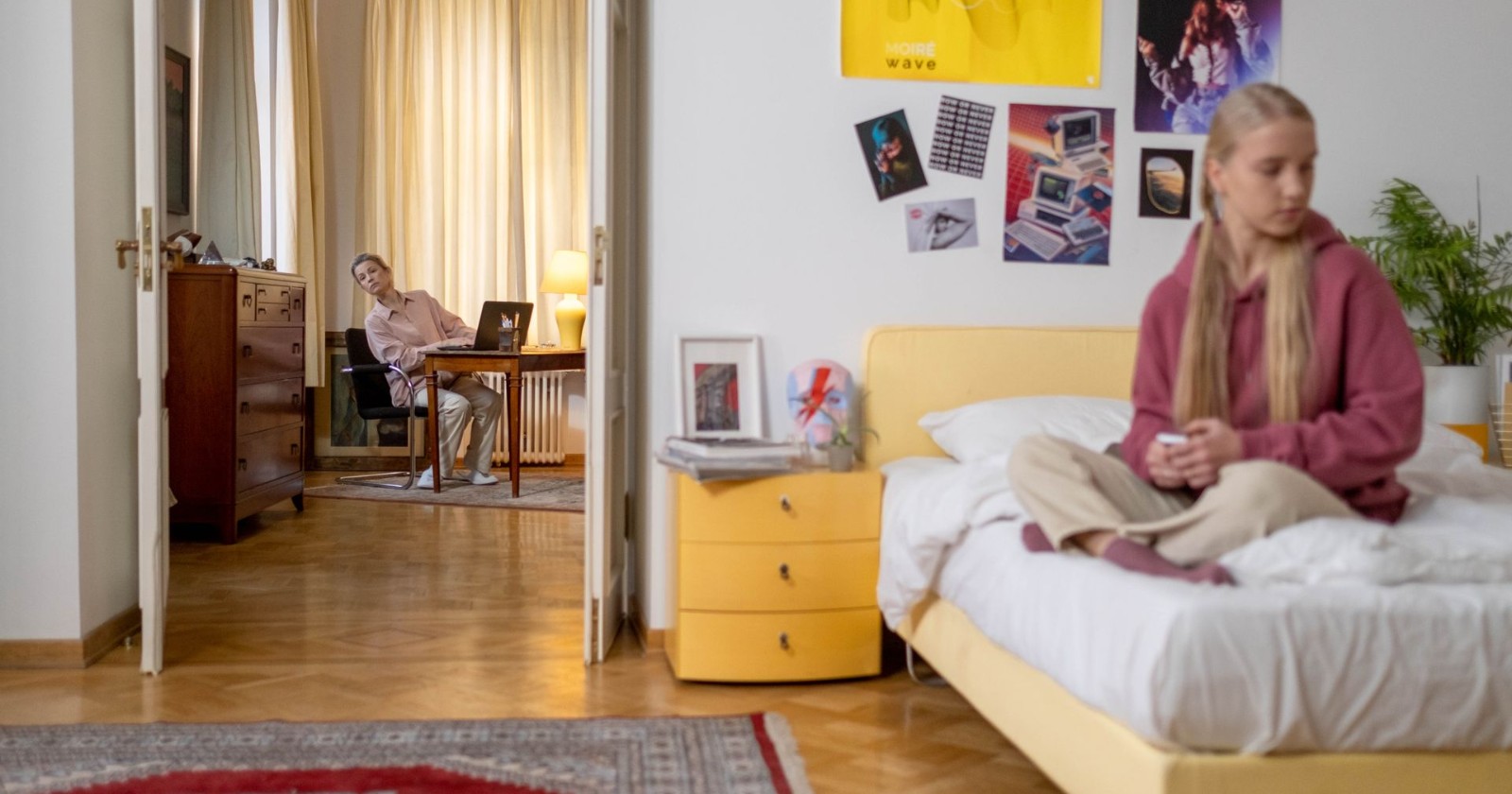
My mother gets something else. With her, Grandma is quieter and more careful, like someone reading something important in small print. She asks her lots of questions like “How’s work treating you? Are you sleeping properly? Why did you say yes to that?” I had put the difference down to age: I am her grandchild, and my mother is a grown woman. Then I read a brain-scan study that described it differently. With me, her love seems to feel what I feel. With my mother, it seems to work at understanding her.
What the scan compared
The study is from James Rilling’s lab at Emory. They scanned 50 grandmothers, average age 59, while they looked at photographs: the grandchild they felt closest to (aged 3 to 12), an unknown child of the same age and sex, the grandchild’s same-sex parent, and an unknown adult. The instruction was to “try to share the emotions of the person you see.”
Any familiar face will light up parts of the brain just for being familiar, so the researchers subtracted that out using the parent and stranger photos. What was left for the grandchild was activity in the insula and the secondary somatosensory cortex, which the authors link to emotional empathy, and in motor areas. The parent photos drew more activity elsewhere, most clearly in the precuneus, which they connect to theory of mind, the ability to work out what someone else believes and intends. In Emory’s release, Rilling said grandmothers seem “geared toward feeling what their grandchildren are feeling,” while with an adult child, the release adds, they “may be trying to cognitively understand what their adult child is thinking or feeling and why.”
Where the neat version breaks
The “adult child” was only sometimes the grandmother’s child. Of the 50 parents in the photos, 32 were. The others were in-laws, or a relative standing in.
The parent response was not purely about thinking either. The authors say the precuneus “might indicate greater engagement of cognitive empathy,” and the “might” matters. In their region-of-interest analysis the right anterior insula and the dorsal anterior cingulate also responded more to the parent, and they count those as emotional empathy regions.
And going from a brain region to a mental process is a known problem. Russell Poldrack wrote in 2006 that this kind of reverse inference is “not deductively valid,” though not worthless, and that it gets weaker the more different things a region does.
The result I keep thinking about
The result I keep coming back to is one that found nothing. The authors checked whether the parent response was stronger when the parent was the grandmother’s own child than when it was an in-law. In the parental-brain regions where parents beat grandchildren, it wasn’t. They give two readings. The regions might not be specific to parenting. Or grandmothers might come to develop “parental orientations” toward their sons- and daughters-in-law. I can’t stop thinking about it. If it holds, the response isn’t about the adult being her own child. It’s about the relationship: someone she has spent years trying to understand, whether or not she raised them.
Rilling interviewed every participant himself. The main difficulty many of them described was trying not to interfere when they disagreed with the parents about how the grandchildren should be raised. So working out an adult you love comes with a lot of holding back.
Later, I asked my mother why my Grandma talks to her the way she does. She laughed, before saying “Because she can’t tell me what to do anymore. Maybe this is her way of staying in my life without taking over.”
I had heard a grilling. My mother heard someone choosing, every time, not to give an order.
Why feeling is the easy one
Rilling’s own explanation for the grandchild response is partly the “cute factor”: young children “have likely evolved traits to be able to manipulate not just the maternal brain, but the grand maternal brain.” He offers this as speculation, not something they measured. There is a plausible background. Humans raise children cooperatively, and the grandmother hypothesis says women live decades past reproduction partly because helping descendants pays. And it isn’t exotic where I grew up: in one Singapore cohort, half of 4.5-year-olds had childcare support from at least one grandparent.
If evolution made small children easy to feel for, then feeling for them takes little effort. Understanding an adult is a different job.
What the study can’t tell us
The grandmothers were, in the paper’s words, “mentally and physically very healthy” and “highly positively engaged,” with little financial strain, and they spent almost 24 hours a week with the grandchild. All of them were women. The authors say that because they ran multiple contrasts across multiple regions, the results “may still be vulnerable to false positives.”
What I take from it
I used to think we were close because she looked after me. In the Emory paper, neither the hours a grandmother spent with her grandchild nor how much of the practical care she did significantly predicted how strongly her brain responded to the grandchild’s photo. It isn’t proof, but it fits a suspicion I now have: being looked after doesn’t fully explain why we’re so close.
There is one more thing, and I can’t use it as evidence. It’s the most touching memory I have of her. When she was coming round from an operation, she kept calling out for me. Nobody else. She wasn’t choosing, I think. It just came out. That is the kind of love the scan seems to describe, the kind that doesn’t have to think first.
I used to hear those questions as prying. Now I think they were love, the deliberate kind. Next time she asks my mother how work is treating her, I’ll listen to the answer too.
Spot an error in this article? Email [email protected]