
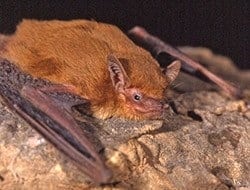
An international team of scientists, including biologists from, the University of York, has discovered five new species of bats in West Africa.
The team, which also included researchers from the Czech University of Life Sciences and the Academy of Sciences, Charles University in the Czech Republic, discovered a wealth of unexpected diversity among Vesper bats in Senegal.
During seven expeditions to the Niokolo-Koba National Park in south-eastern Senegal, and subsequent genetic analysis, the scientists discovered that five species of bats looked similar to other populations in Africa, but differed significantly genetically from them.
Taxonomists are now working on describing formally these new species – Vesper bats (Vespertilionidae) are already the largest family of bats with more than 400 known species. The research is published in Frontiers in Zoology.
The researchers studied 213 vespertilionid bats from Senegal and identified ten species, five of which were significantly genetically different from their nominate species — Pipistrellus hesperidus, Nycticeinops schlieffenii, Scotoecus hirundo, Neoromicia nana and Neoromicia somalica.
One of the research team, Nancy Irwin, of the Department of Biology at York, says: “The fact that these Senegalese bats are unrelated and are different to their cousins in other parts of Africa, suggests that West Africa may have been isolated in the past and formed a refugium, where populations gradually diverged and even acquired new chromosomal configurations. “This exciting finding confirms that West Africa may represent an underestimated bio-geographic hotspot with many more species to discover.”
ScienceBlog.com has no paywalls, no sponsored content, and no agenda beyond getting the science right. Every story here is written to inform, not to impress an advertiser or push a point of view.
Good science journalism takes time — reading the papers, checking the claims, finding researchers who can put findings in context. We do that work because we think it matters.
If you find this site useful, consider supporting it with a donation. Even a few dollars a month helps keep the coverage independent and free for everyone.