

Yesterday, the TRIIM study was described in science news headlines around the world, though, through a glitch, the original research paper is not yet on the Aging Cell web site. (You saw it first here.) I refer you to the writeup in Nature’s News section for a full summary of the paper, and in this column I will add my personal framing, and what I know about the study from private connection to its authors and one of the subjects. The big news is setback of the epigenetic clock, by several methylation measures. Instead of getting a year older during the trial, nine subjects got a year younger, on average, based on the version of the Horvath methylation clock that best predicts lifespan. The study had been originally designed to regrow the thymus. (Loss of thymus function has been linked to the collapse of the immune system that occurs typically before age 70.) Imaging showed that the functional part of the thymus expanded over the course of the trial, and blood tests confirmed improved immune function. The treatment included
- human growth hormone (HGH)
- Metformin
- Vitamin D
- Zinc
- DHEA
It is my belief that the age of our bodies is controlled by several biological clocks. (Greg Fahy, who conceived and conducted the TRIIM study, shares this perspective.) Candidates for clocks include
- Thymic involution
- Methylation profile
- Timekeeper in the hypothalamus
- Telomere length
- Perhaps some changing homeostatic state of signal molecules and transcription factors circulating in the blood
This story is about #1 and #2. To be explicit, I’m saying that the body doesn’t wear out with age, but rather aging is a continuation of the timed growth and development program into a phase of late-life self-destruction. Just as growth and development are under epigenetic control.
Thymic involution
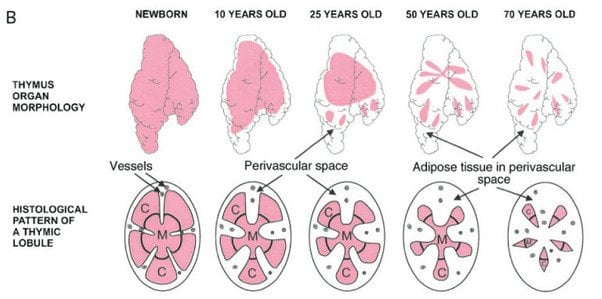
The thymus is a thumb-sized organ just above the sternum where our immune cells are trained to recognize self from other. It is fully developed by the time we are 10 years old, but after that it begins gradually to shrink, simultaneously losing its functional tissue and filling with useless fat. By age 25, it has already lost 30% of its mass, and by age 60 it is less than half its peak size. There is evidence that this is related to the immune decline that contributes so much to growing mortality risk with age, and that reversing that decline might lead to longer, healthier lives. A healthy immune system is important for fighting infection and for eliminating cancer cells before they become tumors. Immune aging may be related to systemic aging in other ways. (Of course, aging affects the immune system, but it also seems that the immune system may be a driving force in other aspects of aging.)

Thus, a rejuvenated thymus might have generalized anti-aging benefits. I first learned this story from Greg Fahy, PhD, chief scientific officer at 21st Century Medicine. and, indeed, he was the first to think of thymic involution as an aging clock, and remains the most enthusiastic and most knowledgable expert on the relationship of the thymus to aging. Twenty years ago, Fahy experimented on himself, and found evidence that he was able to reverse decline of his thymus with HGH=human growth hormone. Ever since, he has wanted to conduct a clinical trial to see if his N=1 result could be replicated.
Methylation aging
Already seven years ago, several of us were speculating [Johnson; Mitteldorf; Rando] that aging is controlled by an epigenetic clock. Epigenetics is gene expression, which changes from moment to moment, from tissue to tissue, and also from young age to old. There are many modes of epigentic control, but the one best studied and easiest to measure is methylation of the cytosine C’s that appear in repetitive islands (C-G-C-G-C-G-C) in our DNA. (Cytosine is the C in ATCG, the four nucleic acids that form the DNA backbone.) Also at this time, Steve Horvath published the first paper using methylation to measure age; Horvath has led in this fast-moving field ever since. I’ve written [here, here, here, and here] about aging clocks based on methylation. The most important things to know are
- The methylation state of a person’s DNA is the most accurate known measure of his biological age. The latest methylation clocks can predict morbidity and mortality even better than chronolotical age.
- I am among the biologists (still a minority but growing in acceptance) that believe methylation is a prime driver of aging. In other words, changing the methylation state of the body’s cells to a more youthful profile will actually make the body younger.
The TRIIM Study
In 2015, Fahy finally had funding and regulatory approval to replicate his one-man trial in a still-tiny sample of ten men, aged 51-65. That it took so long is an indictment of everything about the way aging research is funded in this country; and not just aging—all medical research is prioritized according to projected profits rather than projected health benefits. The protocol included frequent and extensive testing of many aspects of age-related health. Treatment consisted of
- Human growth hormone (HGH), 0.015mg/Kg body weight, adjusted individually according to metabolic response. HGH doesn’t survive digestion, so it is self-injected with a tiny needle in the belly
- Metformin, 500mg daily
- Vitamin D, 3000 IU daily (5 times RDA)
- Zinc, 50mg daily (5 times RDA)
- DHEA, 50mg
The hypothesis was that HGH would stimulate regrowth in the thymus. Zinc and vitamin D were added because they are known to enhance immune function. Metformin, a standard diabetes drug, was added because HGH can cause insulin resistance, a pro-diabetic effect. DHEA is a proto-hormone from which all sex hormones and steroid hormones can be made in the body; and blood levels of DHEA decline steadily with age. DHEA is linked to both better immune function and expression of IGF1. The TRIIM paper says that DHEA was added to help counteract any tendency toward insulin resistance, but according to Examine.com, DHEA does not affect the insulin metabolism.

As the study was planned, the primary endpoint was to be thymus size, and so, at considerable expense, MRI images of the thymus were planned up to 5 times during the 12-month study period. Various blood tests were planned to track other metabolic changes, especially to assure that subjects were not being exposed to increased risk of cancer or diabetes. HGH is weakly linked to cancer risk and more strongly to insulin resistance.
Results
Subjects felt a kick from the daily HGH and some reported temporary weight loss and endurance improvement; but the increase in energy was associated with anxiety and insomnia for some. There was no sustained effect on youthful feeling or appearance.
MRI imaging confirmed that, though the thymus wasn’t increasing in size, the functional matrix of the thymus was indeed regrowing at the expense of the fatty, atrophied portion in 8 of the 9 subjects. Several blood tests indicated better immune function.
- C-reactive protein, a marker of inflammation, decreased.
- The ratio of lymphocytes to moncytes is an emerging measure of resistance to cancer, and TRIIM subjects showed a decrease in monocytes.
- Portion of the T cells that wer PD-1 positive went down. PD-1 is a means by which cancer cells shield themselves from the immune system.
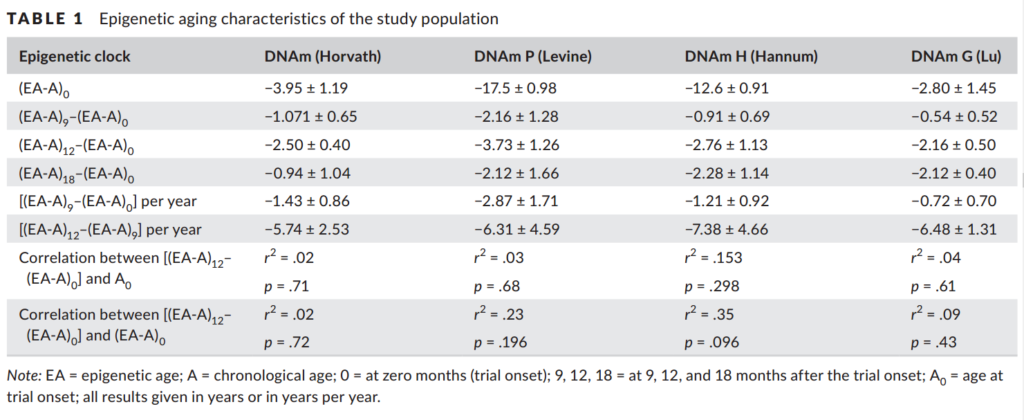
This level of success might have led to a modestly encouraging publication, but fortuitously, Fahy made contact with Horvath toward the end of the study, and Horvath volunteered to analyze changes in the subjects’ methylation. (TRIIM had preserved some blood samples from each of the patients at each time point, so this could be done retrospectively.) The result demonstrated a decrease in methylation age, consistent enough to be visible in a sample of only 9 subjects. This was the first time that a treatment in humans led to a setback of the epigenetic clock.
There was no reason a priori to imagine that HGH would affect methylation age, either directly or through its effect on the thymus. If anything, theorists (including Fahy) imagined that the thymus and DNA methylation functioned as indepdent aging clocks.
Fahy reached out to Steve Horvath, who responded with enthusiasm. Horvath did the methylation analysis and the careful statistics that could draw significant conclusions from a marginal effect in a small sample.
Methylation testing procedure: white blood cells are run through a kit that measures methylation at 850,000 sites in the DNA. Then computer programs are used to extract an age from some small subset of a few hundred sites. Once you have done the lab work, the difficult and expensive part is over. Calculating several different methylation ages is as simple as running the appropriate software package.
- At the start of the test, the average epigenetic age of the group was already well below average chronological age. This is presumably because the subjects tended to be highly-motivated anti-aging enthusiasts. Whatever they were doing before the TRIIM study was already working well. By the Levine Clock, they were 17 years (!) younger than their chronological age, and by the GrimAge clock they were 2 years younger.
- A year of extra chronological age would be expected to add one year to the methylation ages, but instead all methylation clocks registered an average decrease in age.
- The so-called Grim Age clock, new this year from the Horvath lab, is the best available measure of life expectancy. By the Grim Age clock, subjects became a year younger while their chronological age was a year older.
- For most of the clocks, the big drop in epigenetic age came during the last three months of the trial (months 9 to 12), raising the possibility that there is a latency period, and a longer trial might produce a bigger drop in epigenetic age.
- After the trial was over, months 12-18, there was a marginal tendency for epigenetic age to “catch up” with chronological age, a loss of the benefit during the test period. The Grim Age clock, arguably the best indicator, did not regress, but held firm at 18 months.
The Bottom Line
There is no known mechanism whereby HGH is expected to affect the methylation profile. This is not to say that it does not do so, but it is just as viable to think that the combination of vitamin D and Zn is affecting methylation age.
High blood levels of vitamin D and zinc are known to be correlated with lower all-cause mortality and longer life expectancy. Metformin is being investigated in its own right as an anti-aging drug. DHEA has been promoted as an anti-aging supplement for decades, though existing studies indicate DHEA does not increase lifespan in mice. The principal effect of HGH is to increase the hormone IGF1, and DHEA also does this, far more cheaply and over-the-counter, but to a much smaller extent.
HGH is both expensive and theoretically suspect for long-term use. Elevated levels of IGF1 are known to decrease lifespan in rodents; dwarf mice and dwarf humans without IGF1 receptors live longer, healthier lives [ref]. Readers looking to make immediate changes to their personal stack based on the results of this experiment might try the four cheap and proven ingredients, leaving out the HGH for now.
The results are tantalizing, and will certainly motivate follow-up studies, despite the fact that there is no patentable element to the TRIIM protocol. There are five ingredients in the cocktail, all credible, and the interactions among the five are completely unstudied. This first TRIIM study presents good reason to believe that there are anti-aging synergies among some of these ingredients, and it should be an immediate priority to study which among the five are synergizing.
Important, though unrelated news:
Cell phone carriers the world over have plans to roll out 5G technology in the next few years. There is growing evidence that existing 4G technology increases cancer risk, and can cause acute symptoms in sensitive individuals. Lab tests indicate that higher frequency radio waves are a more serious threat. 5G operates in a frequency range ~10 times higher than 4G, and because of absorption in the environment, signals have to be stronger.
(This is not ionizing radiation that can directly break chemical bonds. The biological activity of radio waves is not well understood, but there is a theory that it acts by opening calcium gates in cell membranes, which are a primary mechanism of nerve firing, among other ubiquitous metabolic functions.)
There has been no health testing of 5G frequencies, or if the telecomm companies have performed tests, they haven’t published results. We should be demanding extensive animal and human tests before the technology goes into service.
This weekend, a series of videos about health effects of 5G has been opened at The 5G Summit.
Discussion
201 reader comments
Imported threads are marked Archive. New comments are welcome and moderated for spam.
I did a short self experiment for a few months using 5 grams of GABA powder before bedtime in place of HGH. This resulted in an increase in blood glucose and a prescription for Metformin. Soon after I started skipping the GABA on days when I do strenuous exercise on MWF, as the exercise would yield a natural boost of HGH/IGF-1 on those days, and this also seemed to help get the BG back under control. I obviously can't afford thymus MRIs, and have no degree or reputation to pursue a grant (in anything other than computer science), but perhaps before and after epigenetic clock tests would have yielded something useful. I also wonder if daily exercise with GABA would be better for HGH and/or controlling BG? Too many questions, and no real conclusions.
Roger, I practice strenuous exercise in the fasted state, combined with sauna use, as a cheap and safe way to raise HGH. No pills.
I was surprised that no one suggested some ipamorelin (or related combinations) as alternatives to HGH.
Per the point "Readers looking to make immediate changes to their personal stack based on the results of this experiment might try the four cheap and proven ingredients, leaving out the HGH for now."
Sulforaphane research findings have commonalities with the clinical trial. The four treatments are especially interesting at https://surfaceyourrealself.com/2020/05/27/reversal-of-aging-and-immunosenescent-trends-with-sulforaphane/
The second half of Dr Fahy's presentation topics' commonalities with sulforaphane research at https://surfaceyourrealself.com/2020/05/29/part-2-of-reversal-of-aging-and-immunosenescent-trends-with-sulforaphane/
This is an interesting article on triple drugs and very significant life extension https://www.pnas.org/content/early/2019/09/26/1913212116
I have used lithium drops daily for a couple of years now without any issues. I’m wary of dasatinib but I like intermittent theaflavin with quercetin. I really like rapamycin synergies.
Thanks for sharing Paul. Interestingly the Mayo Clinic has just come out with a D+Q study where they showed an improvement of many SASP markers after just a few weeks of treatment. I think this will be a major boost of the combination of these 2 drugs for senolytic treatment.
What the study you just cited, and many others before it make me think about, is the contradiction between aging being the result of a decrease in re-generation, and the fact that dialing down cell proliferation is strongly associated with life extension.
Of course I don't think it is that simple, and the trade-offs between the two may be complex. But it seems as if reducing senescent cell burden and/or slowing the pace of epigenetic change, results in a bigger life extension than any increase in cell turn-over and regeneration would. It would be useful someone looks into gene expression changes and aging in non-vertebrates so that we gain a better perspective on these studies. I believe they don't use methylation to regulate gene expression.
Perhaps these mutants would have a much reduced fitness in the wild, and that's why the balance between the two is what it is. But something to think about.
Adrian
On D&Q, I'm concerned about the fairly serious potential side effects of dasatinib, including pulmonary hypertension, pleural effusions, and GI bleeding. If I'm going for a senolytic I'd probably choose fisetin or quercetin+theaflavin. Dosing intervals are always an issue and a vast unknown.
I very much agree that reducing senescent cell load and slowing epigenetic changes are within our capabilities even now. I think that GSK3 inhibition has been largely ignored by most people , so I was pleased to see the synergy with rapamycin. A little lithium may go a long way.
Vince G's latest blog talks about the genome being for the species and the epigenome, being subject to the chaos of entropy, being for the individual and is the cause of aging. So information related to the individual is passed along in the epigenome, is subject to the second law of thermo, and causes us to age. As always he's an interesting read.
Well it stands to reason that making better use of a limited proliferative capability will make you live longer. I don't think there's a contradiction there. Of course turning up proliferation is not always a good thing. It is clear that most animals grow to a fixed size, after which they have a very limited regenerative capacity. This seems to the way evolution works - it doesn't want or need an individual to be more long lasting. But to beat aging I don't think we can put up with this. Keeping old cells going will probably not be sufficient. We need them young again, and proliferative competent (in the right circumstances). There is every chance this so doable. Until then though, we'll have to keep our old cells going a little longer.
So this recipe lowers biological age by 18 months while whatever the test subjects were doing before - which is unlikely to be anything more cutting edge than eating well and exercising - lowers biological age by 24. I don't understand the excitement.
3 things.
First this reversed the epigenetic patterns, what they were normally doing could have slowed the rate of epigenetic change, but it is unknown if it also reversed the patterns.
Second this reversed 18 months in a relatively short period, longer treatment could potentially reverse even more.
Third it opens the door to other interventions that may be stronger, by showing the viability of reversal.
Hi Akshay
So here’s the report of a study showing that women who look much younger actually do have gene expression patterns of much younger women. https://www.sciencedaily.com/releases/2017/11/171128102918.htm
So do you think that if we could maintain these youthful gene expressions that we could appear young even at a very old age?
Paul,
Interesting paper. " These women had increased activity in genes associated with basic biologic processes, including DNA repair, cell replication, response to oxidative stress, and protein metabolism."
This would surely grant a advantage over avg humans not only for skin but even overall mortality. In the end the onslaught of other age related degradation would eventually win. They should better chances for longer healthspan and maybe lifespan.
I beeleive Sinclair defense circuit has no relationship at all with the aging program lying on the cell nucleus. Too many, and different, reasons indicate the AP necessarilly exists.
Most important, the species-specific longevity, varying up to 1 million fold betweeen species.
What is known is that, except for autophagy, all the other best known aging mechanisms, which I think are aging effectors (executors) of this program, are Pro-aging (analogously to most single gene Pro-aging mutants in mice) instead of Anti-aging.
Please note that UNIFICATION OF ALL PREVIOUSLY CALLED"THEORIES OF AGING" (Barja, Exper. Gerontol. 2019) is possible only if we accept the existence of such program.
In theory you might be able to genetically engineer a mouse to age as slowly as a squirrel; a factor of 10, say. But in its natural environment that extra life would be irrelevant, as no mouse would survive anywhere near that long. So why would we expect evolution to do it?
Put another way, would an immortal Adam, put upon the earth, continue to sire immortal progeny? Or would the harshness of conditions put a limit on the advantage of a well-maintained soma? I suspect his grandchildren would be mortal.
I don’t know if that’s an argument for programmed aging or not!
I think the idea that organisms age as fast as it is beneficial in evolutionary terms is not wrong. I see both your and Medawars hypothesis align in this sense. Its only that Medawar did not consider group survival as an evolutionary force.
However I think the consequences can be the same. The aging program is a program of calculated neglect. The body could fix the aging soma if it was evolutionary beneficial, but it isnt, so it just controls how fast enthropy is allowed destoy the organism. Just my two cents.
I agree that aging affects fitness in the wild - I don't think aging is invisible to evolution. But I think that extending a mouse's life by x10 (for example), would not stop it from dying from cold or starvation or being eaten by a predator or dying from infection, so the advantage slow aging would give a mouse would be irrelevant.
And that is why I agree with Gabor that any aging program is probably neglect rather than self-destruction, or rather starting from the mortal and not bothering to evolve immortality, rather than starting from immortality and evolving mortality.
Of course, I'm happy to be proven wrong, and I do think there is a great deal of randomness to species creation - lifespans could be largely arbitrary, with some fine tuning due to conditions.
Mark the program is self destruction: deliberate changes in predetermined timelines. That's why all of us age similarly - a 70 year olds look more or less in similar decline. The cheat codes of hormesis allow only gives a little wriggle room to slow down some of the destruction. This study by Morrimoto gives evidence of programmed self destruction:
https://www.ncbi.nlm.nih.gov/pmc/articles/PMC4546525/
This repressive epigenetic marks just after puberty interferes with enzymes starting a cascade which deflates efficiency of heat shock response by 70% during the most important phase of protein formation. Starts a journey of degradation we call aging.
Just because turning certain genes up or down extends life isn’t proof of programmed aging. You’d have to prove such gene adjustments poised no disadvantage to the propagation of the germline over evolutionary time scales. It might be impossible to prove programmed aging.
I am afraid that I am like the doubting St Thomas Akshay, I just can't believe until I see the wounds on Jesus’s hands with my own eyes (however much I might want to).
Some further information on HSPs. This study looked at the correlation between HSP70 and male infertility and found a link (https://www.fertstert.org/article/S0015-0282(07)01364-7/fulltext). They speculated that the HSP was activated as a defensive mechanism to preserve fertility, but I find the more likely conclusion that HSP actually contributes to infertility. This is supported by small studies that show sauna usage (which lowers all cause mortality in humans) lowers sperm count and motility (https://www.nhs.uk/news/lifestyle-and-exercise/can-regular-saunas-harm-sperm-quality/), albeit temporarily – it was restored on cessation of sauna usage.
Long and short of it is that it looks likely getting your germline cells hot (or activating HSP by other means, I would speculate) is bad for them, so HSP being turned down at the onset of sexual maturity looks like a sensible move for the germline.
That being said, Saunas are likely to extend your life, so this is still a viable longevity strategy, but not proof of programmed aging.
Thanks Akshay. I did read the paper. I replied but I think the references stopped the post being approved.
HSP70 is implicated in infertility. Sperm motility and count are also decreased by regular saunas. So maybe turning down HSP is a good idea for germline cells.
"But I think that extending a mouse’s life by x10 (for example), would not stop it from dying from cold or starvation or being eaten by a predator or dying from infection, so the advantage slow aging would give a mouse would be irrelevant."
It is not advantage that should worry but disadvantage. As there are likely a small peak group of mice that are better able to avoid predation and better able survive infection due to getting the best combination of genes making them the fittest in the population, they benefit disproportionately from antiaging vs the less fit mice in the population.
There are several problems that could happen if a mouse lived significantly longer.
One, as said, given that evolution works by differentially propagating the offspring of the fitter organisms at the expense of the reproductive potential of the less fit organisms, this could lead to an inbreeding positive feedback loop(as the members of the fittest families wipe genetic diversity out before the effects of inbreeding become detrimental enough).
Also the mature organisms could outcompete most younger organisms for resources, leading to stagnation.
The loss of genetic diversity would result in greater vulnerability to disease, and later on prolonged inbreeding would lead to species extinction.
Also sperm are fast dividing, and it is said that mutations accumulate in the germline stem cells of an organism the older it gets. Unless a solution was found simultaneously with increased lifespan, a vastly longer lived male could be extremely fit yet introduce vast genetic damage to the population, leading to error accumulation and species extinction.
To avoid loss of genetic diversity(which can be detrimental, even just taking into account disease vulnerability), and error accumulation, an aging program could protect similar to the protections that exist towards incest.
Akshay I look forward to reading your blog.
Darian, I like the idea of inbreeding, such things probably do happen before a change in environment causes die off. Such things show why an aging program would be an advantage. And likely the male germline is 'an experiment' allowing for faster mutation. Having said that aneuploidy comes from the old eggs of the female germline.
I don't think it's that complex. Let me explain DNAm age again.
Neurons have to last a lifetime, but they are metabolically very active. So DNA breaks will be happening all the time. Therefore there is plenty of opportunity for errors in methylation during this repair process.
Fast dividing cells will also accumulate such methylation errors through cell division, when methylation has to be removed and then re-added, but so long as they are replaced by more quiescent stem cells (which have less such errors) DNAm age is kept under control and advances only as quickly as it does in the stem cell compartment.
So there are two things going on regarding methylation 'aging', 1) aging of somatic tissues that are not replaced, and 2) aging of the stem cell compartment that is replacing proliferating tissues.
A consequence of this is that extending telomeres in proliferating tissues will obviously increase DNAm age because these cells then require replacement by (less metabolically active) stem cells less often. This is why people with longer telomeres have an older DNAm age. But this is a different situation to old people who have a high DNAm age because of the aging of their stem cell compartment, which slows the rate of replacement of somatic cells and therefore leads to the advance of DNAm age in somatic cells as well.
Almost no one, including Horvath, seems to grasp this. But the data is all there in pubmed, for anyone to discover.
But if we could maintain stem cells indefinitely, we would solve both the telomere 'aging program' and the methylation error 'aging program'. This is why I am so interested in ex vivo pluripotent stem cells infusions and also very small embryonic like stem cells (VSELs) that still exist in even old tissues.
Mark
That makes perfect sense. Speaking of pluripotent stem cells, it’s amazing to me how a well differentiated cell , like a fibroblast, can dedifferentiate back to a pp stem cell. There’s also the debate about the origin of the immortal and very difficult to eradicate, cancer stem cell. Is it coming from a differentiated somatic cell , or from a normal stem cell.
If from a normal somatic cell, it must have a p53 mutation ( in p53) , so that when telomeres hit a certain level of loss, the cell bypasses replicative senescence and continues to divide until we reach that very critical telomere shortening phase and then end to end fusion. Maybe one in a million of these cells escape death and upregulate telomerase leading to a CSC.
These CSC’s are both immortal and capable of fooling the immune system into not recognizing them as invaders. They even survive chemo and radiation.
I’m not sure that this represents a failure of the immune system, but it certainly is more common in the elderly. Very complicated
Hi Paul
Re: de-differentiation to pluripotency, I know the early studies had appalling efficiency, like 0.1%. I believe this has been hugely improved on, but I'm not sure you can yet say that the process is simple or easy, many cells die from the process or become senescent.
I believe that cancer happens the other way around from what you describe Paul - short telomeres precede the mutations. Loss of telomeres allows end to end fusions and genomic rearrangements via transposable elements and this is how CSCs arise. In rare cases you can get mutations even in cells with long telomeres, and this is probably what drives those rare but deadly cancers in non-proliferating tissues like the brain. In this case long telomeres allow the (pre)cancer to grow bigger (eroding telomeres), which then leads to the process I describe above.
The key to beating CSCs is almost certainly not immunotherapy, which relies on a specific karyotype, but probably something much more simple, such as described here: https://www.ncbi.nlm.nih.gov/pubmed/31002656
Hi Mark
In order to bypass senescence and eventual cell death, it seems to me that a tumor initiative mutation, like a p53 loss, would be a necessary prerequisite.
Of course, somatic NSC’s May be the source of CSC’s since telomerase expression is already present. Or the ALT pathway and no telomerase necessary.
All of this makes it even more remarkable that IP6 can cause a dedifferentiation from poorly differentiated cancer cells to well differentiated ones which aren’t likely to metastasize. Mayo Clinic is using this with success in advanced melanomas.
What strikes me Paul, is that it’s very hard to categorise cancer cells by their karyotype. Some have a completely alien chromosome structure (I suspect CSCs must be like this) but bizarrely from their phenotype you can still tell they came from a lung cell (say). Some ‘cancer’ cells have NO mutations (just epigenetic disregulation, I would guess).
Maybe IP6 is a strong epigenetic modifier and it can tell cancer cells to behave themselves, even in the presence of mutations.
Most of the mutations that you are ever going to get you already have and you got them in the womb! So systemic signalling and epigenetic control must be keeping the whole show on the road.
Looking at the hTERT study it is possible that stem cells are the time keepers of the Horvath clock. At least after puberty. Interestingly the arrested somatic cells stopped at age 13, after which there is not much more growth in humans (at least not in height, which I think is highly indicative).
So indirectly, you can say the clock is tracking the state of the stem cells niches. But it is an open question how much the change in gene expression is an upstream cause of the ageing phenotype.
I think you point to stem cell depletion and decrease in regeneration as the primary cause of ageing. And that may well be the case, or at least be one of the several processes/programs.
But I don't think we can put DNAm age down to errors or 'drift'. It would not proceed in such a predictable fashion. To say it is a highly predictable random process is a bit of a contradiction. Studies such as the one the Sinclair lab published recently, or the original re-programming one by Izpusua, also indicate that methylation changes that show a decrease in eAge also improve health. These were treatments directly aimed at epigenetic reprogramming that resulted in improved function.
You could say those improvements were brought about by increased regeneration by more active stem cells. But even so, then we have found an effective way to do just that.
You're right - it's not JUST drift, it's also ADAPTATION (for example, to accumulated metabolic damage and no ready cell replacements). But at the moment the epigenetic clocks cannot seem to distinguish the two.
"Neurons have to last a lifetime, but they are metabolically very active. So DNA breaks will be happening all the time. Therefore there is plenty of opportunity for errors in methylation during this repair process....
So there are two things going on regarding methylation ‘aging’, 1) aging of somatic tissues that are not replaced, and 2) aging of the stem cell compartment that is replacing proliferating tissues. "
Neurons have been transplanted to longer lived animals and lasted as long as the longer lived animals(twice as long). The researchers commented that they may last even longer in even longer lived animals, potentially indefinitely, if I'm not mistaken.
Dr. Michael Fossel, has commented that nondividing cells that last a lifetime potentially do not actually age, if I'm not mistaken.
So I think at least for some tissues that have cells that are not replaced, it is the aging of the dividing supporting cells that jeopardizes such tissue's function.
you point out an interesting question. how much nondividing cells age by default. I somehow always thought that cells cannot perfectly fix themselves but cell division can make them younger as they have to reconstruct much of their organalles so the structures get built of scratch thus they become young again.
I wonder what the turnover of different organelles is.
One has to admire cancers engineering for building immortal cells
There's a few studies that point towards asymmetric cell division in yeast. The mother cell retains most of the molecular waste. I think the assumption that a similar process occurs in humans is at the basis of the dominant view on aging and the SENS project.
Looking at yeast, this may still be true. But I'd be surprised if evolution has managed to keep cell lineages alive for billions of years, but it has not figured out how to effectively clean up molecular waste.
The fact that neurons can live on for decades, perhaps centuries, makes me think the asymmetrical division of some cell lines after just a few days or weeks is a bit arbitrary. Sure, it may confer an advantage to those cell lineages, but the mother cells can still go on for quite a while, it may just be less fit.
This discussion is slightly tangential to my explanation for why methylation clocks work in both dividing and non-dividing cells, but it is interesting, so I'll chip in.
If you look at bacterial 'aging' it is basically a matter of accumulation of metabolic waste - so long as the cell keep dividing they can keep ahead of this problem. And in very stressful environments where accumulation accelerates, they can do asymmetric division and leave one cell line as the 'bad bank', which will probably die off unless circumstances improve, but the other cell line will be fine.
Long lived cells like neurons produce metabolic waste, but they have dividing glial cells to remove it for them. So in that sense the aging is starting in glial cells not the neurons (presumably relating to telomere loss as Fossel advocates). Hence why transportation of neurons to a younger host enables them to live longer.
Good morning everyone, I regularly read about the importance of Melatonin but I am surprised by a post today at https://microwavenews.com/news-center/ntp-turns-search-mechanisms, about the implications it may have on Effects of oxidative and DNA damage.
There is a lot of emphasis on damage from the inside but there is not so much diffusion about causes outside the human being of extreme danger, such as radiofrequency electromagnetic radiation what induced DNA strand breaks https://onlinelibrary.wiley.com/doi/abs/10.1002 /bem. 2250160309
As I read today, the NTP plans to investigate on gene expression, oxidative stress and DNA damage and repair, as well as on the possible role played by heat.
The NTP has already reported finding more DNA breaks —as detected with the comet assay— among the RF – exposed animals, including in the brain where rats later developed tumors
Those results, presented at a conference two years ago, have been submitted for publication. The paper is currently under peer review, according to Sheena Scruggs in NIEHS ’Office of Communications and Public Information.
A recent review of some 100 journal articles found that more than 90 percent “confirmed that [low-level] RF radiation induces oxidative effects in biological systems.” It was published in Electromagnetic Biology and Medicine in 2016 https: //www.tandfonline. com / doi / abs / 10.3109 / 15368378.2015.1043557.
In your Microwave News Louis Slesin posting: When they (Lay H. and Shingh N.) treated the rats with melatonin - a natural hormone that neutralizes free radicals - before RF exposure there were no more DNA breaks.
If the radiation could indeed generate free radicals, they pointed out, the risks would go beyond cancer to include premature aging as well as Alzheimer's, ALS and other neurological diseases, https://microwavenews.com/news-center/ntp-turns- search-mechanisms
Greetings.
Hellow everybody,
Now I have already recieved comments from immunologists and epigenetics-related experts concerning aging here at Madrid University (UCM), which I would add to my preliminary opinion already entered into this blog last week.
-My immuno-aging scientist friend main criticisms on Fahy et al., Nature 2019 were that:
a) The number of various immune cells were measured, but not their functional activity, which could have been easily measured too, and is most important. The problem is, according to this expert opinion that it is frequent to observe, e.g., increases in immune cell numbers in old mammals which however can be accompanied by a decreased functionality of these cells. These changes are usually interpreted as failed compensation declines in immune activity in the old..; and
b) The increase in lymphocyte/monocyte ratio is expected since the main change observed was a decrease in monocyte number.
c) Many other more informative parameters, in addition to, or instead of, some measured parameters could have been assayed.
-The epigenetics expert said that the number of participants (N= 9) and the too short time period studied prevent reaching statistically sound conclusions. Although the “pilot study” character of TRIIM is recognized by the authors, the preliminary character of the results prevents reaching the strong conclusion that human aging has been reversed for the first time. Instead, the methylation age seems to have improved as well as some parameters of the immune system .
Finally, although epigenetic age was measured using four different epigenetic clocks, some of which “can predict diseases better than chronological age”, it is not yet clear if what those clocks measure is functionally related to the aging rate and the biological age, as opposed to chronological age. Aging corresponds to root processes proximal to the appearance of degenerative diseases but it is not equal to them. I also notice that most authors on the most interesting epigenetics and aging area seem to try hard to avoid stating whether the methylation clocks represent (partial) evidence that aging is programmed as a continuation of development. Continuation of traditionally attributing DNA methylation changes with age to random processes, drift or noise, seems fully contradictory with strongly stating that these methylation clocks predict human mortality and aging better than chronological age. It is unclear to me how such excellent correlations (e.g. ) could have been obtained if epigenetic changes were not part of an aging program, or if most of them would only represent random noise. It seems that the present state of the field is ripe enough for scientists in the epigenetics area to decide if their observations correspond or not to important regulated phenomena linked to aging.
I would like to add that in the Discussion (3rd before last paragraph) the authors favor the use of GH/IGF-1 therapy in the old in spite of large and strong data on mutant long-lived mice (and DR experiments) indicating the implication of GH/Insulin-IGF-1-like axis in pro-aging signaling to target tissue cells. The authors argue against the long-lived mutant mice being meaningful for normal aging in healthy individuals, but do not discuss the contradiction of the results obtained also with very abundant data on many pro-longevity DR effects being mediated in part by decreased insulin/IGF-1-like signaling. In addition, they tend to relate low insulin resistance to human aging causally. But fail to explain how GH and IGF-1 can be pro-longevity hormones while they work in the same endocrine axis and sense than insulin.
Hi Gustavo,
What assays would you say would be the best for measuring the functional activity of the immune system? I may soon be doing a little self-experimenting with senolytics. Before and after assays for immune activity would be very interesting.
I think many people here are cautious to call DNAm age a program because we have been let down by telomeres failing to prove they drove such a program. I would say though, that it was pretty close: Telomere attrition -> change in gene expression -> cellular dysfunction -> tissue dysfunction.
Replace telomere attrition with a yet unknown process (metabolism?, circadian rhythms?, cellular proliferation?) and I still believe it gene expression the upstream cause.
Inside Ake Lu's paper last year on the role of the hTERT gene and epigenetic age acceleration there was a very interesting finding. That fibroblasts immortalized by telomerase continued to age and divide, BUT regular fibroblasts reach their replication limit and STOPPED their DNAm age progression. Moreover, quiescent immortalized fibroblasts also never 'aged', they stayed at a near zero DNAm age (nice summary on fig. 3 on the nature version of the paper, "GWAS of epigenetic aging rates in blood reveals a critical role for TERT").
This could mean it is stem cells, which in most tissues show *some* telomerase activity, together with reduced metabolic rates, the ones that register the aging methylation state, and pass it on to their progeny. So it would be proliferation of stem cells, and not somatic cells, that drive the aging program in humans.
This could explain why processes that arguably result in higher rates of cell damage or stimulate cellular turn-over are also associated with accelerated epigenetic age: smoking, alcohol abuse, HIV infection, UV radiation... I would also include HGH on this list, as it should drive growth and cell proliferation, but I will keep an open mind. If it I had to bet, I would attribute the DNAm age decrease on this study to DHEA, as hormone replacement therapy has already shown to decrease eAge in certain tissues in women.
In short, I believe it is cell proliferation (with stem cells as time keepers) that drives the DNAm program. This could also explain why men show a higher DNAm age than women: men are on average bigger and need more cell divisions. Despite perhaps 'appearing' healthier than women in advance ages, as men have higher bone and muscle mass to begin with, but as DNAm would predict it, men tend to die a few years earlier.
However, it would not explain why brain or muscle samples show comparable eAge to other tissues. Unless we have underestimated the role of stem cells in those adult tissues, or proliferating cells have found their way into those samples (glial cells in the case of brain tissue for example).
replied below
Dr Peter Attia's take on the study, part I. He is in contact with the author and has some new insights:
“First hint that body’s ‘biological age’ can be reversed.”
In a world where the population aged 60 or over doubled in the last 30 years, and is expected to double again by 2050, how’s that for a sensational headline? The story, written in the journal Nature, is referring to a study published by Aging Cell. Amazingly, only 137 of you sent it to me within the first 24 hours of its release.
Nine healthy men, given a cocktail of human growth hormone (hGH), metformin, DHEA, vitamin D3, and zinc for 1-year, shed about 2.5 years off their biological ages, according to an analysis of their epigenome.
As a result of this study, I’ve had more people than usual ask the following questions:
Should I be taking hGH? Should I be taking metformin? Should I be taking DHEA?
To address these questions (and others) will be a bit of an undertaking, so I’m breaking this topic up into at least two emails. In today’s email, I want to explain the study’s purpose, how it was done, what it found, as well as some of the nuts and bolts behind it, and—most importantly—propose a framework for evaluating studies in general. I’ve covered a lot of the groundwork in the Studying Studies series so I may sound a little like a broken record in places. That said, if you are tired of being held hostage by the media’s interpretation of science, you will need to buck up and learn this stuff. The Studying Studies series is the starting point. I realize it may seem like Groundhog Day for you to see more prose from me about how to think about studies rather than the tactical bits we think we can immediately extract and employ from them. Just remember, it’s better to learn how to fish than to be given … you get it.
On to the study.
The stated purpose was to investigate the possibility that using hGH in a population of men in their 50s and early 60s can prevent or reverse signs of the gradual deterioration of the immune system that has been attributed to natural age development (i.e., immunosenescence). The trial, dubbed Thymus Regeneration, Immunorestoration, and Insulin Mitigation, or TRIIM, reveals its aims. (Note that nothing in the initial aim of the study dealt with assessing the impact of the hormone/drug cocktail on the epigenome, for which all the attention has been generated.)
The thymus, a gland located in the middle of the upper chest, converts white blood cells from bone marrow into T-cells, which play a central role in the immune response. The “T” in T-cells is named after the thymus. As it turns out, the thymus reaches its maximum size by the end of the first year of life. After that, the thymus decreases in size and activity, particularly after puberty, in a process referred to as thymic involution. Along with the decrease in size and activity of the immune system with age comes an associated functional decline. The lead investigator of the study, Greg Fahy, wanted to see if he could regenerate the thymus and restore immune system function using hGH.
All things equal, a more youthful immune system would suggest greater longevity. But there was a catch with using hGH. The investigators worried that using hGH to regenerate the thymus might induce hyperinsulinemia (high insulin) and noted a “diabetogenic” effect of growth hormone. Hyperinsulinemia and diabetes are obviously not desired side effects, regardless of how much thymic regeneration takes place. So Fahy and his colleagues added metformin and DHEA to try and counter these potential effects. Vitamin D3 and zinc were also added as a hedge against cancer and inactive thymulin, according to Fahy (personal communication, email).
It’s not a surprise that the investigators chose metformin as a drug that can aid in “Insulin Mitigation” (the “IM” in TRIIM; for a nice overview of why, revisit the interview with Nir Barzilai), but DHEA? This was news to me. After doing a little, I mean a lot of digging, I would say there is not much in the way of evidence supporting the use of DHEA as an insulin lowering agent. According to a related article, it appears Fahy was working off his own hypothesis. Young people have higher growth hormone without an increase in insulin, and Fahy believed this to be due to them having higher levels of DHEA. Fahy tested this on himself by taking hGH alone for a week and found his insulin levels elevated by 50%. He then added DHEA and the increase was apparently reversed.
In the TRIIM study 9 men, ages 51-65, first took hGH alone (0.015 mg/kg, or ~3 IU for a person weighing 70 kg) 3-4 times per week for one week and then added DHEA (50 mg) the next week, similar to Fahy’s n=1. The week after that, the same doses of hGH and DHEA were combined with metformin (500 mg). At the start of the fourth week, the doses were individualized based on each participant’s particular responses. (To put the hGH dosing into context, while it’s individualized, athletes using it for performance enhancement may take 10-25 IU 3-4 times a week and “longevity” clinics may prescribe somewhere in the ballpark of 1-2 IU/day.) The goal of this titration approach was to maximize IGF-1 and minimize insulin by varying each of the hormones and drugs. The study didn’t reveal what the effect DHEA hay have had after week 2, so we contacted Fahy to check. He wrote that the results with DHEA were qualitatively the same but quantitatively different, with each person having their own specific response (personal communication, email).
It’s important to highlight that not only was this study multifaceted in the number of independent variables introduced (i.e., hGH, metformin, DHEA, vitamin D3, zinc), it was also personalized, since the subjects did not all receive the same dose of each agent. It’s possible (actually, likely) that all nine subjects were consuming a different cocktail in terms of the dosing of hGH, DHEA, and metformin. Also, it was a very small sample size and lacked a control group, consisting entirely of 9 healthy (see Supplement 2 for exclusion criteria) 51-65-year-old men.
So why, you might (rightly) ask, all the media hype for a very small, not especially well-controlled preliminary/exploratory study?
The investigators reported a mean “epigenetic age” approximately 1.5 years less than baseline after the 1-year intervention. In other words, their epigenetic age got 1.5 years younger while their chronological age obviously went up another year. For example, let’s say “John” entered the trial with a chronological and epigenetic age of 60. After the trial his chronological age is 61 and his epigenetic age is 58.5. Presumably, he increased his life expectancy (LE) by ~2.5 years, or got ~2.5 years younger biologically, depending on how you look at it. And it’s exactly for this reason that this study is being talked about at all.
Which brings us to the framework I would suggest you apply to every study you read or attempt to evaluate. In a study like this, lacking a control group and utilizing a surrogate outcome (i.e., something other than actual morbidity or mortality), such an analysis is essential. Let’s walk through the possible outcomes with respect to the intervention (the independent variables) and biological aging using the epigenetic clocks (the dependent variable). So now consider a 2x2 matrix of the following scenarios:
(i) the dependent variable (the clock) is a correct (i.e., representative) output measurement versus it is not.
(ii) the independent variables (the cocktail of inputs) did versus did not lead to the outcome we saw.
Again, the former question is necessary whenever evaluating a study with surrogate (i.e., not “hard”) outcomes and the latter question is essential in the absence of a control group.
The exercise, then, is to evaluate each of the 4 quadrants in this matrix and ultimately decide, for yourself, which one has the highest probability of being correct. This is the scientific method. It is not absolute. There are no “proofs.” It’s all about probabilities. Let’s start with the assumption that there was no foul play by anyone involved in the study. In this case, either:
1. The intervention accounted for the improvement, or
2. Something other than the intervention accounted for the improvement.
In the first case, there are also many scenarios, and in the latter, there are also many scenarios. In the first case, it may be that the metformin alone accounted for the improvement, or the hGH alone, or there was a synergistic effect between the hGH, DHEA, and metformin, or perhaps one compound in the cocktail was detrimental, but the other compounds more than made up for it. And, remember, not only was there no control group, there was no consistency in the intervention. Everyone got their own signature cocktail. In the second case, it could be the Hawthorne effect at play. This is a type of bias where individuals change aspects of their behavior in response to knowing that they’re being observed. Maybe the participants changed their eating, sleeping, or exercising, for example, which confounded the experiment.
So this tells us how to consider the inputs to the study, but what about the output? Next, we consider if there was some sort of epigenetic clock malfunction? Here, we’ll consider the next two scenarios:
3. The clock estimate accurately represents biological age, or
4. The clock estimate is inaccurate.
Either we’re not being fooled and the clock is accurately picking up a change in mortality risk in this study or we’re being fooled and the clock is malfunctioning for some reason. We’ll pick this up next week (or the week after) to assess the likelihood of each matrix quadrant.
Oh, and I almost forgot, what may have gotten lost in the shuffle is whether the treatment showed promise for TRIIM, the intended aim of the study. After 1-year of treatment, there was “highly significant” evidence of a restoration of thymic functional mass along with improvements in age-related immunological parameters, based on MRI imaging and favorable changes in monocytes and T-cell changes. Insulin levels were reportedly controlled, so as far as preliminary studies go, it’s an intriguing finding, with certainly a lot more to learn.
- Peter