
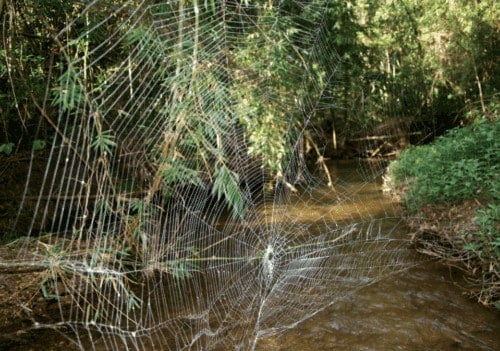
Matjaz Gregoric, a research associate at the Scientific Research Centre of the Slovenian Academy of Sciences and Arts (ZRC SAZU), Jovan Hadzi Institute of Biology, and coauthors studied the mating behavior of the Madagascan Darwin’s bark spider (Caerostris darwini), a sexually size dimorphic species from Madagascar with females several times larger and heavier than males. They uncovered a rich sexual repertoire in C. darwini that predictably involved sexual cannibalism and genital mutilation. In addition, their surprising finding was that males of this species routinely salivate onto female genitalia.
“Oral sexual contact seems to be an obligate sexual behavior in this species as all males did it before, in between, and after copulations, even up to 100 times.” said Gregoric who led the field and laboratory work that resulted in the current publication. Matjaz Kuntner, the senior author on this paper and chair of the Jovan Hadzi Institute of Biology ZRC SAZU only recently discovered and described C. darwini, noting that it produces nature’s largest webs and toughest silk. Now, this intriguing finding adds sexual behaviors to the species’ natural history.
Oral sexual contact is rare in the animal kingdom, except in mammals, where fellatio-like behaviors are known in macaques, lemurs, bonobos, hyenas, cheetahs, lions, dolphins and bats. However, cunnilingus-like behaviors, like the one shown in this spider are even rarer. Gregorič and coauthors suggest that oral sexual encounters could be a mechanism for boosting the male’s chances of paternity by either signaling the male’s quality or creating a chemical environment that would favor one male’s sperm against the sperm of rival males.
ScienceBlog.com has no paywalls, no sponsored content, and no agenda beyond getting the science right. Every story here is written to inform, not to impress an advertiser or push a point of view.
Good science journalism takes time — reading the papers, checking the claims, finding researchers who can put findings in context. We do that work because we think it matters.
If you find this site useful, consider supporting it with a donation. Even a few dollars a month helps keep the coverage independent and free for everyone.