
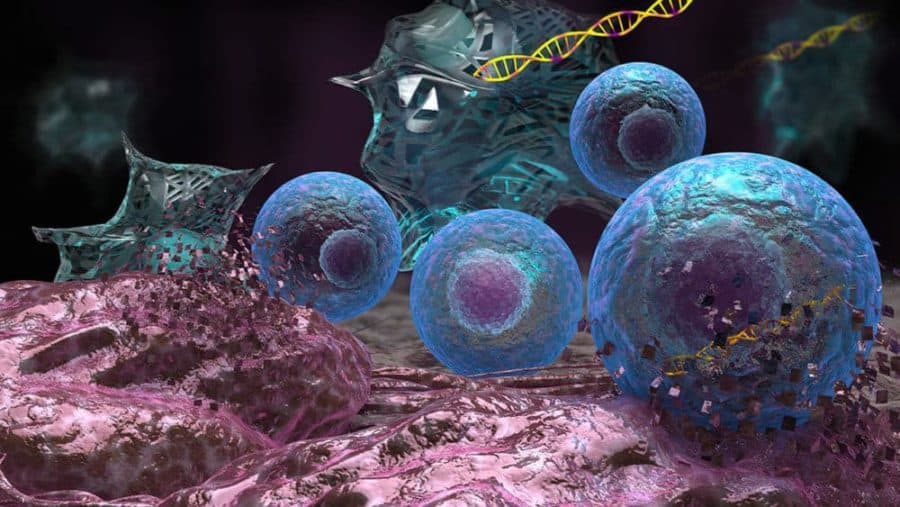
Imagine cells that can move through your brain, hunting down cancer and destroying it before they themselves disappear without a trace. Scientists have just achieved that in mice, creating personalized tumor-homing cells from adult skin cells that can shrink brain tumors to 2% to 5% of their original size. Although the strategy has yet to be fully tested in people, the new method could one day give doctors a quick way to develop a custom treatment for aggressive cancers like glioblastoma, which kills most human patients in 12–15 months. It only took 4 days to create the tumor-homing cells for the mice.
Glioblastomas are nasty: They spread roots and tendrils of cancerous cells through the brain, making them impossible to remove surgically. They, and other cancers, also exude a chemical signal that attracts stem cells—specialized cells that can produce multiple cell types in the body. Scientists think stem cells might detect tumors as a wound that needs healing and migrate to help fix the damage. But that gives scientists a secret weapon—if they can harness stem cells’ natural ability to “home” toward tumor cells, the stem cells could be manipulated to deliver cancer-killing drugs precisely where they are needed.
Other research has already exploited this method using neural stem cells—which give rise to neurons and other brain cells—to hunt down brain cancer in mice and deliver tumor-eradicating drugs. But few have tried this in people, in part because getting those neural stem cells is hard, says Shawn Hingtgen, a stem cell biologist at the University of North Carolina in Chapel Hill.
ScienceBlog.com has no paywalls, no sponsored content, and no agenda beyond getting the science right. Every story here is written to inform, not to impress an advertiser or push a point of view.
Good science journalism takes time — reading the papers, checking the claims, finding researchers who can put findings in context. We do that work because we think it matters.
If you find this site useful, consider supporting it with a donation. Even a few dollars a month helps keep the coverage independent and free for everyone.