
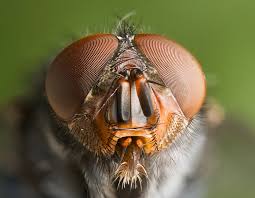
Scientists at the University of Sussex have discovered how parts of organs grow differently when body size changes.
Published today (Wednesday 16 March), the study entitled, “Differential scaling within an insect compound eye”, reveals how different parts of a single organ in the body can change sizes at different rates.
In the study, Sussex scientists measured the eye surfaces of 66 small and large wood ants and created eye ‘heat maps’. They discovered that when the ants’ body sizes changed, different regions within their eyes increased / decreased in size at different rates.
Dr Jeremy Niven, of the University of Sussex said: “Scientists have been trying to understand how organs reach the right size in our bodies since the beginning of the last century.
“Scaling within organs still remains poorly understood – but our results show for the first time that when the size of our bodies change, the different regions and cells within our organs respond in more diverse ways than previously thought.”
Craig Perl, the University of Sussex PhD student who worked on the study said: “Our work provides the foundation for future investigations into the role of scaling in organ evolution. Many species show substantial variation in organ size and shape that could be produced by regional differences in scaling.
“It is essential that we continue to try to understand how organs work and interact with one another so we can help animals remain healthy. If an organ, or the cells within it are too small or too big, this could have major consequences for an animal’s health.”
ScienceBlog.com has no paywalls, no sponsored content, and no agenda beyond getting the science right. Every story here is written to inform, not to impress an advertiser or push a point of view.
Good science journalism takes time — reading the papers, checking the claims, finding researchers who can put findings in context. We do that work because we think it matters.
If you find this site useful, consider supporting it with a donation. Even a few dollars a month helps keep the coverage independent and free for everyone.