
A new study led by The University of Western Australia has demonstrated for the first time that plants can learn about their environment by making links between events, an ability thought to be exclusive to animals.
The international research team, led by Research Associate Professor Monica Gagliano from UWA’s Centre for Evolutionary Biology, in collaboration with researchers from the Universities of Oxford and Zurich, set out to prove plants were capable of associative learning.
The study, published in the online journal Scientific Reports, was inspired by Pavlov’s experiments with dogs, one of the most revealing studies in the history of behavioural research, which demonstrated that behaviour could be changed using conditioning.
Through a range of behavioural experiments, the team was able to provide convincing evidence that plants were capable of learning a particular association between the occurrence of one event and the anticipation of another.
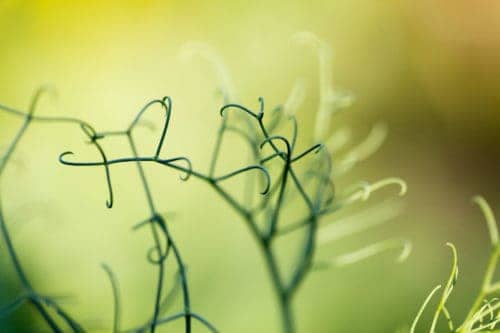
Professor Gagliano experimented with pea seedlings, placing them in a Y-shaped maze to see how they responded after initially being exposed to light from a particular direction.
The results showed the seedlings were able to learn and choose the best growth direction for survival by correctly predicting the occurrence of light once it was removed.
Professor Gagliano said the ability of plants to employ a wide range of adaptations had made them a predominant form of life on Earth. Yet the possibility that plants were capable of forming associations between environmental cues to enhance their ability to ‘forage’ for light had never been explored.
“Because our findings are unexpected, we anticipate that this study will stir a lively and exciting debate on the origin and properties of memory, learning and ultimately intelligent behaviour in biological systems,” Professor Gagliano said.
“By challenging the way we currently view the agency of plants and their behaviours, which have enabled them to flourish, the research opens up new and bigger ecological questions of how modifications to our environment will shape future plant communities.
“Beyond plants, these findings compel us to review our thinking about the essential mechanisms underlying information processing throughout living systems.”
ScienceBlog.com has no paywalls, no sponsored content, and no agenda beyond getting the science right. Every story here is written to inform, not to impress an advertiser or push a point of view.
Good science journalism takes time — reading the papers, checking the claims, finding researchers who can put findings in context. We do that work because we think it matters.
If you find this site useful, consider supporting it with a donation. Even a few dollars a month helps keep the coverage independent and free for everyone.