
Scientists have identified two brain regions that work together to determine whether we push through mental exhaustion or simply give up.
Using functional MRI scans, Johns Hopkins researchers discovered that cognitive fatigue activates a specific neural circuit linking our perception of tiredness to decisions about continuing difficult tasks—findings that could help treat debilitating mental fatigue in depression and PTSD.
The study, published in the Journal of Neuroscience, tracked 28 healthy volunteers as they performed increasingly difficult memory tasks while their brains were scanned. Participants had to remember letter sequences, with harder challenges offering bigger cash rewards.
The Brain’s Fatigue Circuit
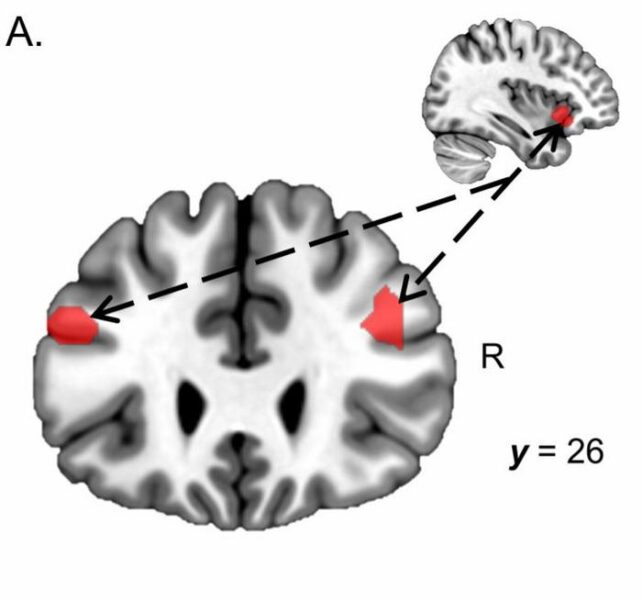
When people reported feeling mentally tired, two brain areas showed dramatically increased activity. The right insula, buried deep in the brain, has long been associated with fatigue sensations. Meanwhile, the dorsal lateral prefrontal cortex—regions on both sides of the brain—controls working memory and decision-making.
“Our study was designed to induce cognitive fatigue and see how people’s choices to exert effort change when they feel fatigue, as well as identify locations in the brain where these decisions are made,” explains Vikram Chib, the study’s senior author and associate professor at Johns Hopkins.
Both brain regions showed activity levels more than twice their baseline measurements during periods of cognitive fatigue. The connection between these areas appears to create a feedback loop that influences whether we continue pushing ourselves mentally.
Money Talks When Minds Are Tired
The research revealed something counterintuitive about motivation and mental effort:
- Financial incentives needed to be substantial to overcome cognitive fatigue
- Participants were more likely to avoid harder tasks when mentally exhausted, even for moderate rewards
- External motivators became crucial for sustained mental performance
- People’s perception of their capabilities didn’t always match their actual brain capacity
“The financial incentives need to be high in order for participants to exert increased cognitive effort, suggesting that external incentives prompt such effort,” Chib noted. This pattern mirrored his team’s previous findings with physical exertion.
Real-World Implications
The discovery matters beyond laboratory settings. Cognitive fatigue severely impacts people with neurological and psychiatric conditions, particularly those with depression and PTSD who often struggle with overwhelming mental exhaustion.
“The two areas of the brain may be working together to decide to avoid more cognitive effort unless there are more incentives offered,” Chib explains. However, he cautions that “there may be a discrepancy between perceptions in cognitive fatigue and what the human brain is actually capable of doing.”
The study participants, aged 21 to 29, received $50 for participation plus performance bonuses ranging from $1 to $8. All underwent baseline brain scans before tackling the memory challenges.
Treatment Possibilities
Understanding this neural circuit opens new therapeutic avenues. Chib suggests that targeted medications or cognitive behavioral therapy might help combat excessive mental fatigue by modifying activity in these brain regions.
The research framework could also provide doctors with objective ways to measure and classify cognitive fatigue—moving beyond subjective patient reports to measurable brain activity patterns.
However, important limitations remain. The functional MRI technique measures blood flow rather than direct neuron activity, potentially missing subtle brain changes. The controlled laboratory environment also differs significantly from real-world mental challenges.
“This study was performed in an MRI scanner and with very specific cognitive tasks. It will be important to see how these results generalize to other cognitive effort and real-world tasks,” Chib acknowledges.
The next step involves studying how this fatigue circuit behaves differently in people with depression, PTSD, and other conditions where mental exhaustion becomes debilitating. Such research could ultimately lead to more effective treatments for millions struggling with cognitive fatigue.
ScienceBlog.com has no paywalls, no sponsored content, and no agenda beyond getting the science right. Every story here is written to inform, not to impress an advertiser or push a point of view.
Good science journalism takes time — reading the papers, checking the claims, finding researchers who can put findings in context. We do that work because we think it matters.
If you find this site useful, consider supporting it with a donation. Even a few dollars a month helps keep the coverage independent and free for everyone.