
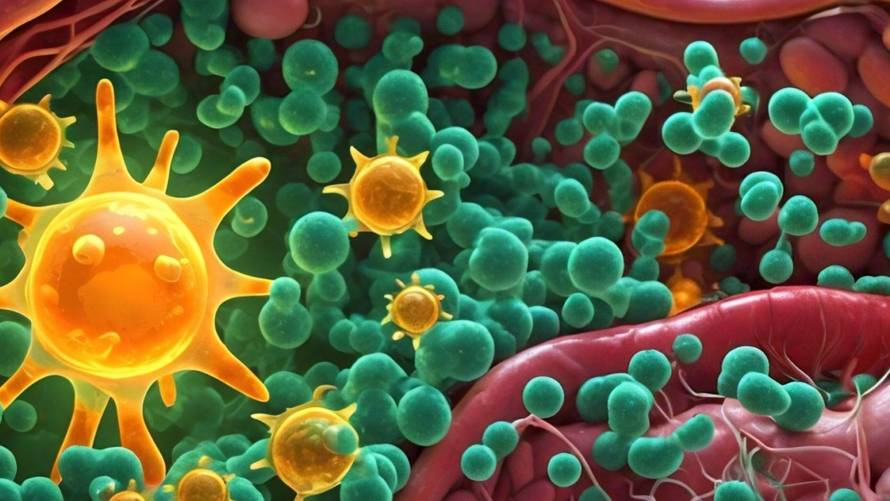
The colon can sense a common bacterial protein and rapidly tell the brain to stop eating, thanks to a newly discovered “neurobiotic sense,” researchers at Duke University School of Medicine report in Nature.
The study reveals an electrical circuit connecting microbes in the gut to the brain, bypassing hormones and immune responses in favor of direct neural communication.
At the heart of this system are neuropods, specialized sensory cells that detect flagellin—a protein found in the whip-like tails of many bacteria. These cells use a receptor called TLR5 to send signals via the vagus nerve, suppressing appetite within minutes. Without TLR5, this pathway breaks down, leading to overeating and weight gain in mice.
A sixth sense in the colon
“We were curious whether the body could sense microbial patterns in real time and not just as an immune or inflammatory response,” said Diego Bohórquez, senior author and professor of medicine and neurobiology at Duke. The team found that colonic neuropods express TLR5, a microbial sensor typically associated with immune cells. When they encounter flagellin, they release a neurochemical called PYY, which activates appetite-suppressing neurons in the brainstem.
This effect is both fast and precise. In one experiment, fasting mice given a small dose of flagellin directly into the colon ate significantly less than control mice. Mice genetically modified to lack TLR5 in neuropods showed no such response—and over time, gained more weight.
Real-time behavior control
Unlike the immune system, which takes hours to mount a response, this gut-brain link operates in seconds. The team used in vivo calcium imaging to show that nearly half of vagal neurons with receptors for PYY fired in response to flagellin but not to nutrient signals like intralipid, revealing a dedicated channel for microbial detection.
To confirm that neuropods were required for this effect, the researchers used optogenetics to either activate or silence these cells with light. Turning off neuropods during flagellin exposure eliminated the brain’s response and the appetite-suppressing effect.
A new platform for microbiome research
This neurobiotic sense opens up new ways to think about how the microbiome shapes behavior, independent of inflammation or metabolism. Key findings from the study include:
- Flagellin levels rise after eating, signaling satiety to the brain via the vagus nerve
- Disabling TLR5 only in neuropods increased both meal size and duration without changing meal frequency
- These effects were observed even in germ-free mice, showing that direct sensing—not microbial metabolites—triggers the response
The researchers also built a “Crunch Master” system to precisely measure bite patterns after microbial stimulation. Mice that received a flagellin enema took longer to start eating and consumed less, even when no immune markers of sickness were present.
“One clear next step is to investigate how specific diets change the microbial landscape in the gut,” said Bohórquez. This could help explain why certain foods or microbiome shifts are linked to obesity, anxiety, or other brain-related conditions.
Journal: Nature
DOI: 10.1038/s41586-025-09301-7
ScienceBlog.com has no paywalls, no sponsored content, and no agenda beyond getting the science right. Every story here is written to inform, not to impress an advertiser or push a point of view.
Good science journalism takes time — reading the papers, checking the claims, finding researchers who can put findings in context. We do that work because we think it matters.
If you find this site useful, consider supporting it with a donation. Even a few dollars a month helps keep the coverage independent and free for everyone.