

In a leap toward safer and more accurate gene therapies, scientists have developed a new artificial intelligence-driven method that predicts how cells repair their DNA after CRISPR cuts. The approach, called Pythia, uses deep learning to forecast repair outcomes and design molecular “glue” that guides cells to make precise genetic changes.
Researchers from the University of Zurich, Ghent University, and ETH Zurich report that it enables targeted edits in human cells, tropical frogs, and even mouse brain neurons, opening new possibilities for treating genetic diseases.
Turning DNA Repair Patterns Into Predictive Power
When CRISPR cuts DNA, cells use natural repair mechanisms to seal the break. While these processes follow patterns, they can produce unwanted side effects. “DNA repair follows patterns; it is not random. And Pythia uses these patterns to our advantage,” said lead author Thomas Naert, now a postdoctoral researcher at Ghent University. By simulating millions of possible outcomes, Pythia identifies the most efficient path to making a desired edit.
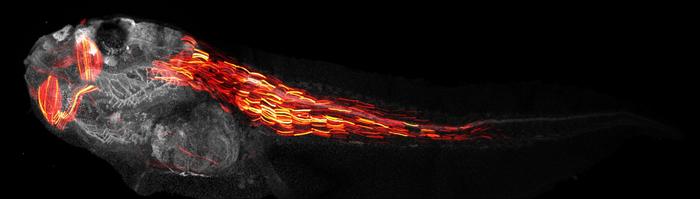
The team created tiny DNA repair templates with short, repeated sequences known as microhomologies. These templates act like docking points for the cell’s repair machinery, reducing the chance of genetic errors. In lab tests, this approach improved the precision of gene edits and integrations, whether inserting new genes, making single-letter changes, or tagging proteins with fluorescent markers to track their activity in living tissue.
“Just as meteorologists use AI to predict the weather, we are using it to forecast how cells will respond to genetic interventions. That kind of predictive power is essential if we want gene editing to be safe, reliable, and clinically useful,” said Soeren Lienkamp, senior author and professor at the University of Zurich and ETH Zurich.
From Cells to Brains
After proving the concept in human cell cultures, the researchers validated it in the tropical frog Xenopus, a staple in developmental biology, and in adult mice. In frogs, they achieved stable genetic integration that could be passed to offspring. In mice, they tagged proteins inside brain cells, a challenge for traditional CRISPR methods because neurons do not divide. The method increased the proportion of precise, scar-free edits compared to standard techniques.
Why This Matters for Gene Therapy
Gene therapies often face a trade-off between efficiency and precision. Double-stranded breaks, the DNA cuts made by CRISPR, can cause unintended rearrangements if repaired unpredictably. By using AI to anticipate and guide repair, Pythia reduces these risks. It also works in cell types where common repair pathways are inactive, such as the brain, retina, or early embryos, making it valuable for hard-to-treat genetic conditions.
Key Advantages of the Pythia Approach
- Uses deep learning to predict repair outcomes at each DNA cut site
- Employs short, customizable repair templates that fit into viral delivery systems
- Effective in both dividing and non-dividing cells
- Enables single-letter edits, gene insertions, and protein tagging
- Applicable to research, disease modeling, and potential therapeutic use
Looking Ahead
The researchers have made Pythia available as a free online tool at pythia-editing.org, allowing scientists to design their own repair strategies. While the technique still relies on DNA cuts and shares some of CRISPR’s inherent risks, its predictive accuracy could help shift gene editing from trial-and-error toward a more controlled, engineering-like discipline.
As Lienkamp noted, the union of AI and molecular biology may soon make it possible to rewrite genes with the same confidence engineers bring to building bridges or coding software. For patients with genetic diseases, that precision could mean the difference between a treatment that works safely and one that does not.
Journal: Nature Biotechnology
DOI: 10.1038/s41587-025-02771-0