

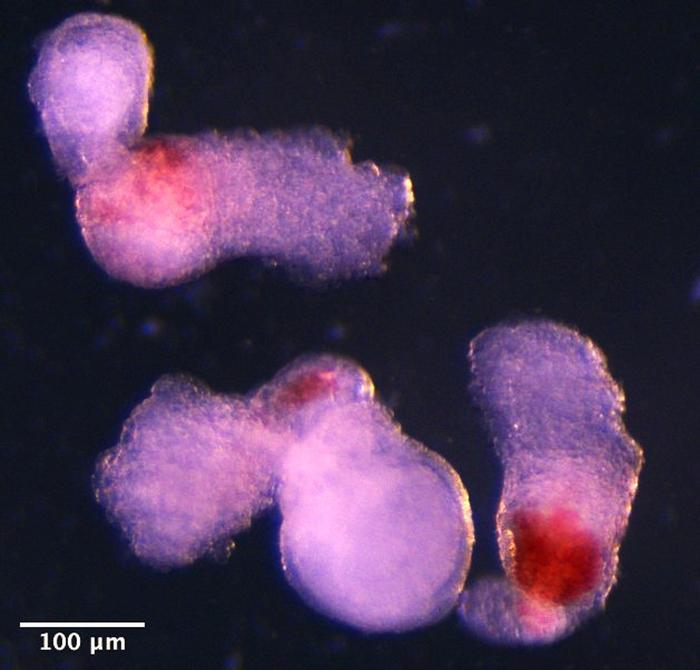
Under the lens of a microscope at the University of Cambridge, a cluster of human stem cells began to self-organize, fold, and pulse with life. By day fourteen, tiny red patches appeared within the translucent spheres, signaling the first lab-grown human embryo model to produce blood cells naturally.
Researchers at Cambridge’s Gurdon Institute have created these three-dimensional embryo-like structures, called hematoids, to replicate key stages of early human development, including blood and heart formation. Unlike traditional stem cell cultures, hematoids generate their own support environment, forming blood and beating cardiac cells without added growth factors.
Blood Formation Without Extra Ingredients
Human blood stem cells, known as hematopoietic stem cells, are responsible for producing every type of blood cell in the body. Until now, replicating their natural emergence in the lab required complex cocktails of proteins. The new model changes that. By mimicking embryonic conditions, the hematoids generate blood autonomously within a self-organized structure that mirrors the earliest weeks of human development.
“It was an exciting moment when the blood red color appeared in the dish – it was visible even to the naked eye,” said Dr Jitesh Neupane, the study’s first author.
These self-organizing structures form the body’s three germ layers by the second day of culture, the same foundational tissues that shape all organs and systems in a human embryo. By day eight, researchers observed the formation of beating heart cells. Five days later, blood stem cells emerged, capable of differentiating into multiple blood lineages, including immune cells such as T-cells.
Dr Geraldine Jowett, a co-first author, said the model captures the second wave of blood formation seen during natural embryogenesis, which gives rise to immune cells. The ability to reproduce this process in vitro opens new paths for modeling leukemia and other blood disorders, as well as for producing transplant-ready stem cells tailored to individual patients.
Windows Into a Hidden Stage of Human Life
Because implantation occurs before week four of human gestation, this stage of development cannot be studied directly in human embryos. Stem cell-derived models like hematoids provide a rare window into these otherwise inaccessible stages, offering insight into how organs and blood systems first assemble.
“This model offers a powerful new way to study blood development in the early human embryo,” said Professor Azim Surani, senior author of the study. “Although it is still in the early stages, the ability to produce human blood cells in the lab marks a significant step towards future regenerative therapies.”
Cambridge scientists emphasize that hematoids are not embryos and cannot develop into them. They lack essential tissues such as the placenta and yolk sac, which are necessary for implantation and further growth. Nevertheless, their ability to self-organize and produce blood cells without external cues signals a new era in developmental and regenerative biology.
The team has patented the technique through Cambridge Enterprise, aiming to advance its use for personalized medicine. By generating blood cells from a patient’s own reprogrammed stem cells, doctors may one day create perfectly matched blood for transplants and immune therapies.
For now, the sight of red-stained lab dishes marks an early but pivotal step toward that goal.