

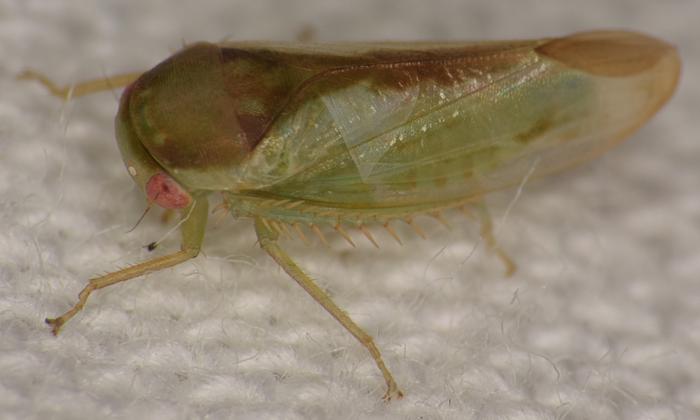
In the tropical canopy of Kibale National Park in western Uganda, seven previously unknown leafhopper species revealed themselves during routine nighttime fieldwork.
The discovery, made by Anglia Ruskin University entomologist Dr Alvin Helden and published in Zootaxa, marks the first time since 1981 that new African members of the genus Batracomorphus have been identified. These insects, mostly bright green with large eyes and long, folded hind legs, take their name from the Greek for frog shaped.
Only 375 species of Batracomorphus were known globally before this work, with just two recorded in the United Kingdom. Finding seven more in a single rainforest reserve hints at how much biodiversity remains hidden even in studied environments. Dr Helden collected all seven species at elevations above 1,500 meters using light traps, a method that reveals insects otherwise invisible in dense rainforest.
Unlocking New Species with a Painstaking Key
The greatest challenge was not locating the insects, but proving they were new to science. Batracomorphus leafhoppers look nearly identical to the naked eye. Their identity is locked in the shapes of their reproductive structures, each pair functioning as a species specific key and lock. The male genitalia, shaped from the same hardened material as the exoskeleton, must fit precisely with the female for mating to occur. This mechanism prevents hybridisation and keeps species independent even when they coexist in the same habitat.
“Leafhoppers are beautiful, endearing creatures. Although some can be pests, and are associated with crops such as maize and rice, overall leafhoppers are a really undervalued group of herbivores. They are an important source of food for birds and other insects, and their presence is a sign of a healthy ecosystem. Finding these new species has taken a lot of painstaking fieldwork in the rainforest, dealing with heat and humidity, but it is incredibly satisfying to find species previously unknown to science, it makes all the hard work worthwhile.”
The discovery highlights an essential truth about tropical ecosystems. Even the smallest herbivores serve as foundational elements, transferring energy from plants to predators and signaling whether an environment is thriving. Helden notes that while some leafhoppers can damage crops, their broader ecological role is overlooked. The seven new species, found only through persistent field surveys and meticulous anatomical study, expand our understanding of an insect group that often escapes public attention.
Science and Tribute Woven Into a Name
Taxonomy carries a human element, and among the newly described species, one carries a deeply personal dedication. Batracomorphus ruthae honors Dr Helden’s mother, Ruth, who died in 2022. A scientist herself, she worked in a hospital laboratory and encouraged her son’s fascination with nature from the beginning. She gave him his first microscope, a gift he still owns, and helped set him on the path that led to this discovery.
“I’ve named six of the leafhoppers, in Greek, after their distinctive features or where they were found. One, Batracomorphus ruthae, carries a very personal meaning. It honours my mother, Ruth, who I lost in 2022.”
By inscribing his mother’s name into the scientific record, Helden joins a long tradition of researchers who weave their personal histories into the taxonomy of the natural world. Each new species carries both biological importance and a human story, a reminder that discovery is shaped by perseverance, memory, and the relationships that nurture curiosity. The seven frog like leafhoppers of Kibale now stand as both a scientific milestone and a quiet tribute, their presence proof of the rainforest’s richness and the dedication required to reveal it.