

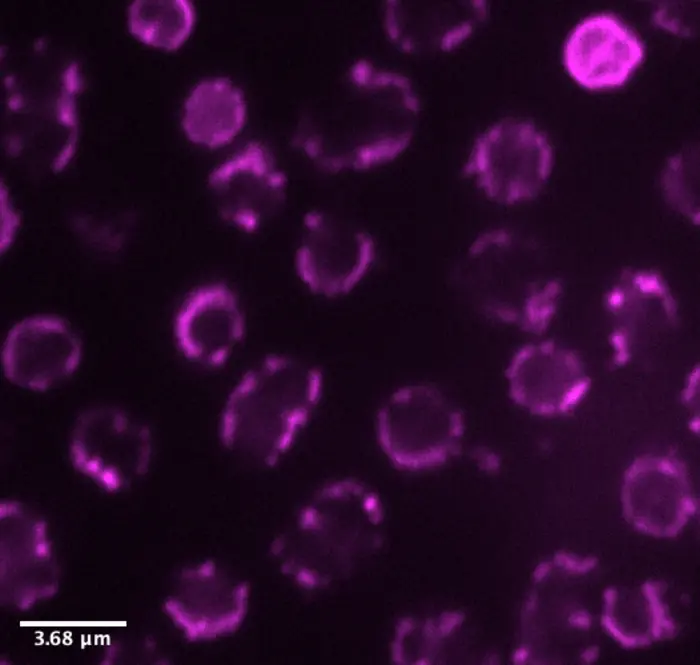
For over 60 years, scientists believed DNA translation followed absolute rules. Each three-letter genetic sequence codes for exactly one amino acid, no exceptions. But researchers at the University of California, Berkeley have discovered that methane-producing microbes blur these boundaries, reading the same DNA sequence two different ways and thriving despite the chaos.
The team, led by assistant professor Dipti Nayak, studied Methanosarcina acetivorans, an archaea that incorporates an unusual 22nd amino acid called pyrrolysine into its proteins. What they found challenges a core principle of molecular biology. “Objectively, ambiguity in the genetic code should be deleterious; you end up generating a random pool of proteins,” Nayak said. “But biological systems are more ambiguous than we give them credit to be and that ambiguity is actually a feature, it’s not a bug.”
The discovery, published November 6 in Proceedings of the National Academy of Sciences, centers on how these microbes interpret the UAG codon, normally a stop signal that terminates protein synthesis. M. acetivorans reads UAG as both a stop and as an instruction to add pyrrolysine. This means the organism produces two versions of certain proteins simultaneously, a long form and a truncated one, seemingly at random.
Special Amino Acid Enables Methylamine Digestion
The ambiguity likely evolved to help these archaea digest methylamines, nitrogen-containing compounds abundant in environments like the human gut. Pyrrolysine sits in the active site of enzymes that break down methylamines, and the team’s experiments confirmed it’s essential. When they deleted pyrrolysine biosynthesis genes or mutated the amino acid’s position in key enzymes, the microbes couldn’t grow on trimethylamine.
These methane producers play an unexpected role in human cardiovascular health. In the liver, red meat metabolites convert to trimethylamine N-oxide, associated with heart disease. Gut microbes remove methylamines before they reach the liver, potentially protecting against this pathway.
Former graduate student Katie Shalvarjian, now at Lawrence Livermore National Laboratory, surveyed archaea genomes and found pyrrolysine production widespread, especially in methanogens consuming methylated amines. “The UAG codon is like a fork in the road, where it can be interpreted either as a stop codon or as a pyrrolysine residue,” Shalvarjian said. “We think whether or not a protein exists primarily in its elongated or in its truncated form might form a regulatory cue for the cell.”
The researchers looked for sequence patterns that might determine when UAG means stop versus pyrrolysine, but found none. The microbes haven’t developed a deterministic system. They flip back and forth between interpretations, producing both protein versions.
Supply and Demand Balance Guides Code Reading
Preliminary evidence points to pyrrolysine availability as the deciding factor. When the amino acid floods the cell, UAG codons more likely incorporate it into proteins. With little pyrrolysine around, UAG functions as a stop signal. The organism contains between 200 and 300 genes with UAG codons, all capable of producing pyrrolysine-containing proteins.
The team’s transcriptome data revealed that pyrrolysine genes ramp up fourfold when cells switch from methanol to trimethylamine. Yet this increase gets swamped by a 188-fold surge in methylamine enzyme transcripts, all containing UAG codons. The demand for pyrrolysine vastly outpaces supply under these conditions, potentially lowering how often the cell reads through UAG instead of stopping.
Nayak’s group created deletion mutants lacking either pyrrolysine biosynthesis or incorporation machinery. Both strains grew 15% slower on methanol and couldn’t grow on trimethylamine. Complementing the deletions restored normal growth, confirming no unintended mutations caused the defects.
They also tested pyrrolysine systems from other archaea, engineering them into M. acetivorans. Genes from the acetogen Borrarchaeum weybense couldn’t restore growth, suggesting that organism’s pyrrolysine machinery doesn’t function despite appearing intact in its genome. An anaerobic methanotroph called ANME-3 S7 had functional biosynthesis genes but broken incorporation machinery, likely preventing it from actually using pyrrolysine despite retaining the ability to make it.
The findings may inform treatments for genetic diseases caused by premature stop codons, including about 10% of all genetic diseases like cystic fibrosis and Duchenne muscular dystrophy. Making stop codons leaky could allow enough functional protein production to ease symptoms, though the approach remains speculative.
“This really opens the door to finding interesting ways to control how cells interpret stop codons,” Nayak said.
The work received support from the Searle Scholars Program, Rose Hills Innovator Grant, Beckman Young Investigator Award, Alfred P. Sloan Research Fellowship, Simons Foundation, and Packard Fellowship in Science and Engineering.
