

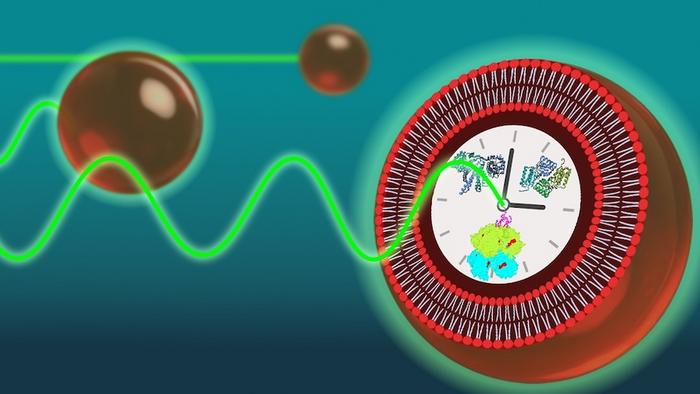
Radiotherapy works, in essence, by smashing cancer cells’ DNA so badly they can’t recover. Healthy cells patch themselves up; tumour cells, with their dodgy repair machinery, often can’t. It is a blunt instrument — but an effective one. What nobody had seriously reckoned with, until now, is that the cells’ ability to patch themselves up isn’t constant. It rises and falls across the day, governed by the same molecular clock that tells you when to sleep.
A team led by Pablo Huertas at the University of Seville and CABIMER, the Andalusian molecular biology research centre, has traced this daily fluctuation to a single protein called Cryptochrome 1, or CRY1. Their work, published in Nature Communications, unpicks the mechanism in considerable molecular detail and then — rather boldly for a basic science paper — follows the thread all the way into the cancer clinic. A retrospective look at patients treated with radiotherapy at a Seville hospital found that those irradiated in the afternoon fared better than those treated in the morning, at least for certain cancers. The effect lines up precisely with what the bench work predicts.
To understand why, you need to know a bit about how cells choose between their two main options for fixing a double-strand break, the nastiest kind of DNA damage. One pathway, homologous recombination, uses an intact copy of the broken sequence as a template. It’s careful, accurate, the sort of repair you’d want. The other, non-homologous end-joining, just sticks broken ends back together. Quicker, but sloppier. The decision point between these two hinges on a process called DNA end resection — a controlled nibbling-back of one strand at the break site. If resection happens, recombination proceeds. If it doesn’t, end-joining wins by default.
What the Seville group found is that resection follows a circadian rhythm. They synchronised human cells in the lab using dexamethasone (a standard trick for resetting the cellular clock) and then hit them with radiation at intervals across 48 hours. The cells’ capacity for resection peaked just after synchronisation — the equivalent of early morning — and then sagged through the afternoon before climbing again overnight. The pattern repeated cleanly into the second day, ruling out a one-off drug effect.
CRY1 turned out to be running the show. This protein is a core piece of the 24-hour oscillator; its levels naturally build through the day and fall at night. When CRY1 is scarce, resection hums along efficiently. As it accumulates, it puts the brakes on. The mechanism is quite specific: CRY1 physically grabs hold of another protein, CCAR2, and pins it to the damage site. CCAR2 in turn blocks CtIP, the enzyme that actually does the resecting. So the whole thing works like a molecular clamp — CRY1 holds CCAR2 in place, CCAR2 smothers CtIP, and resection grinds to a halt.
There’s an extra layer, too. When CRY1 arrives at a break, the enzyme DNA-PK phosphorylates it, which locks CRY1 more firmly onto the damaged DNA. A mutant version of CRY1 that can’t be phosphorylated doesn’t suppress resection at all. A version mimicking permanent phosphorylation suppresses it regardless. The circadian signal and the damage response aren’t operating in parallel — they’re physically coupled at the break.
One odd detail: CRY1’s close cousin CRY2 doesn’t do any of this. It isn’t recruited to breaks, and depleting it has no effect on resection. The researchers think this comes down to differences in their tail regions — CRY2 lacks the DNA-PK phosphorylation sites entirely. So it isn’t really the circadian clock as a whole that’s modulating repair. It’s one specific part, doing something on the side.
Which raises the obvious question: why would evolution build a DNA repair system that clocks off in the afternoon? The team’s best guess involves metabolism. Humans are most metabolically active during daylight hours, and active metabolism generates reactive oxygen species that can break DNA. Having recombination at its sharpest in the early morning, ready for the day’s damage, and winding down as things quieten towards evening — that sort of makes sense. The clincher is mice. They’re nocturnal, so their CRY1 cycle is shifted 12 hours. In mouse cells, recombination peaks at dusk and dips at dawn. The system tracks the active phase, not the sun.
But the clinically interesting bit is what happens when you flip the logic around. If high CRY1 makes cells worse at repairing double-strand breaks, then tumours with lots of CRY1 should be especially vulnerable to radiotherapy. And tumours irradiated when CRY1 is naturally elevated — late in the day — should sustain more damage they can’t fix.
The team tested this in several ways. Mining data from The Cancer Genome Atlas, they found breast cancer patients whose tumours had high CRY1 expression survived longer after radiotherapy than those with low-CRY1 tumours — a median difference of about 18 months. High levels of CCAR2 showed an even bigger gap, roughly two and a half years. In mouse xenograft experiments, tumours engineered to lack CRY1 grew faster and shrugged off the chemotherapy drug etoposide more easily.
Then came the hospital data. Working with the radiotherapy service at the Virgen Macarena University Hospital in Seville, the group pulled records for patients treated primarily with radiotherapy between 2018 and 2023, and sorted them by appointment time: morning (before 2pm) or afternoon. Across all cancer types, afternoon patients had significantly better overall survival.
That pan-cancer result hides some important variation, though. Prostate and breast cancer patients clearly benefited from afternoon irradiation. Lung cancer patients didn’t — not at all. Neither did those with gliomas or head and neck cancers. The likely explanation is that some tumour types have already lost normal circadian control of CRY1. If the protein’s expression is deregulated, the time of day ceases to matter; the clock is already broken.
Some caution is warranted. This was retrospective, not a randomised trial. Patients weren’t assigned to morning or afternoon slots based on their biology, and confounders — age, tumour stage, who tends to get which time slot — could muddy things. The survival differences, while statistically significant for specific cancers, aren’t enormous. Still, the molecular story underneath is remarkably coherent: a clear chain from circadian protein to repair mechanism to drug sensitivity to patient outcome, each link demonstrated independently.
The broader picture is tantalising, if speculative. Shift workers and people with chronic jetlag have elevated cancer risk, and nobody has fully explained why. If disrupting circadian rhythms throws off the balance between accurate and sloppy DNA repair, the resulting uptick in mutagenic repair could, over years, help drive tumour formation. The team found that tumours with high CRY1 carry more of the mutational signature associated with defective homologous recombination — the same pattern you see when BRCA1 or BRCA2 are lost. A genetic footprint, possibly, of a clock gone wrong.
Chronotherapy — timing cancer treatment to the body’s rhythms — has been talked about for years without gaining much traction, partly because the molecular rationale was thin. The Seville work gives it something more solid to stand on. Not a mandate to reschedule every radiotherapy appointment to after lunch; we’re a long way from that. But perhaps a reason to find out, tumour by tumour, whether the clock still ticks.
Study link: https://www.nature.com/articles/s41467-025-65854-1
