
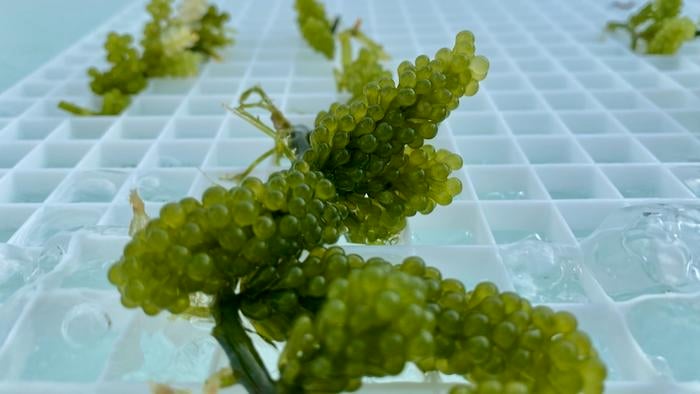
Every yellowtail snapper excretes ammonia. It cannot help doing so; it is a metabolic inevitability, the nitrogen-rich byproduct of a fish eating, breathing, living at commercial density in a tank on Virginia Key, Florida. In a conventional aquaculture operation, that ammonia accumulates in the effluent water until it becomes a problem, sometimes a serious one, for the marine environment downstream. What researchers at the University of Miami have spent the past several years working out is whether the right seaweed, given the right conditions, can simply eat the problem before it leaves the building.
The answer, it turns out, is yes, though which seaweed you choose matters quite a lot, and the reasons why are more interesting than a simple efficiency metric might suggest.
The concept behind integrated multi-trophic aquaculture, or IMTA, is straightforward enough: instead of treating fish effluent as waste, you pipe it through tanks of seaweed that can use the nutrients for growth. What makes the approach compelling is what it produces on the other end. Haley Lasco, then a marine biology graduate student at the Rosenstiel School, spent two-week trials monitoring four native seaweed species as they processed effluent from snapper held at commercial stocking density, 26 kilograms per cubic metre. Three of the four species reduced ammonia nitrogen in the outflowing water to below detectable limits. One of them, a red alga called Agardhiella subulata, achieved complete ammonia removal in eight days, once its biomass reached roughly 6.7 kilograms per cubic metre.
That is not just a pollution statistic. It is also a harvestable crop, enriched in protein by the very nutrients it has extracted from the fish upstream.
Each Seaweed Does Something Different
The four species tested were chosen partly for regional relevance (all are native to the Southeast US and Caribbean) and partly because earlier market research had flagged their commercial promise. Agardhiella subulata and the green alga Ulva lactuca both cleared ammonia to undetectable levels and grew substantially over the trial period. Agardhiella finished with nearly 11.5 kilograms per cubic metre; Ulva underwent what the paper describes as exponential growth, increasing its wet weight by more than 700 percent in three days during the second week. A second red alga, Gracilaria caudata, reduced ammonia by 82 percent before plateauing. Caulerpa racemosa, the fourth candidate, struggled, apparently because wild-caught specimens hadn’t acclimated long enough to their new system before the trial began.
The nutritional profiles of each harvested crop diverge in ways that arguably matter as much as the cleanup performance. Caulerpa came out with the highest protein content (around 25 percent of dry weight), and the most omega-3 fatty acids of any species tested. Ulva, despite its explosive growth, had the lowest protein but the highest carbohydrates and the strongest affinity for carbon uptake, a property with potential relevance to carbon sequestration rather than just food production. Agardhiella landed somewhere between the two in most categories, while also harbouring the highest combined omega-3 and omega-6 profile: the researchers calculate that roughly 45 grams dry weight provides the equivalent of a standard fish oil supplement capsule.
The Waste That Seaweed Couldn’t Touch
Not everything dissolved in fish effluent water yields so neatly to seaweed remediation. Phosphate, it turns out, is a more stubborn problem. None of the four species drove phosphate concentrations below detectable limits, and the statistical analyses found no significant phosphate reduction relative to the incoming effluent in any tank. The likely explanation is that once the seaweed had stripped available nitrogen from the water, growth became nitrogen-limited, which meant phosphate uptake stalled too. Caulerpa actually showed the lowest outflow phosphate concentrations, possibly reflecting its relatively high phosphate requirements when growing at optimal rates, though since it wasn’t growing optimally in this trial, that interpretation is tentative. The phosphate gap represents an open engineering problem for IMTA systems: clearing nitrogen while leaving phosphate behind is progress, not a solution.
There were some quieter findings that deserve attention on their own terms. All four species raised pH and lowered dissolved carbon dioxide in the water passing through their tanks, a result of photosynthesis consuming CO2 alongside ammonia. Ulva and Gracilaria both showed carbon-to-nitrogen ratios in their harvested tissue suggesting they incorporate carbon efficiently relative to their nitrogen uptake, which has prompted speculation about whether either species could be cultivated specifically for carbon sequestration, perhaps by sinking the biomass into deep water as some researchers have proposed. Whether that proves commercially viable is another question.
“This work shows how integrating macroalgae into marine finfish aquaculture systems can reduce waste while producing a valuable secondary crop,” said John Stieglitz, who led the project as principal investigator. “It provides a practical framework for selecting species based on specific production goals, improving environmental performance while creating opportunities for better production economics and more diversified products using an IMTA approach.”
The metal content data introduces some nuance. Caulerpa accumulated the highest levels of arsenic, lead, and iron of any species tested, with lead at 0.7 parts per million dry weight, above the FDA’s 0.05 ppm guideline for food. The researchers note that Caulerpa in this study was wild-caught and may not reflect the profile of seaweed cultured in captivity over longer periods. Mercury and cadmium across all four species remained well within safety thresholds.
“With the significant interest in the development of marine aquaculture throughout the Southeast U.S. and Caribbean, these findings can be used to guide the selection of extractive macroalgae species in operations culturing marine finfish,” said Lasco, who is now a scientist at the South Carolina Department of Natural Resources. The guidance amounts to a decision tree, essentially: if your priority is nitrogen removal, go with Agardhiella or Ulva; if you want the highest-protein secondary crop, Caulerpa wins on that metric but needs longer acclimation and more careful light management; if carbon sequestration interests you alongside bioremediation, Ulva and Gracilaria both merit closer attention.
What the study doesn’t resolve, and makes no claim to, is whether this scales. The pilot system at the Rosenstiel School’s Experimental Hatchery is just that, a pilot, and the regulatory landscape for marine aquaculture in US waters remains genuinely complicated. But the basic case, that seaweed can eat what fish produce and emerge from the process as something worth selling, has now been made with enough detail that producers in the region have a species-by-species guide to act on.
Source: Lasco et al., Aquaculture International, 2026. DOI: 10.1007/s10499-026-02441-1
Frequently Asked Questions
Can seaweed actually eliminate fish farm pollution, or just reduce it?
For ammonia nitrogen, three of the four seaweed species tested in this study reduced concentrations in fish effluent water to below detectable limits within 8 to 11 days of reaching sufficient biomass. Phosphate is a different story: none of the species tested made a statistically significant dent in phosphate levels, likely because nitrogen ran out before phosphate could be fully consumed. So the honest answer is: it depends on which pollutant you’re measuring.
Is seaweed grown in fish effluent actually safe to eat?
Largely yes, though with caveats. All four species tested had mercury and cadmium levels well within FDA safety thresholds. The concern is arsenic and lead, particularly in Caulerpa racemosa, which showed lead levels above FDA food guidelines. The researchers note this may reflect the wild-caught origin of that particular batch rather than the species in general, and that extended captive culture could change the picture. Decisions about food use would need species-specific and site-specific metal testing.
Why would you grow seaweed alongside fish instead of just treating the water chemically?
Chemical treatment removes waste but produces nothing. Growing seaweed alongside fish turns that waste into a harvestable crop, whether for human food, animal feed, or nutritional supplements. In this study, seaweed cultured in fish effluent had notably higher protein content than wild counterparts of the same species, suggesting the nutrient-rich effluent actively fortifies the crop. The economic logic is that you’re not just managing a pollution problem; you’re farming a second product from inputs you’d otherwise be paying to neutralise.
Could this type of fish-seaweed farming help with climate change?
Potentially, in a few ways. The seaweed in this study consistently lowered dissolved carbon dioxide in water passing through the tanks, a direct result of photosynthesis. Two species, Ulva lactuca and Gracilaria caudata, showed particularly high ratios of carbon to nitrogen in their harvested tissue, meaning they incorporated carbon efficiently relative to other nutrients. Some researchers have proposed sinking seaweed biomass into the deep ocean as a long-term carbon storage strategy, and the findings here suggest both species could be worth investigating for that purpose.
ScienceBlog.com has no paywalls, no sponsored content, and no agenda beyond getting the science right. Every story here is written to inform, not to impress an advertiser or push a point of view.
Good science journalism takes time — reading the papers, checking the claims, finding researchers who can put findings in context. We do that work because we think it matters.
If you find this site useful, consider supporting it with a donation. Even a few dollars a month helps keep the coverage independent and free for everyone.