

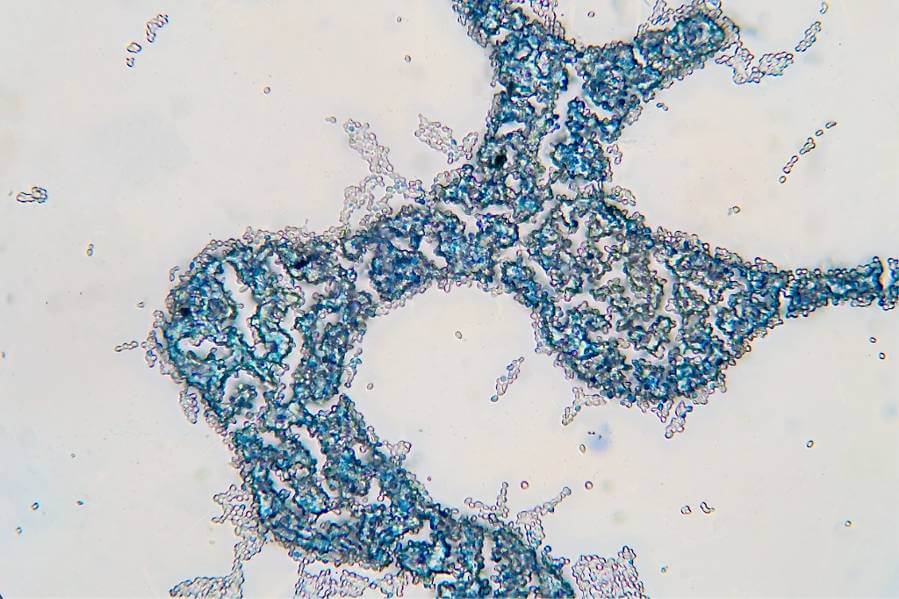
Yeast has been making things for humans for thousands of years. Bread, beer, wine, the slow alchemy of fermentation that civilisations were built around. What it couldn’t do, until recently, was read a genetic instruction manual several hundred thousand letters long and use it to synthesise a cancer drug from scratch. That’s changing. And the reason it’s changing comes down to a deceptively simple engineering problem: how do you write enough DNA, quickly enough, without making mistakes, to give a microbe an entirely new job?
The answer, it turns out, involves lessons borrowed from chip manufacturing, a yeast cell’s extraordinary talent for self-repair, and the occasional synthetic chromosome that doesn’t exist in nature.
A review published this week in Quantitative Biology maps out just how far the field has come. The authors, led by Yue Shen of BGI Research in China, describe a technology that has scaled from assembling individual genes to stitching together entire chromosomes spanning millions of genetic letters. The goal is what researchers call a microbial cell factory: a bacterium or yeast strain redesigned at the genomic level to produce pharmaceuticals, biofuels, or industrial chemicals more efficiently than conventional synthesis allows. The appeal is obvious. Fermentation tanks don’t require oil wells, and a well-designed microbe can manufacture complex molecules that no chemist could realistically synthesise by hand.
Getting there, though, requires inserting very large amounts of new genetic material into cells without breaking them.
The first generation of genetic engineering worked with relatively small DNA fragments, maybe a gene or two at a time. The biosynthetic pathways that produce useful compounds are rarely that tidy. Taxol, the cancer drug originally derived from Pacific yew bark, involves a cascade of enzymatic reactions encoded across dozens of genes drawn from plants, bacteria, and fungi. Assembling that kind of pathway means joining DNA fragments tens of thousands of base pairs long, and doing it without introducing errors that would derail the whole metabolic sequence. Until recently, that was genuinely hard.
Stitching Genomes Together, Piece by Piece
The breakthrough came from several directions at once. Gibson assembly, developed in 2009, offered a way to join multiple overlapping DNA fragments in a single reaction, at a constant temperature, without needing to worry about restriction sites getting in the way. It sounds almost too straightforward, but the method scaled surprisingly well, enabling constructs exceeding 900 kilobases. Around the same time, researchers realised that yeast cells, with their unusually aggressive DNA repair machinery, could be persuaded to assemble large fragments on their own just by delivering overlapping pieces and letting the cell do the joining. The transformation-associated recombination method, exploiting this property, eventually enabled assembly of DNA sequences up to 600 kilobases long.
These weren’t just incremental improvements. They opened up entire classes of compound that had been effectively off-limits to biotechnology.
What’s happened since is harder to summarise neatly, because the field has branched in several directions simultaneously. One branch has focused on inserting whole biosynthetic gene clusters (sometimes called BGCs) into microbes that would never naturally produce the compound in question. A team working on the antibiotic corbomycin, for instance, managed to capture a 76-kilobase gene cluster from its original bacterial host and transfer it into yeast for stable expression, achieving a 19-fold increase in final yield over previous methods. The key innovation was a more robust capture system that could grab the relevant stretch of DNA from a messy genomic background without losing it. These clusters can run to hundreds of kilobases; capturing them intact, then getting them functioning in a foreign host, is roughly analogous to transplanting not just an organ but the entire metabolic context it needs to work.
A second branch has gone further still, into what the field calls synthetic genome assembly. The idea here isn’t merely to add new DNA but to rewrite the organism’s existing genome from scratch, codon by codon, and in doing so create properties that couldn’t exist in any wild type. The Synthetic Yeast Genome Project (Sc2.0) is perhaps the most ambitious example: a global consortium working toward a fully synthetic Saccharomyces cerevisiae genome, with each chromosome replaced by a designed alternative containing thousands of embedded recombination sites. Activate those sites with the right enzyme, and the genome reshuffles itself, generating a population of variant strains at a speed no conventional mutagenesis programme could match. In one experiment, five cycles of this shuffling produced a yeast strain with 38.8 times the carotenoid output of the parent. In another, strains emerged capable of tolerating 8 percent ethanol concentrations, a property with obvious relevance to industrial fermentation.
Chromosomes You Can Design From Scratch
The most recent development, and perhaps the strangest, is the neochromosome: an artificial chromosome assembled de novo, with no natural template, that sits alongside the organism’s existing genome as a kind of biological expansion slot. The appeal is that you can load a neochromosome with large metabolic pathway modules without disrupting the native chromosomal architecture. A team at BGI recently used a method called HAnDy to assemble a neochromosome just over a megabase long, containing 542 exogenous genes, with an assembly efficiency of around 60 percent. When introduced into six phylogenetically distinct yeast strains, it improved their tolerance to temperature stress, osmotic pressure, heavy metals, and expanded the range of carbon sources they could metabolise. Nine putative novel metabolites appeared that hadn’t been detectable before. The neochromosome, in effect, gave ordinary lab yeast a set of capabilities it would have taken millions of years of evolution to acquire naturally, if it ever did.
The limitation, for now, is that all of this works most reliably in a small number of model organisms. E. coli and S. cerevisiae between them have attracted the bulk of the methodological innovation, partly because their biology is so well characterised and partly because that’s where the tools were developed first. Extending the same approaches to other industrially interesting hosts, like Yarrowia lipolytica or Trichoderma reesei, remains genuinely difficult. Interspecies transfer of large DNA assemblies is still inefficient; the biology of how cells accept, maintain, and express foreign chromosomes isn’t fully understood even in yeast.
Shen is sanguine about the trajectory, even so. “As large DNA assembly technologies increasingly integrate with automated platforms and AI-driven design,” he says, “the development cycle of microbial cell factories is poised to accelerate dramatically.” The specific promise he’s pointing to is a design-build-test-learn cycle in which AI proposes pathway designs, robotic platforms assemble them, and sequencing confirms the result, all without the rate-limiting step of human hands at the bench. “This technological leap is unlocking their true potential as practical, sustainable platforms for global biomanufacturing.”
Whether the leap arrives on the timescale the field is hoping for depends on how quickly the bottlenecks outside the laboratory resolve themselves. The cost of DNA synthesis has dropped precipitously over the past decade and continues to fall; microchip-based parallel synthesis is beginning to push the economics further. Regulatory frameworks for releasing redesigned microbes into industrial settings are still catching up with what the science can do. And there’s a subtler question sitting underneath all of it: how much of the biological complexity that makes these organisms useful can actually be designed in advance, and how much will always need to be discovered through iteration? Yeast has been surprising us for millennia. Probably it isn’t finished yet.
Source: Zhang, Y., et al. (2026). Advances in large DNA fragment assembly for microbial cell factory engineering. Quantitative Biology. https://doi.org/10.1002/qub2.70039
Frequently Asked Questions
Could engineered microbes actually replace conventional chemical manufacturing for things like medicines and fuels?
For some compounds, they already do. Microbial fermentation now produces a significant portion of the world’s insulin, and biosynthetic routes to complex molecules like artemisinin (a malaria drug) have replaced plant extraction at commercial scale. The challenge is that each compound requires its own tailored pathway, and building those pathways reliably in microbes is still technically demanding, though advances in large DNA assembly are narrowing that gap substantially.
What exactly is a biosynthetic gene cluster, and why is it so hard to transplant?
A biosynthetic gene cluster is a stretch of DNA, often spanning tens to hundreds of thousands of base pairs, that encodes all the enzymes needed to produce a particular compound, usually an antibiotic or other natural product. The difficulty in transplanting it isn’t just length; it’s that the cluster evolved to work within a specific cellular context, with particular regulatory signals and metabolic precursors. Capturing the whole thing intact and getting it to function in a foreign host requires both precise DNA assembly and substantial rewiring of the host’s own metabolism.
Is rewriting an organism’s entire genome actually safe?
One unexpected benefit of genome recoding is that it can make organisms safer, not more dangerous. Strains with reassigned genetic codons become unable to read viruses written in the standard code, conferring broad phage resistance and reducing the risk of genetic information leaking into wild populations. Researchers have framed this as a “genetic firewall,” though the regulatory and biosafety frameworks around deliberate genome-scale rewriting are still catching up with what the science can now do.
What’s a neochromosome, and how is it different from just adding genes to an existing chromosome?
A neochromosome is an entirely artificial chromosome assembled from scratch and introduced into a cell as a supernumerary addition, sitting alongside the organism’s existing genome rather than replacing any part of it. This matters because inserting large gene clusters into native chromosomes can disrupt neighbouring genes and destabilise replication. A neochromosome sidesteps that problem by providing a dedicated, modular platform for expressing new pathways, and in principle it can be swapped in or out like a biological expansion module.
