
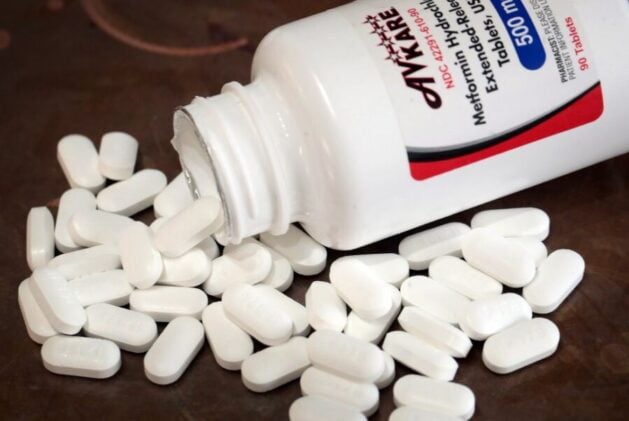
For decades, if you asked a pharmacologist where metformin does its thing, they’d tell you: the liver. That was the consensus. The drug, taken by roughly 150 million people worldwide to manage type 2 diabetes, was thought to suppress the liver’s tendency to churn out excess glucose, and that explanation was tidy enough that almost nobody questioned it too hard. It held for twenty-odd years. Turns out it was mostly wrong. A study published in Nature Metabolism this month has traced metformin’s primary action to an entirely different organ, one that researchers have been overlooking as a therapeutic target, and the implications are rather more interesting than a simple correction to the textbooks.
The real site of action, it seems, is the gut. More specifically, the cells lining the intestine.
Navdeep Chandel, a professor of biochemistry at Northwestern University Feinberg School of Medicine, has spent years probing metformin’s mechanism, and the laboratory’s previous work had already established that the drug inhibits a key component of the cell’s energy-making machinery, a molecular assembly called mitochondrial complex I. The new study, led by postdoctoral researcher Zachary Sebo, pinpointed where that inhibition matters most. The finding reframes a fairly basic question about one of medicine’s most familiar molecules. “Our study suggests that revisiting assumptions about metformin’s mechanism may offer a more detailed understanding of how it works,” Sebo said.
A Drug That Concentrates Where It’s Needed
The clue was hiding in the pharmacology all along, though it took careful analysis to notice it. When metformin is swallowed in a standard clinical dose, its concentration in intestinal tissue reaches millimolar levels, roughly 10 to 100 times higher than what accumulates in the liver, and up to 300 times more than what circulates in the bloodstream. That pharmacokinetic gap matters, because complex I is only meaningfully inhibited at the concentrations that build up in the gut. The liver, it turns out, probably never sees enough metformin to be the primary target.
To confirm this, Sebo and colleagues engineered a mouse model with an important quirk. They introduced a yeast enzyme called NDI1 specifically into intestinal cells. NDI1 performs the same basic job as complex I, regenerating the cellular cofactor NAD+, but it does so in a way that completely bypasses complex I and is immune to metformin’s effects. In mice carrying this modification, the intestinal cells could shrug off the drug entirely. And when those mice were given metformin, its blood-glucose-lowering power was substantially reduced. The gut, not the liver, is where the action is.
What exactly happens when complex I is inhibited in intestinal cells is something Chandel describes with characteristic directness. “Metformin essentially helps the intestine suck the glucose out of the bloodstream, which further highlights that the gut plays a major role in regulating blood sugar levels,” he said. The mechanism goes roughly like this: blocking complex I forces the intestinal cells to obtain energy through glycolysis instead of oxidative phosphorylation, and glycolysis is hungry for glucose. The intestine, ordinarily a fairly modest consumer of blood sugar, gets converted into something closer to a metabolic sponge.
Ripple Effects Through the Body
This one mechanistic shift, it turns out, explains a startling range of metformin’s clinical effects. Patients on metformin tend to have lower blood sugar after meals, consistent with the gut acting as a sink for postprandial glucose. They also show reduced levels of citrulline, a molecule produced exclusively by mitochondria in small intestine cells; inhibit complex I, and citrulline production drops too. That had been observed in clinic for years without a convincing explanation. Patients also show elevated GDF15, a hormone linked to reduced appetite that researchers believe contributes to the modest weight loss many people experience on the drug. The intestine, sensing an energy shortage, secretes GDF15 as a kind of distress signal the brain receives as an instruction to eat less. “People have always wondered how one drug can do 10 things,” Chandel said. “Well, it can do that if the drug is hitting a big node in a cell, and hitting mitochondria in a cell is a big node. So, if you can get into those cells and inhibit mitochondria, it’s going to have huge effects.”
The citrulline connection is perhaps the most intriguing thread to pull. Citrulline is a precursor to nitric oxide, a vasodilator essential for muscle perfusion during exercise and the dominant ingredient in pre-workout supplements. Metformin suppresses it. The paper’s authors suggest this could explain something researchers noticed but struggled to account for: people taking metformin appear to get blunted benefits from exercise training, gaining less muscle and improving aerobic capacity less than comparable patients not on the drug. A direct toxic effect on muscle mitochondria seems unlikely given how little metformin reaches muscle tissue, so reduced nitric oxide, from reduced citrulline, is the more plausible culprit. The authors raise the possibility that citrulline supplementation could partially restore exercise benefits in metformin users, though they’re careful to frame this as speculative.
Nature’s Ozempic Gets a Closer Look
The study also picks up on a parallel that social media had already noticed, even if it had rather overinterpreted it. Berberine, a plant-derived compound sold as a dietary supplement and sometimes called “nature’s Ozempic” in wellness circles, appears to lower blood sugar through the same intestinal mechanism as metformin. Like metformin, berberine is a potent inhibitor of complex I, but it’s normally poorly absorbed from the gut, meaning it rarely escapes into systemic circulation. That, the researchers now argue, isn’t a deficiency; it’s the point. Its gut-restricted behaviour is precisely what makes it work at all. In the NDI1 mice, berberine’s glucose-lowering effect was completely abolished, more completely than with metformin, consistent with the idea that berberine has no meaningful therapeutic targets anywhere else.
Whether that equivalence translates to comparable clinical benefits in people is quite another question. Chandel is blunt about it. “Metformin has decades of clinical evidence behind it, whereas supplements like berberine are far less rigorously tested,” he said. “If you’re going to use berberine, you may as well use the real deal.” The mechanistic overlap is scientifically interesting; it does not constitute a clinical endorsement.
There are some limitations worth noting. The research was conducted in mice, and while the human metabolomic data included in the study show consistent patterns around citrulline and other markers, mouse pharmacokinetics don’t always translate cleanly. The incomplete resistance conferred by the NDI1 modification also suggests metformin probably acts through additional targets the study hasn’t resolved, perhaps in the gut microbiome, perhaps elsewhere.
Still, the practical implication of this work is fairly clear, and clinically actionable in a low-effort kind of way. Metformin is already recommended to be taken with meals, ostensibly to reduce the nausea and gut discomfort that some patients experience. This study suggests that timing isn’t just a side-effect management strategy; it’s probably when the drug is most effective at its primary job, capturing the glucose surge that follows eating before it ever reaches the bloodstream. The chronic benefit, the study’s authors argue, isn’t some slow rewiring of metabolism. It’s just the sum of a lot of individual bolus doses, each one doing the same acute job.
For a drug this old and this widely used, that’s a meaningful thing to establish. And it opens a door researchers are now starting to take seriously: that designing compounds to act specifically in the gut, rather than reaching the liver or bloodstream at all, might be a genuinely useful strategy for metabolic disease. Not a second-best option. Perhaps, in some cases, the right one.
https://doi.org/10.1038/s42255-026-01530-y
Frequently Asked Questions
If metformin mainly works in the gut, why did scientists think it targeted the liver for so long?
Earlier research, using isotope tracing and other techniques, showed that glucose production by the liver decreased in people taking metformin, and the liver seemed the obvious place to look for an explanation. The problem was that the drug concentrations needed to inhibit the relevant enzyme, mitochondrial complex I, are only achieved in the intestine under standard dosing. The liver sees far less metformin than the gut does, which means direct inhibition of liver cell metabolism was probably never the primary mechanism. It took careful mapping of drug concentrations across tissues, combined with targeted genetic tools in mice, to make the mismatch obvious.
Does this mean metformin is most effective when taken with food?
That appears to be the implication. The study found that metformin’s benefit comes from repeated acute doses rather than any kind of cumulative chronic effect on metabolism, and taking it with or just before meals lines up its peak gut concentration with the moment blood sugar is rising. Mealtime dosing has long been recommended to manage gastrointestinal side effects, but the new findings suggest it may also be when the drug does its most useful work, capturing the postprandial glucose surge before it spills into the bloodstream.
Why might metformin blunt the benefits of exercise?
The new mechanism suggests a plausible explanation that has eluded researchers for years. Metformin suppresses mitochondrial activity in intestinal cells, which reduces production of citrulline, an amino acid synthesised exclusively in small intestine mitochondria. Citrulline is a key precursor to nitric oxide, a signalling molecule that dilates blood vessels and improves blood flow to muscles during exercise. Less citrulline likely means less nitric oxide, and therefore less effective muscle perfusion during physical activity. Whether supplementing with citrulline could offset this effect in people taking metformin is an open question, but researchers in the field consider it worth investigating.
Is berberine actually a safe or effective alternative to metformin?
The study found berberine works through the same intestinal mechanism as metformin, which is scientifically interesting, but that similarity doesn’t make it a clinical equivalent. Metformin has been tested in large, rigorous trials over decades, and its safety profile is well established. Berberine has a much thinner evidence base, variable product quality in the supplement market, and meaningful drug interactions that are not yet fully characterised. The researchers are explicit that the mechanistic overlap should not be read as an endorsement of berberine as a substitute.
Could gut-targeted drugs replace systemic ones for metabolic disease more broadly?
This study raises that possibility more seriously than before. If a drug working almost exclusively in the intestine can achieve the glucose control that metformin provides, it suggests the gut may be a more powerful metabolic regulator than clinical medicine has historically treated it as. Designing compounds that act at millimolar concentrations in the gut lining but don’t reach systemic circulation could, in principle, capture therapeutic benefits while reducing side effects in other tissues. Berberine’s natural gut-restricted absorption looks less like a pharmacological flaw in this light, and more like a template worth designing toward.
ScienceBlog.com has no paywalls, no sponsored content, and no agenda beyond getting the science right. Every story here is written to inform, not to impress an advertiser or push a point of view.
Good science journalism takes time — reading the papers, checking the claims, finding researchers who can put findings in context. We do that work because we think it matters.
If you find this site useful, consider supporting it with a donation. Even a few dollars a month helps keep the coverage independent and free for everyone.