
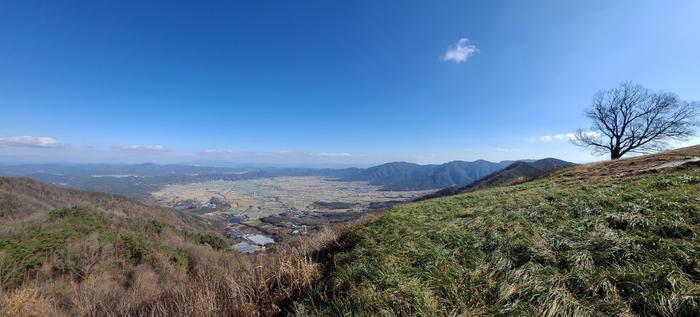
Somewhere in the foothills of South Korea’s Hapcheon province, in a narrow valley where a stream runs intermittently, there are small rounded stones buried twenty centimetres beneath the gravel. To a passing hiker, unremarkable. To Jaesoo Lim and his colleagues at the Korea Institute of Geoscience and Mineral Resources, they are something else entirely: the oldest biological structures ever found inside an impact crater, and possibly a clue to how oxygen first entered Earth’s atmosphere roughly 2.4 billion years ago.
The stones are stromatolites, layered structures built up over thousands of years by microbial communities. Cyanobacteria and their ancestors have been constructing these mounded mats since at least 3.5 billion years ago, making stromatolites the oldest fossil evidence of life on Earth. Today they persist mainly in extreme environments: hypersaline coastal bays in Western Australia, hot springs in Yellowstone, alkaline lakes across the African interior (places where animal grazers cannot reach them). Finding them in a Korean impact crater, of all places, raises a question that researchers are only beginning to ask. What if asteroid impacts didn’t just devastate early life? What if they also created the conditions for it to flourish?
A Crater That Kept Something Alive
Lim’s team first confirmed the Hapcheon basin as Korea’s only known meteorite impact site in 2021, identifying the telltale shatter cones and shocked mineral fabrics that distinguish genuine impact structures from ordinary geological features. The impact itself, they now know, happened roughly 42,300 years ago, geologically speaking practically yesterday. What interests them more is what happened in the years and decades after the rock struck.
When a large bolide hits, the immediate aftermath is catastrophic: vaporised rock, pressure waves, fires. But the crater that remains is not simply an inert bowl. Heat from the impact melts rock deep underground, and this residual warmth can persist for an extraordinarily long time, driving hydrothermal circulation through the newly fractured bedrock. In the Ries crater in Germany, evidence for such hydrothermal activity extends for roughly 250,000 years after the impact. In Hapcheon, the chemical record encoded in the stromatolites themselves suggests the hydrothermal phase lasted more than 27,000 years. For microbial life, that is practically an invitation.
A post-impact lake formed in the basin. Water percolating through hot fractured rock would have been warm, mineral-rich, somewhat alkaline: exactly the conditions modern stromatolite analogues seem to prefer. Sediment cores drilled from the crater floor reveal the fingerprints of this early environment. Calcite concentrations in the lower sediments are high, the kind of carbonate-oversaturated chemistry that encourages microbial mat formation. Sulphur is abundant. Microbial DNA recovered from sediments some 70 metres down contains organisms recognisably related to geothermal-environment specialists: Annwoodia aquaesulis, isolated originally from geothermal water, and Sulfuritortus calidifontis, which lives in hot spring microbial mats. The lake, in its early phase, was essentially a warm spring trapped in a bowl.
Reading the Chemistry Frozen in Stone
That the Hapcheon stromatolites formed in this hydrothermal environment rather than simply washing in from elsewhere is encoded in their rare earth element chemistry. Europium, one of the rarer members of that group of fifteen metals, behaves oddly under high-temperature conditions: it is reduced to a more soluble form and concentrates in hydrothermal fluids, leaving an anomalously strong Europium signal in anything that precipitates from those fluids. The Hapcheon stromatolites carry exactly this signature. More telling still, the Europium anomaly is strongest in the innermost growth layers and weakens toward the outer rim, a gradient that corresponds neatly with the gradual cooling of hydrothermal activity over time. The stromatolites, in other words, kept a running temperature record as they grew.
A second chemical fingerprint links them to the impact event itself. Meteorites are rich in osmium and carry distinctive isotope ratios quite different from those of ordinary Earth rocks. The stromatolites contain elevated osmium concentrations with depleted isotope ratios intermediate between local bedrock and carbonaceous chondrite meteorite values. The modelling implies the stromatolites incorporated roughly 0.02% meteoritic material, a tiny fraction, but detectable, and physically meaningful. These structures grew from material that included the impactor itself, dissolved and redistributed through the hydrothermal system.
“This is the first comprehensive evidence suggesting that stromatolites could form in hydrothermal lakes created by asteroid impacts,” said Lim. “Such environments may have provided favorable conditions for early microbial ecosystems.” The research was published in Communications Earth & Environment.
The paper is careful to note what the Hapcheon findings do not show. The post-impact lake was dominated by green algae, specifically Spirogyra, a warm-water genus whose ancestors evolved well after the Great Oxidation Event. So the Hapcheon stromatolites themselves are not witnesses to that ancient transformation. The argument is more structural than that: if impact craters can produce this kind of hydrothermal cradle for microbial life in a 42,000-year-old Korean basin, the same mechanism could have operated on much larger scales across the heavily bombarded early Earth.
Oxygen Oases in a Cosmic Hailstorm
Between about 4.1 and 2.5 billion years ago, Earth was pummelled by asteroids at rates far higher than anything seen today. The Moon’s cratered surface is a record of this bombardment that Earth’s geology has mostly erased. During this same period, oxygen-producing cyanobacteria were evolving and spreading, but the Great Oxidation Event, when atmospheric oxygen finally accumulated to detectable levels, did not happen until around 2.4 billion years ago. Why the delay? One hypothesis is that early cyanobacteria were producing oxygen locally for hundreds of millions of years, in isolated habitats where it could accumulate before being consumed by geological sinks. These have been called oxygen oases.
A 2022 study of 2.7-billion-year-old stromatolites from South Africa found evidence that lacustrine microbial mats served as exactly these kinds of localised oxygen sources, long before global atmospheric oxygen rise. What Lim’s team adds is a mechanism: impact craters, through their hydrothermal systems, could have provided particularly stable and chemically suitable environments for these early oxygen-producers. Warm, mineral-laden water. Protection from the open ocean’s chemistry. A bowl shape that concentrates microbial activity and slows dispersal. During a period when asteroid strikes were common, new crater lakes may have been forming regularly across the continents, each one a potential nursery.
The implications extend beyond Earth. Mars, during its wet early period, hosted impact craters that were almost certainly filled with liquid water. Some of those craters show evidence of hydrothermal activity. If the logic applies on Earth, it applies at least in principle on Mars, which is why Lim’s team suggests that crater environments with stromatolite-like sedimentary structures should be high-priority targets for biosignature searches. The rocks we are looking for, if they exist, may be precisely the kind of layered, mineral-rich formations found on a hillside in South Korea. Buried twenty centimetres down. Waiting.
Frequently Asked Questions
What are stromatolites and why do scientists care about them?
Stromatolites are layered rock-like structures built by microbial communities, typically cyanobacteria, that trap and bind sediment over time. The oldest known examples date back around 3.5 billion years, making them among the earliest physical evidence of life on Earth. Scientists care about them because they are records of ancient microbial activity and, in some cases, early oxygen production through photosynthesis.
How does an asteroid impact create conditions suitable for microbial life?
When a large meteorite strikes, the energy released melts rock deep underground and fractures the surrounding bedrock extensively. This residual heat can drive hydrothermal circulation, where water percolates through the hot fractured rock, picking up minerals and warmth. The resulting hydrothermal lake is chemically rich and thermally stable, providing conditions that favour microbial mat growth for potentially thousands to hundreds of thousands of years.
Does this discovery prove that impact craters caused the Great Oxidation Event?
No, and the researchers are explicit about this. The Hapcheon stromatolites formed in a lake dominated by green algae, which evolved long after the Great Oxidation Event about 2.4 billion years ago. The findings instead suggest a mechanism: that during the period of heavy asteroid bombardment on early Earth, impact-generated hydrothermal lakes may have provided suitable habitats for oxygen-producing microbes to form localised “oxygen oases,” contributing incrementally to rising atmospheric oxygen levels over time.
Could similar environments have supported life on Mars?
Possibly. Early Mars is thought to have hosted liquid water in impact craters, and some of those craters show geological evidence of hydrothermal activity. If asteroid-generated hydrothermal lakes fostered microbial life on Earth, comparable environments on Mars could, in principle, have done the same. The researchers suggest that Martian craters with layered sedimentary structures similar to stromatolites should be considered priority sites in the search for evidence of past life.
How do scientists know the stromatolites formed after the impact rather than before?
Several lines of evidence converge on this conclusion. Radiocarbon dating places the stromatolites’ growth well after the impact event (dated to 42,300 years ago), and their chemistry carries clear post-impact signatures: a meteoritic osmium component and a hydrothermal Europium anomaly that matches the post-impact lake chemistry documented in sediment cores from the same crater. The decreasing Europium signal from the inner to outer growth layers also matches the expected cooling trajectory of a post-impact hydrothermal system, not a pre-existing environment.
ScienceBlog.com has no paywalls, no sponsored content, and no agenda beyond getting the science right. Every story here is written to inform, not to impress an advertiser or push a point of view.
Good science journalism takes time — reading the papers, checking the claims, finding researchers who can put findings in context. We do that work because we think it matters.
If you find this site useful, consider supporting it with a donation. Even a few dollars a month helps keep the coverage independent and free for everyone.