
Every hospital has drains. Sinks, toilets, floor gullies in procedure rooms, the slow trickle from IV lines flushed between patients. For years, all of that went down the pipes and nobody thought much about it. But researchers at the University of Nevada, Las Vegas have spent the better part of four years paying very close attention to what hospitals are washing away, and what they’ve found in Southern Nevada’s sewer lines is, by any measure, alarming: a drug-resistant killer fungus circulating through healthcare facilities months before a single patient tests positive.
The pathogen is Candidozyma auris, the organism formerly known as Candida auris. It causes bloodstream infections, organ failure, meningitis. More than one in three patients with invasive infections dies.
Nevada has lived with C. auris longer and more intensively than almost anywhere else in the United States. The state has been in the grip of the largest recorded outbreak in U.S. history since 2022, and last year alone accounted for 22% of the country’s roughly 7,200 reported cases, outpacing California and Texas despite having a fraction of their populations. When adjusted for population, Nevada recorded approximately 20 times more cases per capita than California. Those numbers have pushed UNLV researchers into the sewer lines, quite literally, looking for ways to get ahead of a pathogen that has proven stubbornly resistant to every category of antifungal medicine currently available.
The Hospital as a Patient
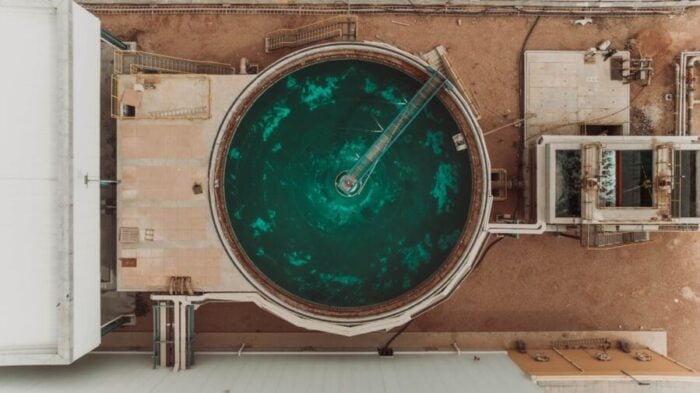
The new approach, published in Nature Communications, builds on a surveillance architecture that the same team helped pioneer during COVID-19. Wastewater-based epidemiology proved its worth during the pandemic, catching viral variants circulating silently in communities before they showed up in clinics. The UNLV group applied similar logic to fungal disease, but with a crucial refinement: rather than sampling from municipal treatment plants, which pool wastewater from entire urban areas, they moved the sampling point upstream, to the sewer lines directly serving three major Southern Nevada hospitals.
The difference was striking. Hospital-source samples detected C. auris 95% of the time; community treatment plant samples managed just 18%. Concentrations at the hospital lines ran nearly 100 times higher. “Wastewater surveillance provides a non-invasive, facility-scale biopsy of a hospital community,” said Edwin Oh, professor and director of UNLV’s Center for Water Intelligence and Community Health. “And we can get answers on a daily basis.”
It’s an odd way to think about a hospital, as a kind of patient in its own right, submitting to daily testing via its plumbing. But the logic holds. A ward dealing with an undetected outbreak sheds the pathogen into drainage constantly, from wound dressings, catheter lines, surface cleaning, the ordinary biological detritus of a place where sick people are being treated. Pull that wastewater before it dilutes into the broader sewage system and you have, in Oh’s phrase, a real-time biopsy of everything happening inside those walls.
Five Months’ Warning
The results that will likely arrest the attention of infection control specialists are the lead-time figures. By combining amplicon sequencing and a mass spectrometry technique called MALDI-TOF, the team could identify not just whether C. auris was present but which genetic variants were circulating and what resistance mutations they carried. Whole-genome sequencing of 443 wastewater-derived samples showed more than 90% concordance with 2,945 clinical isolates collected over the same period, meaning what they found in the pipes was a faithful mirror of what was circulating in patients. But the wastewater saw it first. In several instances, resistance mutations in key genes (including a variant called FKS1 Phe635Leu, which confers resistance to the echinocandin class of antifungals) appeared in sewer samples up to nearly five months before they turned up in clinical tests.
Five months. In infection control, that kind of lead time can be the difference between managing an outbreak and watching it take hold. “Too often, a patient’s own illness is the first signal that a drug-resistant strain has arrived in a facility, and by then it may already be spreading,” said study co-lead author Ching-Lan Chang, a neuroscience doctoral student at UNLV. “Wastewater surveillance changes that timeline, giving healthcare workers, patients, and their families a head start that simply didn’t exist before.”
The study covered three hospitals in Southern Nevada between 2021 and 2024, comparing what the sewer lines yielded against both clinical records and centrally located treatment plants. The genomic data was extensive enough to build one of the world’s largest C. auris repositories, a resource the team is now using to probe how the fungus adapts under drug pressure. Transcriptomic analysis of resistant strains under antifungal and stress conditions revealed unexpected changes: disruption to ribosomal assembly pathways, altered cell cycle checkpoints, metabolic rewiring that seems to help the organism survive drugs that should kill it. These aren’t just curiosities. They may represent vulnerabilities, potential targets for new therapeutics that work through mechanisms the fungus hasn’t encountered before.
From Pipes to Policy
For wastewater surveillance to become standard infection control practice, it would need to be fast, cheap, and interpretable by clinicians who are already stretched thin. The UNLV team hasn’t fully solved that yet. The genomic analysis pipeline requires specialist expertise, and questions remain about how hospitals in less-resourced settings would implement daily sampling. Daniel Gerrity of the Southern Nevada Water Authority, a co-author, is measured about the timeline: “These new results highlight the benefits of implementing this emerging public health tool closer to healthcare facilities,” he said, “potentially leading medical professionals toward more effective treatment options.” Potentially. The conditional is doing real work there.
The longer-term ambitions are even more speculative. Oh’s group wants to pair the genomic repository with molecular tools to develop new antifungal treatments, and has flagged the possibility of a vaccine. No antifungal vaccine has ever been approved for clinical use. Fungal pathogens have proved extraordinarily difficult to vaccinate against, partly because their cellular machinery overlaps enough with our own that hitting them without hitting us is genuinely hard. Chang is careful about sequencing the claims: “New antifungal treatments and a vaccine remain longer-term goals, but the genomic repository we’ve built from this work lays the groundwork. In the meantime, wastewater intelligence gives us the ability to act right now.”
That phrase, “right now,” is probably the most important one in the paper. The pandemic taught public health systems something they’d perhaps known in principle but hadn’t operationalized: surveillance that works before people get sick is categorically different from surveillance that works after. Nevada’s C. auris outbreak has been running for four years. Every drain in every affected hospital has been quietly carrying intelligence about what’s coming. The question now is whether the rest of the healthcare system will start listening to the pipes.
The research was published in Nature Communications. DOI: 10.1038/s41467-026-71960-5
Frequently Asked Questions
Why can’t hospitals just test patients more frequently to catch C. auris outbreaks early?
Routine screening of all patients for a pathogen that may not be causing symptoms is logistically difficult and expensive, and it still only reveals the fungus after it has colonized a person. Wastewater surveillance works differently: it samples the entire hospital environment simultaneously, picking up traces of the pathogen before any individual patient tests positive, which can provide warning months ahead of the first clinical case.
Is C. auris a risk to the general public, or only to hospital patients?
The fungus poses the greatest danger to people who are already immunocompromised, have serious underlying conditions, or are in long-term care settings with invasive medical devices. Healthy people in the community are not considered at significant risk, and the pathogen does not contaminate drinking water. Its danger lies in its ability to persist on hospital surfaces and resist disinfectants, making healthcare settings particularly vulnerable to sustained outbreaks.
What makes C. auris so hard to treat compared to other fungal infections?
Most dangerous fungi can be knocked back by at least one of the three main classes of antifungal drugs. C. auris has developed resistance across all three, leaving clinicians with very limited options when a resistant strain takes hold. The UNLV research found evidence of this resistance evolving in new ways, including previously unreported mutations, which is part of why building a comprehensive genomic repository matters so much for future drug development.
Could wastewater surveillance be used to detect other drug-resistant pathogens before outbreaks?
Almost certainly. The same principles that made this approach work for C. auris should apply to drug-resistant bacteria and other emerging fungal threats. Wastewater-based epidemiology was originally developed for viruses like SARS-CoV-2, and the UNLV team’s work suggests that moving sampling points closer to specific high-risk facilities rather than monitoring at large community treatment plants significantly improves detection sensitivity for pathogens that originate in healthcare settings.
ScienceBlog.com has no paywalls, no sponsored content, and no agenda beyond getting the science right. Every story here is written to inform, not to impress an advertiser or push a point of view.
Good science journalism takes time — reading the papers, checking the claims, finding researchers who can put findings in context. We do that work because we think it matters.
If you find this site useful, consider supporting it with a donation. Even a few dollars a month helps keep the coverage independent and free for everyone.