

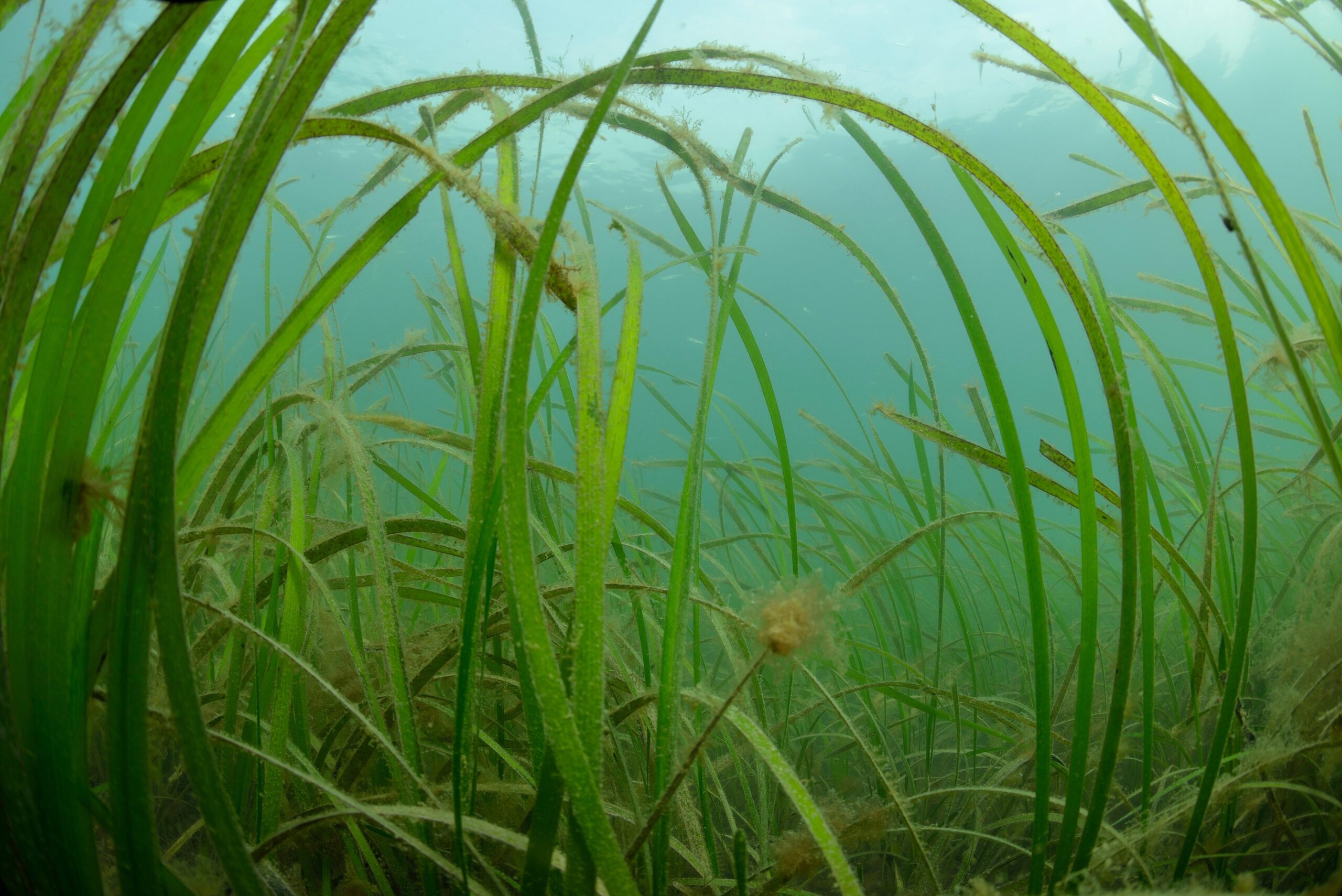
The eelgrass meadow that scientists brought back to the shallow bays behind Virginia’s barrier islands now covers 4,792.08 hectares, about 11,800 acres, and it is still spreading on its own. That figure comes from Christopher Patrick, director of the SAV Monitoring and Restoration Program at the Virginia Institute of Marine Science (VIMS), William & Mary, where he is also an associate professor. SAV stands for submerged aquatic vegetation, the technical name for underwater grasses.
The last published number was smaller. A 2020 paper in Science Advances, led by VIMS scientist Robert J. Orth, reported 3,612 hectares of vegetated bottom grown from 74.5 million seeds broadcast between 1999 and 2018. Patrick was not an author on that paper. His program runs the restoration and the monitoring now, and he told ScienceBlog the published figures look to be from the 2018 survey. “The meadow is doing amazing,” he said in an email, describing it as “spreading naturally every year and showing up in new areas”.
Eelgrass is an underwater flowering plant. It is a seagrass, meaning a true plant with roots, leaves, flowers and seeds, unlike seaweeds, which are algae. It grows in meadows in shallow coastal water, and those meadows shelter young fish and shellfish and slow the water enough that mud settles out of it.
Virginia’s seaside bays used to be full of it. Then it vanished. By 1933, as the paper puts it, a pandemic slime mold disease running along the whole US east coast and the west coast of Europe, combined with a devastating hurricane, “completely eradicated all eelgrass in the Virginia coastal lagoons”. The wasting disease is usually blamed on Labyrinthula zosterae, a microscopic single-celled organism. Gone with the grass went the brant goose that fed on it, the commercial bay scallop fishery, and the eelgrass wrack people used as fertilizer, insulation and packing material. E.V. Connett, writing in 1947 and quoted in the paper, described the loss this way: “[With] it went the wildfowl, the cream of salt-water fishing, most of the clams and crabs, and all of the scallops. Speed its return, for nature deserves it if we don’t!”
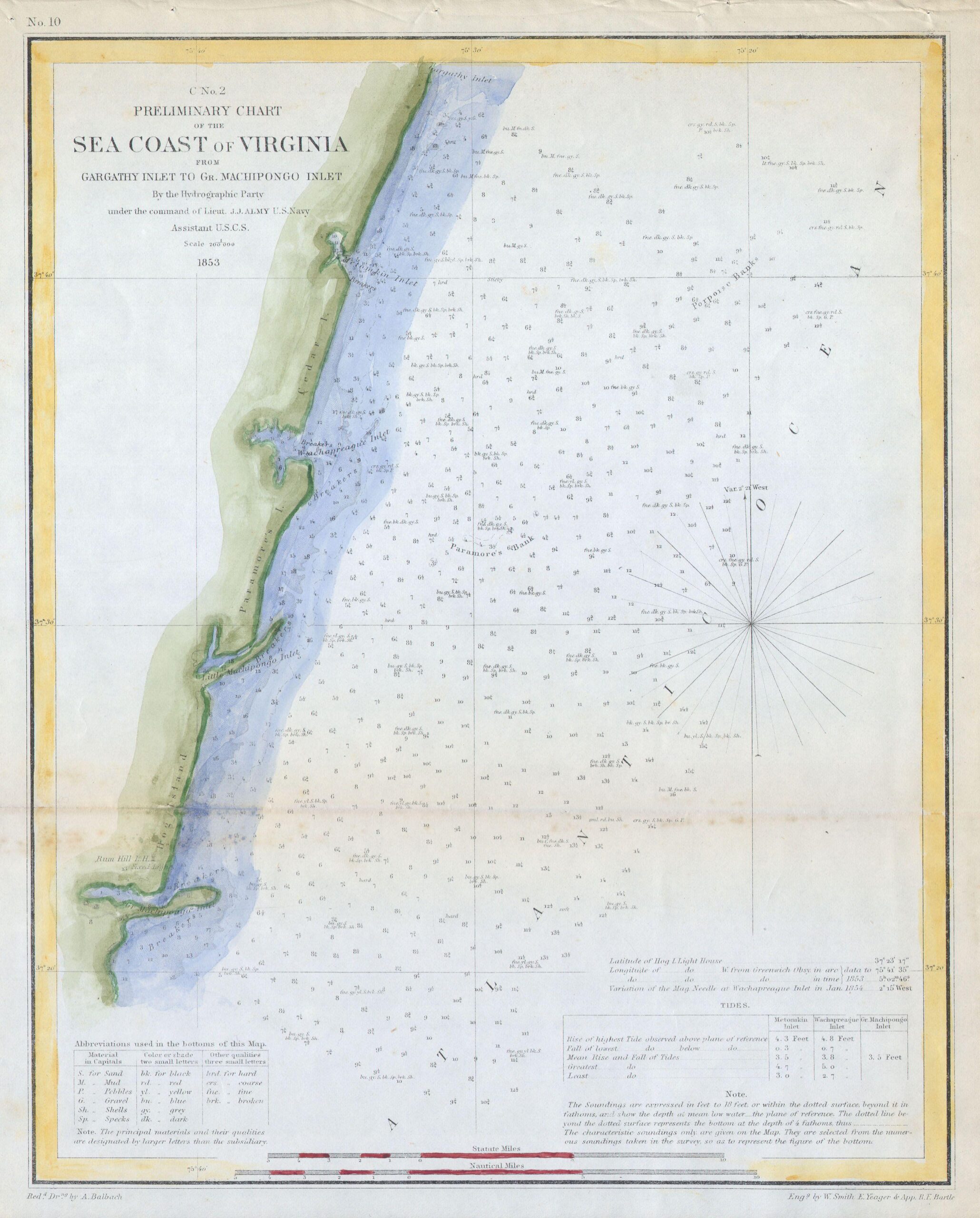
The paper says that for over 70 years eelgrass was not documented in these lagoons, even as beds recovered in other places the disease had hit. Water quality monitoring and modelling of how much light reached the bottom indicated the water was still good enough for eelgrass, and in the late 1990s researchers found several natural patches in one bay, each under two square metres. The limit, they concluded, was seed supply. Too few plants were left in these isolated lagoons to reseed them.
So people did the seeding. Seeds were collected each spring, first from established beds in Chesapeake Bay and later from the restored beds themselves, held through the summer in temperature-controlled water baths, and hand-broadcast in the autumn. Two people broadcast them from a moving boat along eight evenly spaced lines across each plot, at 25 to 50 seeds per square metre. Volunteers put in over 3,500 hours and collected more than 10 million seeds. Through 2018 the effort came to 74.5 million seeds in 536 plots covering 213 hectares, and Patrick says at least 15 million more have gone out since, a number he gave off the top of his head.
The seeded plots were only 6 percent of the restored area at the time of the paper. Everything else the plants did themselves. Patrick says it is “all about the seeds”. Eelgrass creeps outward through its underground stems, called rhizomes, at around 30 centimetres a year. But each plant might produce 50 to 100 seeds, which he says works out to tens of millions per acre of dense grass, and the meadow puts out trillions of seeds a season. The seeds sink fast and do not travel far from where they drop. The long-distance mechanism is the flowering shoots. “Those reproductive shoots can break free and they float, carrying spathes loaded with seeds to other locations with the currents,” Patrick said. Spathes are the sheaths that hold the developing seeds. He calls the meadow “an incredible engine for propagating itself”.
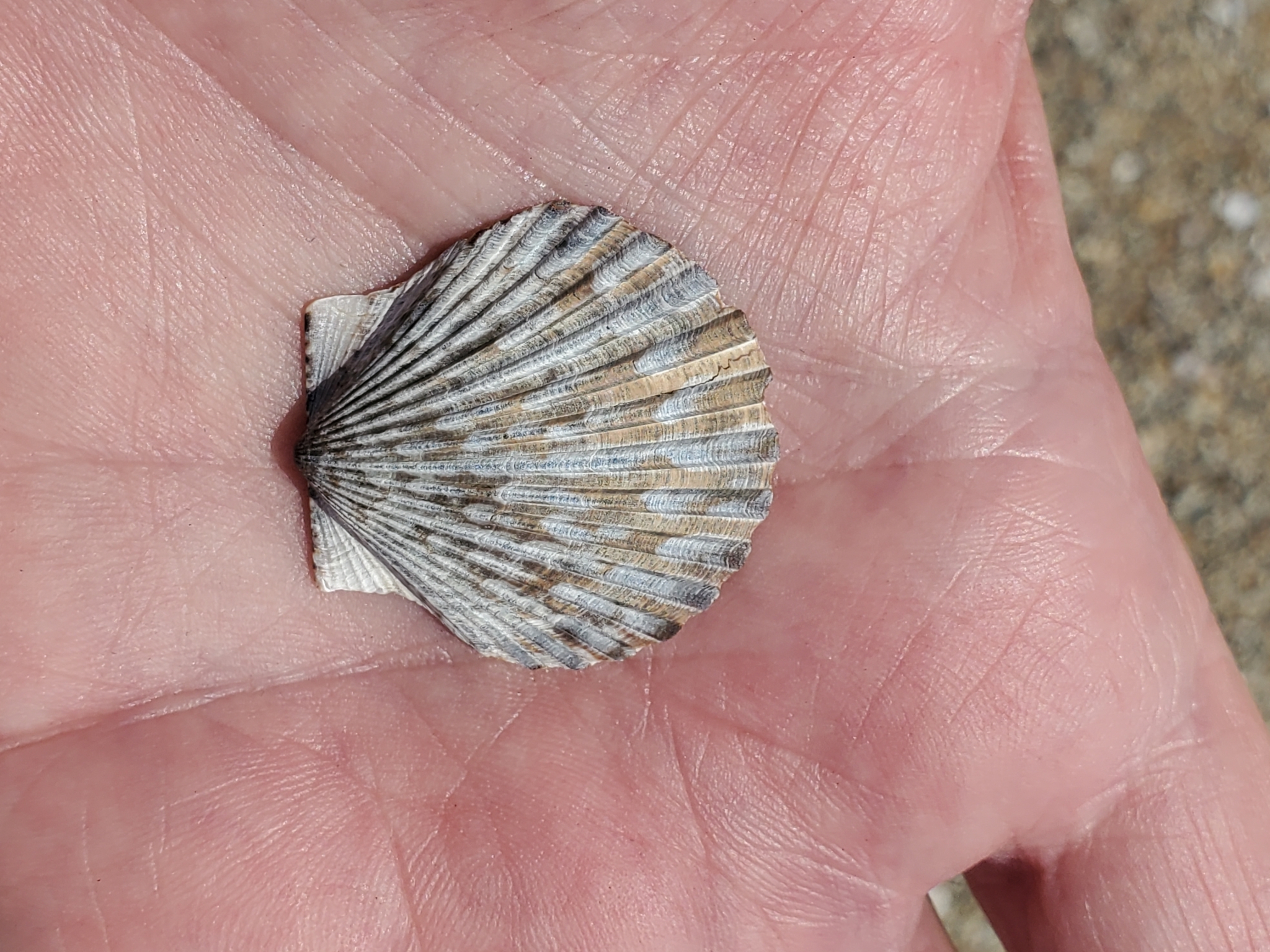
Things moved back in behind it. The small invertebrates living on the plants, crustaceans, decapods and snails, were indistinguishable from natural beds in nearby Chincoteague Bay as early as three years after restoration. Total fish biomass rose quickly, and the fish and invertebrates settled into a stable equilibrium in less than a decade. Summer turbidity, meaning how cloudy the water is, dropped substantially as the bed grew, rose again for several years once the bed stopped expanding, and stayed well below where it started. In restored sediments older than nine years, carbon and nitrogen content were 1.3 and 2.2 times what they were in patches colonised in the previous one to five years. A bay scallop restoration started in 2008 with broodstock from North Carolina has produced a wild population living in the grass.
What keeps it going, Patrick says, is mostly restraint. Once a meadow is spreading under its own steam, the job is to “stay out of its way and protect the water clarity”. He listed the ways people get in the way: “Dredging, bottom trawling, prop scarring, and other anthropogenic bottom disturbances can directly or indirectly impact the grass.” Nutrients and sediment washing off the land cloud the water. “If we can prevent these stresses from occurring, the grass has an excellent chance of continuing to expand and do well.”
This one interested me as a story because good-news recoveries are rare, and because of the shape of it, something getting a start and then mostly being left alone. It sits close to what’s interesting about a regenerative farming project I’m a partner in on Marajó Island in Brazil.
Patrick also pointed to a threat that comes from outside the bays. “The biggest threat facing the meadow is climate change,” he said, because warmer, more subtropical coastal water puts greater stress on “a cold loving temperate species”.
Restoration is “far from complete”, in the paper’s words. Habitat models put the bays’ historical eelgrass distribution at roughly 116 square kilometres against about 33 occupied at the time of writing, and Patrick’s figure of 4,792 hectares is about 48 square kilometres, still well under half the historical estimate. Bay scallops have returned to only a fraction of their estimated historical values, and the authors say further intervention may be necessary. The setting helped as well. These bays are cooler than Chesapeake Bay and less nutrient-polluted than Maryland’s coastal bays just to the north, helped by the Eastern Shore’s small population, and eelgrass has been declining in both of those neighbouring systems. I think that makes this a weak guide to what seeding would do in dirtier water. Patrick’s hectare count and his seed estimate also come from an email rather than a published paper.
The 2020 paper said seeding had by then turned to bays where seagrass was not present. How much further the meadow can push while the water keeps warming is not a number anyone has.
Sources:
- Orth et al., Restoration of seagrass habitat leads to rapid recovery of coastal ecosystem services, Science Advances, 2020.
- Virginia Institute of Marine Science, Seagrass restoration speeds recovery of ecosystem services (news release), 2020.
- Virginia Institute of Marine Science, SAV Monitoring and Restoration Program.
_-_Geographicus_-_SeaCoastVirginiaNo2-uscs-1853.jpg)
