Native plant richness on the bison-grazed parts of Konza Prairie Biological Station in eastern Kansas was 103 percent higher by 2020 than on ungrazed ground at the same station, measured in plots of 10 square metres, while cattle grazing elsewhere on the station raised richness at that scale by 41 percent, according to a 29-year study in the Proceedings of the National Academy of Sciences (PNAS).
The study’s first author is Zak Ratajczak of the Division of Biology at Kansas State University, and it was published on 29 August 2022. It uses plant cover records from permanent monitoring plots on the station. At the wider catchment scale, where 20 plots are pooled into a single unit, bison lifted native richness by 86 percent and cattle by 30 percent against ungrazed catchments. All four percentages come from the final year of data, 2020.
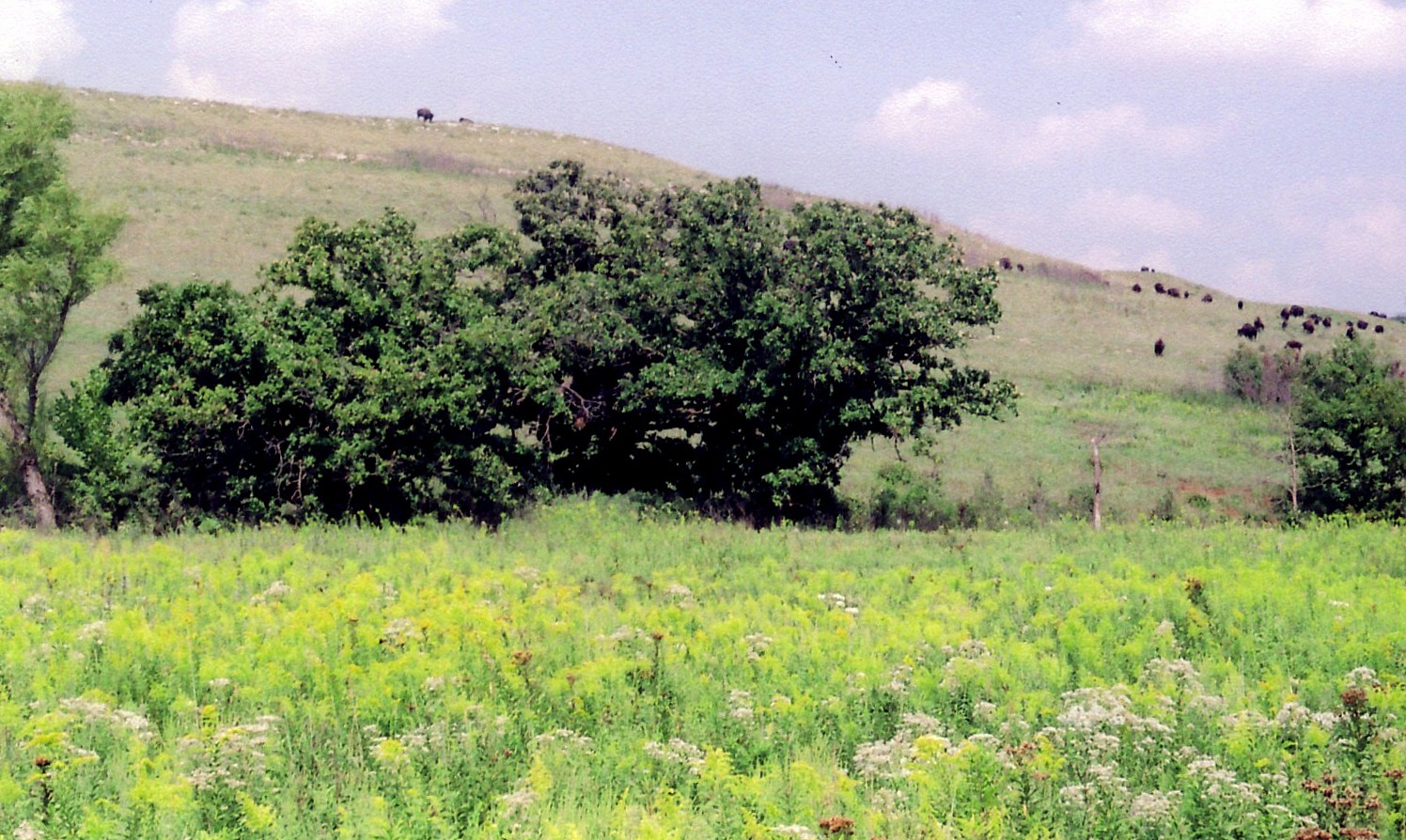
The methods section describes Konza as “an unplowed native tallgrass prairie located in eastern Kansas”, sitting in the Flint Hills, which the authors call the largest remaining landscape of tallgrass prairie in North America.
Bison came back in 1987. The herd was 30 adults and was held, in the paper’s words, to “under half of its current spatial extent” until 1992, when the animals were given the rest of the area and the herd stood at 121. Cattle were introduced to their own part of the station the same year, so the full bison area and the cattle comparison both date from 1992.
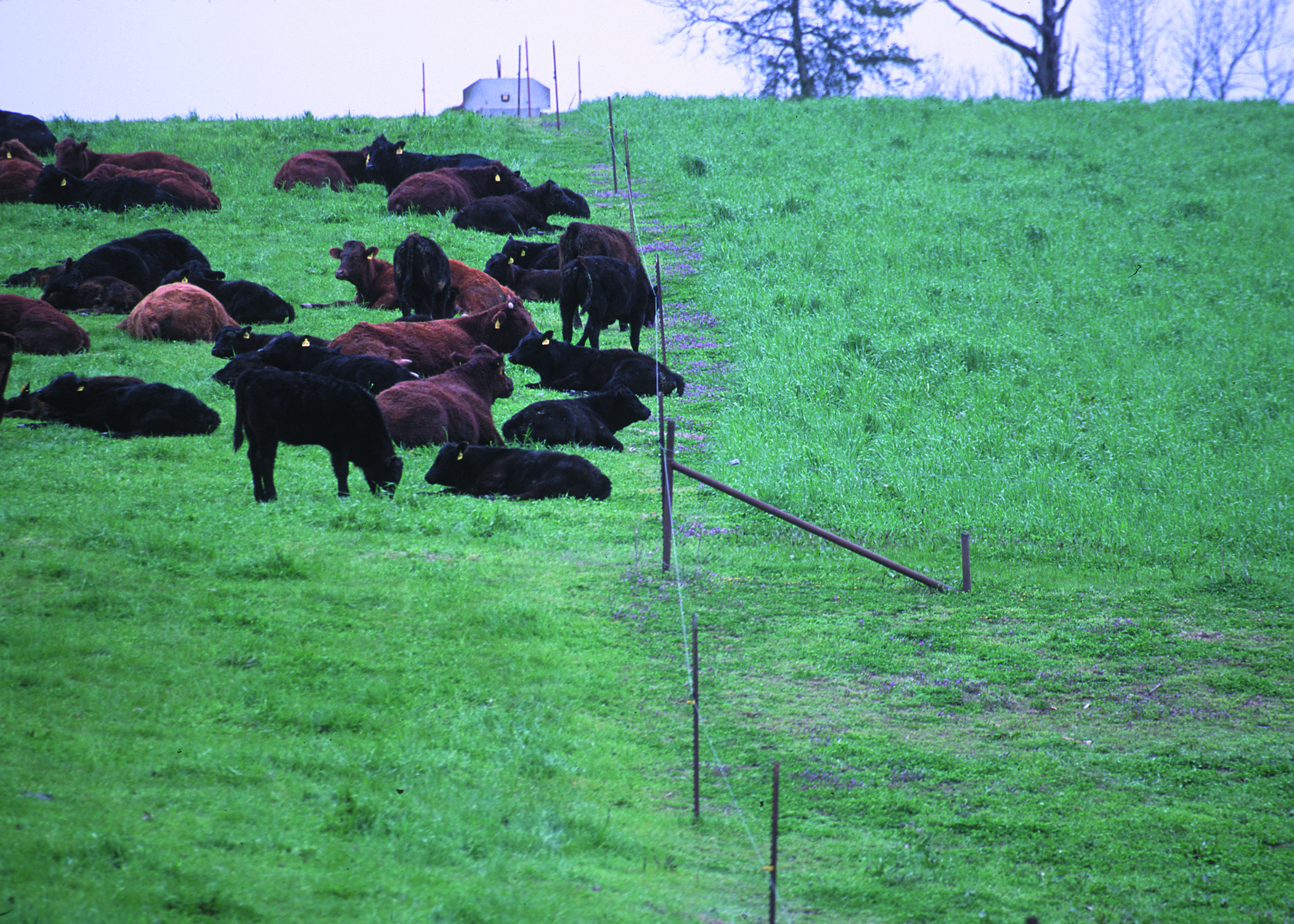
The experiment sets three land uses against each other on areas of more than 18 hectares per replicate: no large grazers at all, bison grazing year-round, and cattle grazing only between April and November, stocked at a higher density to make up for the shorter season. That split mirrors how the two animals are managed across most of the region, the authors write, and seasonal grazing by bison or year-round grazing by cattle is “neither realistic nor likely to occur”.
The mechanism the authors propose is keystone herbivory of the dominant grasses, which releases other species from competition. Four perennial grasses, Andropogon gerardii, Sorghastrum nutans, Panicum virgatum and Schizachyrium scoparium, can account for around 80 percent of annual net primary production when nothing is eating them. Grazers that prefer those grasses hold them back and leave room for other species. In the ungrazed treatment the cover of the four grasses increased slightly over the study, and native richness did not change significantly at either scale.
Under bison, cover of those dominant grasses declined initially, stabilised for nine years, declined for another seven, then oscillated around a mean of 20 to 25 percent through the final 11 years. Native richness in the bison treatment rose in a straight line from 1994 to 2010, at an average of 0.58 species per year in the plots and 1.06 species per year at the catchment scale.
Then came 2011 and 2012, years 20 and 21 of the experiment. The growing season “standardized precipitation index”, which the paper defines as rainfall minus estimated evapotranspiration, was below the fifth percentile in both years, and 2012 was the most extreme dry year on record. The authors describe the pair as one of “the most extreme drought events that have occurred in the Great Plains since the 1930s Dust Bowl”.
Richness in the bison treatment fell. That was the only stretch when the confidence interval of the fitted model dropped below the pre-drought trend line, which the authors read as “limited resistance of species richness to extreme drought”. Afterwards the model converged back on that trend, with recovery taking four years at the plot scale and two years at the catchment scale.
The recovery is the part I find most useful here. Native plant richness under bison dipped through the worst dry period to hit this grassland in at least four decades, then climbed back onto the trajectory it had been on before.
Dominant grass cover in the cattle watersheds followed no directional trend before the climate extreme, dropped sharply during it and eventually recovered at both scales. Native richness in the cattle treatment moved up and down from year to year between 2011 and 2020, with no net change at either scale, because the confidence intervals for the first and last year of data overlapped. Cattle records only begin in 2008, so the authors fitted no pre-drought trend line for that treatment.
Set against a global database of how grazing affects grassland richness, the bison response ratios sat above the 95th percentile, which the authors say puts them “among the largest recorded increases in plant species richness due to grazing”. The cattle values fell well below that line, which the paper takes as evidence that site characteristics cannot fully explain the bison result.
A commentary on the study by Kyle E. Harms, titled “Bison outperform cattle at restoring their home on the range”, was published in PNAS on 28 September 2022.
By the final year of data, plots in the bison treatment carried an average of 48.9 native species, and nonnative plants stayed uncommon in both grazed treatments, at fewer than four species per plot on average. The bison-grazed communities included plants nearly absent from the ungrazed and cattle treatments, among them tall forbs of the Asteraceae family such as rigid goldenrod (Solidago rigida) and 11 new annual species. Against both of the other treatments, bison also increased the frequency of Bouteloua gracilis and Bouteloua dactyloides, two grasses that are abundant in drier Great Plains grasslands.
The authors set out a caveat of their own: “we cannot isolate the effects of management (year-round grazing by bison vs. growing season only for cattle) and grazer identity (bison versus cattle)”. They add that making the treatment areas big enough for realistic and heterogeneous grazing patterns necessarily brings some degree of pseudoreplication, and argue that the added realism of mimicking common land-use systems and an ecosystem-scale approach outweighs the disadvantages. They also point to a smaller study at the same site, where bison and cattle had identical management, that reported higher plant species richness under bison.
The record in this paper ends in 2020, and the dry period it tested lasted two years. Work on the 1930s Dust Bowl cited by the authors suggests ungrazed Great Plains grasslands are potentially resilient to a four-year drought, and the paper says the chance of extreme, decade-long droughts will double by the end of the century because of anthropogenic climate change. The authors say further work is needed to measure resilience to longer and more intense dry periods.
Sources:
- Ratajczak Z., Collins S.L., Blair J.M., Koerner S.E., Louthan A.M., Smith M.D., Taylor J.H., Nippert J.B. (2022). “Reintroducing bison results in long-running and resilient increases in grassland diversity.” PNAS 119(36): e2210433119, published 29 August 2022. https://doi.org/10.1073/pnas.2210433119
- Full text of the same paper, PubMed Central (PMC9457053). https://pmc.ncbi.nlm.nih.gov/articles/PMC9457053/
- Harms K.E. (2022). “Bison outperform cattle at restoring their home on the range.” PNAS 119(40): e2213632119, commentary published 28 September 2022, doi 10.1073/pnas.2213632119. https://doi.org/10.1073/pnas.2213632119 (LSU repository record: https://repository.lsu.edu/biosci_pubs/4306/)
Spot an error in this article? Email [email protected]