Concepts that people talk about more often are more likely to have their own word across the world’s languages, a study in Nature Human Behaviour reports. The link is real but modest, and the authors say it does not show that frequent use causes a word to exist.
Temuulen Khishigsuren, Francis Mollica, Ekaterina Vylomova and Charles Kemp of the University of Melbourne published the paper on 16 November 2026. This report draws on the full text of their preprint, posted on 1 October 2026, and on the published abstract.
Measuring use and words
A language has a lexical item for a concept when it has a conventional word or expression for it. The abstract gives CHILD and SUN as concepts that many languages label, and PARENT and WEATHER as concepts that fewer do. In the preprint’s introduction, English and Gurindji, a language of northern Australia, both have words for TOMORROW and SUN. English has no single term for the day after tomorrow, and Gurindji has none for the general idea of weather.
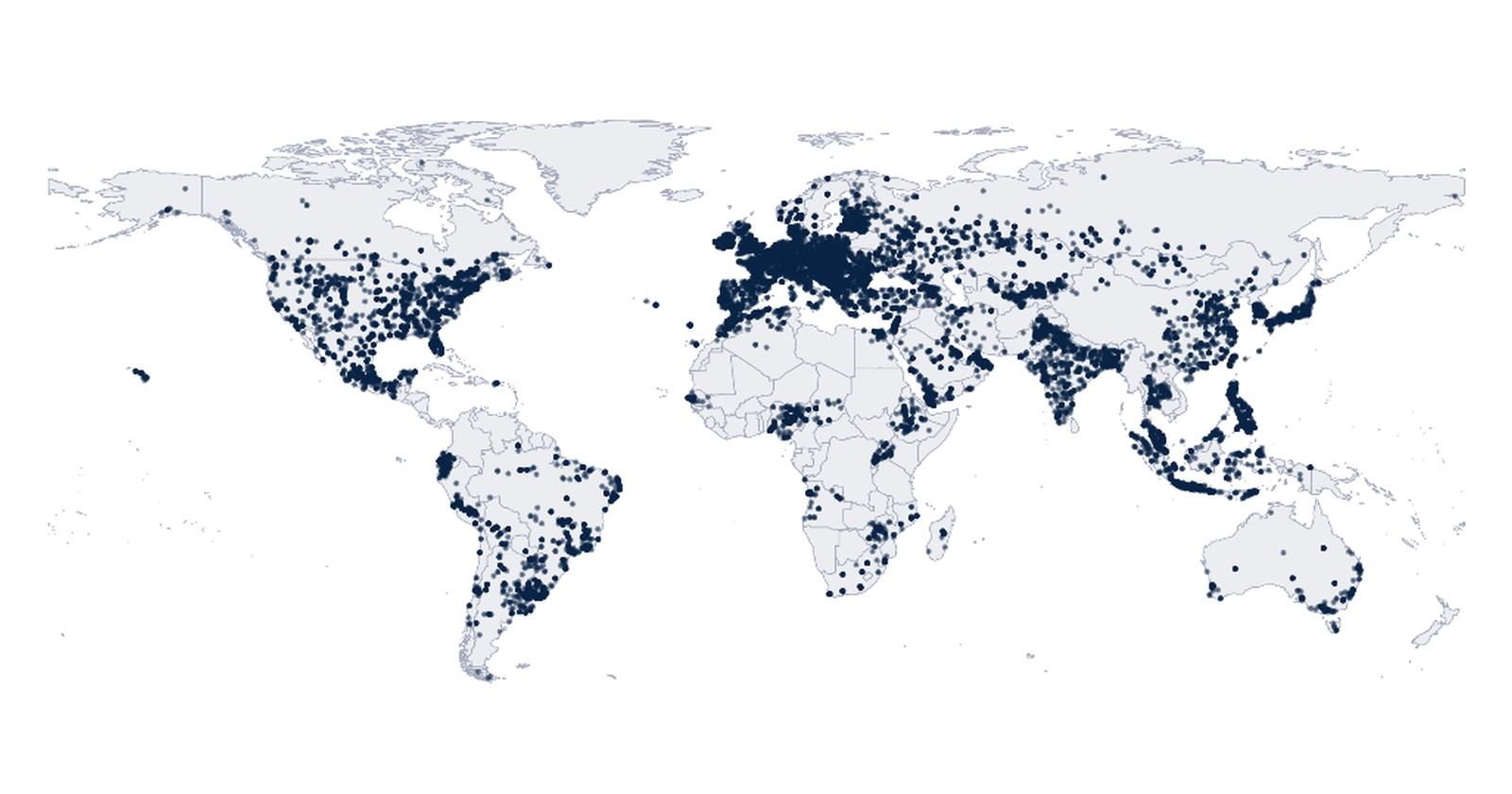
The team analysed 854 concepts. They estimated how often each is used from the Language Documentation Reference Corpus (DoReCo), a collection of transcribed speech, using English translations for 46 languages, many of them spoken by small, non-industrialised communities. A second frequency source, Worldlex, uses social media and blog text in 23 languages.
They then tested whether those usage figures predict which concepts have words in two separate databases. The World Loanword Database covers 41 languages from 24 families. The Intercontinental Dictionary Series covers 262 languages from 31 families. The usage and word data come from largely different sets of languages, so average use in one group of languages is predicting vocabulary in another.
What they found
Average usage frequency in DoReCo was what the authors call a relatively good predictor of how many languages have a word for a concept. The coefficient was 0.25 for the World Loanword Database (95 per cent confidence interval 0.16 to 0.33) and 0.30 for the dictionary series (0.23 to 0.38). Worldlex frequencies and English-only frequencies also predicted word coverage better than a model with no predictor.
The team also compared 4,688 pairs of related concepts, such as CIRCLE and SQUARE. In about 67 per cent of pairs, the concept with words in more languages was also the one used more often. For 16 proposed language universals of the form “a language with a word for SQUARE also has one for CIRCLE”, relative frequency pointed the right way more often than chance. The authors call that support preliminary, given the small set.
Usage was not the best single predictor. In the full set of 854 concepts, adults’ self-reported age of acquisition, a rating of how early a concept is learned, did better. The authors suggest it captures how learnable a concept seems. Models that included both frequency and other predictors generally did better than those without frequency, which they take as a sign that frequency adds something of its own.
Some concepts break the pattern. Body parts such as TOOTH and FLESH are named in many languages despite low usage. The authors suggest such terms may be rarely discussed but vital when they matter, as in talk of illness. TIME, WEEK and HOUR are used often but are named less consistently across languages.
What the study cannot show
The authors say their results do not support conclusions about cause, because other factors probably influence both how often a concept is mentioned and whether it gets a word. The study compares languages at one point in time and does not follow words as they enter a language.
The data lean towards English. Frequency counts rely on English translations, which at best roughly approximate usage in the original languages. Concepts that English expresses with several words were left out even where other languages use one word. The two vocabulary databases also underrepresent languages outside Eurasia, South America and Papunesia, and nearly half of the 262 dictionary-series languages belong to just two families, Nakh-Daghestanian and Indo-European.
Both databases cover basic concepts such as WIND, not fine distinctions such as a cool southerly wind. Their entries often reflect approximate translations: in the World Loanword Database, about 56 per cent of the roughly 24,800 entries with match information were exact counterparts. Blank entries in the dictionary series are not always true gaps.
The published version may differ from the preprint in details. The full text of the paper sits behind a paywall and was not read.
Spot an error in this article? Email [email protected]