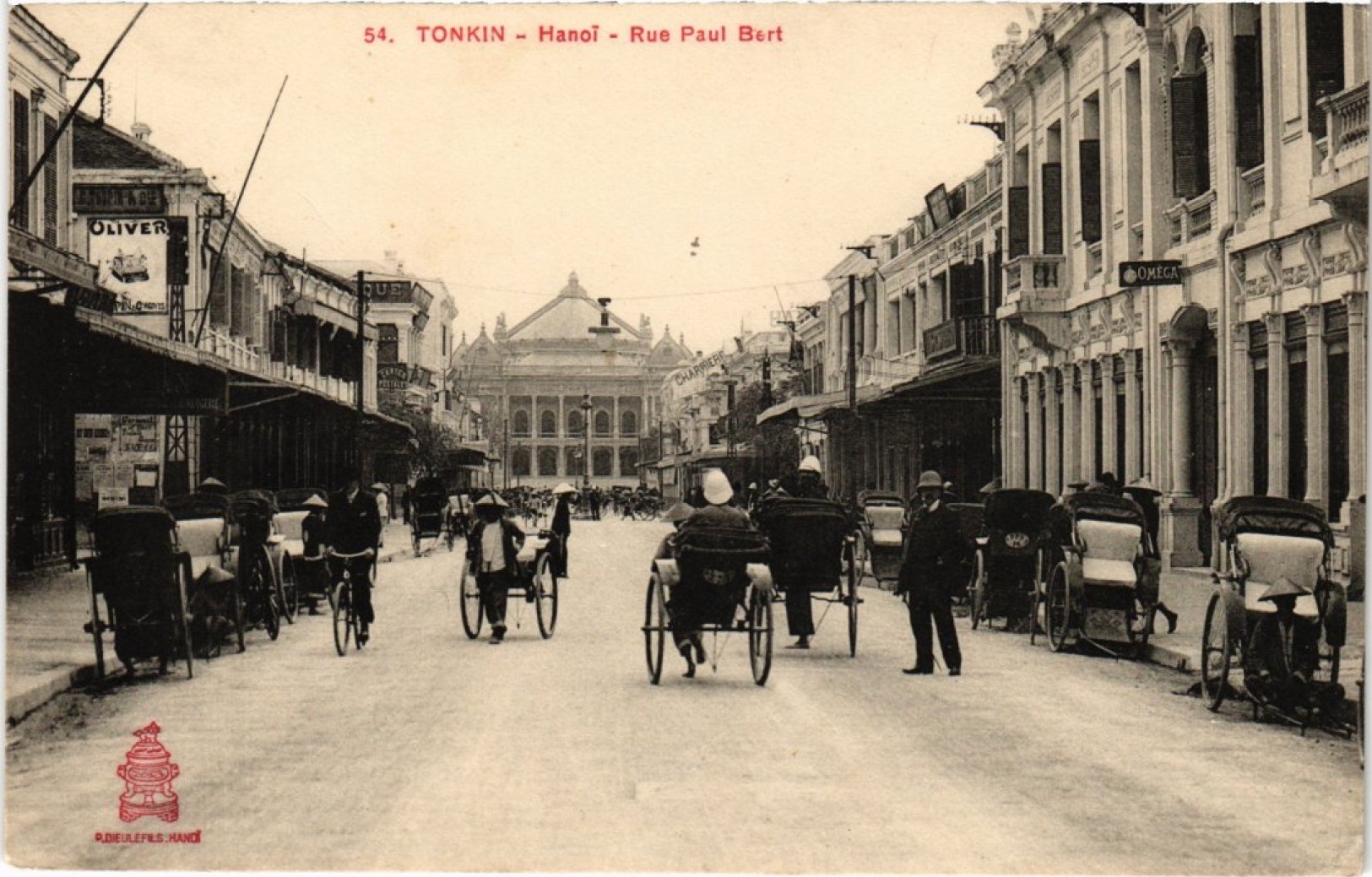
By 1902, the French had spent years transforming Hanoi, convinced they knew how to build a better city.
Doctors, engineers and colonial officials had arrived in Vietnam with grand plans. They wanted to turn Hanoi into a showcase of French architecture, culture and modern infrastructure.
They called it their mission civilisatrice, or “civilizing mission.” The idea was that French rule would introduce the Vietnamese population to European ways of living, including modern sanitation.
At least, that was the justification.
In practice, much of this modern infrastructure was built for the French themselves, while the Vietnamese population continued living in considerably less sanitary conditions.
And one particular piece of infrastructure, intended to demonstrate the superiority of French engineering, ended up producing one of the most spectacular backfires I’ve come across.
It involved sewers, hundreds of thousands of rats, and a government policy that somehow made the problem even worse.
The French arrive with grand plans
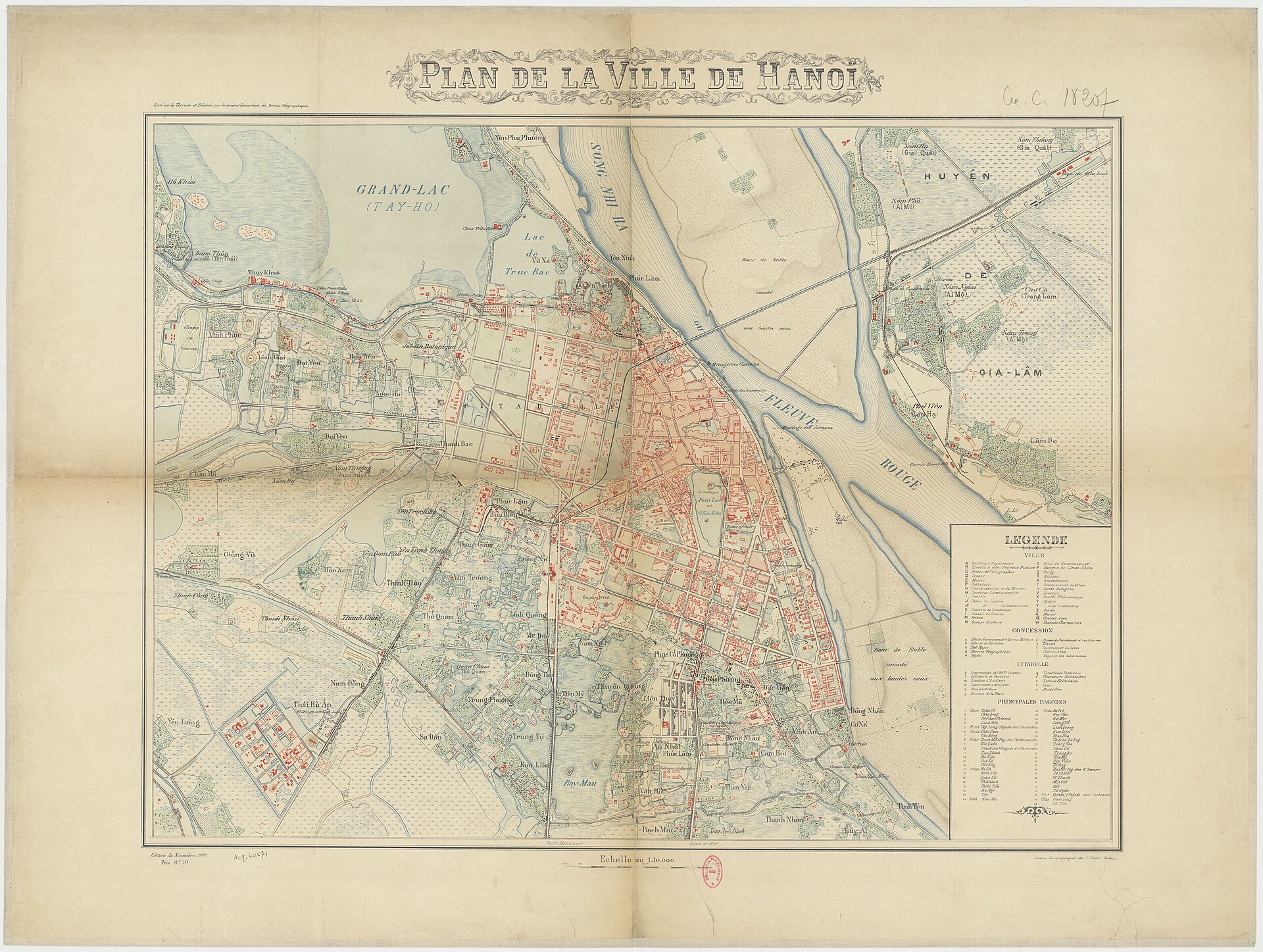
Paul Doumer, governor-general of French Indochina from 1897 to 1902, wanted Hanoi to become a magnificent symbol of French colonial achievement.
Historian Michael G. Vann describes how Doumer envisioned a rational, orderly city, in contrast to Saigon, which he regarded as disorderly and dominated by commercial interests.
French colonial officials were convinced that their civilization, science, technology, education and administration were superior and should be introduced to the populations they ruled.
France had established colonial control over Hanoi in the 1880s, and by 1902, the French had spent years reshaping it.
Hanoi was already a centuries-old Vietnamese city, with its own architecture, traditions and established ways of living.
But that wasn’t the kind of city Doumer wanted to showcase.
He wanted European-style streets, impressive government buildings, and modern sanitation systems that would demonstrate what French engineering could accomplish.
The city itself was meant to become proof that colonialism was beneficial. With that, the French got to work.
The result was magnificent. For some.
The transformation was impressive, and you can still see much of the French architectural influence in Hanoi today.
The colonizers built broad, tree-lined boulevards, fancy European-style villas, government buildings and beautiful public spaces.
They also constructed something particularly important: an elaborate underground sewer system.
By the beginning of the twentieth century, there were more than 15 kilometers of sewer pipes beneath the European quarter.
Along the way, the French demolished or transformed parts of the existing city, including religious and other historic sites, to make room for their vision.
The new French Quarter looked splendid, and sanitation had certainly improved for the people living there.
Except those people were mostly the colonizers themselves.
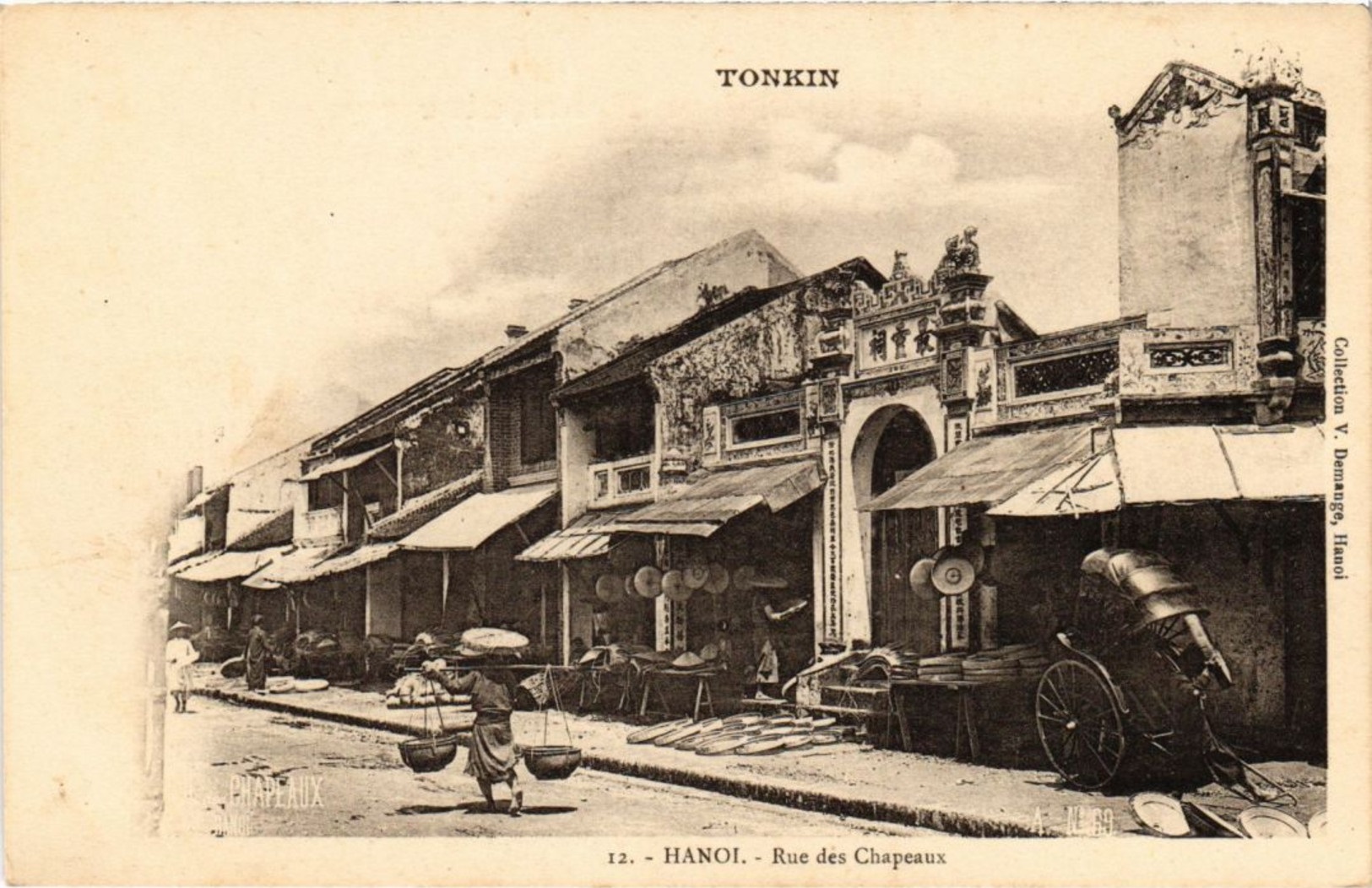
Wealthy European residents enjoyed running water, flush toilets and modern drainage systems, while many Vietnamese and Chinese residents in the Old Quarter continued relying on public fountains and workers who collected human waste in buckets before dawn.
During the rainy season, drains in the older neighborhoods could back up, sending sewage into the streets where Vietnamese residents lived.
Vann, who extensively researched the Hanoi rat campaign, also found that Vietnamese taxpayers helped finance the city’s modernization, even though the improvements disproportionately benefited the European quarter.
So, yes, Hanoi had been transformed.
But the benefits were not shared equally.
The rats loved the new city, too
I’ve lived in Southeast Asia for 12 years and traveled extensively around the region, including Vietnam.
It’s not uncommon to see a rat or two sneaking around at night, particularly near markets or areas involved in the food trade. I see this in São Paulo, too, so this is by no means exclusive to Asia.
To me, it’s always seemed like a big-city problem, nothing more.
French administrators, however, had generally regarded rat infestations in Hanoi’s Vietnamese neighborhoods as evidence of poor local hygiene.
As long as the problem remained in those neighborhoods, it didn’t seem to concern the Europeans quite as much.
Without intending to, the French had created a paradise for rats.
The underground pipes offered darkness, shelter from predators, and plenty of opportunities to breed.
And while the French celebrated their modern infrastructure, the rodents discovered that it offered something else: an efficient transportation network.
The rats could travel beneath the streets and find their way into the European homes.
According to Vann, there were even reports of rats emerging through the plumbing and toilets.
And whose homes were these?
The French residents’ homes, of course.
The very people who had celebrated the new sanitation system as proof of European superiority were now discovering rats in their own bathrooms.
What had previously been dismissed as a Vietnamese problem was suddenly a European one.
The fear of plague
The timing made the infestation particularly terrifying. In 1894, Alexandre Yersin identified the bacterium responsible for bubonic plague during an outbreak in Hong Kong. Four years later, Paul-Louis Simond published research supporting the role of fleas in transmitting the disease.
These discoveries were changing how doctors understood plague, although some of the details of its transmission were still being debated.
The third plague pandemic was spreading internationally, with infections reaching new places through commercial and transportation routes.
The French authorities were worried that rats appearing in European homes could carry infected fleas and spread the deadly disease.
They would send workers underground and exterminate as many rats as possible.
But who would carry out this dangerous, unpleasant work?
Not the French residents themselves.
They hired local Vietnamese workers.
The great Hanoi rat hunt
In the spring of 1902, the colonial government sent teams of Vietnamese workers into the sewers to kill rats.
According to Vann, the racial hierarchy of French colonial society meant that dangerous, dirty manual labor was generally assigned to Vietnamese workers.
The rat catchers had to navigate narrow, dark underground passages, move through human waste, and handle wild animals that might carry disease.
Their compensation depended on the number of rats they killed.
Between 26 April and 1 May 1902, workers turned in 7,985 rats.
On 30 May alone, they killed a reported 15,041.
And on 12 June, the authorities recorded an astonishing 20,114 rats killed in a single day.
These figures come from colonial administrative records examined by Vann, who discovered the unusual rat-killing tallies while researching Hanoi’s history in the French archives.
The records counted the rats being killed, but they couldn’t tell the authorities how many more were still living beneath the city.
The sewers still provided a comfortable habitat for the surviving rodents, and the infestation continued.
The French had complaints. So did the Vietnamese.
On 9 June 1902, just three days before the extraordinary rat count, the resident-superior of Tonkin contacted the governor-general’s office about complaints from European residents.
Apparently, some French people were unhappy about the sight and smell of Vietnamese workers emerging from the sewers and walking through their neighborhoods carrying dead rats.
The Vietnamese men were doing the dangerous, filthy work of protecting European neighborhoods from disease, and some of the people being protected were complaining about having to see them.
On 16 June, Dr. Serez, the head of health services, responded that the rat catchers were no dirtier than ordinary sewer workers. He added that he had not personally received complaints about them.
The Vietnamese workers, meanwhile, were not particularly happy either.
Their work was difficult, unpleasant and potentially dangerous, and they believed their pay was inadequate.
During June and July 1902, they began organizing work stoppages and slowdowns.
The authorities eventually had to increase their commission from one cent per rat to two cents. By 1904, the rate had reached four cents per rat.
This wasn’t the public rat-tail bounty that would become famous later. It was the payment system used for the employed sewer crews.
Long before the broader population found ways to exploit the government’s bounty scheme, Vietnamese workers had already demonstrated that they could organize and bargain with their French employers.
The authorities increased the payments and continued killing rats. But the infestation wouldn’t disappear.
So they came up with another idea. Why not get the entire population involved?
The Vietnamese find a business opportunity
The French administration decided to expand its rat-killing campaign to the general public. Residents could earn one cent for every rat tail they submitted.
Officials didn’t want people bringing entire dead rats into government offices. Handling thousands of carcasses would create an enormous burden.
So they decided that tails alone would count as proof.
One tail, one supposedly dead rat, one payment.
With that, thousands of tails began arriving at municipal offices.
But then officials began noticing rats running through Hanoi’s streets without tails.
As Vann describes in his original research, some residents had realized they didn’t actually need to kill a rat to claim the reward.
They could catch it, cut off its tail, deliver the tail, collect their money, and release the animal alive.
The rat could then continue breeding.
And some people reportedly went even further.
According to Vann’s historical research, health inspectors discovered that people in villages outside Hanoi were actually raising rats for the purpose of collecting the bounty.
In a later interview with World History Connected, Vann also described a black market through which rats were brought into Hanoi from elsewhere in northern Vietnam.
The French had introduced a system that was supposed to reduce the city’s rat population. Instead, they had created an economic opportunity around the animals themselves.
There is one qualification worth noting. Vann’s 2003 paper cites a municipal report from 1930–31 for the rat-farming account, without establishing the exact date or location of the discovery. The underlying report would be needed to settle those details.
Some Vietnamese residents had responded creatively to an economic opportunity created by the very administration that considered itself more advanced.
The authorities thought they were paying for each exterminated rat, but in reality, they were paying for each rat tail.
Vann himself pointed out the irony of a colonial administration that encouraged capitalist development and entrepreneurship, only to find Vietnamese residents applying that entrepreneurial spirit to its own disastrous policy.
Faced with abuses of the bounty scheme, the French eventually abandoned it.
The final irony
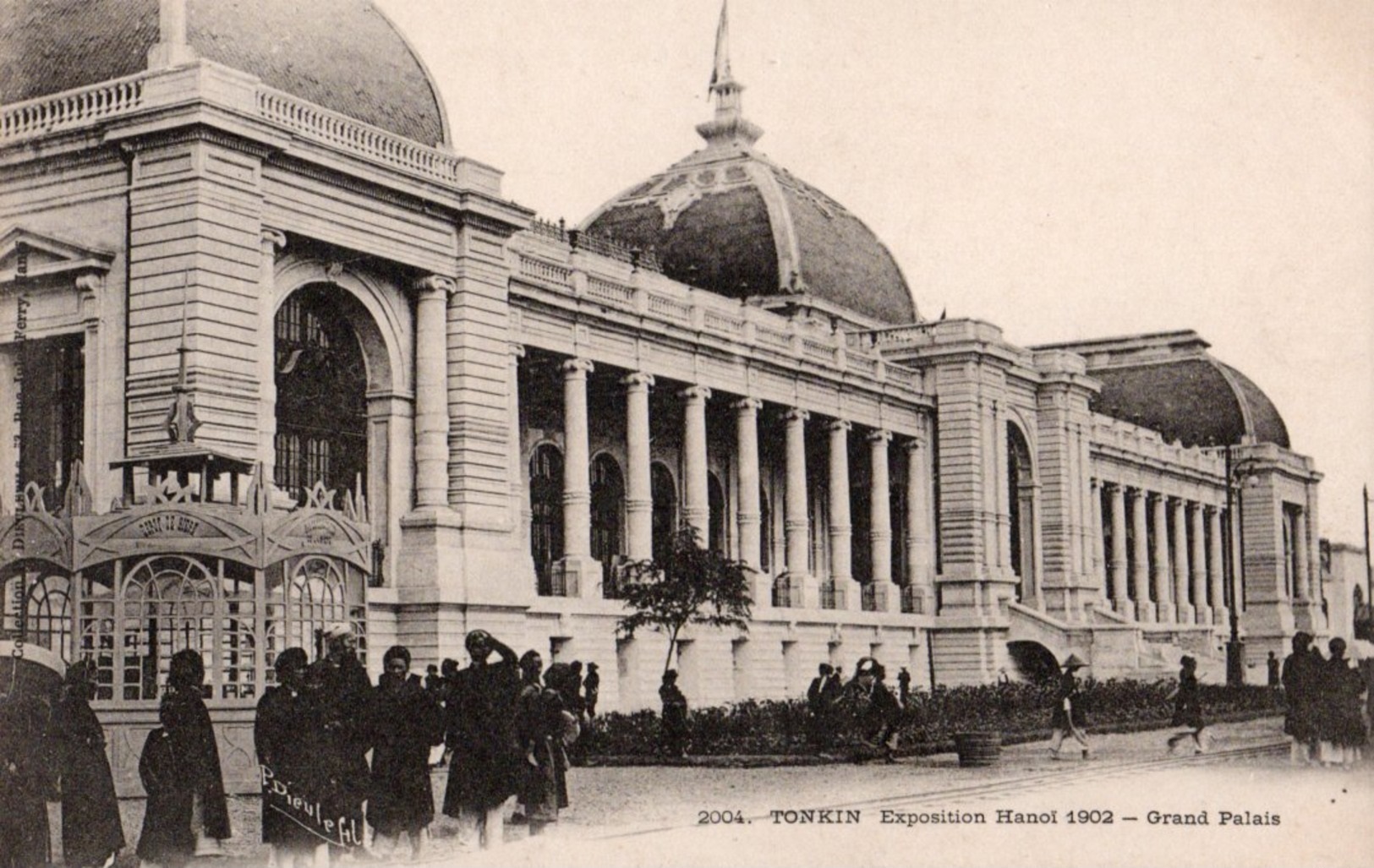
In late 1902, French officials opened an elaborate colonial exhibition in Hanoi.
The exhibition, which continued into early 1903, was intended to demonstrate the achievements of French rule in Indochina.
An original report about the exhibition describes ambitions to develop commercial relations and display the region’s resources, progress and future.
At its center stood the Grand Palais, an impressive building intended to show what French architecture, engineering and administration could accomplish.
Above ground, the French were celebrating the modern city they had created.
Below ground, its sewers were still providing shelter and passageways for rats.
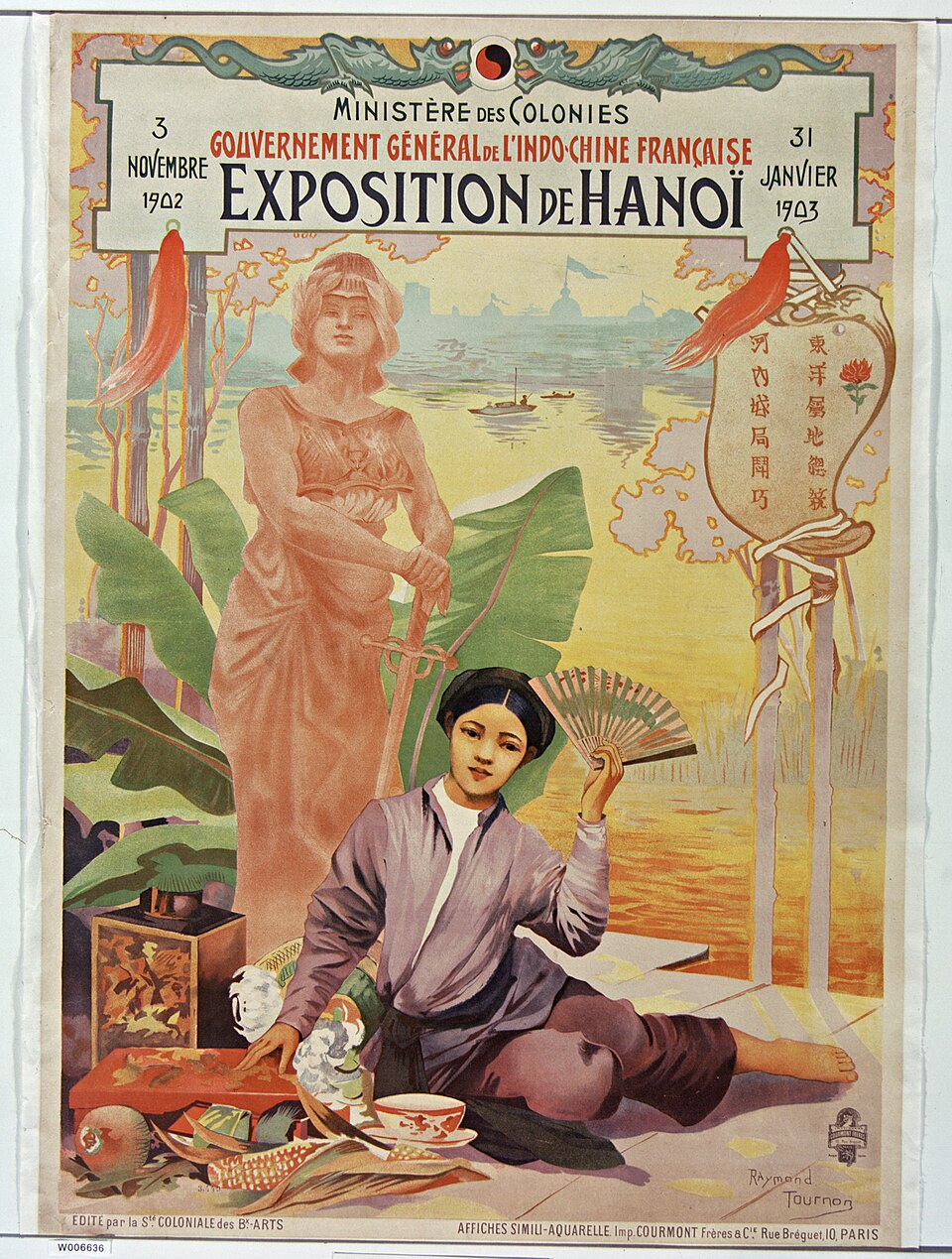
But there may have been another consequence of the exhibition.
Vann suggests that the arrival of visitors and cargo for the event may have helped introduce plague-infected rats into Hanoi, potentially contributing to the outbreak that followed. The specific route was not conclusively established.
In 1903, Hanoi experienced a serious outbreak of bubonic plague.
According to the colonial records examined by Vann, 159 cases were officially reported among the indigenous population, with 110 deaths. Among Europeans, six cases and two deaths were recorded.
The true Vietnamese death toll may have been higher, as some families reportedly concealed cases and deaths to avoid interference from the colonial authorities.
The bounty scheme itself cannot be shown to have caused the outbreak. But the enormous rat-killing campaign had not eliminated the threat.
And the rats continued troubling the French authorities for decades afterward.
In his research on France’s longer struggle against rats, historian Peter Soppelsa describes another rat-bounty problem reported in Paris in 1939.
I contacted Soppelsa, an associate professor at the University of Oklahoma, to ask whether French officials had been aware of Hanoi’s earlier experience.
“I have no evidence that Parisians in 1939 were aware of the earlier rat breeding in Hanoi,” he told me in an email on 21 October 2026.
But he also pointed me toward examples from Dutch colonial Java and Japan, including a Japanese newspaper article from January 1900 that, according to him, had already anticipated how people living outside cities might exploit urban rat bounties.
That warning came two years before the Hanoi campaign. I have not yet examined the original newspaper article, so its precise wording remains unverified.
Today, the Hanoi story is often used to illustrate a problem known as the cobra effect, in which a poorly designed incentive encourages the very behavior it was intended to prevent.
But I think there is something even more interesting here than an economics lesson.
The French arrived convinced they had the scientific knowledge, engineering skills and administrative power to transform Hanoi into a better city.
They rebuilt its streets, created modern infrastructure, and confidently measured their achievements.
Yet their prized sewer system helped create a new rat problem, the Vietnamese workers sent to solve it protested their conditions, and some residents discovered ways to profit from the government’s solution.
The administration could record exactly 20,114 dead rats on 12 June 1902.
What it couldn’t reliably measure was whether its grand plan was actually working.
Sources and further reading
- Michael G. Vann (2003). Of Rats, Rice, and Race: The Great Hanoi Rat Massacre, an Episode in French Colonial History. French Colonial History, 4, 191–203. Original archival research.
- Michael G. Vann (2018). Interview with Marc Jason Gilbert. World History Connected, 15(2).
- Ivan Franceschini and Michael G. Vann (2020). The Great Hanoi Rat Hunt: A Conversation with Michael G. Vann. Made in China Journal.
- Peter Soppelsa (2021). Losing France’s Imperial War on Rats. Journal of the Western Society for French History, 47.
- T. Butler (2014). Plague History: Yersin’s Discovery of the Causative Bacterium in 1894. Clinical Microbiology and Infection, 20(3), 202–209.
- Exposition d’Hanoï 1902–1903: Rapport général. Contemporary exhibition report, digitized by the Conservatoire national des arts et métiers.
- Peter Soppelsa, personal email correspondence, 21 October 2026. Original reporting on rat-bounty examples in France, Dutch colonial Java, and Japan.