Being in your 30s is a funny place to watch the generations from. You catch yourself marvelling at how the older lot take life’s knocks – the redundancies, the family dramas, the boiler packing in the week before Christmas – with barely a raised eyebrow.
So I started asking. Over cups of tea and over the garden fence, I put the same question to anyone born in the 1960s and 70s who’d humour me: did your childhood make you tougher? What surprised me was how similar the answers were, from people with completely different backgrounds. Then I went through the actual research papers to see whether it holds up.
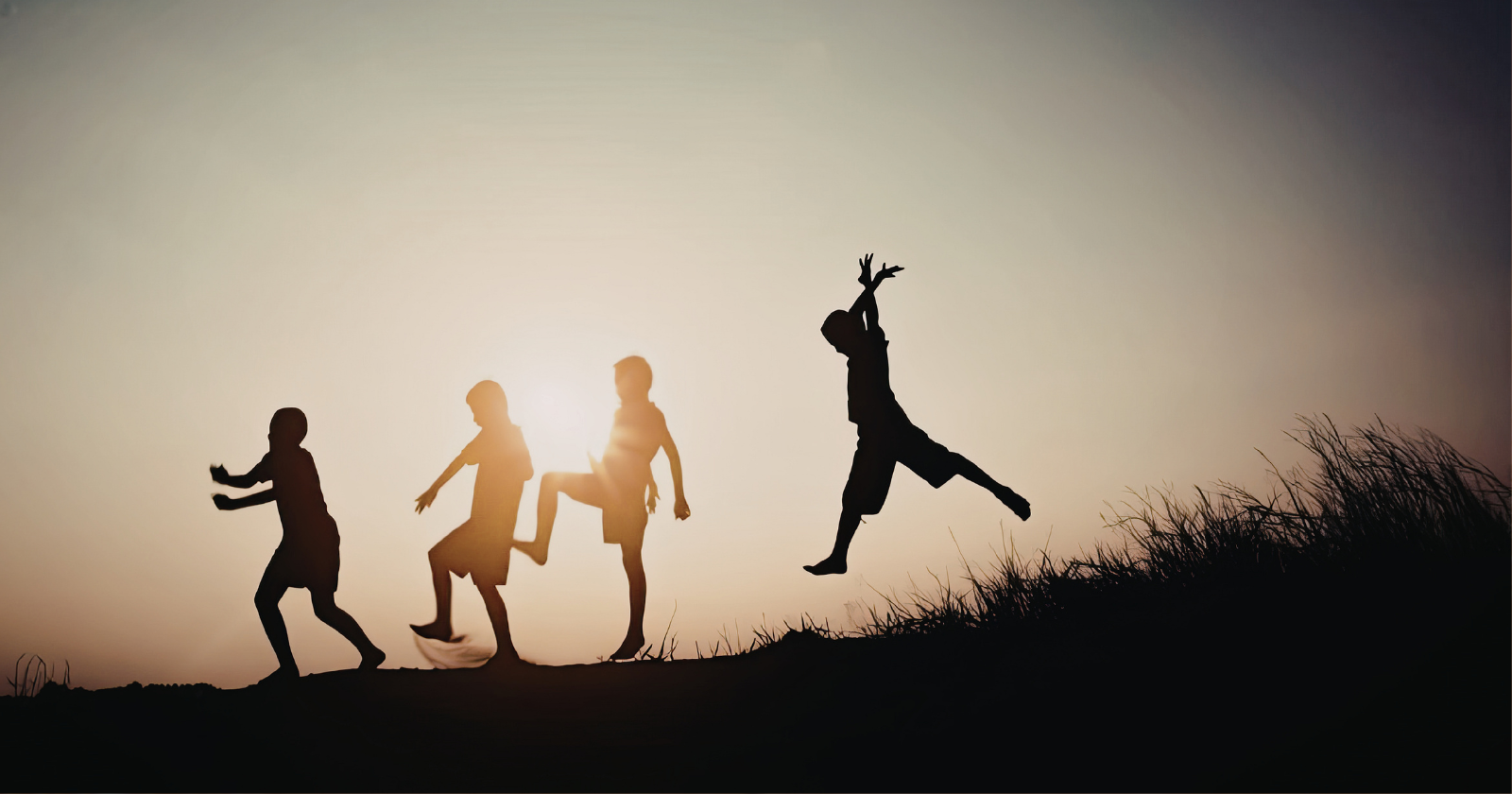
Home when the street lights come on
Nobody I spoke to described being neglected, as such. They were fed, clothed, and sent to school. They were just left to get on with it.
M.A, a close family friend, put it perfectly:
“I remember having a lot of freedom. Mum and dad pretty much left us to our own devices – come home when the street lights turn on. We didn’t have mobile phones back then, so we weren’t constantly in touch. There was a level of trust between parents and children that today’s world lacks. My parents don’t know half of the things I got up to as a teen! We made our own mistakes and we had to learn from them. I do believe that my generation were exposed to a lot more than younger people today. This is probably why a lot of us have a ‘get on with it’ attitude, although perhaps not as strict as our own parents.”
The data backs him up. A 1990 report with the rather ominous title One False Move found that in 1971, 80% of 7 and 8-year-olds went to school on their own. By 1990, it was 9%. By 2010, only 25% of primary school children were even allowed to travel home alone.
Kids born in the 60s, like my mum, made their own way to school. Someone my age was far more likely to be walked to the gate. And kids today? Many are tracked on an app from door to door.
What all that freedom taught them
The psychologist who’s argued loudest that this matters is Peter Gray of Boston College. His TEDx talk is well worth a watch:
His point is that the unsupervised part is what counts:
“Play is where children learn that they are in control of their life… Play is where they learn to solve their own problems.”
With no grown-up to referee, kids practise self-regulation and problem-solving hundreds of times over. In a 2023 paper in the Journal of Pediatrics, Gray and two colleagues argue that a decline in children’s freedom to “play, roam, and engage in other activities independent of direct oversight” is “a primary cause of the rise in mental disorders”.
A 2015 review of 18 studies on “risky play” also found links with physical activity and social skills. But – and this is the bit most write-ups skip – its authors rated that evidence “very low” quality. And Gray’s team admits most of the studies “cannot, by themselves, prove causal direction.” The pattern is there. Proof isn’t.
Emotional calluses
When I spoke to my mum, she didn’t talk about playing out. She talked about distance.
“Coming from a working-class family in the north of England, our parents didn’t talk to us much. If they did, it was practical – ‘When did you last eat?’ type of stuff – nothing to do with emotions or how we were feeling about school. They were in survival mode, they didn’t have time to pander to us kids. But in a way it also made us a lot more independent and resilient. I grew up having to sort out my own problems. I couldn’t run to mum or dad every time I faced an issue.”
In 2010, Mark Seery and colleagues published “Whatever does not kill us”, following 2,398 American adults. People who’d been through lots of adversity did worse – but so did people who’d been through none. Those with two to four adverse events came out best.
That sounds like my mum’s emotional calluses. But I don’t think it quite covers how her generation were raised:
- Childhood isn’t singled out. The events covered whole lives, and nothing measured how people were parented.
- Hardship isn’t the same as independence. Losing a loved one is a very different challenge to walking to school alone at seven.
- It relies on memory. The authors admit “recall or reporting biases” and say the design “cannot establish causation”.
So for me, it supports the idea that a life with no struggle isn’t the healthiest – not that a distant upbringing builds calluses. My mum didn’t think so either. She raised her own kids differently, “because I often felt there was a cold distance with my parents.”
“We repeat what we know”
Our next door neighbour, S.C, is about as quintessentially English as they come. Yet listen to how similar it sounds:
“I grew up in a ‘children should be seen and not heard’ type of family, and that type of upbringing stays with you for life. My parents were strict but they always made sure we had everything we needed. But in terms of being emotionally open with us, it was completely different to how parenting is done today. Arguments were had behind closed doors, and if I ever asked what was wrong, I was told it’s ‘grown-up stuff’.”
And then she said something I think most people can relate to:
“I think the lack of learning how to emotionally regulate from my parents played a part in my marriage and how I parented my own kids. We repeat what we know. Did it make us more resilient? Yes. But it also made some things harder in life, like managing relationships or setting boundaries.”
Being able to endure hard things isn’t the same as knowing what to do with your feelings – and that skill is largely learned from parents. In a 1996 study of 56 families, John Gottman and colleagues found that children whose parents practised “emotion coaching” – noticing feelings, naming them, and working through problems together – were better at calming themselves and more socially skilled by age eight. It’s a small, “preliminary” study, but it echoes S.C.
What the viral version leaves out
You’ve probably seen the claim that five to eight times as many young people today have serious anxiety or depression as in the 1950s. It comes from a 2010 study led by Jean Twenge of questionnaire scores from around 77,000 American students between 1938 and 2007. The rise is real, but a few things get lost:
- These aren’t diagnoses. The authors did consider whether people have simply become more comfortable admitting to symptoms, but when they tested it, that didn’t explain most of the rise.
- The biggest rises weren’t in depression. The scales that climbed most were hypomania, schizophrenia, and paranoia.
- The rise includes the 60s and 70s generation. Scores rose “steadily between 1938 and 2007”, so the supposedly durable generation were already scoring higher at university than students from the 1930s and 40s.
Experts don’t agree on what’s driving today’s numbers, either. Jonathan Haidt blames the switch to a “phone-based childhood”; Gray’s team finds “little support” for screens being a major cause; and Candice Odgers, reviewing Haidt’s book in Nature, warns against drawing two trend lines and assuming one caused the other.
Final thoughts
So, did the 60s and 70s accidentally produce one of the most emotionally durable generations in modern history?
What you can fairly take from this: children back then really did have far more independence, and a reasonable body of psychology suggests unsupervised play, problem-solving, and manageable hardship help build a sense of control over your own life.
What it doesn’t prove: there isn’t one single study that ranks generations on emotional durability – the case is built from several strands of research pointing the same way. The links are correlational, and “durable” isn’t the same as emotionally healthy.
That last point is what my mum, M.A, and S.C were all getting at. Every one of them made it clear things softened with their generation. My mum wanted to close that “cold distance”. S.C realised she’d carried the silence into her own marriage. Even M.A admitted his generation weren’t as strict as their parents.
Maybe the calluses were real. But the people who grew them didn’t necessarily want their kids to need them. What they seem to want – and what a lot of us in our 30s are figuring out now – is a middle ground. Enough freedom to fall over and get back up on your own, and enough warmth that you know someone will listen when you get home.
When the street lights come on, of course.