When the Atlantic Ocean’s great overturning current weakened during iceberg surges in the last ice age, the North Pacific gained oxygen, according to a study of 2,569 counts of fossil seabed shells from 11 sediment cores, published in Nature Geoscience on 23 November 2026.
The team, led by Martin Tetard of Earth Sciences New Zealand and Luc Beaufort of the CEREGE geoscience laboratory in Aix-en-Provence, France, reconstructed oxygen levels across the subarctic and eastern North Pacific over the past 55,000 years. They then tested the pattern with a computer model of the Earth system.
The work concerns oxygen minimum zones, layers of water, mostly between 200 and 1,000 metres deep, that hold less than 0.5 millilitres of oxygen per litre. That is about a tenth of a typical open-ocean value. Such zones cover more than 30 million square kilometres today, and more than 20 million of those lie in the North Pacific, the paper says.
Climate projections generally expect these zones to grow this century as warmer water holds less gas and mixes less. The new record suggests a second force, ocean circulation, can push the other way.
Reading oxygen from shells
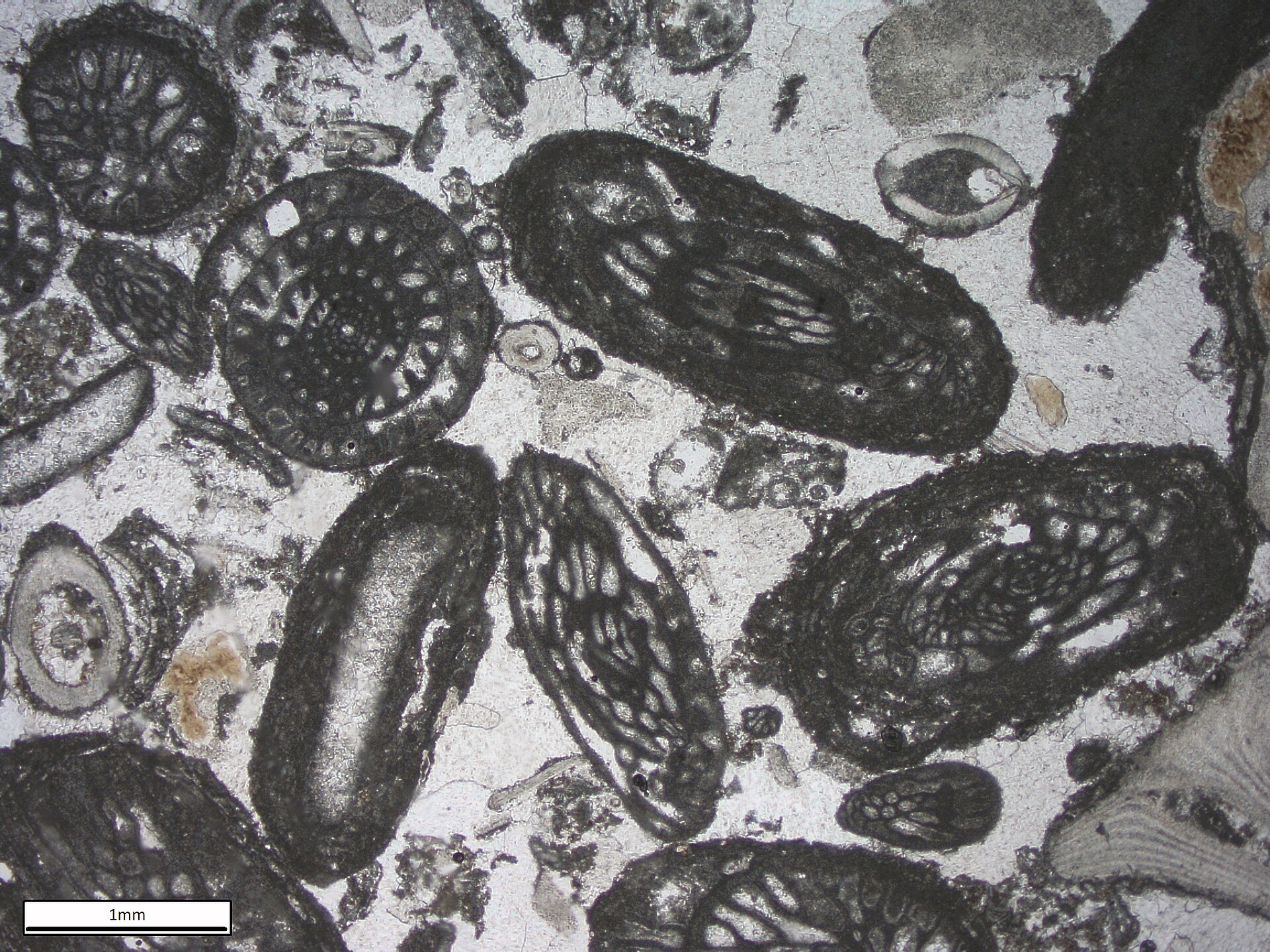
Benthic foraminifera are single-celled organisms that live on the seabed and build tiny shells. Different species tolerate different amounts of oxygen, so the mix of species buried in a layer of mud records how much oxygen the bottom water held when they lived. The authors pooled counts from 11 cores, one of them newly analysed, and converted them into oxygen estimates.
The record follows the abrupt climate swings of the last glacial period. During Dansgaard-Oeschger events, sudden warmings recorded in Greenland ice, the low-oxygen zone off North America expanded fast. Its core stretched from about 3,000 kilometres to at least 6,000 kilometres along the coast, before relaxing slowly.
Heinrich events produced the reverse. These were episodes of mass iceberg discharge into the North Atlantic, when meltwater slowed the overturning circulation. In those cold spells the Pacific low-oxygen core shrank to about 1,000 to 2,000 kilometres, and in some, such as the third and fourth Heinrich events, it virtually disappeared.
Bottom-water oxygen at the studied sites rose to one millilitre per litre or more in most cold intervals, and to four or five in some cases. In warm periods, including the present interglacial, the California margin fell below 0.1 millilitres per litre. The Pacific responded within a few hundred years of each Atlantic event, the authors estimate.
A seesaw between two oceans
The proposed link runs through deep-water formation. When the Atlantic circulation weakens, the North Pacific tends to form more of its own cold, oxygen-rich intermediate water, which spreads south and refreshes the depths off North America. A 2007 modelling study by Andreas Schmittner and colleagues had linked large oxygen swings in the Indian and Pacific oceans to changes in North Atlantic deep water.
To test it, the team ran cGENIE, an Earth system model described in 2007 by co-author Andy Ridgwell, now of the University of California, Riverside, and colleagues, starting from an ice-age state. Adding fresh water to the North Atlantic weakened the circulation, strengthened Pacific intermediate water and shrank the low-oxygen zone. Adding salt to strengthen the Atlantic circulation made the zone grow.
Biology amplified the effect. In the Dansgaard-Oeschger simulation, ocean productivity rose by up to 18 per cent in the North Pacific, and the extra sinking organic matter used up more oxygen as it decayed. In the iceberg simulation, productivity across the North Pacific as a whole fell by about 10 per cent. Runs with productivity held fixed showed the same pattern with slightly smaller changes, which points to circulation as the main driver.
The open question is what happens when warming and a slowing Atlantic arrive together.
The Atlantic circulation is expected to weaken in the coming decades, the authors write. They cite a 2022 analysis of 14 climate models by Busecke and colleagues, which suggested that the core of the tropical Pacific low-oxygen zone will probably contract by 2100 under high emissions, because stronger ventilation and lower productivity outweigh the effect of warming. The fossil record, they say, shows weak Atlantic circulation has repeatedly coincided with a shrinking Pacific core through those same two mechanisms.
The authors stop short of a forecast. “Future AMOC weakening in conjunction with global-scale warming and stratification may drive a complex and spatially heterogeneous response of OMZs,” they write, using the abbreviations for the Atlantic meridional overturning circulation and oxygen minimum zones.
What the study cannot show
The study describes the last glacial period, and its simulations start from an ice-age ocean, not today’s. The oxygen estimates carry an error margin of plus or minus 45 per cent, and each core records bottom water at one site. The basin-wide maps are interpolated between those sites, and coverage is thin across a 2,000-kilometre stretch of the transect.
The model is coarse. “We do not exclude the possibility that our simulated teleconnection may reflect the simplified resolution and representation of physical climate in cGENIE,” the authors write, though they note that other models, including the Community Earth System Model, have produced similar links between the two oceans. The two southernmost cores, bathed in Antarctic Intermediate Water, showed muted swings and contrasting trends during the last deglaciation. The team calls the response of equatorial waters a primary target for future sampling.
Source: Tetard, M., Pohl, A., Okazaki, Y., Ridgwell, A., Ovsepyan, E. and Beaufort, L. “Last glacial North Pacific oxygenation due to North Atlantic circulation changes.” Nature Geoscience (2026). doi:10.1038/s41561-026-02122-x (open access, CC BY 4.0).
Spot an error in this article? Email [email protected]