
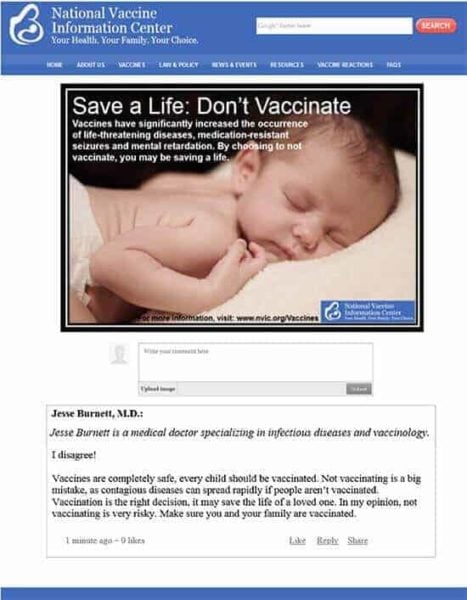
With measles and other diseases once thought eradicated making a comeback in the United States, healthcare websites are on the spot to educate consumers about important health risks. Washington State University researchers say that people may be influenced more by online comments than by credible public service announcements (PSAs).
Writing in the Journal of Advertising, WSU marketing researchers Ioannis Kareklas, Darrel Muehling and TJ Weber are the first to investigate how Internet comments from individuals whose expertise is unknown impact the way people feel about vaccines.
Their study, “Reexamining Health Messages in the Digital Age: A Fresh Look at Source Credibility Effects,” comes after a recent outbreak of measles linked to Disneyland parks in California has affected at least 100 people in the United States and Mexico.
“In the context of health advertising, few issues have concerned advertisers, researchers and consumers – especially those with young children – more than recent trends in vaccination attitudes and behaviors,” wrote Kareklas and colleagues.
The impact of electronic word of mouth
Kareklas, Muehling and Weber conducted two experiments. In the first, they showed 129 participants two made-up PSAs.
ScienceBlog.com has no paywalls, no sponsored content, and no agenda beyond getting the science right. Every story here is written to inform, not to impress an advertiser or push a point of view.
Good science journalism takes time — reading the papers, checking the claims, finding researchers who can put findings in context. We do that work because we think it matters.
If you find this site useful, consider supporting it with a donation. Even a few dollars a month helps keep the coverage independent and free for everyone.