Skip to content
ScienceBlog.com
  • Featured Blogs
    • EU Horizon Blog
    • ESA Tracker
    • Experimental Frontiers
    • Josh Mitteldorf’s Aging Matters
    • Dr. Lu Zhang’s Gondwanaland
    • NeuroEdge
    • NIAAA
    • SciChi
    • The Poetry of Science
    • Wild Science
  • Topics
    • Brain & Behavior
    • Earth, Energy & Environment
    • Health
    • Life & Non-humans
    • Physics & Mathematics
    • Social Sciences
    • Space
    • Technology
  • Our Substack
  • Follow Us!
    • Bluesky
    • Threads
    • FaceBook
    • Google News
    • Twitter/X
  • Contribute/Contact

American Chemical Society

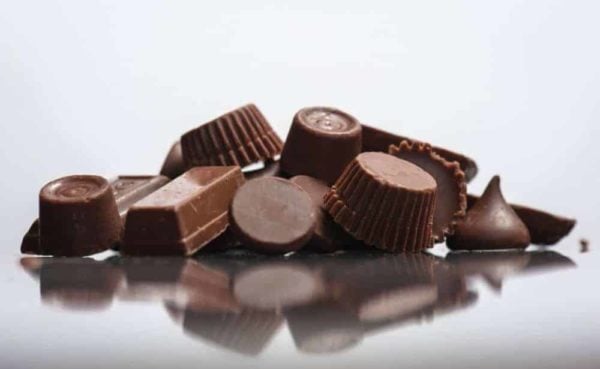
Chocolate

Chocolate’s tasty flavors might pose a risk in other desserts

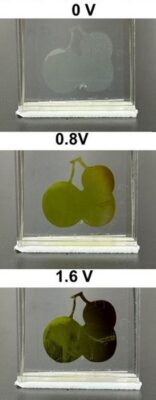
This electrochromic film’s color and optical properties change when the electric potential goes from 0 to 0.8 to 1.6 volts: Green helps reduce glare, and red enhances thermal insulation.

Electrochromic films — like sunglasses for your windows?

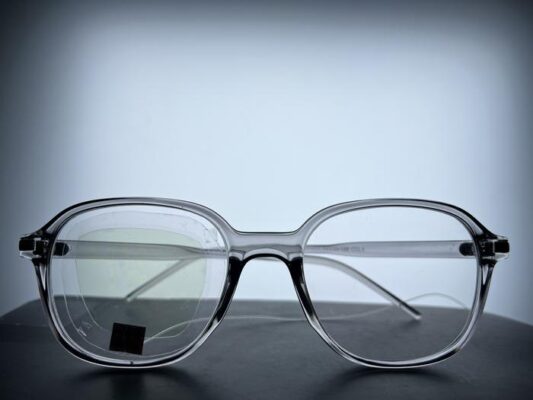
When attached to eyeglasses, a clear, flexible sensor can detect how close eyelashes are to the lens, enabling blink tracking.

Flexible Sensor Detects Objects Without Touch, Enables Blink-Tracking Glasses

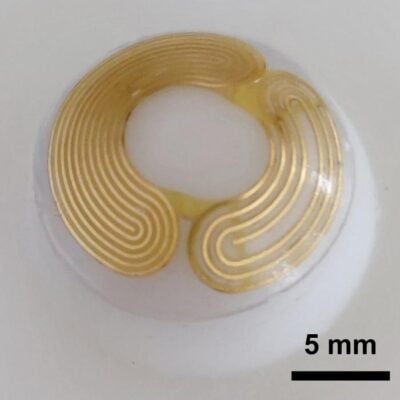
This “smart” contact lens could someday help measure eye pressure and send wireless signals to enable early detection of glaucoma.

Researchers Develop “Smart” Contact Lens to Detect Glaucoma Across Wide Temperature Range

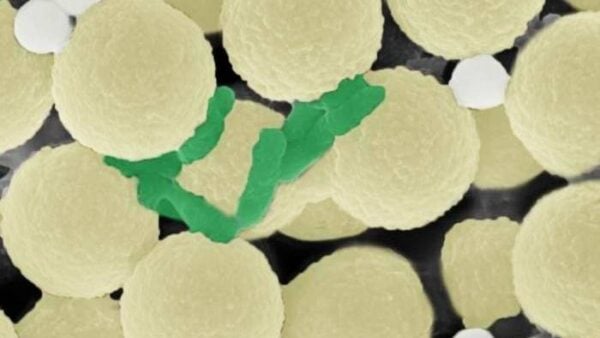
To clean water, researchers have designed swarms of tiny, spherical robots (light yellow) that collect bacteria (green) and small pieces of plastic (gray).

Microrobots Clean Microplastics and Bacteria from Water

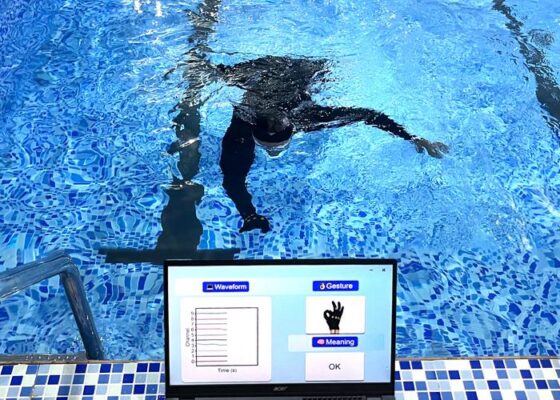
A waterproof e-glove makes it easier for scuba divers to communicate underwater.

Underwater “E-Glove” Translates Divers’ Hand Gestures into Messages

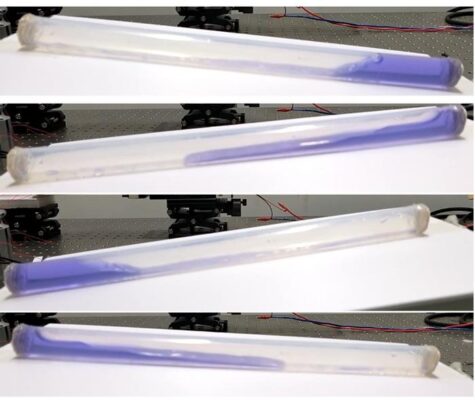
Researchers harvest more energy from waves by moving a liquid–solid nanogenerator’s electrode to the end of the tube where the water crashes.

A simple way to harvest more ‘blue energy’ from waves

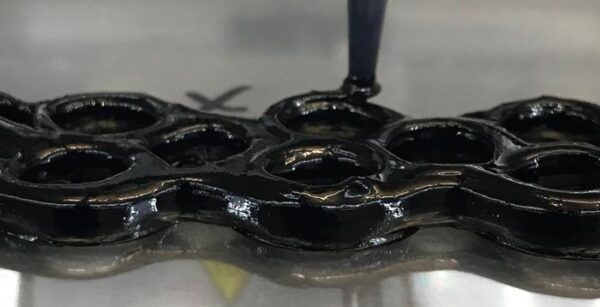
This flexible and conductive material has “adaptive durability,” meaning it gets stronger when hit.

Hitting this stretchy, electronic material makes it tougher

a very fit person holding a pill

Scientists Discover Compounds That Mimic Exercise Benefits in Cells

a backyard deck made of composite material

Scientists Develop Carbon-Negative Decking Material That Helps Combat Climate Change

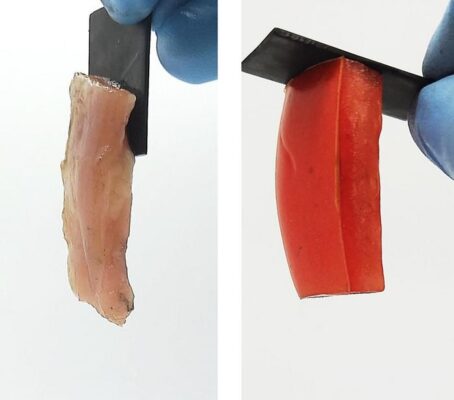
These soft materials (chicken on the left and tomato on the right) permanently stick to hard surfaces just by passing electricity through them.

You don’t need glue to hold these materials together — just electricity

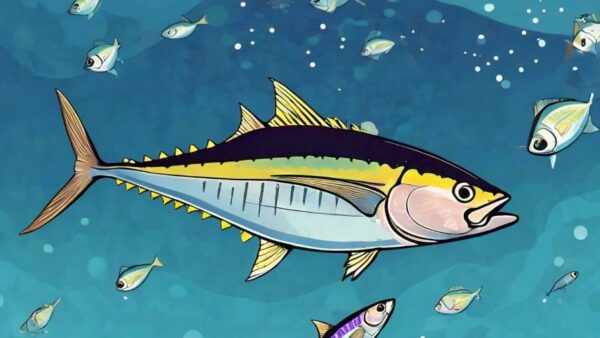
tuna illustration

Mercury levels in tuna remain nearly unchanged since 1971

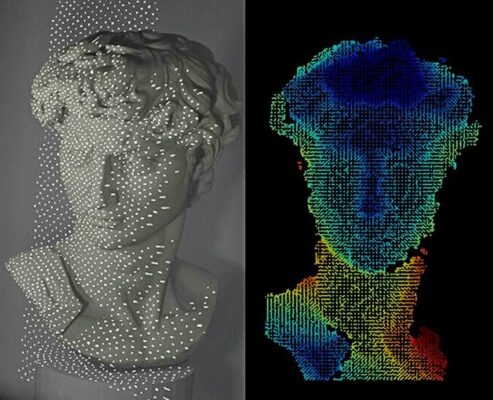
A new lens-free and compact system for facial recognition scans a bust of Michelangelo’s David and reconstructs the image using less power than existing 3D surface imaging systems.

A sleeker facial recognition technology tested on Michelangelo’s David

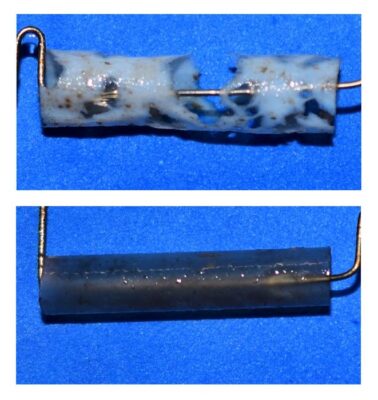
After 16 weeks in seawater, bioplastic straws made of foam (top image) broke down at least twice as fast as the solid versions (bottom image).

Lifetime of ‘biodegradable’ straws in the ocean is 8-20 months, study finds

Older posts
Newer posts
← Previous Page1 … Page3 Page4 Page5 … Page10 Next →
Substack subscription form sign up

Comments

  • Karoly Mirnics on Common Prescription Drugs May Disrupt Cholesterol Pathways in the Womb and Raise Autism Risk
  • Aizen on Laziness helped lead to extinction of Homo erectus
  • Norwood johnson on Electrons in New Crystals Behave as If They Live in Four Dimensions
  • ScienceBlog.com on Hidden Geometry Could Finally Fix Quantum Computers
  • Theo Prinse on America Is Going Back to the Moon. This Time, It Plans to Stay
© 2026 ScienceBlog.com | Follow our RSS / XML feed