Skip to content
ScienceBlog.com
  • Featured Blogs
    • EU Horizon Blog
    • ESA Tracker
    • Experimental Frontiers
    • Josh Mitteldorf’s Aging Matters
    • Dr. Lu Zhang’s Gondwanaland
    • NeuroEdge
    • NIAAA
    • SciChi
    • The Poetry of Science
    • Wild Science
  • Topics
    • Brain & Behavior
    • Earth, Energy & Environment
    • Health
    • Life & Non-humans
    • Physics & Mathematics
    • Social Sciences
    • Space
    • Technology
  • Our Substack
  • Follow Us!
    • Bluesky
    • Threads
    • FaceBook
    • Google News
    • Twitter/X
  • Contribute/Contact

Harvard University

Olive oil

Olive oil – maybe not your mom’s – is a good place to start the Mediterranean diet

Factory at night

Exxon scientists predicted global warming with ‘shocking skill and accuracy,’ Harvard researchers say

Illustration of multiple clocks

Weekend ‘catch-up sleep’ might offer a lifeline

Cancer cells

Killing cancer with cancer: Vaccine destroys brain tumors in mouse model

The Kepler-1658 system.

Doomed planet too attracted to star

The ultra-faint Milky Way companion galaxy Leo I appears as a faint patch to the right of the bright star, Regulus.

Astrophysicists hunt for second-closest supermassive black hole

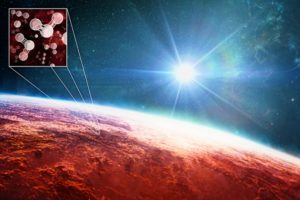
New observations of WASP-39b with the JWST have provided a clearer picture of the exoplanet, showing the presence of sodium, potassium, water, carbon dioxide, carbon monoxide and sulfur dioxide in the planet's atmosphere. This artist's illustration also displays newly detected patches of clouds scattered across the planet.

Webb spies an exoplanet atmosphere as never seen before

Artistic reconstruction of the Ordovician fossils Mieridduryn bonniae

Weird fossils add piece to puzzle of arthropod evolution

Four squid embryos in their egg sac. These are the squid species Doryteuthis pealeii.

How squid and octopus get their big brains

G299 was left over by a particular class of supernovas called Type Ia.

The most precise accounting yet of dark energy and dark matter

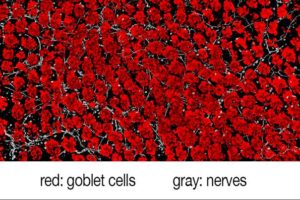
Harvard Medical School researchers have analyzed the molecular crosstalk between pain fibers in the gut and goblet cells that line the walls of the intestine. The work shows that chemical signals from pain neurons induce goblet cells to release protective mucus that coats the gut and shields it from damage. The findings show that intestinal pain is not a mere detection-and-signaling system, but plays a direct protective role in the gut.

Study finds unexpected protective properties of pain

Astronomers have observed a black hole burping up stellar remains years after it shredded and consumed the star.

‘We’ve Never Seen Anything Like This Before:’ Black Hole Spews Out Material Years After Shredding Star


Five Ways Artificial Intelligence Promises to Change Our Lives

Common approach to demystify black box AI not ready for prime time

Concerned looking girl

Building ‘bravery muscles’ to fight rising anxiety among kids

Older posts
Newer posts
← Previous Page1 … Page6 Page7 Page8 … Page20 Next →
Substack subscription form sign up

Comments

  • Anon on Why Fructose Behaves Less Like a Calorie and More Like a Hormone
  • Mark Mellinger on Living Plastic Can Self-Destruct on Command
  • Marie Feret on The Silent Frequency That Makes Old Buildings Feel Haunted
  • Dax on The Silent Frequency That Makes Old Buildings Feel Haunted
  • Karoly Mirnics on Common Prescription Drugs May Disrupt Cholesterol Pathways in the Womb and Raise Autism Risk
© 2026 ScienceBlog.com | Follow our RSS / XML feed