Skip to content
ScienceBlog.com
  • Featured Blogs
    • EU Horizon Blog
    • ESA Tracker
    • Experimental Frontiers
    • Josh Mitteldorf’s Aging Matters
    • Dr. Lu Zhang’s Gondwanaland
    • NeuroEdge
    • NIAAA
    • SciChi
    • The Poetry of Science
    • Wild Science
  • Topics
    • Brain & Behavior
    • Earth, Energy & Environment
    • Health
    • Life & Non-humans
    • Physics & Mathematics
    • Social Sciences
    • Space
    • Technology
  • Our Substack
  • Follow Us!
    • Bluesky
    • Threads
    • FaceBook
    • Google News
    • Twitter/X
  • Contribute/Contact

Karolinksa Institutet

Karolinska Institutet is one of the world´s leading medical universities. Our mission is to contribute to the improvement of human health through research and education.Karolinska Institutet accounts for over 40 per cent of the medical academic research conducted in Sweden and offers the country´s broadest range of education in medicine and health sciences.Since 1901 the Nobel Assembly at Karolinska Institutet has selected the Nobel laureates in Physiology or Medicine.Karolinska Institutet was founded by King Karl XIII in 1810 as an "academy for the training of skilled army surgeons". Today, Karolinska Institutet is a modern medical university and one of the foremost in the world.With our close relationship to the clinical milieu, a well established infrastructure and a stable financial situation, Karolinska Institutet has excellent prerequisites for sustaining high quality research and education.
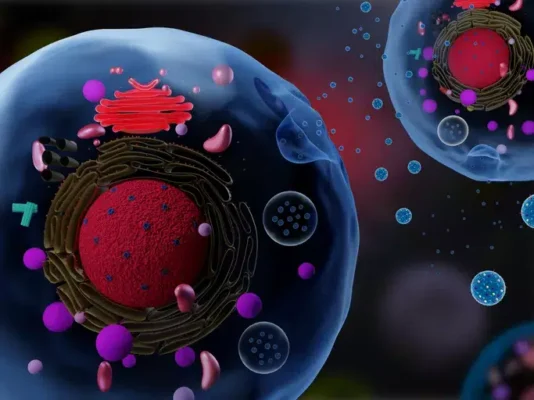
Extracellular vesicles are small bubbles that cells can send to each other to exchange information. Image: Getty Images

Harnessing Cell Communication Bubbles for Targeted Cancer Treatment

Anders Kjellberg

Hyperbaric oxygen therapy tested for post-covid conditions

Garden hoses of various sizes

Use it or lose it: Regular erections help maintain erectile function

Woman eating a strawberry

No increase in cancer risk for most patients with reflux disease

Nuria Matilla-Santander

Precarious employment conditions can increase risk of early death

An arm receiving a vaccination

Previous smallpox vaccine provides immunity to Mpox

Women on a hammock looking at a pond

Sugar molecule in blood can predict Alzheimer’s disease

Weights at a gym

Time of day may determine the amount of fat burned by exercise

Omicron virus

New Omicron subvariant largely evades neutralizing antibodies

omega 3 pills

Positive effects of omega-3 on the immune system in cases of severe COVID-19

Cool room temperature inhibited cancer growth in mice

Finger getting pricked for a blood sugar test

Target protein for diabetes drug linked to reduced risk of Alzheimer’s disease

Nerve closeup

Nerve stimulation promotes resolution of inflammation

People around the world like the same kinds of smell

Older posts
Newer posts
← Previous Page1 Page2 Page3 Page4 Next →
Substack subscription form sign up

Comments

  • Not Buying Yer Bullshit on More Than a Third of Americans Have Lost Relationships Over Politics
  • Marco Messina on More Than a Third of Americans Have Lost Relationships Over Politics
  • Anon on Why Fructose Behaves Less Like a Calorie and More Like a Hormone
  • Mark Mellinger on Living Plastic Can Self-Destruct on Command
  • Marie Feret on The Silent Frequency That Makes Old Buildings Feel Haunted
© 2026 ScienceBlog.com | Follow our RSS / XML feed