
Skip to content
ScienceBlog.com
  • Featured Blogs
    • EU Horizon Blog
    • ESA Tracker
    • Experimental Frontiers
    • Josh Mitteldorf’s Aging Matters
    • Dr. Lu Zhang’s Gondwanaland
    • NeuroEdge
    • NIAAA
    • SciChi
    • The Poetry of Science
    • Wild Science
  • Topics
    • Brain & Behavior
    • Earth, Energy & Environment
    • Health
    • Life & Non-humans
    • Physics & Mathematics
    • Social Sciences
    • Space
    • Technology
  • Our Substack
  • Follow Us!
    • Bluesky
    • Threads
    • FaceBook
    • Google News
    • Twitter/X
  • Contribute/Contact

University of Oxford

Oxford is the oldest university in the English-speaking world, and a leader in learning, teaching and research.
Ariel view of cargo container ships at port.

Green ammonia could decarbonize 60% of global shipping when offered at just 10 regional fuel ports

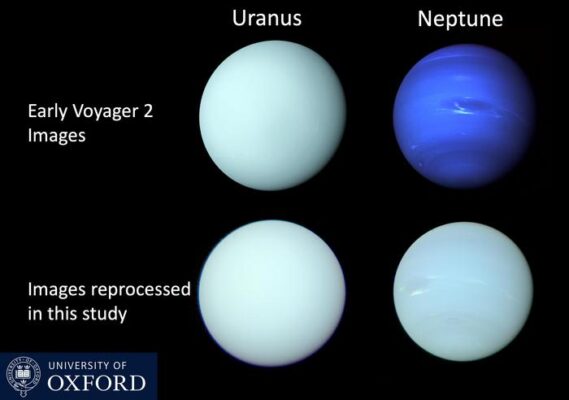
Voyager 2/ISS images of Uranus and Neptune released shortly after the Voyager 2 flybys in 1986 and 1989, respectively, compared with a reprocessing of the individual filter images in this study to determine the best estimate of the true colours of these planets.

New images reveal what Neptune and Uranus really look like

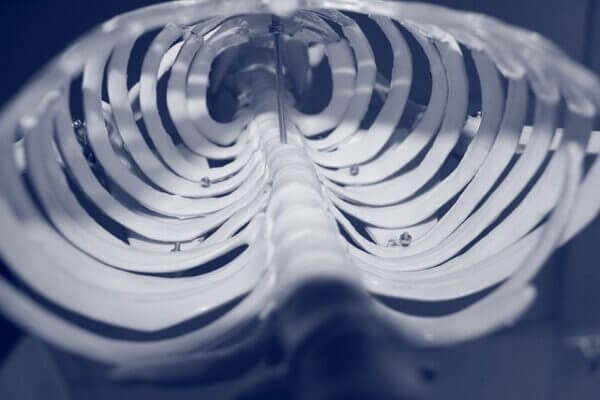
human ribcage

Rise in discovered British dead and decomposed raises concerns

Illustration of heating climate

Experts ID interventions that could rescue 1.5°C

Attenborough's long-beaked echidna, photographed by a camera trap. Credit: Expedition Cyclops.

Found at last: Bizarre, egg-laying mammal finally rediscovered after 60 years

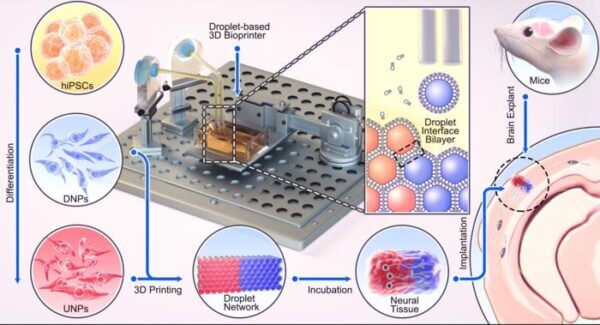
Droplets containing human iPSC-derived neural progenitors were 3D-printed to form 2-layer cerebral cortical tissue, which was cultured before implantation into a mouse brain slice. DNPs: deep-layer neural progenitors; UNPs: upper-layer neural progenitors. Image credit: Yongcheng Jin, University of Oxford.

3D printing method shows promise for repairing brain injuries

Embryo cells. Pixabay

Researchers warn on embryo editing

A ring finger locked in a bent position as seen in Dupuytren's disease, colloquially known as the "Viking disease."

“Viking disease” hand disorder may come from Neandertal genes

Ominous looking computer servers

Oxford breakthrough enables perfectly secure digital communications

Doctor and patient

Doctors give ineffective weight loss advice to patients with obesity

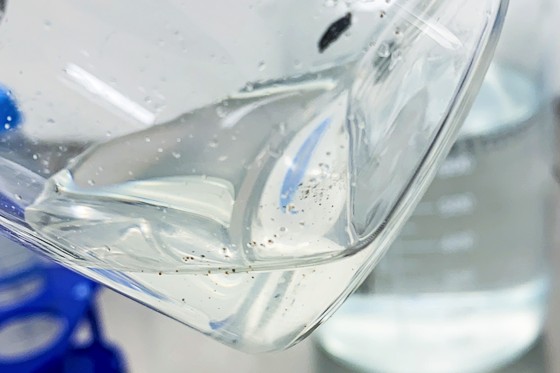
Density separation process during microplastics analysis of samples from Weddell Sea Expedition (c) Nekton

Synthetic fibers discovered in Antarctic air, seawater, sediment and sea ice as the ‘pristine’ continent becomes a sink for plastic pollution

A zoomed-in view of the eruption, taken by Japan's Himawari-8 satellite at 05:40 UTC on 15 January 2022, about 100 minutes after the eruption started. Photo credit: Simon Proud / Uni Oxford, RALSpace NCEO / Japan Meteorological Agency

Scientists identify the highest-ever recorded volcanic plume

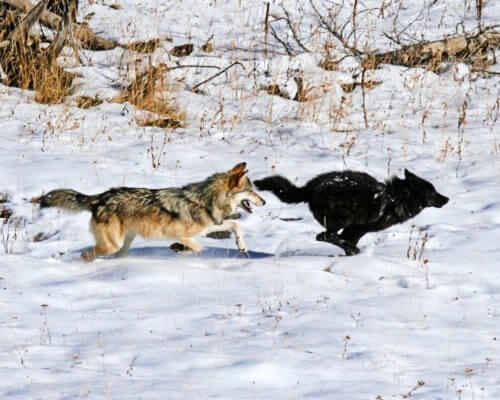
Members of the Druid Peak Pack in Yellowstone National Park engage in a game of chase. The gray colored wolf on the left represents the homozygous gray phenotype, while the black colored wolf on the right represents the K-locus black phenotype. Credit: Daniel Stahler/NPS

Sickly shades of grey: Disease outbreaks influence the color of wolves across North America

Conchie, Hubert, Saturn, Venus and Uranus glaciers draining into a meltwater-laden George VI Ice Shelf.

How fast-moving glaciers may contribute to sea level rise

Older posts
Newer posts
← Previous Page1 Page2 Page3 Next →
Substack subscription form sign up

Comments

  • Kidreadytobreed on Global warming reduces available wind energy
  • James on Global warming reduces available wind energy
  • James on Global warming reduces available wind energy
  • Booklet AI on Key to online education: Test early and often
  • Karoly Mirnics on Common Prescription Drugs May Disrupt Cholesterol Pathways in the Womb and Raise Autism Risk
© 2026 ScienceBlog.com | Follow our RSS / XML feed